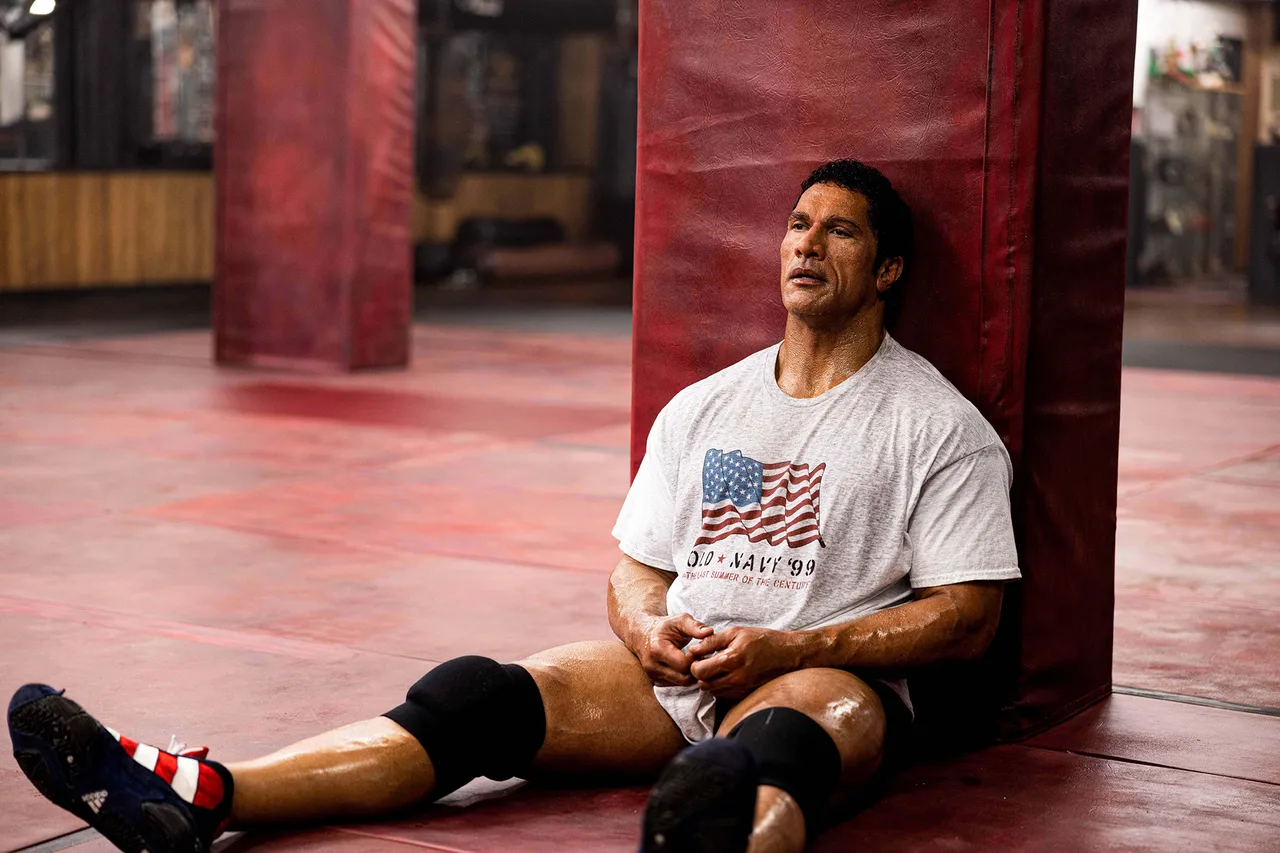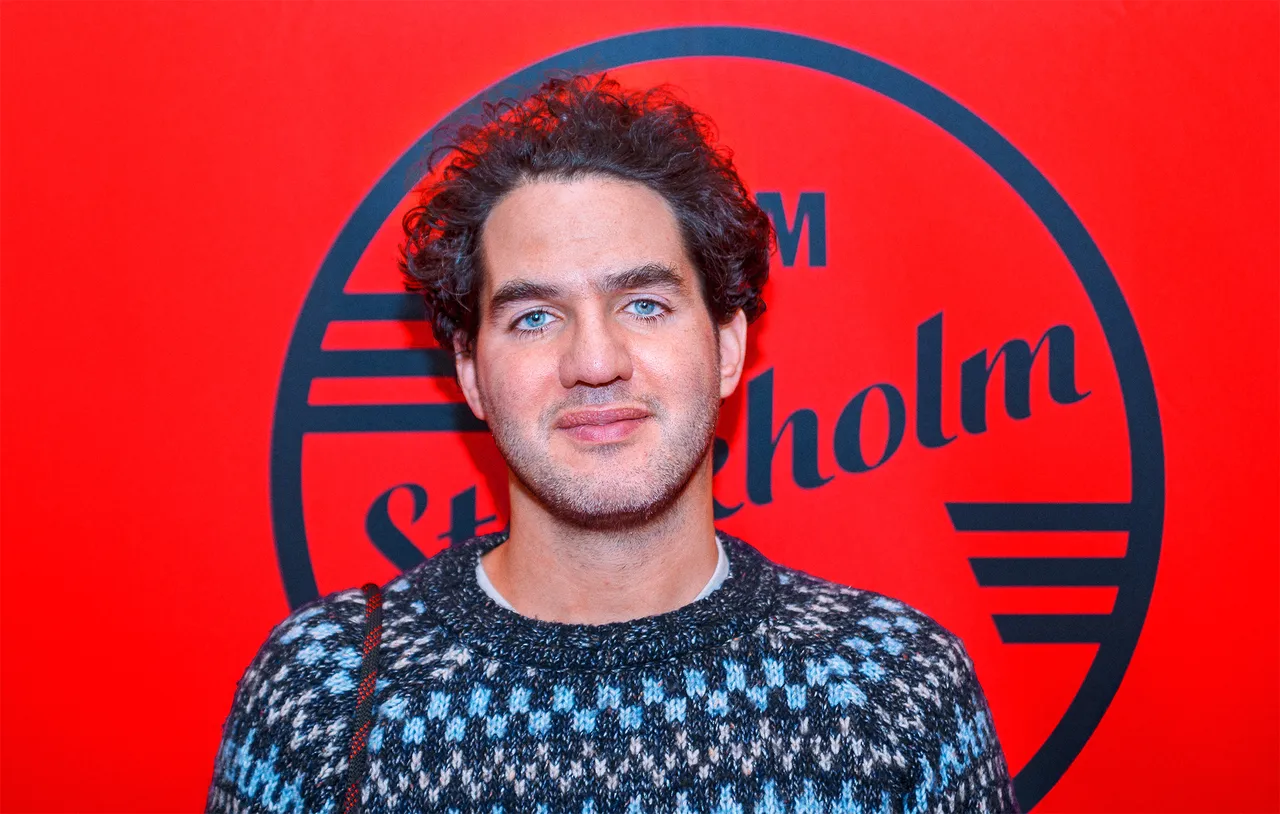
One half of the acclaimed Safdie Brothers, Benny Safdie, has received the Visionary Award at this year’s Stockholm Film Festival, where he presented a masterclass following his solo directorial debut, The Smashing Machine — a biopic of UFC pioneer Mark Kerr that earned him the Silver Lion for Best Director at the Venice Film Festival. The movie stars Dwayne ‘The Rock’ Johnson as Kerr and Emily Blunt as his wife, revealing vulnerability in Johnson as much as Uncut Gems did with Adam Sandler, humanising characters and actors audiences think they already know.
Following a masterclass moderated by Jakob Åsell, co-director of the festival’s programme, we had the opportunity to speak with Safdie. He discussed everything from his early personal work and signature long-lens visual style to his editorial process and approach to casting against type. Known for his kinetic, immersive approach to cinema with films like Good Time, Uncut Gems, and Heaven Knows What, he opened up about the deeply personal foundations of his filmmaking exploring themes of vulnerability and identity in characters often dismissed by society. Throughout the conversation, he reveals his intimate understanding of the relationship between performance, editing, and authenticity. The film also draws unexpected inspiration from Rocky III and Elvis Presley’s fragile final performances.
You started with very personal material. Can you talk about how your early films drew from your own experiences?
It was my experience in college, trying to make friends. That was something I felt like I could talk about. I didn’t want to do anything I didn’t feel like I could answer to. I want to understand the subject I’m talking about. Since it was my experience, I knew I could do that. Daddy Longlegs was basically: we knew we had had a chaotic childhood and we wanted to explore it. What’s interesting now is that I have two kids exactly the same age as the kids in the movie. I can’t imagine allowing them to be part of a movie because it’s such a complicated process. But I understand why the mom was excited about it — that time of their lives is captured. It’s about the things you want to save. I was twenty-two, just coming out of college, trying to understand why am I here? Where am I? It was just trying to understand how you’re even alive, how to get through things.
Can you talk about your choice of filming with long lenses?
That started with the short film The Black Balloon in 2012. We were testing long lenses for the first time. There was this periscope lens, a zoom with a trombone kind of thing on it. It was a real test to see what you could do with that and how it made things feel. With the balloon, you could follow it through the city and it felt very real. When you compressed the space, I remember learning a lot with that short and taking it to Heaven Knows What.
How much of your work is created in the edit?
A lot is created in the edit. With Good Time, the ending was very different — it was going to follow the other person. In the edit, we realised we truly care about the brother. That was only discovered as the movie was edited. You realise the true nature of the story in the edit because you find out what’s engaging. And if it’s not engaging, you cut it out. It’s very extreme like that.
Your characters force us to reconsider people we might otherwise dismiss. What draws you to that challenge?
What I like is when you make a snap judgment about somebody, then the job becomes undercutting that snap judgment. That’s interesting to me — to learn about somebody who you think you’ve already pegged as something. If anybody’s seen The Curse, Dougie makes you uncomfortable immediately. But then you learn he’s dealing with something really dark, and that struggle makes him human. That's fun to me, to put you in a place of trying to understand somebody.
With The Smashing Machine, you look at Mark and think he’s the strongest person in the world, he can handle anything. But it turns out he’s exactly the opposite. Mark told me, just because he was big and strong, the fact that he could put together a sentence was shocking to people.
With The Smashing Machine, you look at Mark and think he’s the strongest person in the world, he can handle anything. But it turns out he’s exactly the opposite. Mark told me, just because he was big and strong, the fact that he could put together a sentence was shocking to people.
Uncut Gems went through 160 rewrites over a decade. What’s behind that number?
It's a yes-and-no kind of thing. When you're making a movie, you have different colours of the draft, and every day you're rewriting the script. That's where that number comes from. Over ten years, it changes. Things get cut out completely. It’s a cool number, but it took us a long time, and then it changed a lot while we were shooting. With Keith’s character, Phil, on the page he's very one-note, a heavy. But what makes it unique is that it’s Keith. He was a longshoreman and brought so much of himself to the role. Casting is so important because a character comes to life based on who’s there.
Josh said you’re like Frederick Wiseman directing from the sound booth. Why that approach?
Since there were two of us, it was a waste to both be in the same place. Early on, the crew was so small: on Heaven Knows What, maybe ten people. I ran sound myself. For fifty per cent of Daddy Longlegs, I did the same thing. It was utilitarian — I knew how to run sound, so that's what I did. It meant I could be right with the actors and give instant feedback. Even now on The Smashing Machine, I was in the same spot because I like being present with the performers. If you’re outside of the room, it slows things down.
“Casting is so important because a character comes to life based on who’s there.”
Can you talk about your interest in the documentary sports format when plotting The Smashing Machine?
It was based on a documentary made at the same time. After Hoop Dreams, people were making these sports documentaries, in 2000 and 2001, trying to capture the essence of competition. John Hyams’ documentary does a great job. I saw that and thought, what if I was there? I can base my reality on that existing thing and move through it freely as a fiction film. I wanted to make something that could be put online and people would think, is that real? It falls into this place of: this feels like I'm watching something real, but I know it's not. That time period of 1997 to 2001 is very close to a lot of people because it was so documented — reality TV came on, cameras became more available. That aesthetic is burned into people’s brains.
You mentioned reference points like Rocky III, It's a Wonderful Life, and Elvis. Can you elaborate?
It's a Wonderful Life: what happens at the end? What's changed? Nothing. His perspective changes. He has to accept who he is, and in that acceptance is joy. That's basically the same thing in The Smashing Machine: you’re watching somebody come to terms with who they really are. Rocky III, Bill Butler shot it, he also shot Jaws. He uses a lot of long lenses and they’re messy. There's a beautiful feeling to it. But also, Rocky loses in the beginning. He thinks he has it in the bag, fights Mr. T and gets his ass kicked. Then he has to come to terms with what am I actually doing. What's interesting is it's basically a documentary about Sylvester Stallone at that time. Here he was, super famous, everybody expected something of him. Dwayne is trying to understand himself in The Smashing Machine the same way.
Elvis, I was listening to him sing songs from near the end of his life, when he was struggling with painkillers, the same things Mark was struggling with. There’s a version from 1973 in Hawaii that has this fragility to his voice, and it was meaningful to Dwayne. So we used that for the training montage.
Elvis, I was listening to him sing songs from near the end of his life, when he was struggling with painkillers, the same things Mark was struggling with. There’s a version from 1973 in Hawaii that has this fragility to his voice, and it was meaningful to Dwayne. So we used that for the training montage.
How involved are you with the composing process?
Very involved. I worked with Nala Sinephro. Allowing her to be herself was very important, she’s an artist who makes things the way she wants. That’s why you ask somebody like that. She has a very specific vibe to her music, and I wanted that in the movie. We spent about a week recording jazz sessions. We played the movie, I told them what the characters were feeling, and they would play.
You worked with Adam Sandler on Uncut Gems and Dwayne Johnson on The Smashing Machine, both known for different genres. What's the thought behind selecting these actors?
For Sandler, the character was somebody who was very caustic, maybe not somebody you’d want to be around. To counteract that, he was the perfect person because he’s so lovable. You want to give him a big hug. That inherently softened the character in a way that allowed you to accept him as who he was. He really pushed us to explore his family and show that he felt bad about the position he put his kids in. The fact that you saw he cared about his daughter and his son, those things humanised him in a way that I think only Sandler could have done.
With The Smashing Machine, Dwayne related to who Mark was. He saw a possibility as an alternate reality for himself. They both came up at similar times and one person went one way, the other went the other. He was thinking, what if that had happened to me in a lot of ways? There was a real intense personification of understanding himself that gave the performance its depth. It's really subtle and beautiful. It's about making a connection between the actor and the character.
With The Smashing Machine, Dwayne related to who Mark was. He saw a possibility as an alternate reality for himself. They both came up at similar times and one person went one way, the other went the other. He was thinking, what if that had happened to me in a lot of ways? There was a real intense personification of understanding himself that gave the performance its depth. It's really subtle and beautiful. It's about making a connection between the actor and the character.
Do you appreciate the fact that you're giving the audience a chance to see these actors in a completely different light?
Yeah, I think it’s rewarding to show another side of somebody who you really love. Here’s Sandler, who you have all these connections with, and then you see this and realise there’s another side to him. Dwayne has this intense charisma and magnetism, you want him to win the day, but now you realise there’s a lot of vulnerability inside of him that he’s able to do all that in spite of, and that deepens him. When I saw him, I saw that element and was like, wow, we can really explore something here and it would make you understand him in a very different way.