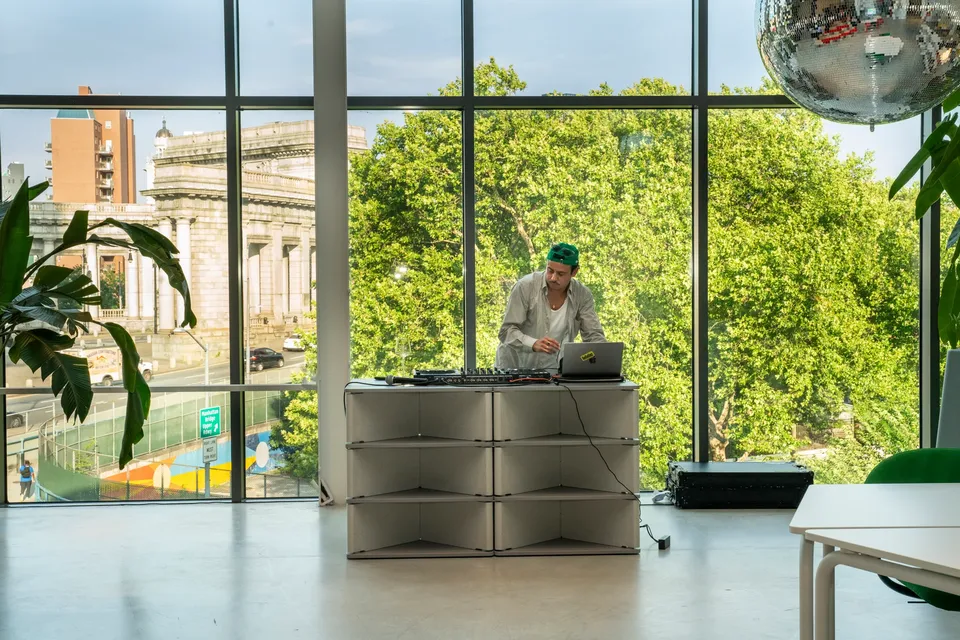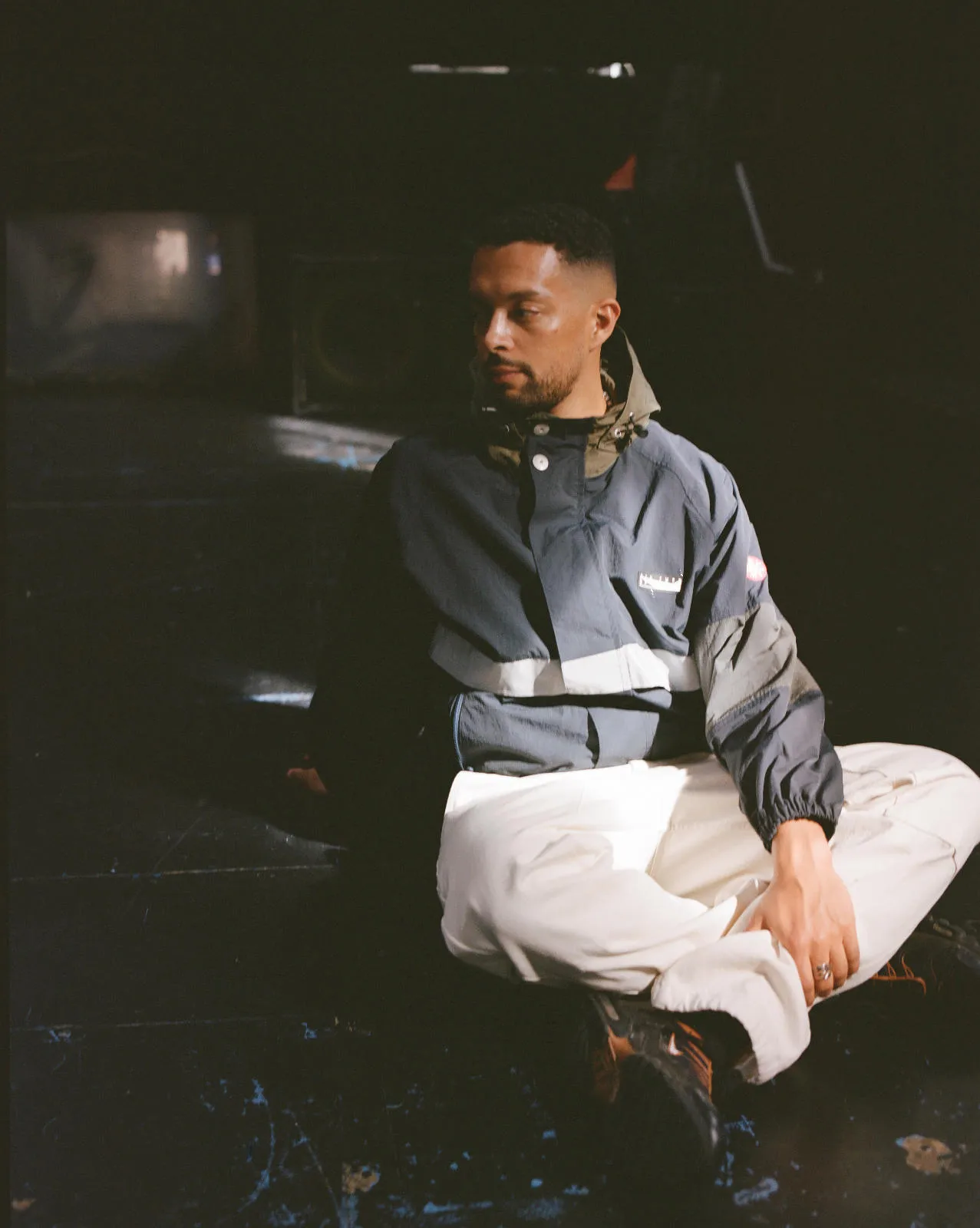
Batu is an incisive rebel. He’s produced for FKA twigs, PinkPantheress and serpentwithfeet and consistently stays true to his underground roots. In the face of capitalistic cultural homogenisation his label Timedance and wider output resists. As he puts it, “modern culture and politics are defined by a pervasive nostalgia for a past that never was; politics starts with individuals' imaginations, so art that represents the contemporary experience and inspires new thought is essential for political progress.”
Across most corners of the world in 2025, globalisation threatens the individuality of culture; the corporate quest for ease and efficiency risks effacing it into a mass standardisation of shops, streets and cities that are simply versions of the same thing. Resultantly, we’re left with high streets that feel like transplants from another place, which come to dominate the environment if left uncontested, rendering so-called independence a thing of the past.
Whilst it’s tempting to think of art as separate from these gross realities, music and club culture can face similar issues and undergo the same fate. Grassroots scenes continue to struggle to thrive in the aftermath of Covid, and ticket sales for small shows wane amid an unending cost of living crisis, public spend on music is instead focused on huge international artists who charge extortionate fees via tiered ticket structures. This wipes out the need for independent venues and artists, and plagues the music industry with the same ugly facets of globalisation. It’s conglomerates like Academy Music (O2 Arena) and Ambassador Theatre Group (who probably own your local ‘Hippodrome’) that replace independent pubs and venues, waving bye-bye to the nuance that once made your city’s nightlife special.
That’s why we have to treasure those who keep independent underground culture alive, those who fight against the corporate pressure to homogenise art. We respect those who continue to provoke thought by delivering countercultural music, and who actually represent a city’s identity alongside the communities they are playing music to.
It’s exciting to be interviewing Batu, one of Bristol’s most influential electronic innovators of the past decade, who has reaffirmed the city’s place on the international map for dance music and contributed to Bristol remaining an artistic force to be reckoned with in the 2020s. You would struggle to find any serious heads in the western techno and experimental world who haven’t heard of Batu, which makes his ongoing commitment to Bristol all the more admirable: the place where he sowed the roots of his now-flourishing label Timedance, which has blossomed into signing artists from across the world, yet has never flown far from its humble city of origin.
In this conversation, Batu reflects on Timedance’s 10-year milestone, and shares his insights into the role of dance floors, electronic music, and acceptance in today’s cultural climate.
Congratulations on Timedance hitting the ten-year mark! How are you feeling about it all? Is there a particular emotion that stands out as you reflect on the label’s journey?
It’s really nice to hit the ten-year mark for a few different reasons. It feels like me and Paul (the label manager) are really hitting our stride now, things are aligning nicely and whilst there is an element of it being a retrospective, actually this moment really feels like the beginning of something new for the label.
The name Timedance feels especially fitting for this kind of retrospective — dancing through time literally and figuratively. Was the name always meant to reflect the expansive, genre-blurring identity we hear across the LP, released this year, from Bambounou’s abstract melodies to Minor Science’s screamo-sampled drop, to your own icy Frostbite? What was the original inspiration behind the name?
The name is more alluding to how time becomes elastic when we are experiencing good art or music. I find it fascinating that when we experience transcendental moments, definitive concepts can become so subjective, rituals such as dancing feel fertile grounds for these elastic moments of perception.
Both Batu and Timedance have deep roots in Bristol, a city that has changed so much since 2015. We’ve seen pivotal venues like Blue Mountain, Crofters Rights and Leftbank close, but also spaces like Strange Brew rise and reshape the scene, following an inspirational community-driven crowdfunding campaign to open its doors. Can you lay down the context of Bristol in 2015 and how its transformation over the past decade has impacted the label?
The city has definitely modernised into a more affluent and dynamic city. It’s lost some of its cultural touch stones along the way but it’s in a spot now where there are so many amazing things happening. We are very spoiled for such a small city. My worry is that it is becoming prohibitively expensive for young people to live here.
Before launching Timedance, you were studying music production in Bath — a humble beginning, given how far you and the label have come. What was it like carving out a name for yourself back then? And how has your mindset as both an artist and a label head evolved since those early days?
I was as driven and hungry to make things then as now, but I learnt a lot creatively at university. My production skills and philosophical vision of what could be achieved with dance music definitely levelled up during this period, and I learnt about a lot of amazing music outside of the dance music format which had a big impact on me.
To touch on a more complex subject — it’s safe to say that we are currently living in turbulent political times, and with Bristol’s long-standing history of resistance and activism (which is often tied to its music scene), I wanted to ask about how this landscape affects Timedance. As an international label with a global roster, have political shifts ever impacted your parties, releases, or artists directly?
I think we are always reacting to political shifts, as everyone in society is. While I wouldn't say Timedance is a label which is closely tied to a lot of activism, we try to be politically aware, and set an example of how new visions of the future might look. In my opinion modern culture and politics are defined by a pervasive nostalgia for a past that never was; politics starts with individuals' imaginations, so art that represents the contemporary experience and inspires new thought is essential for political progress. In our own small way this is a political stance, but I can’t claim to be an expert on direct activism or resistance.
In the same vein, electronic music and club spaces have long offered sanctuary in turbulent times; they are places for release, resistance and connection. Do you reflect much on the healing or transformative power of electronic music?
I do. For me electronic music has definitely been transformative, but I think it’s perhaps a bit more complicated a conversation than people like to allude to. The idea that dance floors are sacred spaces is definitely one I subscribe to but they can also be dangerous, whilst liberal attitudes to drugs and sex can be empowering and transformative some people can get lost in these vices with destructive consequences. Dancing with people is a really powerful thing and the countercultural aspect of electronic music is something I love dearly about it, but the idea that people just have a positive experience with it can be a little reductionist in my opinion. It very much depends on the person.
Is there a real sense of friendship or family within the label? I’m imagining a big celebratory meal after the LP dropped – perhaps somewhere like Sky Kong in Bristol!
There definitely is, a lot of my best friends are part of the label and I do feel like we have cultivated a family of sorts. Not everyone is in Bristol and people are busy with different things, but I'm very proud of the spirit we have made within this group of friends over the past ten years.
Beyond signing artists, throwing parties, and releasing music, have there been any unexpected milestones along the way – collaborations, brand partnerships, or moments that felt especially left-field but meaningful for Timedance?
Seeing how far the music has travelled around the world is the most rewarding part for me.
Earlier this year you did a two-day stage takeover with Draaimolen in the Netherlands and have a busy schedule across Europe and the US this autumn. Is there a particular city or venue you’re especially looking forward to returning to, or one that feels like your home away from home?
It’s hard to pick one, but I think Open Ground in Wuppertal and Nowadays in New York are my two best picks. Both clubs are incredible and I feel deeply aligned with the philosophies of what they are trying to achieve.
As Batu, you released your debut album Opal back in 2022, a project shaped in part by the slower pace of the Covid era which allowed space for such a landmark album. How are you managing the balance between your own music and the label now? And do you see a second Batu album on the horizon?
Next year I’m writing a lot of new music for sure, there's a few projects coming up. I don't want to say too much but I’m busy and will have lots to share before too long.
Timedance has become a global reference point for cutting-edge electronic music, setting trends and pushing boundaries. But inspiration is always a two-way street, so what artists, labels, or scenes are feeding your creativity right now?
In no specific order music wise: Siete Catorce, Dj Helviofox, Debit, Vigro Deep, EsDeeKid, Blawan, DJ Rugal Original, John Glacier, Autechre.
Also films: All We Imagine as Light, Eight Postcards from Utopia, The Spectre of Hope, The Battle of Algiers, Certified Copy.
Also films: All We Imagine as Light, Eight Postcards from Utopia, The Spectre of Hope, The Battle of Algiers, Certified Copy.