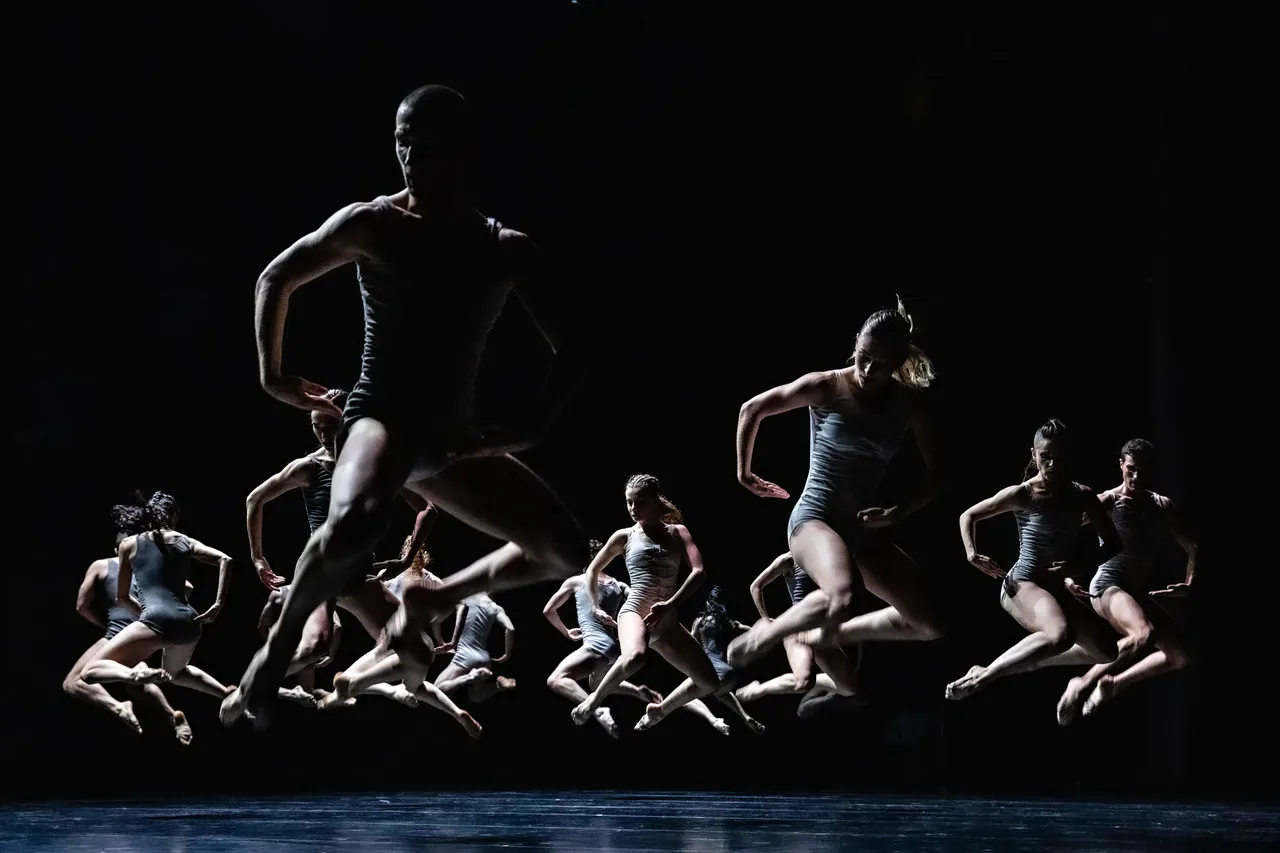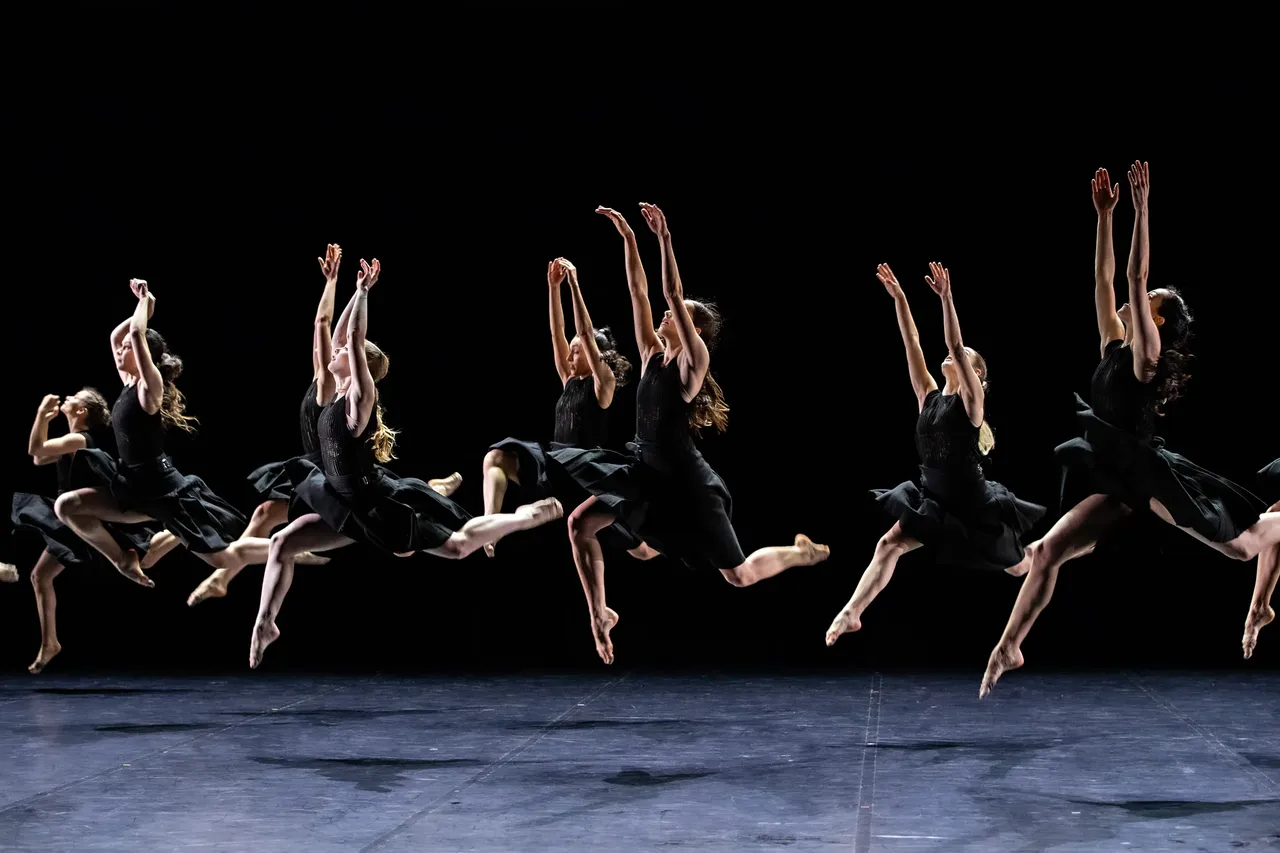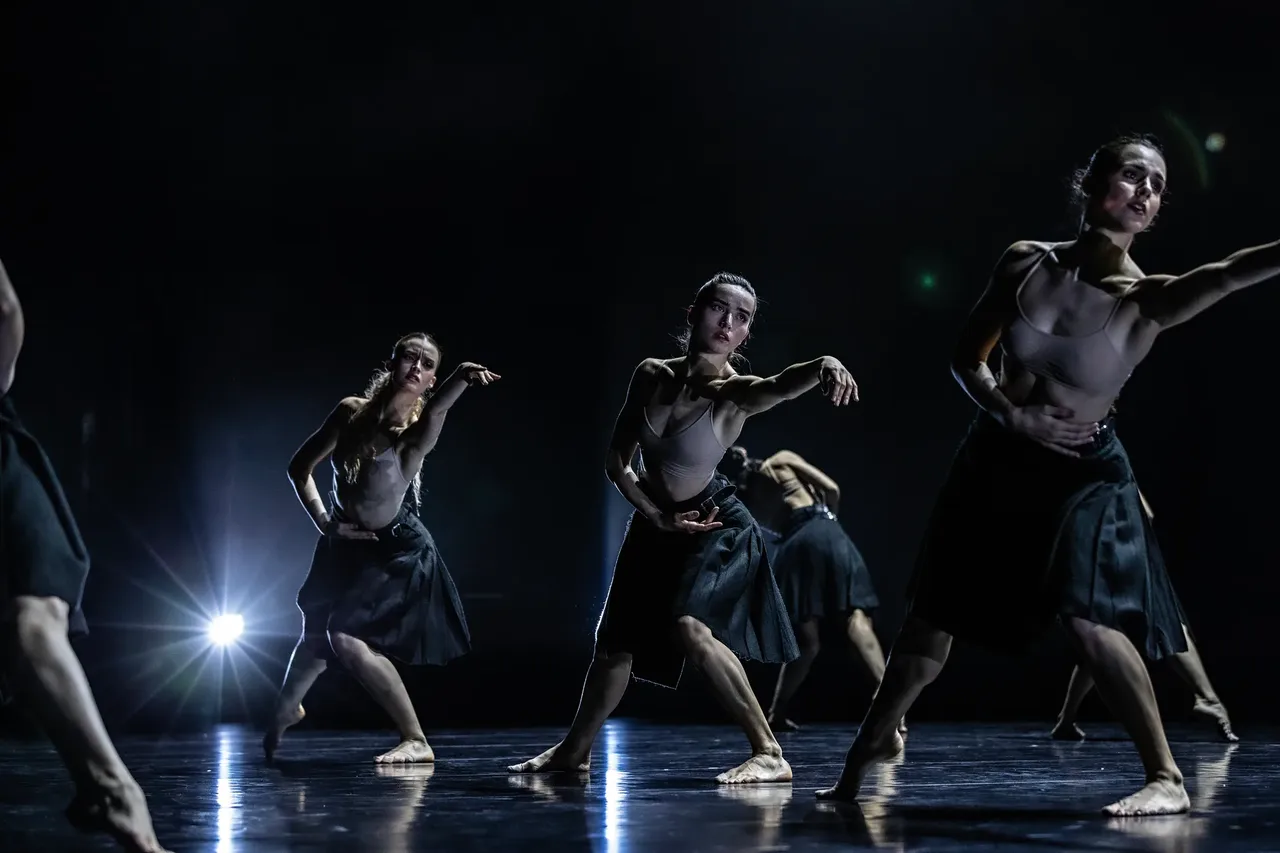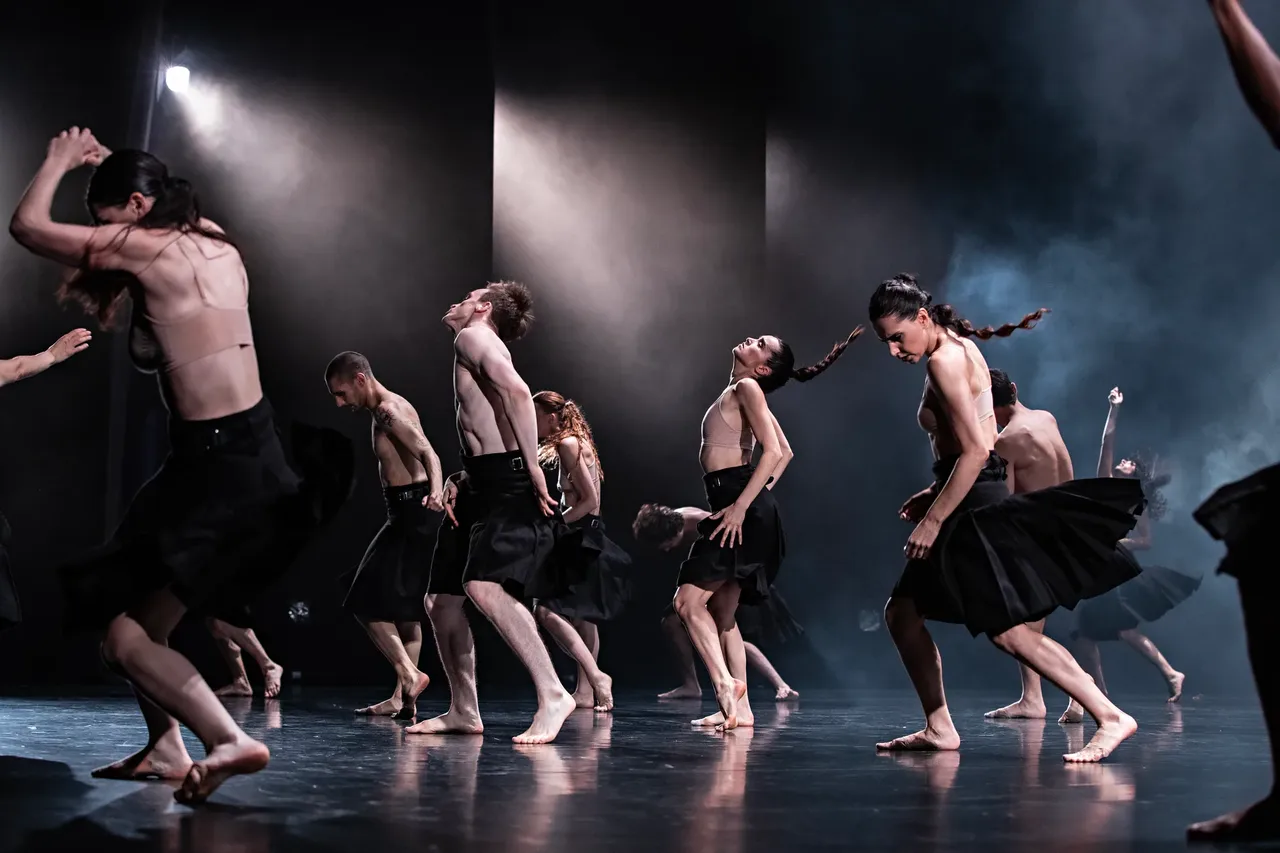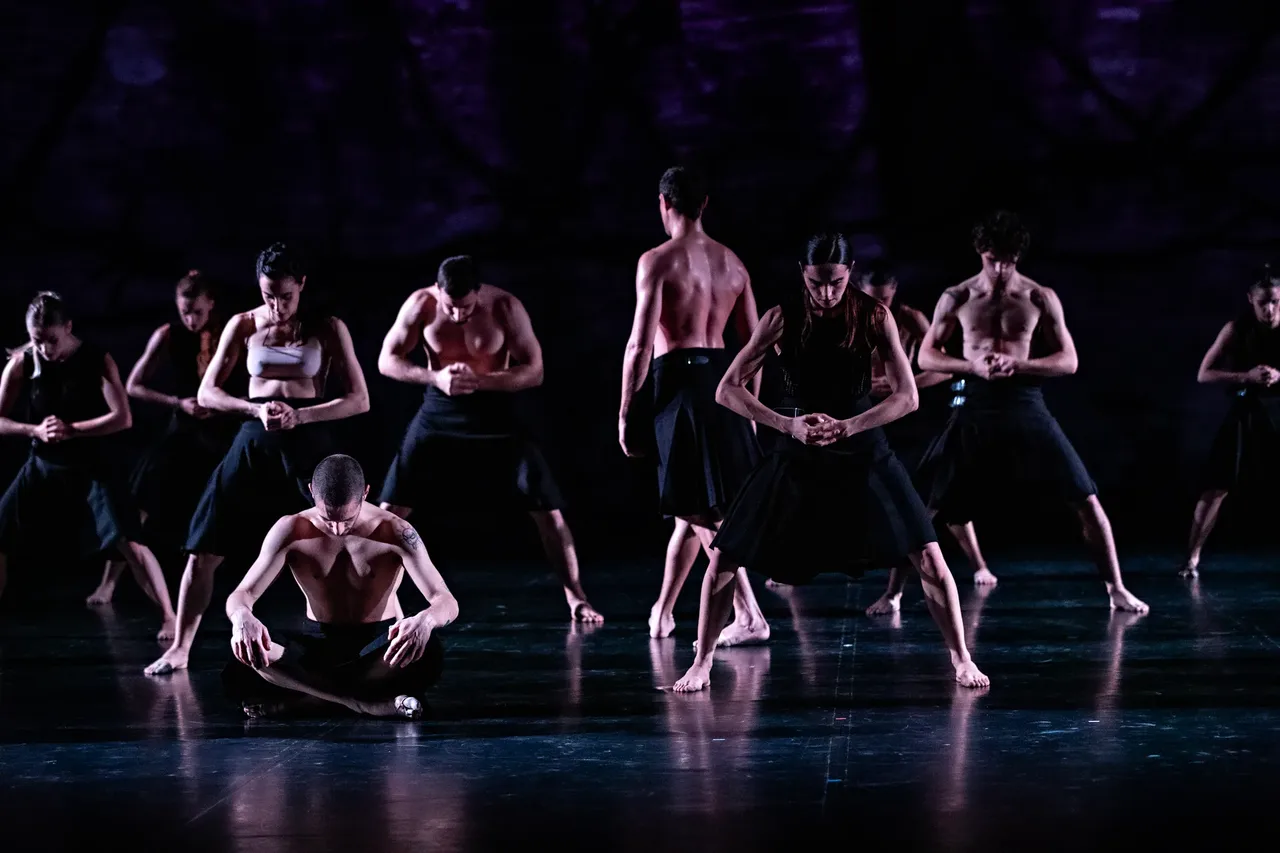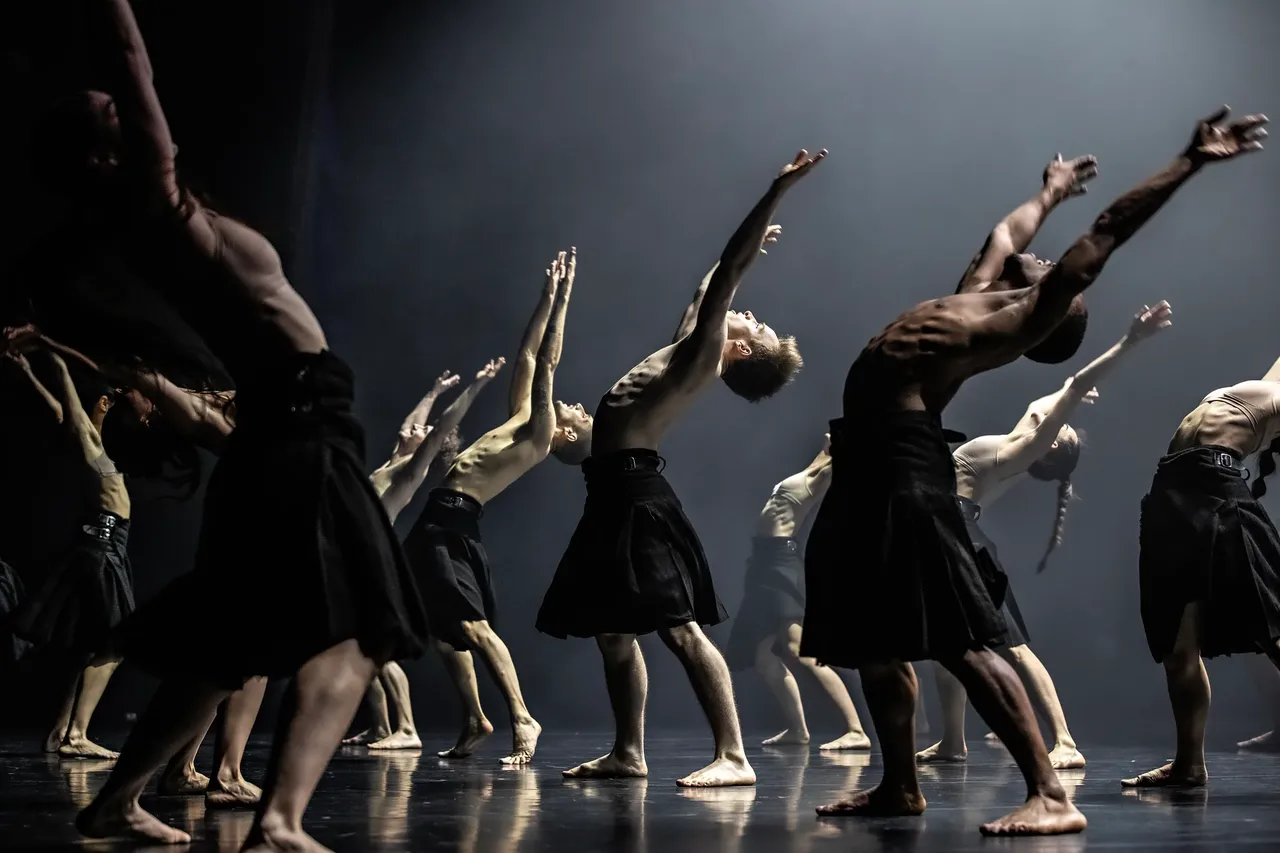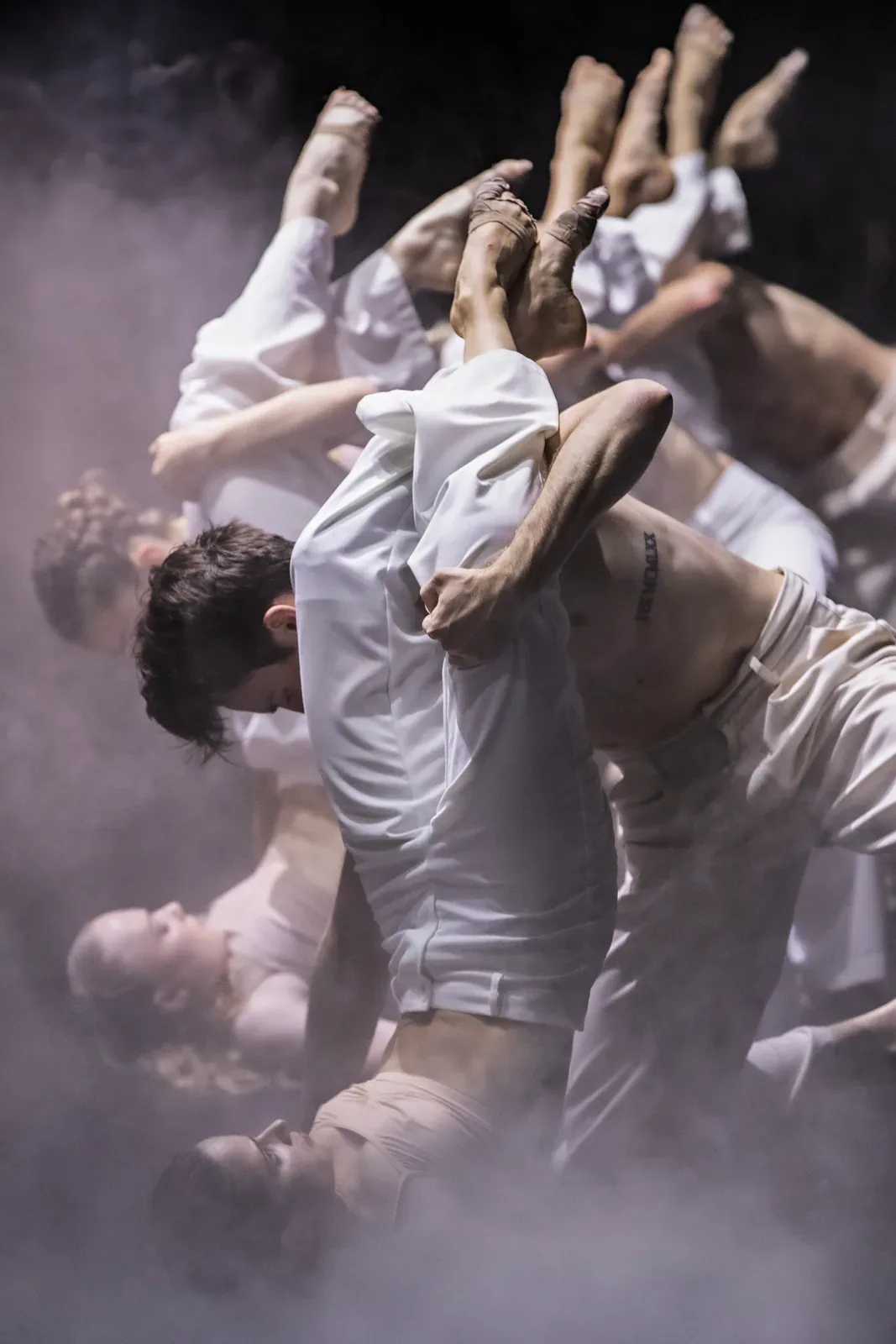
Staged at La Seine Musicale in Paris from May 6 to 8, Requiem(s) rejects the singular lament and monochromatic solemnity in favour of a mosaic of emotions. Nineteen dancers from Ballet Preljocaj transform mourning into a medium moulded by the body, evoking the complex sentiments that arise when facing the loss of a loved one. One group guards hanging cages; another crawls across the floor; another runs in circles and spirals, surging forwards and retreating. And yet, on stage, this patchwork based on archaic ceremonies asserts itself more as a discontinuous accumulation of heterogeneous materials than a choral unity.
Angelin Preljocaj avoids the weight of a single tradition. This is hinted at by the plural in the title, which alludes to the multiple rituals and ways of processing departure. However, the fact that Requiem(s) is not limited to a single cultural or musical reference – even in its attempt to break the traditional gravity of the genre – also dilutes its internal cohesion. This is evident in its self-contained scenes, which fracture the rhythm and decelerate the dramatic progression.
The intensity of Mozart coexists with the vigour of Chop Suey! by System of a Down; the perfect architecture of Bach responds to anonymous medieval chants; Ligeti dialogues with the electronic creations and contemporary atmospheres of Jóhann Jóhannsson. Beyond capitalising on this sonic polyphony, Preljocaj integrates the voices of thinkers such as Gilles Deleuze and Roland Barthes, whose reflections on Nietzsche’s ‘tragic joy’ and the human condition serve to envelop the dance in a philosophical meditation on grief and memory — one that feels, at times, somewhat emphatic.
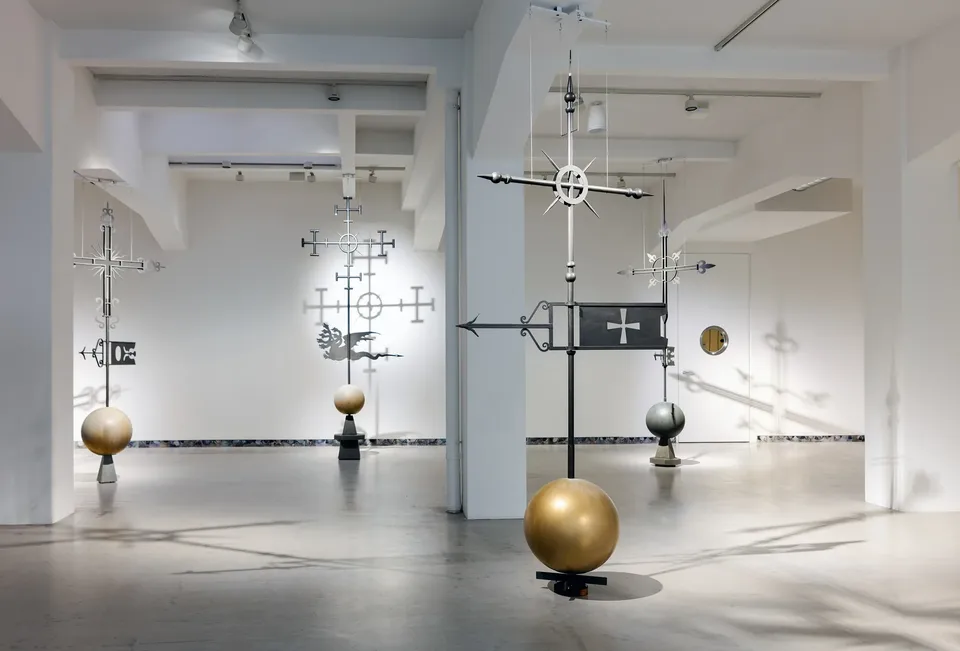
The staging seems to renounce organic fluidity in favour of a structure of watertight compartments whose eclecticism proves disorienting. The piece, a blend of classical ballet and contemporary language, opens with three groups of four performers positioned beneath aerial metal structures that cage bodies or souls in transit. The choreography advances in autonomous blocks, as if each musical shift completely reorganised the stage.
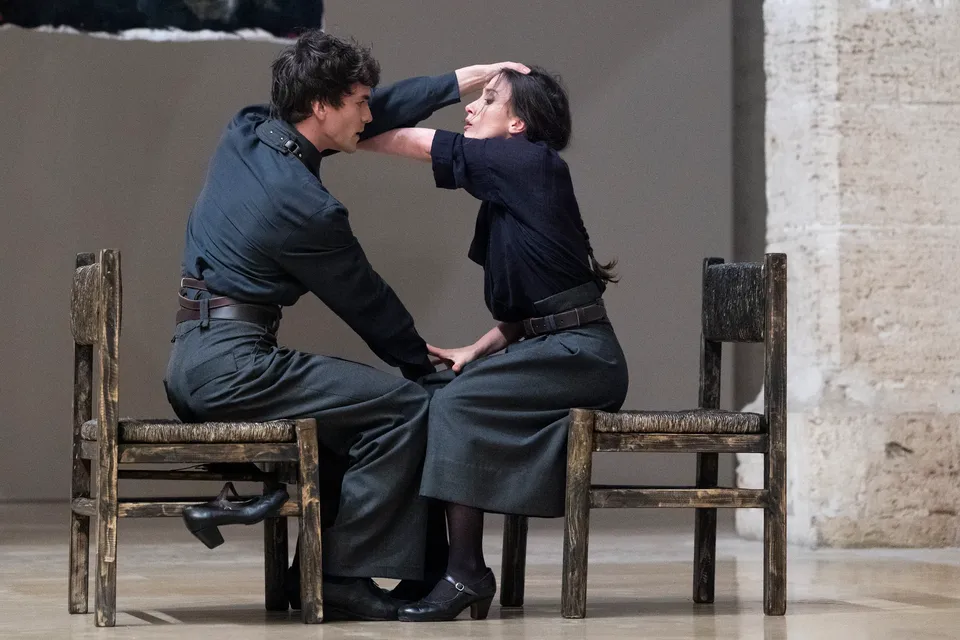
Following a 2023 marked by the passing of his parents and close friends, the French choreographer sought to avoid sentimentalism in this work, focusing instead on the mechanics of ritual and the body’s response to absence. Requiem(s) intersperses collective dynamism with individual fragility: fall and rebirth serving as direct metaphors for the human experience of death. This is achieved through duets, trios, and group formations in lines or manège.
Yet, faced with such jarring scenic cuts, the sense of discontinuity does not fade; it persists. The alternation of black and white in the costumes, and of rock impulses with classical elegy, underscores a formal Manichaeism consistent with the theme of the passage from life to death, even if the seams of the production are left exposed.
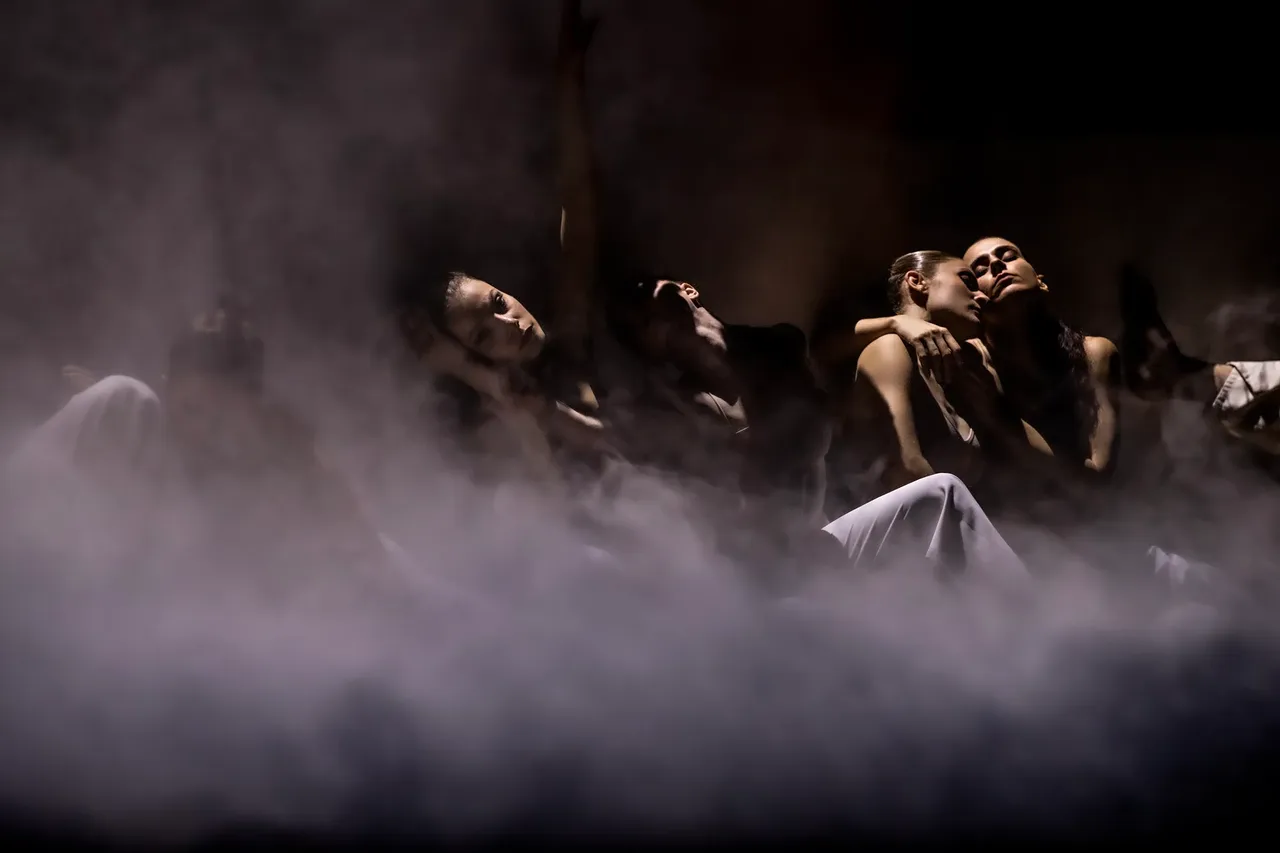
In this setting of chiaroscuro and artificial smoke, the dance alternates between a reptilian floor physicality and a somniferous slowness that borders on the statism of mime. Nor is there any lack of a towering screen at the back, projecting an iconography of desolation through submerged skulls, bombed cities, and scorched forests. The scenic apparatus relies on imagery of such symbolic density that it occasionally erodes the spectator's attention.
Even if this accumulation of references – encompassing sonic narratives of the Holocaust and the memory of Primo Levi – functions solidly on the piece’s conceptual and theoretical plane, the dance itself struggles to sustain the weight of so many superimposed layers of meaning, to the point where certain scenes can only shine in isolation. Consequently, the bittersweet disillusionment left by a work so crammed with ideas is compounded by a slight deficit in global coherence.
Standing out, however, is an episode of great plastic intensity in which two dark presences support a seemingly dying body in a sort of delicate, affective swaying, soon interrupted by two energetic, luminous figures who alter the dynamic of the dance until they precipitate a violent separation. It is the sudden arrival of death. If Durkheim asserted that civilisation begins with the burial of our dead, the choreographer takes up that claim and invites us to dance with our ghosts.
A choral sequence also resonates, where the group, in a circular arrangement, generates a hypnotic flow of masterful individual entrances and exits, as if identity were progressively dissolving into collective movement. Even so, the result is an experience of unstable intensity, where the impact of certain images coexists with structural dispersion.
Towards the end, the dance becomes more radical in its analogy regarding the permanence of those who have gone. The use of alien-like figures hanging erratically from scaffolding, while the company surrenders to a hard rock catharsis, visually translates the arbitrariness with which the dead inhabit our memory — like floating bodies in the limbo of recollection.
The musical mix, which might initially seem disruptive, ends up being the best-articulated element, though it leaves the choreography in a vulnerable position where the brilliance of the runs in circles, lines, or spirals cannot hide a certain rhythmic irregularity. Nonetheless, the audience responded with a practically unanimous standing ovation to this exercise in the embodiment of grief which, in its thirst for accumulation, does not bother to disguise its own fractures.