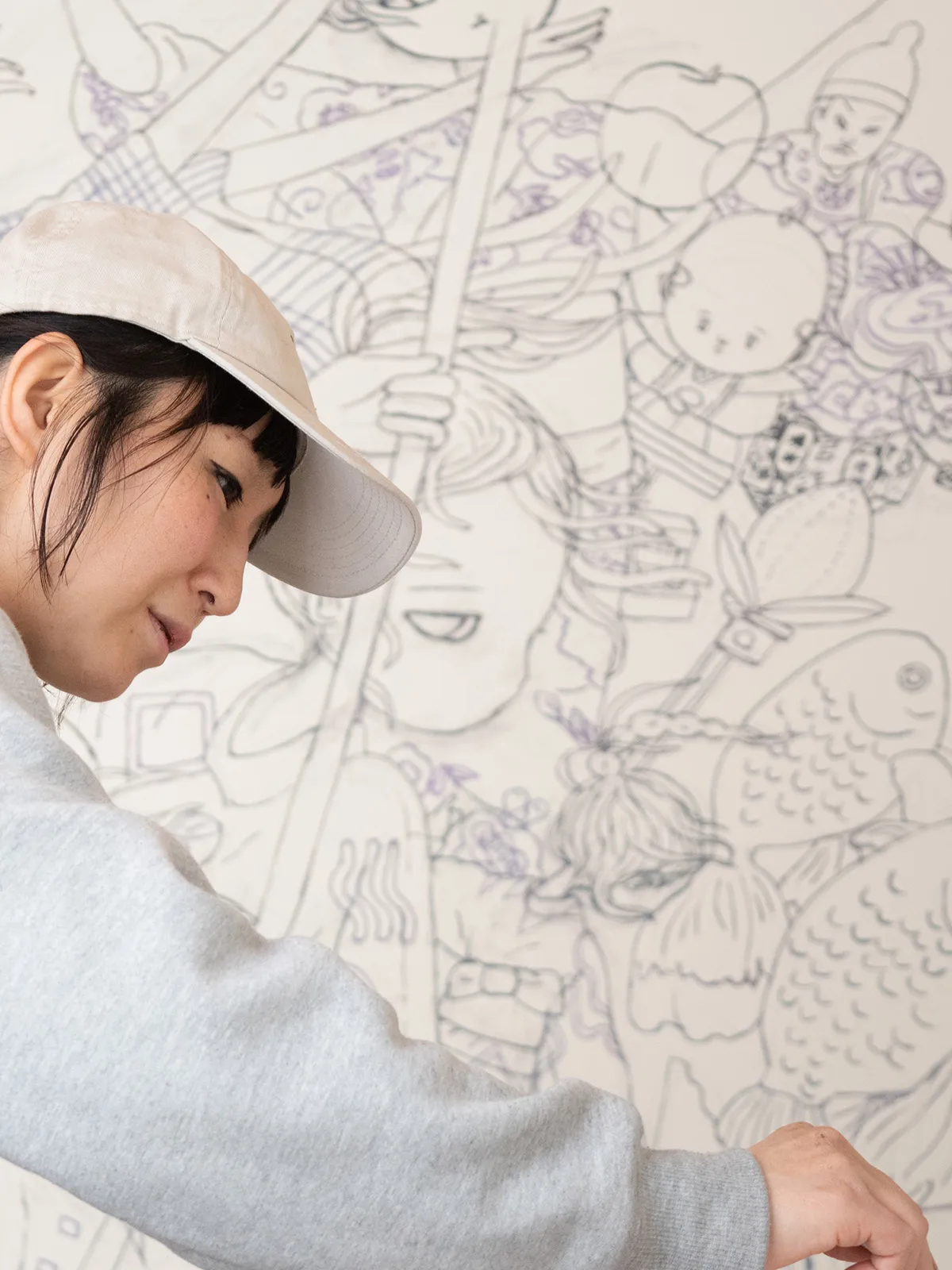
Her most recent exhibition how deep how far we can go, at Perrotin Los Angeles, sought to explore the concept of memory using natures’ influences, taking her art to a climax. By painting the visions in her mind, AYA TAKANO’s work is an example of physical consciousness — an expansion of her psyche, not just a reflection.
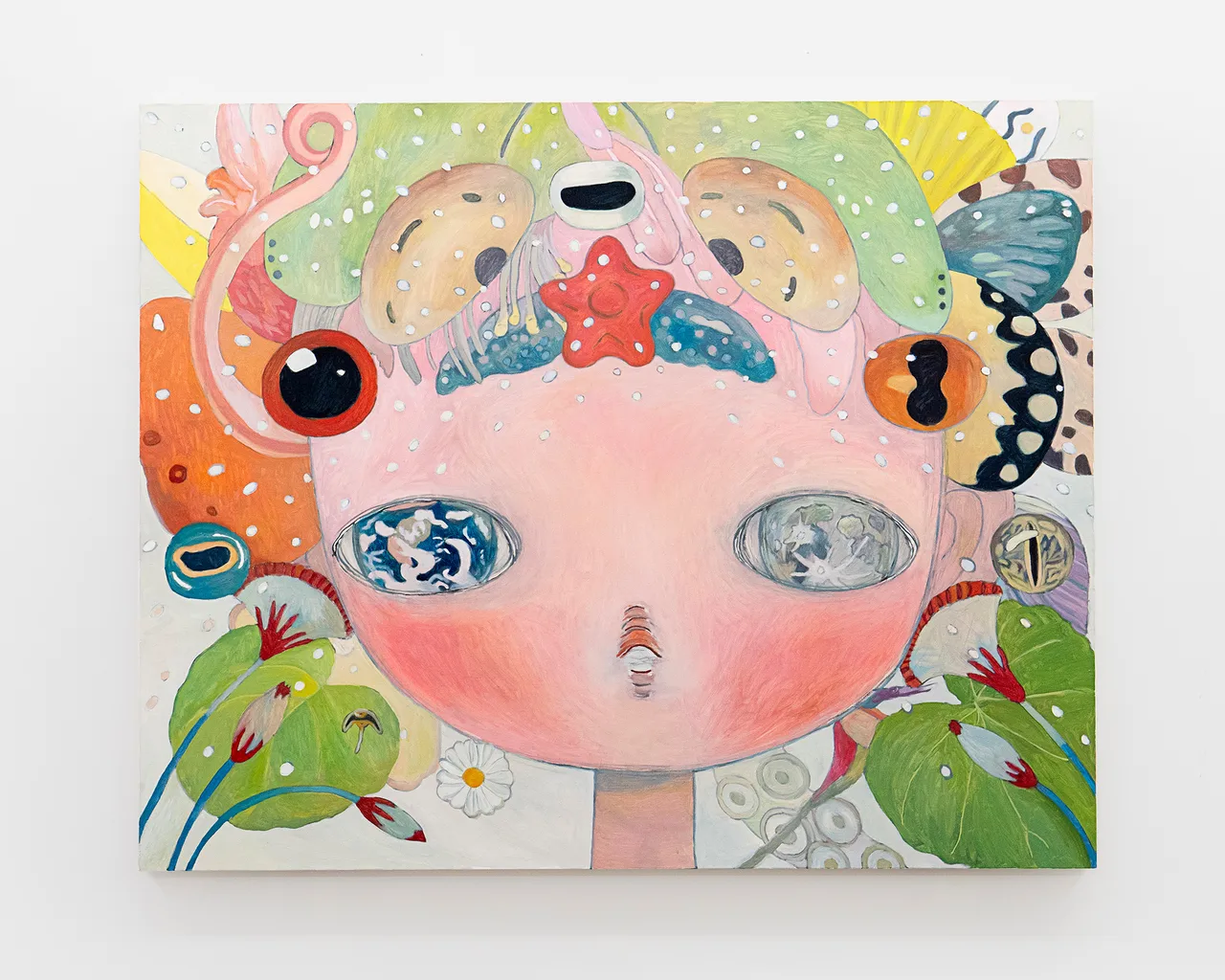
the spirit of all life on earth, 2025.
©2025 AYA TAKANO/Kaikai Kiki Co., Ltd. All Rights Reserved. Courtesy Perrotin.
©2025 AYA TAKANO/Kaikai Kiki Co., Ltd. All Rights Reserved. Courtesy Perrotin.
With her nuanced ability to see past materials, the Japanese artist has a creative technique that can be admired from any perspective. The use of oil paint adds texture and depth to her work, allowing the paintings to gradually become an entity of their own. And, her use of colour displays her knowledge of the complexities of choice.
Elemental and spiritual figures fill her landscapes. These metamorphic beings inspired by natural organisms symbolise her desire for a future where humanity interlinks with the world. Her focus on the female form and its association with nature inspires a feeling of connection. Combined with the portrayal of an array of animals, the artist's pieces are as harmonious as they are striking.
Hoping for people to search for the source of their own life and mind whilst looking at her paintings, TAKANO wants to move beyond the human experience. Immersion seems to be the key to fully understanding her work, and it is through our own responses to her evocative subjects that we begin to learn more about humanity. In some way, these pieces are symbolic of spiritual, natural, and social alignment.
Your most recent solo show, titled how deep how far we can go, at Perrotin Los Angeles, displayed your connection to life and desire for an amalgamation of humanity and nature. Can you explain your intention behind focusing on the circularity of life and memory at this moment in human history?
What humanity is currently doing to all living beings is, at the very least, devastating and catastrophic. For this to improve, I believe that the first and most important step is a change in human consciousness.
I hoped that everyone who visited my exhibition would take a journey through their own memories, and even beyond them, to the source where life and mind begin. Through this, I wished for them to encounter their own origin, realise that everything is connected as one, and come to hold compassion, empathy, and love for others — including all beings beyond humans.
I hoped that everyone who visited my exhibition would take a journey through their own memories, and even beyond them, to the source where life and mind begin. Through this, I wished for them to encounter their own origin, realise that everything is connected as one, and come to hold compassion, empathy, and love for others — including all beings beyond humans.
Many of your pieces feature a warped or tilted view, such as one of your more recent works from present to past, the flow to the center, which has a very elongated and agile perspective. Does the subject or story behind your work influence its depth and curvature?
Of course. I think of the exhibition like a film, with a beginning and a climax.
The work you mentioned is part of the journey — it leads visitors deeper into the back room, and into the depths of their own hearts. That is why perspective is used, and the flow continues.
Why did you start painting and creating?
Since I was a child, I have been deeply drawn to painting, and I have rarely been interested in any other profession. I believe that truly great paintings can free the mind and expand existing concepts. They still have a mythic, mysterious power that allows us to access something like the collective unconscious described by Carl Jung.
One thing about your work that has always struck me is your use of colour, particularly white. It is no secret that painting with white is one of the most complex artistic concepts. So, how do you achieve such harmonious colourways without your work appearing too overwhelmingly bright?
I think most people only see colours within the limits of their own assumptions. (This doesn’t apply to colour alone, but to many things.) For example, imagine you tell someone to colour the black part of a penguin in a colouring book. Most people will simply use black paint. But the pure black from the paint hardly exists on a real penguin.
Depending on the area, the colour may lean toward blue or purple, and where the light hits, it may be almost white. The world is actually infinitely complex. Once you train your eye to see it, the colours naturally become more intricate, subtle, and nuanced.
Following on from this, your choice of oil on canvas is surprising because the tones and brushstrokes, I feel, imitate that of pencil colouring – giving your work a seemingly innocent or childlike aura. Is there any significant reason why you chose this particular style of painting?
I grew up in East Asia, but I have been deeply influenced by Western painting, especially the works from the late 19th century — a time full of excitement and experimentation. As a child, I was completely captivated by them, to the point of holding my breath, and I still love them intensely today. I believe this influence has drawn me to oil painting.
I do feel curious about using the traditional Japanese materials from my birthplace, but I hesitate because they require animal glue from cows — and I am a vegetarian. Oil paints, on the other hand, are still made from plant-based oils, so I feel they are closer to nature. Using them is very sensory and satisfying; I enjoy working with the texture, and I think it allows my paintings to develop a lively, complex, and expansive quality.
I do feel curious about using the traditional Japanese materials from my birthplace, but I hesitate because they require animal glue from cows — and I am a vegetarian. Oil paints, on the other hand, are still made from plant-based oils, so I feel they are closer to nature. Using them is very sensory and satisfying; I enjoy working with the texture, and I think it allows my paintings to develop a lively, complex, and expansive quality.
Do you think the different mediums your artwork is displayed on, such as tarot cards and clothing, fully represent the messages you are trying to convey?
No matter what the outcome of my work is, I am happy as long as it radiates positive energy and helps share — even just a little — the direction I envision with the world.
How do you relate to fashion?
If I receive a collaboration request, I would like to accept it whenever possible. This is for the same reasons I mentioned in my previous answer. Ideally, humanity might not need to produce new clothing for a while — relying only on second-hand clothes and their remakes could be enough, since there is already so much that is discarded. I would be especially happy if the collaboration involved items made from organic and ecological materials.
The way you portray sexuality and sensuality is mythical and slightly erotic. You have said that you draw feminine characters because they allow harmony and compassion. Do you think it is these qualities that perhaps prevent your work from being fetishised?
I believe that life itself always contains an element of sensuality. One can sense it in the forms of mushrooms, the shapes of waves, or the movement of amoebas. In a sense, the state of human bliss is also sensual. When harmony and compassion reach their peak, that state becomes blissful, and the forms of beings immersed in such joy take on a sensual quality.
Do you feel connected to the beings that you draw? Are they a reflection of what you know and who you are?
I believe that an artwork inevitably reflects the inner world of its creator. Although I am always trying to depict my ideas and the places I aspire to reach, rather than portraying myself directly, like all other creators, I imagine that all of my love, conflicts, karma, and attempts at atonement inevitably come through in the work.
You have just completed your beautifully insightful Chakra Drawing Series. Could you further explain this collection of paintings and poses, and elaborate on the influence of spirituality in your work? Do you see your spirit in any pieces?
I incorporate yoga and meditation into my daily life, and I am deeply interested in the insights and philosophical ideas that come from them, as well as in the concept of chakras, the body’s energy centres, which are closely related. I find it fascinating that as the chakras ascend from the lower to the upper parts of the body, they follow the colours of the rainbow, from red to violet. I have reflected it in both my drawings and frames.
It is remarkable that ancient cultures developed a system of chakras corresponding to these frequencies, even in a time when such frequencies were not scientifically known. I created these works with the hope that viewers will engage not only intellectually, but also physically, moving their bodies and experiencing the work.
Spirituality is very important to me, and I believe that bringing it back into cities overwhelmed by materialism and theory can be one way to help the world come alive again. As for the concept of the spirit, its definition may vary, but in any case — as I mentioned — I believe that the inner life of the creator is completely and entirely reflected in their work, whether the medium is music, literature, or painting.
It is remarkable that ancient cultures developed a system of chakras corresponding to these frequencies, even in a time when such frequencies were not scientifically known. I created these works with the hope that viewers will engage not only intellectually, but also physically, moving their bodies and experiencing the work.
Spirituality is very important to me, and I believe that bringing it back into cities overwhelmed by materialism and theory can be one way to help the world come alive again. As for the concept of the spirit, its definition may vary, but in any case — as I mentioned — I believe that the inner life of the creator is completely and entirely reflected in their work, whether the medium is music, literature, or painting.
In your video entry for the 2023-2024 exhibition at MAC in Lyon, you express that a lot of your paintings come from visions, but that the visions are more beautiful. Have you ever been able to portray what your mind sees fully? Is there any painting you feel is most accurate?
It might be nearly impossible to perfectly capture the vision in your mind. Just as photographs or videos cannot fully record the atmosphere, emotions, or colours of a moment, painting cannot reproduce exactly what exists in one’s inner vision.
Finally, you believe that your artwork is like poetry. If possible, can you summarise your work into a haiku?
My galaxy their comet your nebula.
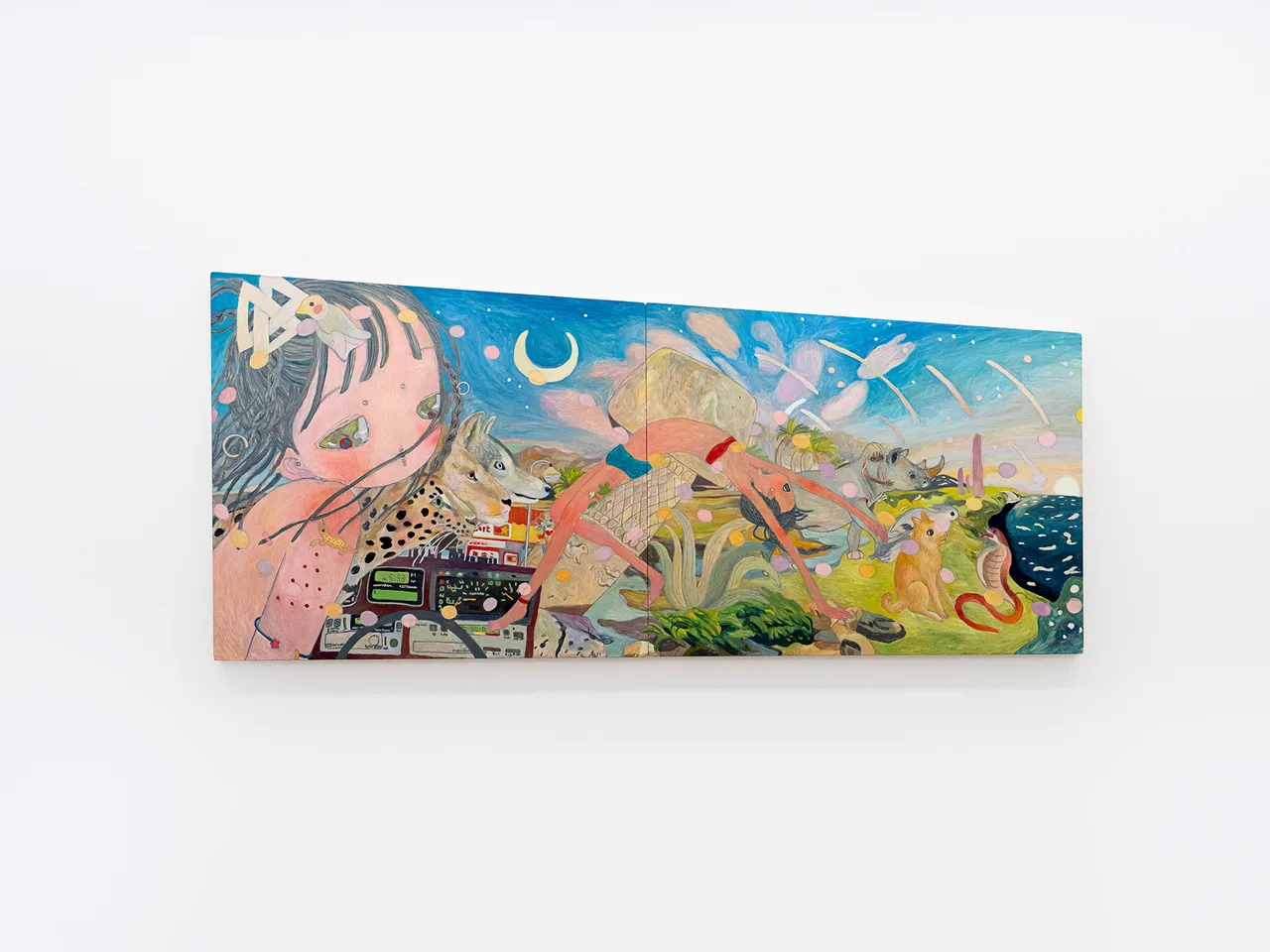
from present to past, a journey to the center, 2025.
©2025 AYA TAKANO/Kaikai Kiki Co., Ltd. All Rights Reserved. Courtesy Perrotin.
©2025 AYA TAKANO/Kaikai Kiki Co., Ltd. All Rights Reserved. Courtesy Perrotin.
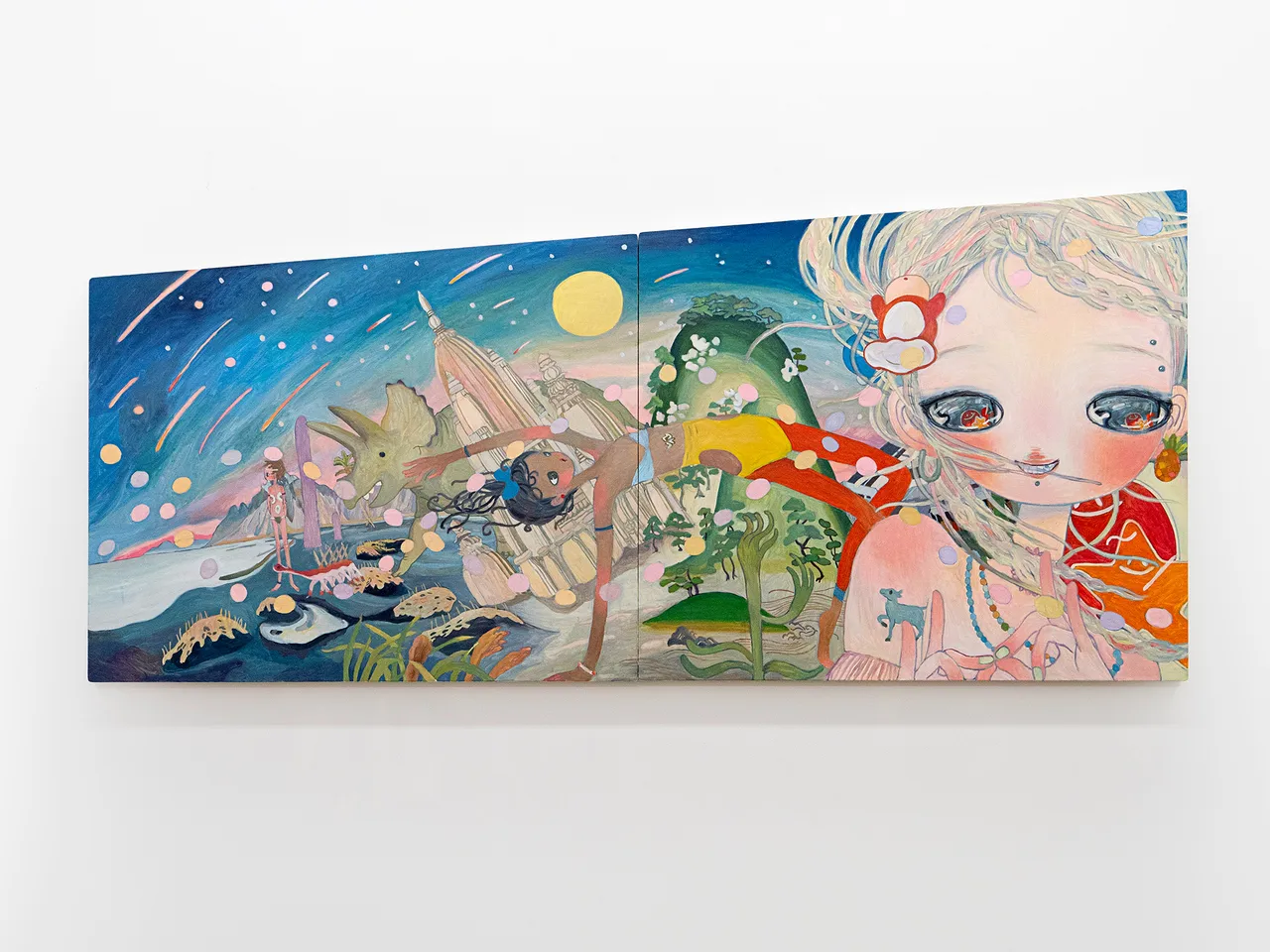
from present to past, the flow to the center, 2025.
©2025 AYA TAKANO/Kaikai Kiki Co., Ltd. All Rights Reserved. Courtesy Perrotin.
©2025 AYA TAKANO/Kaikai Kiki Co., Ltd. All Rights Reserved. Courtesy Perrotin.
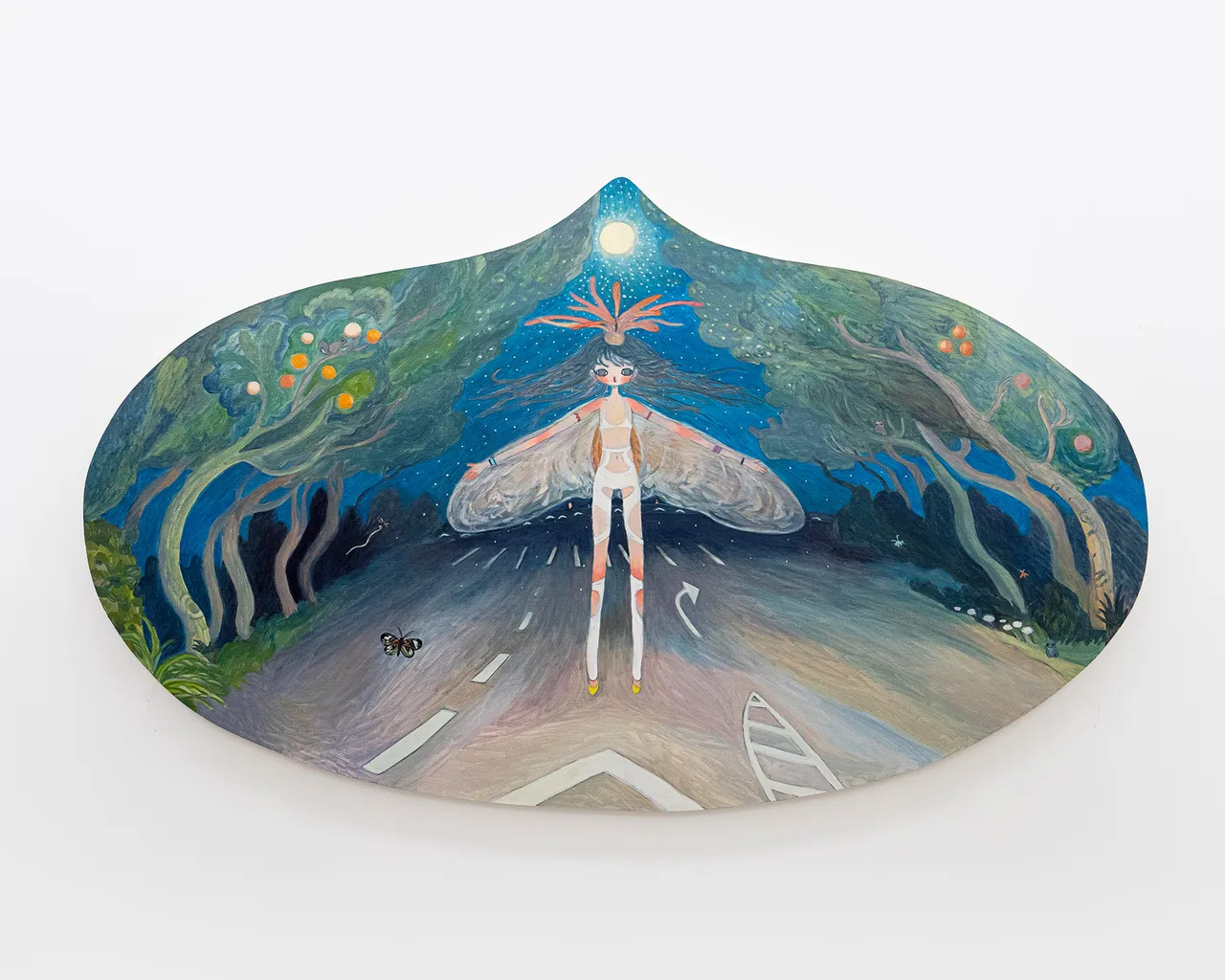
invitation to tranquility, the world of the center, 2025
©2025 AYA TAKANO/Kaikai Kiki Co., Ltd. All Rights Reserved. Courtesy Perrotin.
©2025 AYA TAKANO/Kaikai Kiki Co., Ltd. All Rights Reserved. Courtesy Perrotin.
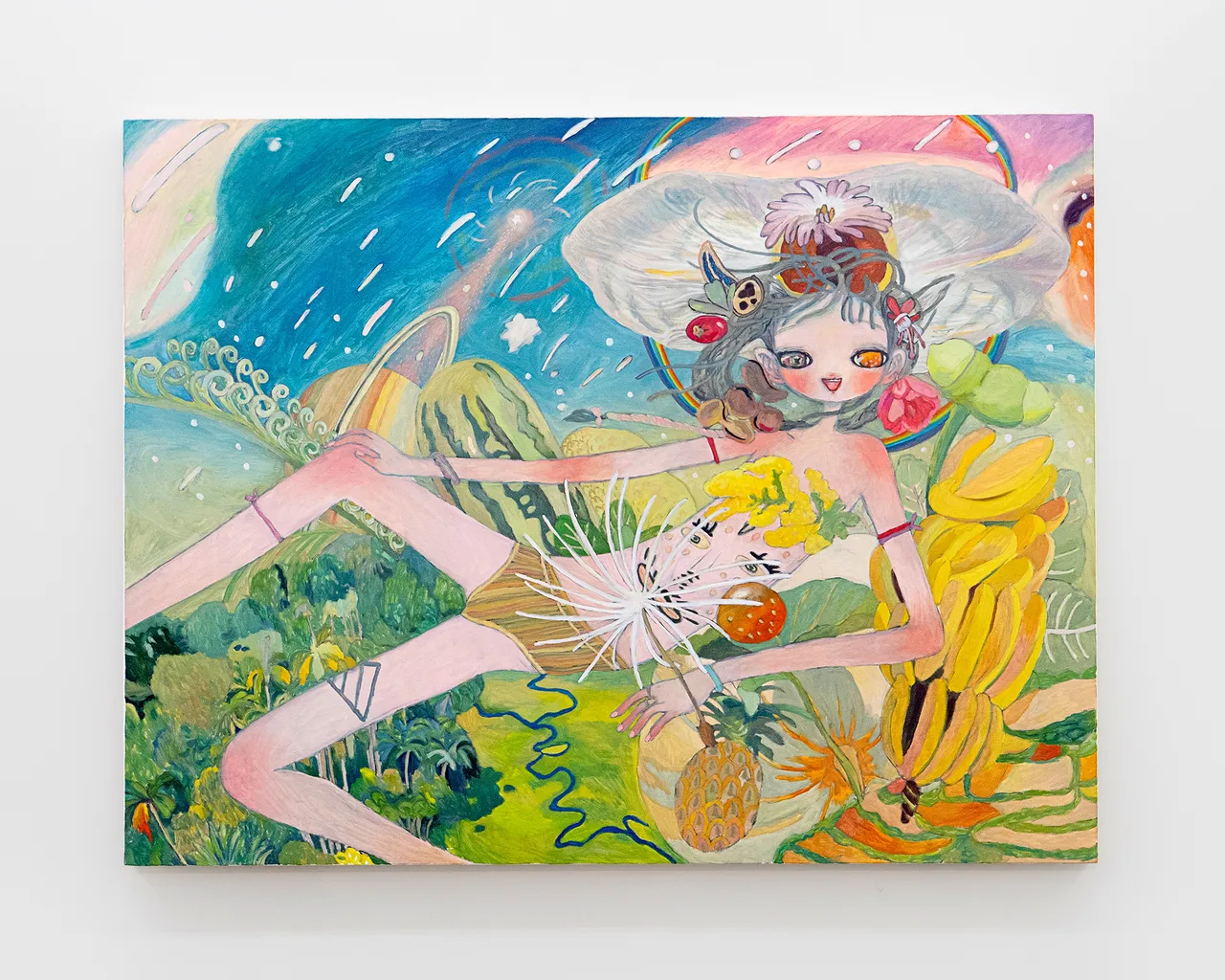
the spirit of all plants on earth, 2025.
©2025 AYA TAKANO/Kaikai Kiki Co., Ltd. All Rights Reserved. Courtesy Perrotin.
©2025 AYA TAKANO/Kaikai Kiki Co., Ltd. All Rights Reserved. Courtesy Perrotin.