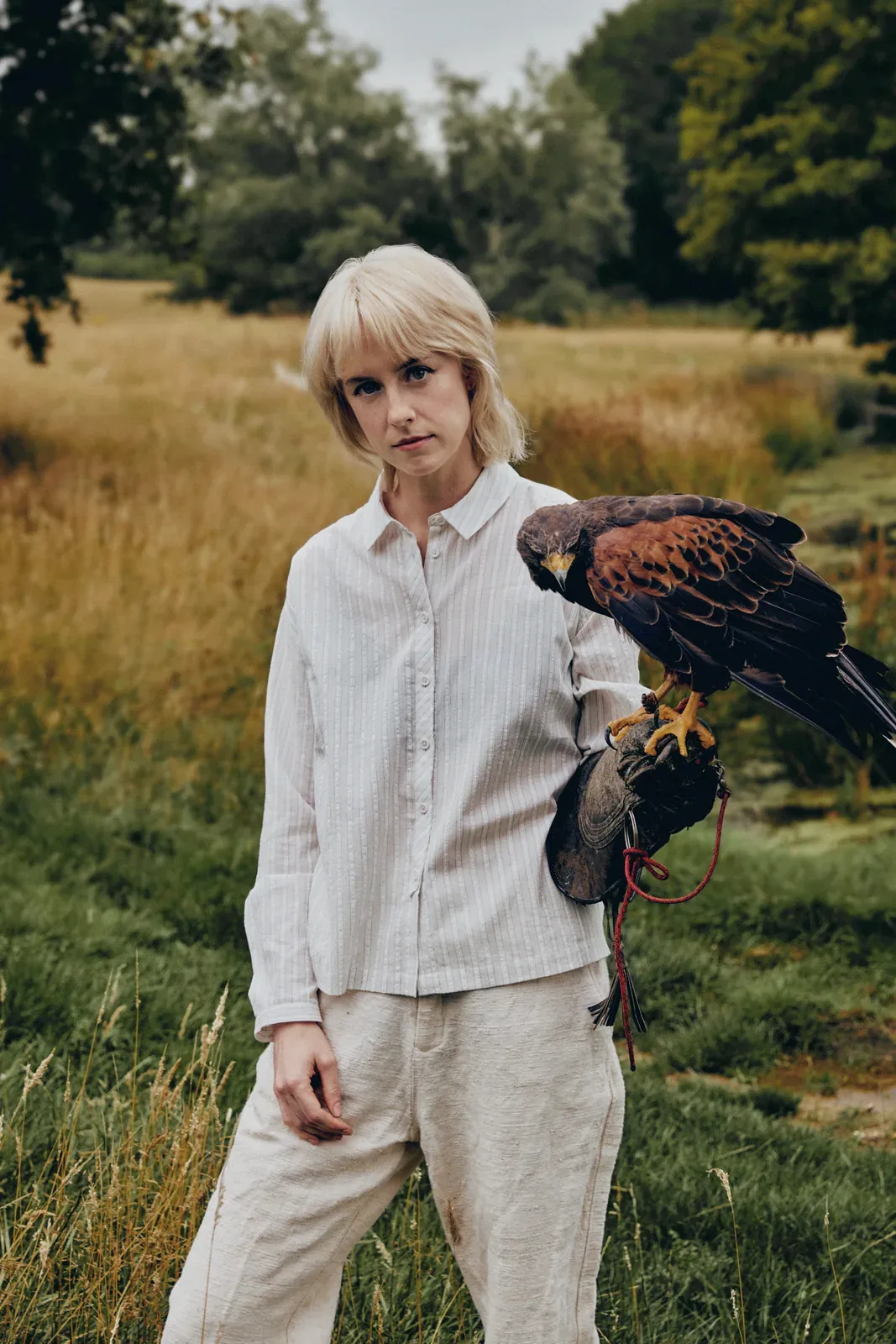
Sometimes change creeps up on us quietly, almost without us realising it; at other times, it takes everything by storm and transforms it all at once. Right now, it seems that change is so pervasive and advancing so rapidly in our collective lives that it is almost impossible to imagine this moment without it. But, in a way, we have lost our focus on the importance of drawing a line in our minds to mark a new phase. For Avalon Emerson, this sense of movement across places, relationships, and versions of the self sits at the heart of Written into Changes, her new album released under the Avalon Emerson & the Charm moniker via Dead Oceans.
Built over years of constant travel between cities such as Berlin, Los Angeles, and New York, the record unfolds as a deeply personal yet fluid body of work, where memory and geography blur into an emotional landscape. Known for her long-standing presence on the global club circuit, from San Francisco’s underground scene to sets at Berghain, Emerson has gradually expanded her artistic language beyond the dancefloor. With Written into Changes, she leans further into songwriting, collaboration, and live instrumentation, crafting a sound that moves between indie pop, electronic textures, and band-driven energy. The result is a record that feels expansive: a collection of songs shaped as much by instinct and process as by intention.
Across its singles, the album reveals its range and emotional depth: from the reflective flow of Eden to the expansive, collaborative energy of Jupiter and Mars, created alongside Rostam Batmanglij, and the evolving, hard-won clarity of Happy Birthday. Each track feels like a fragment of a larger story: songs that have shifted forms, gathered textures, and settled into place over time. This sense of evolution is mirrored in the way the record was made, with a close-knit group of collaborators, including Nathan Jenkins, Keivon Mehdi Hobeheidar, Jay Flew, and Hunter Lombard, contributing across different stages.
Recorded between the English countryside and Los Angeles, and shaped through a flexible, collective process, ‘& the Charm’ operates less as a fixed band and more as a fluid creative entity that allows Emerson’s ideas to move freely between voices, instruments, and emotions. “Bright lights big city. Enough a mess to make me dizzy for days. And days and days,” she sings in I Don’t Want To Fight. Whether intentional or not, there is something about the lyricism of this album that feels incredibly contemporary; even when the imagery captures small moments, the music serves as a compelling narrator of those impressions.
Avalon Emerson embraces transformation, allowing her new songs to evolve, shift, and find their own form — one that feels closer to the listener. In this conversation, she reflects on the making of Written into Changes, the emotional landscapes behind it, and the freedom of letting music, and life, unfold without a fixed direction.
Firstly, if there is one thing I took from the album, it is how accomplished it feels; something you realise immediately upon the first listen. It provides the feeling of listening to something that sounds both familiar and new. “Too young to die / Too old to break through,” you sing in Happy Birthday, and this feels generational and universal right now. What was the feeling you had when you knew it was finished?
It felt great. Happy Birthday was one of the last ones to come together, and that one took quite a bit of massaging, but everything else felt quite flowy.
You describe Written into Changes as not just accepting change but “embracing it with a full wingspan.” When did that shift, from observing change to actively embracing it, happen for you?
It’s more or less something that happens without much input or decision. Some things turn out exactly like you hope, but more often than not I think a happy life is being able to take big swings and try your best, but also ride with things as they play out, however they do.
Both Eden and Country Mouse are dedicated to your wife; they are two of the best songs on the album. What was her reaction when she listened to them for the first time?
Hunter is always very closely involved with me when I’m writing, whether it’s in the studio directly, or being the very first person I send things to, so she’s heard all the versions. I’m very thankful for her being a great sounding board and collaborator.
The title track reflects your move from Berlin to Los Angeles. How did that transition reshape not just your life, but your identity as an artist?
It’s not about LA. It’s more about an erosion-speed change and realisation of becoming a new person, living a new life, while still having great fondness for all the places you’ve been before now.
In a chat with Nathan Jenkins, he mentions the distance from the microphone when recording Written into Changes or God Damn (Finito), and how that made your voice sound different, as if you found a way to project it differently.
Yeah! I think I felt more confident with my singing and shouting this time around, so playing with ways of expressing and recording felt really fun to do.
This is your most ‘memoiristic’ record so far, shaped by five years of constant movement between cities such as Berlin, Los Angeles, and New York. Do you hear those places in specific songs, or is the geography more emotional than literal?
When I played in Berlin a few days ago, I realised how many songs are kind of about Berlin or the people in my life while I lived there. I do hear it and feel it, but it definitely is an emotional landscape — waypoints of place and time and relationships. Which I guess is another way of describing life.
The album was recorded in England during the spring of 2024. Did you enjoy being there for such a creative experience?
So lovely and calm, with occasional animal visitors.
How Dare This Beer was written in loving tribute to the Magnetic Fields — I LOVE IT SO MUCH! Not just the sound, but also the lyrics and the style of describing a thought; it’s on point when referencing the band while still making the song your own. What were the main influences you found suitable for the sound of this album?
I think he’s one of the most talented and prolific songwriters of our time. Lots of sounds inspire me but don’t necessarily make it onto the record.
The album is full of sonic nuances that detail your own musical universe; the energy and effervescence of the acoustics in Eden, the 80s synths and Italo-disco style of God Damn (Finito), or the almost shoegaze-leaning feel of Country Mouse. Was this chapter also an opportunity to showcase other influences within your versatility as an artist?
I think so, yeah. I don’t think about genres too much; more so, language is always an imperfect mirror when thinking or talking about music. There’s so much music out there and there’s so much that I love. I kinda live in the moment when writing, and the sounds that come out—or the decisions I make when dressing up a song—end up sounding a bit like what I like listening to. I think this is probably how all musicians are, to some extent.
Working with Rostam on Jupiter and Mars, you said: “I loved chasing this song with Rostam almost as much as our two little dogs loved chasing each other around the studio.” Somehow, the sound of the album translates the idea of a great team enjoying their time making music. How was the experience working with him, Nathan Jenkins, and the other musicians involved?
Nathan was in the room one day when we were all working, but Jupiter and Mars and Earth Alive are mostly Rostam and me. I loved working with Rostam, and I think he and I could talk forever. Which is very important when making music, actually, I think.
You’ve said the album’s themes “came into clarity after they were all done.” What did you realise about the record only once you stepped back from it?
I don’t think I’m in a place where I want to come up with a concept and then execute songs based on a larger theme, so I think the nature of making a string of songs in a relatively short time frame will naturally impart a bit of a sound and vibe among them all. Even though some of the songs sound so different from one another, to me they definitely all make sense living in the same house.
You’ve contrasted this album with the previous record as being less ‘bedroomy’ and more focused on live energy. What did you learn from performing the first ‘& the Charm’ album that directly changed how you wrote this one?
I truly learned so much from touring with a band in 2023. But in general, I wanted to be bolder, and I think now that we’ve played six live shows in Europe with this new show, I know it is.