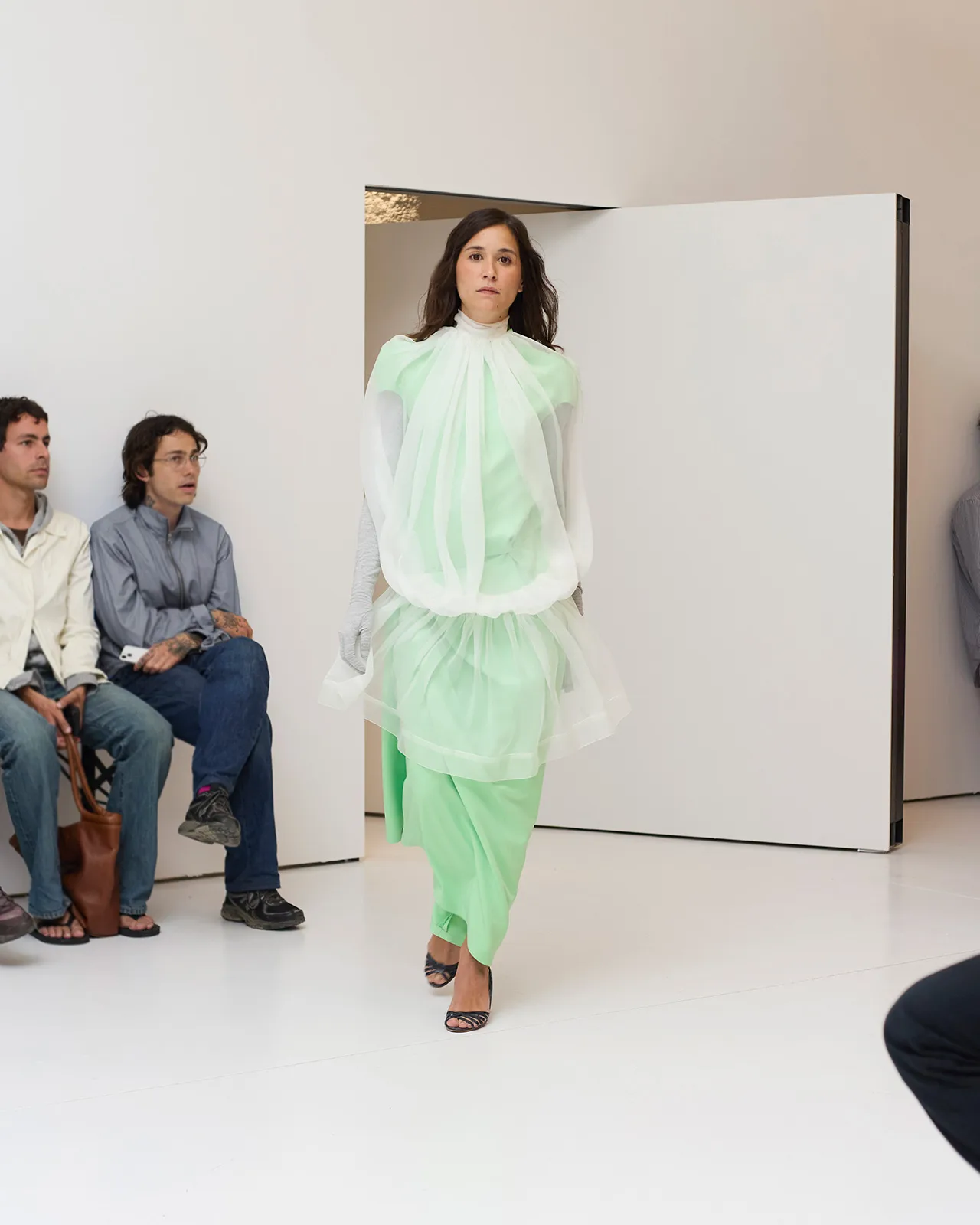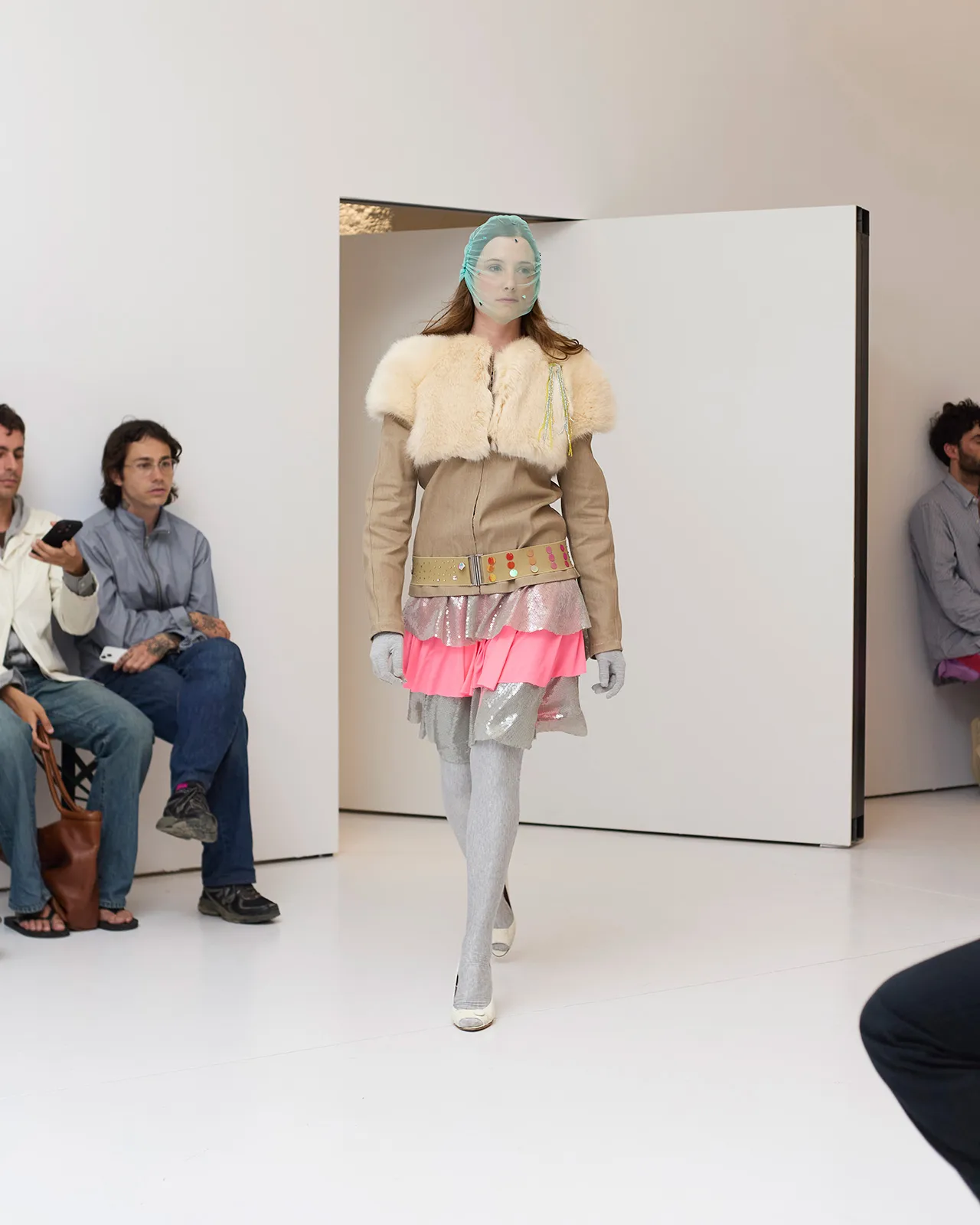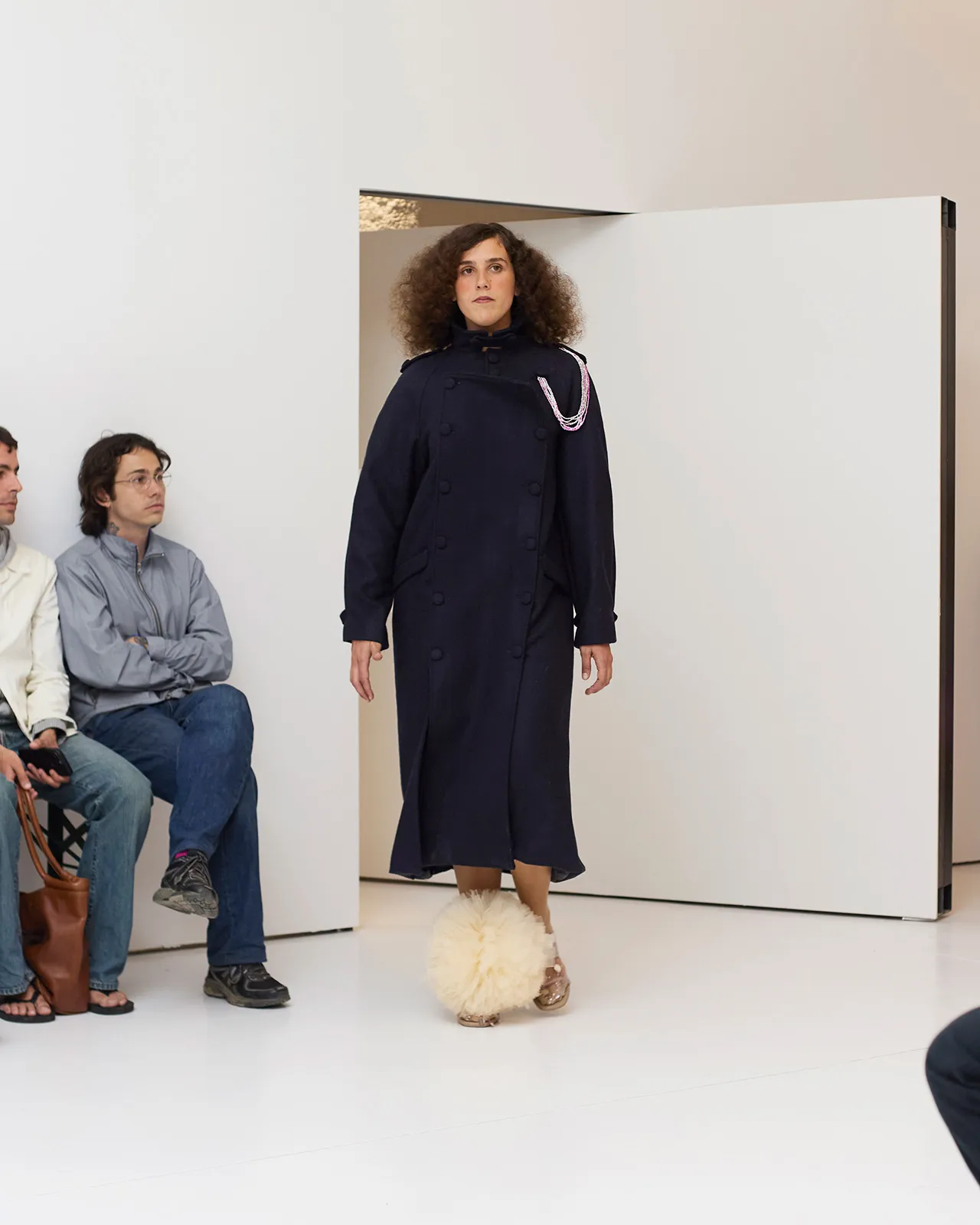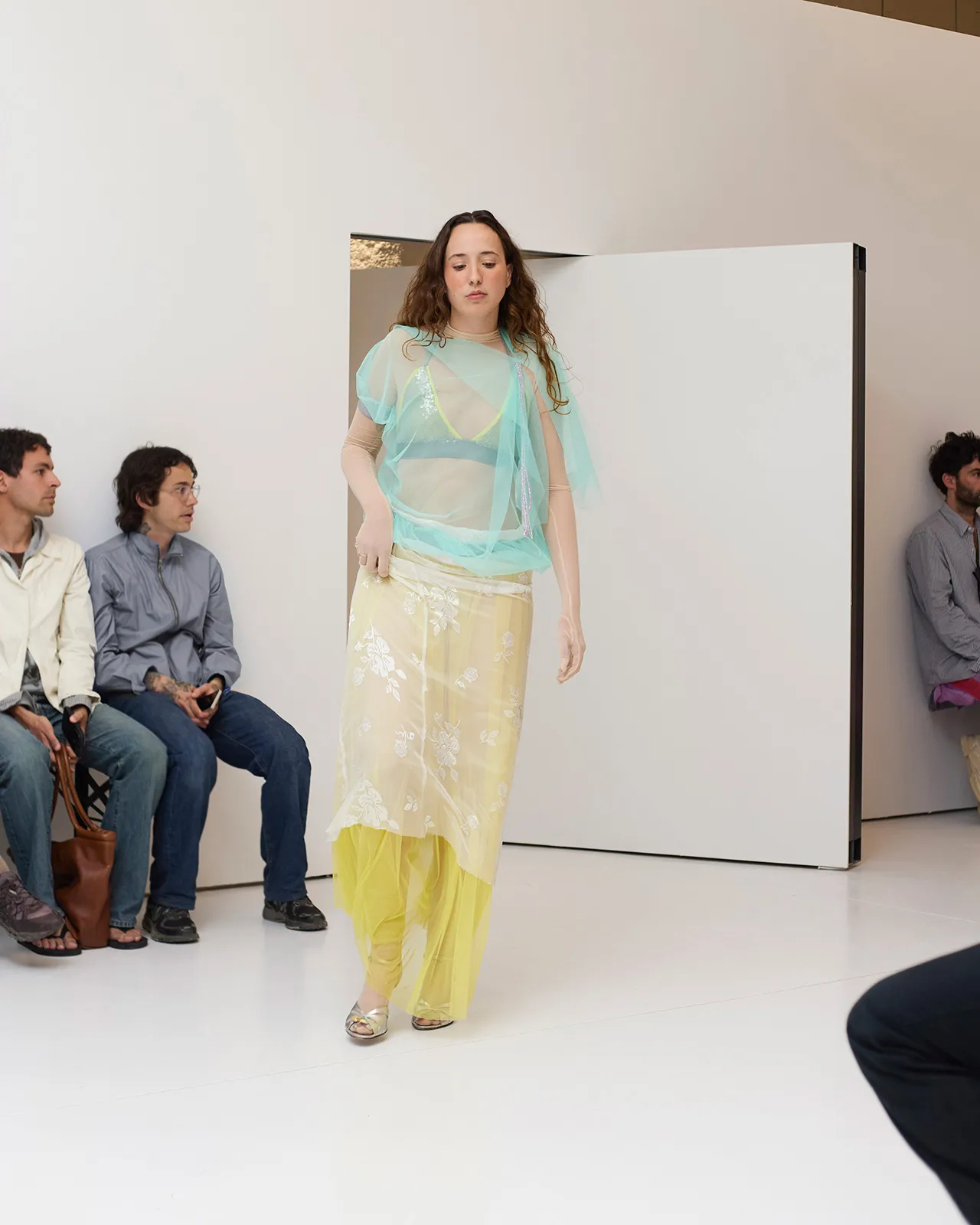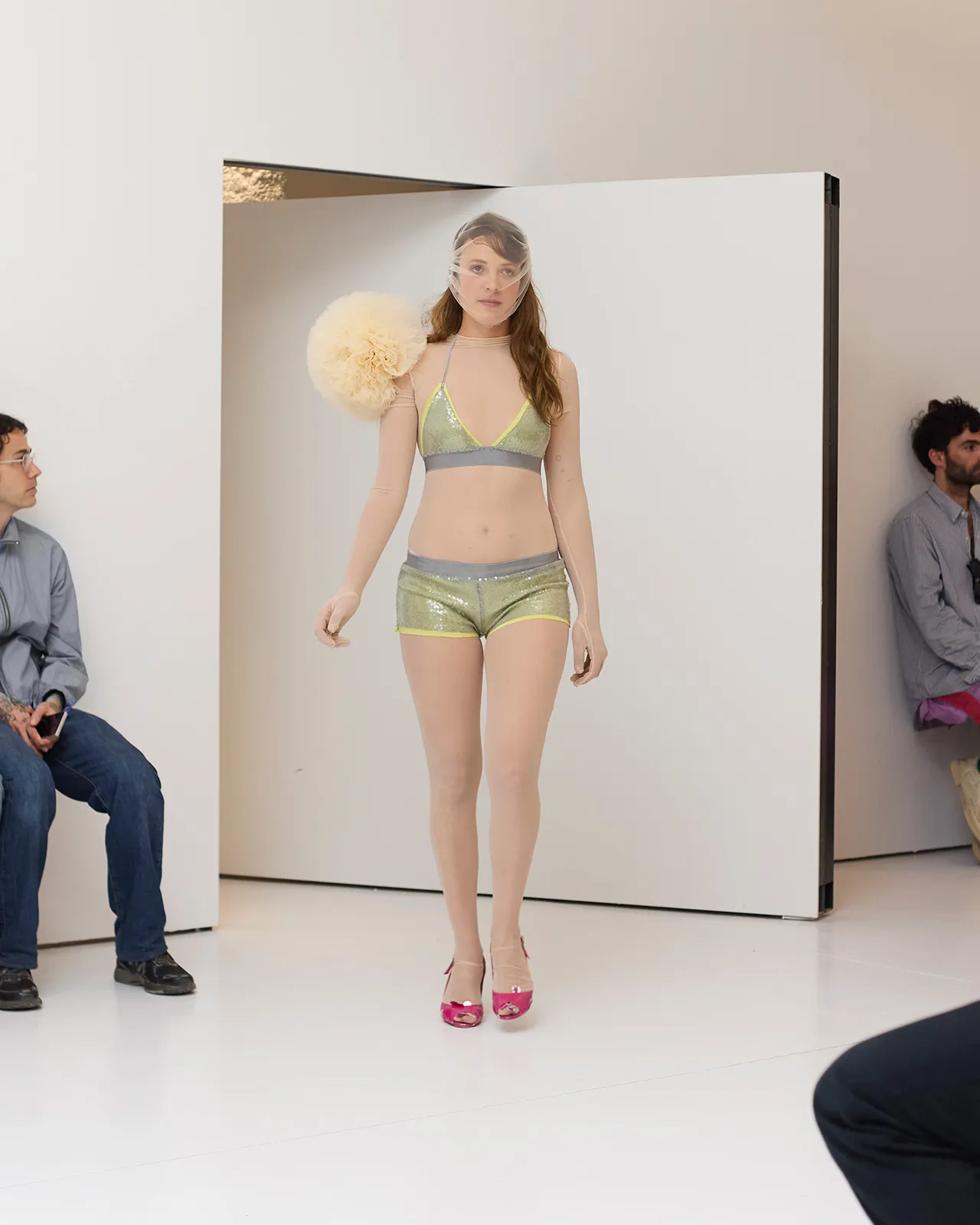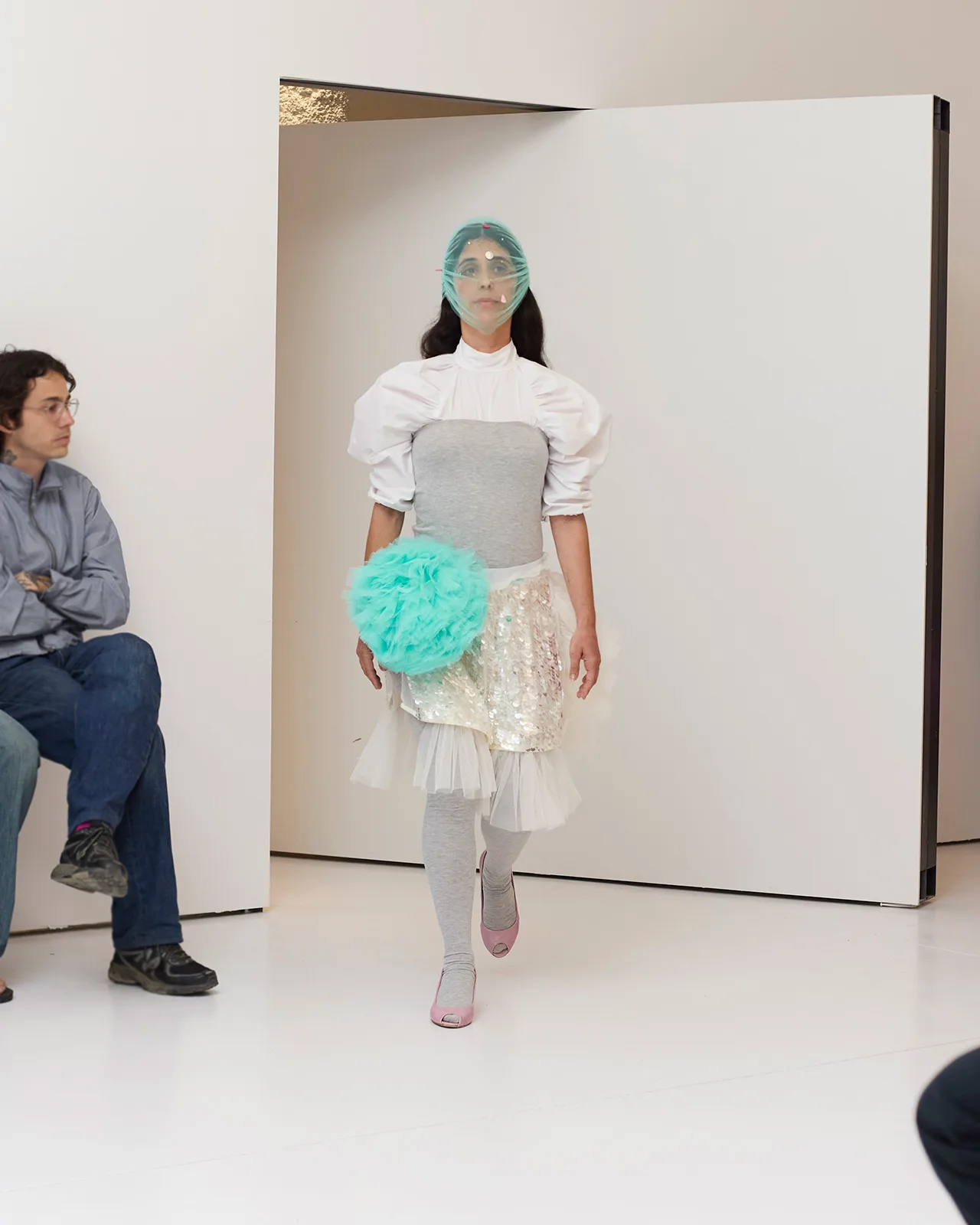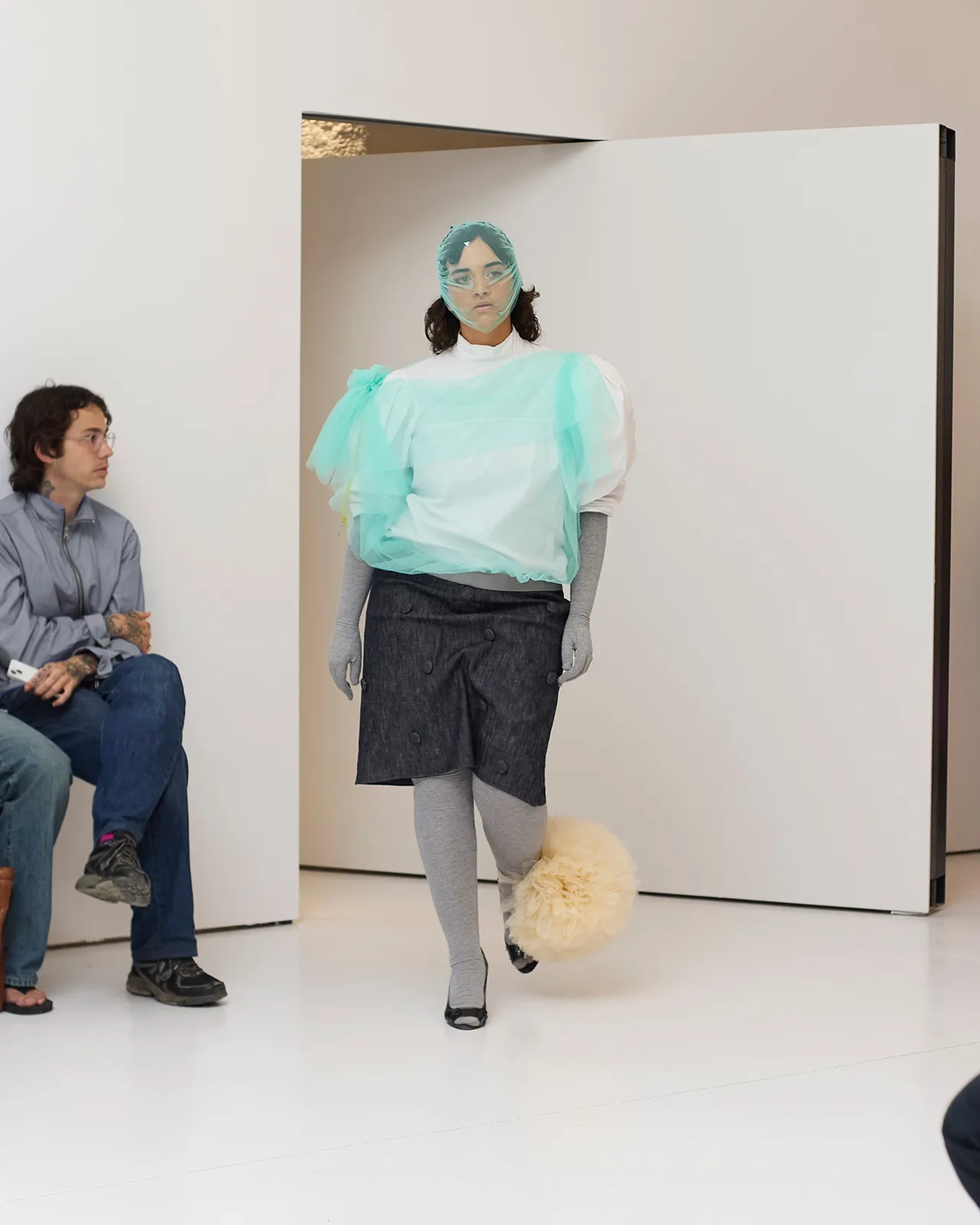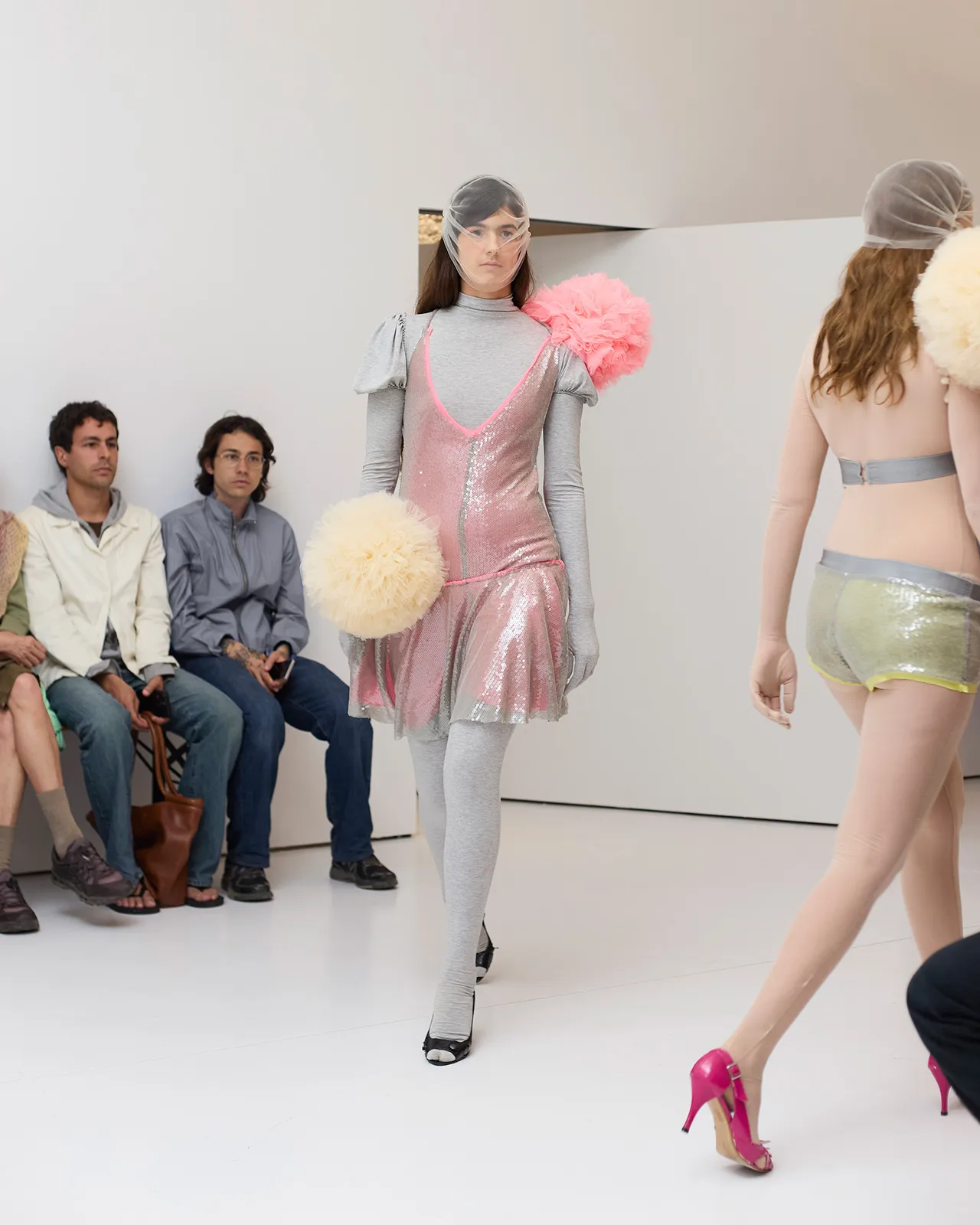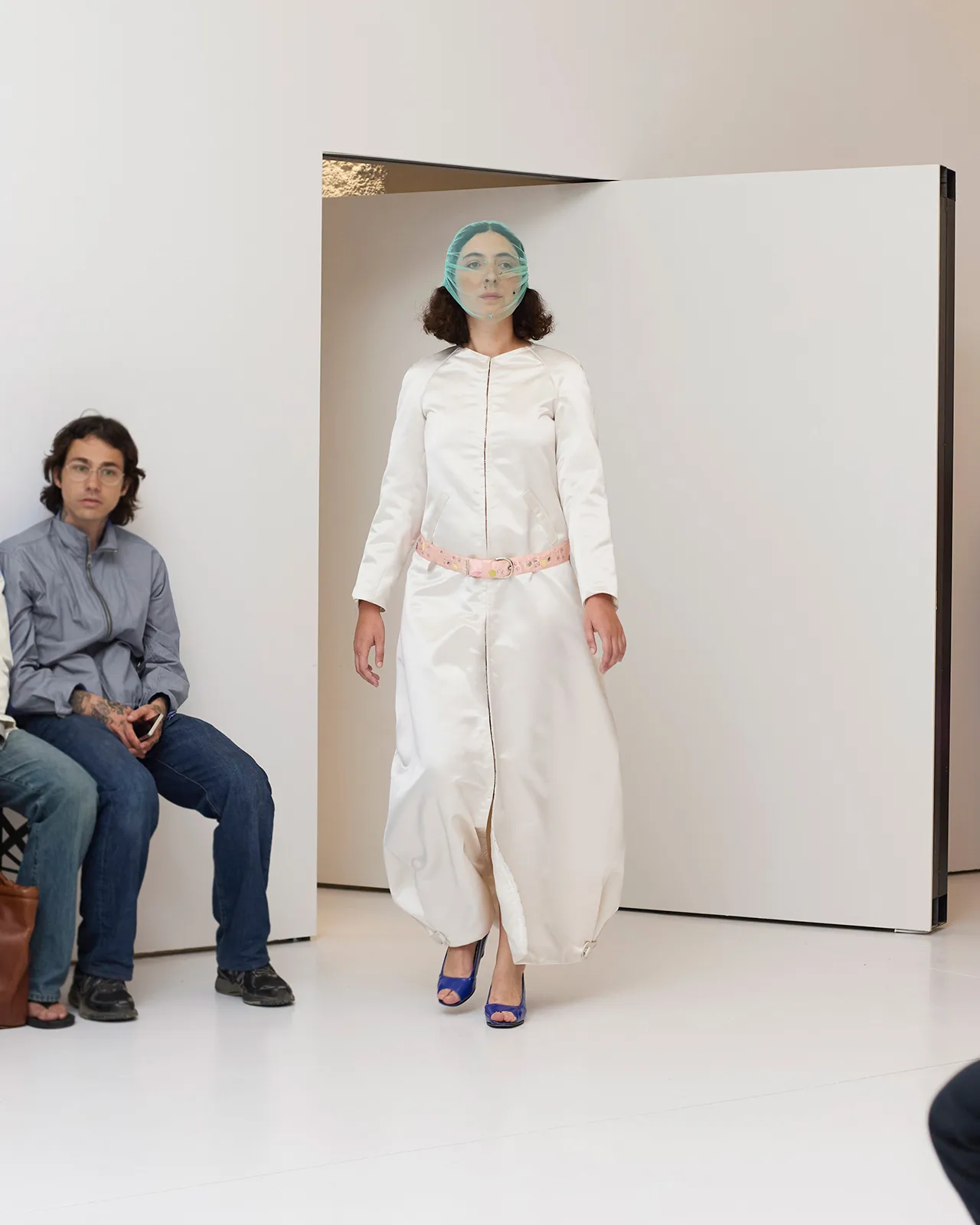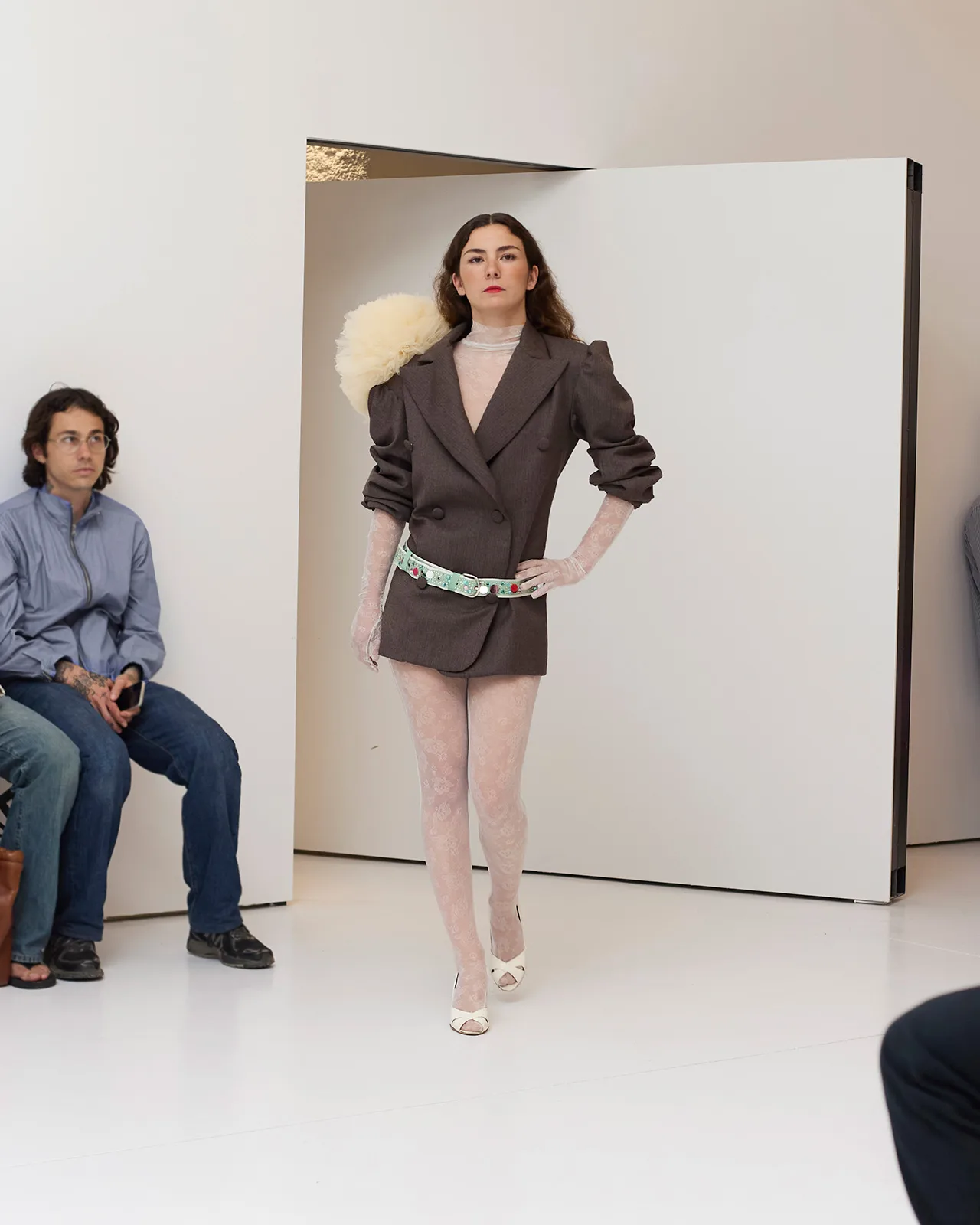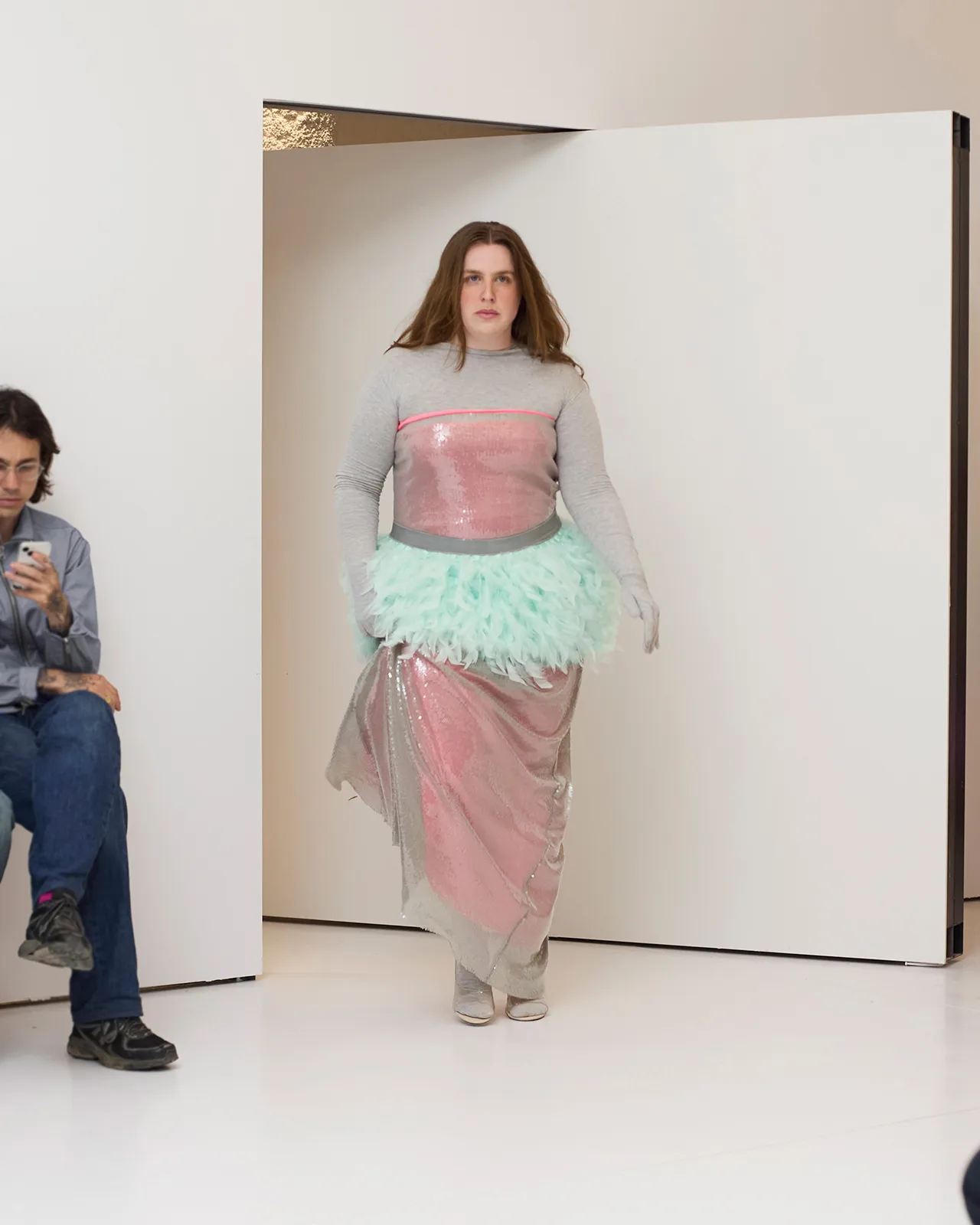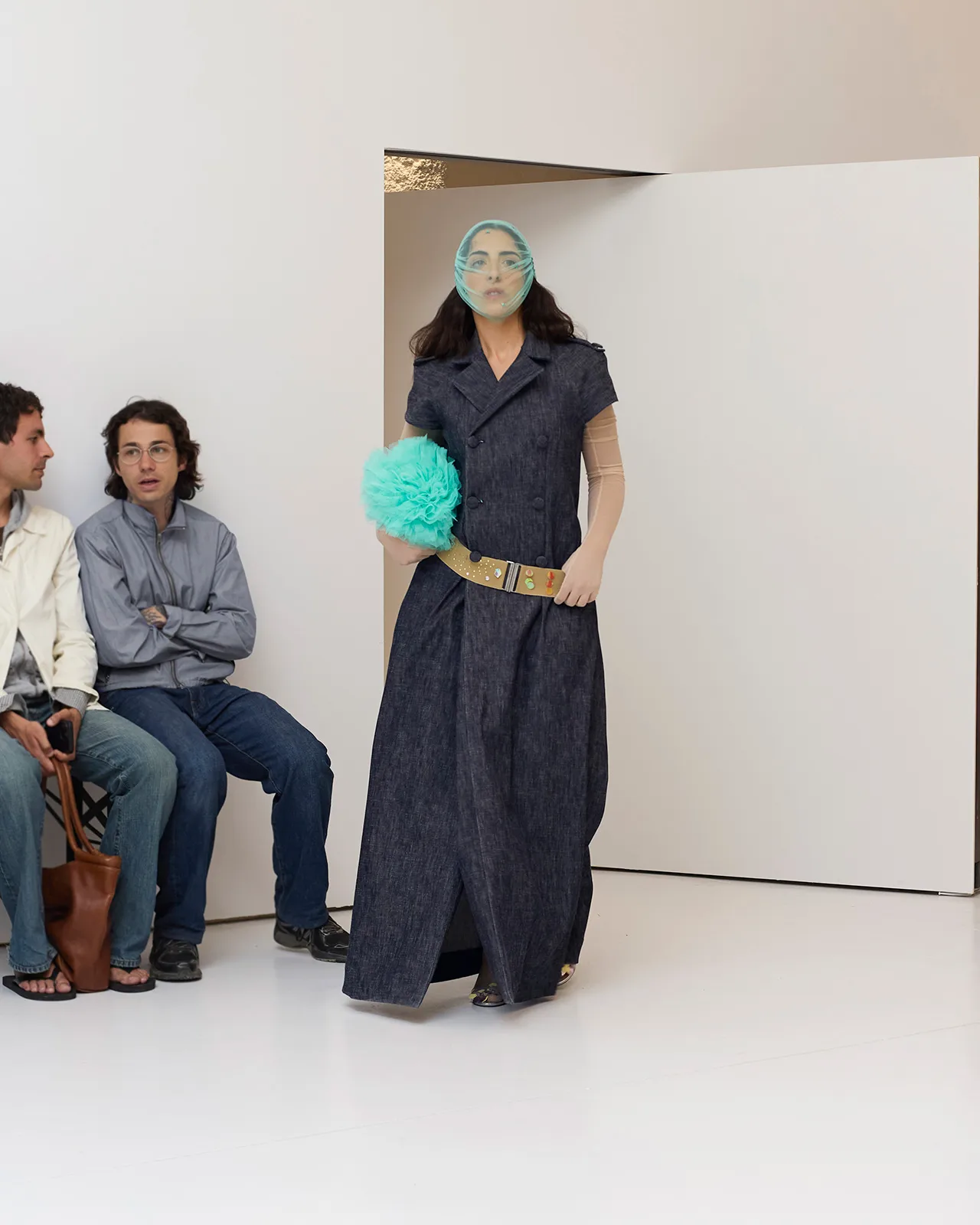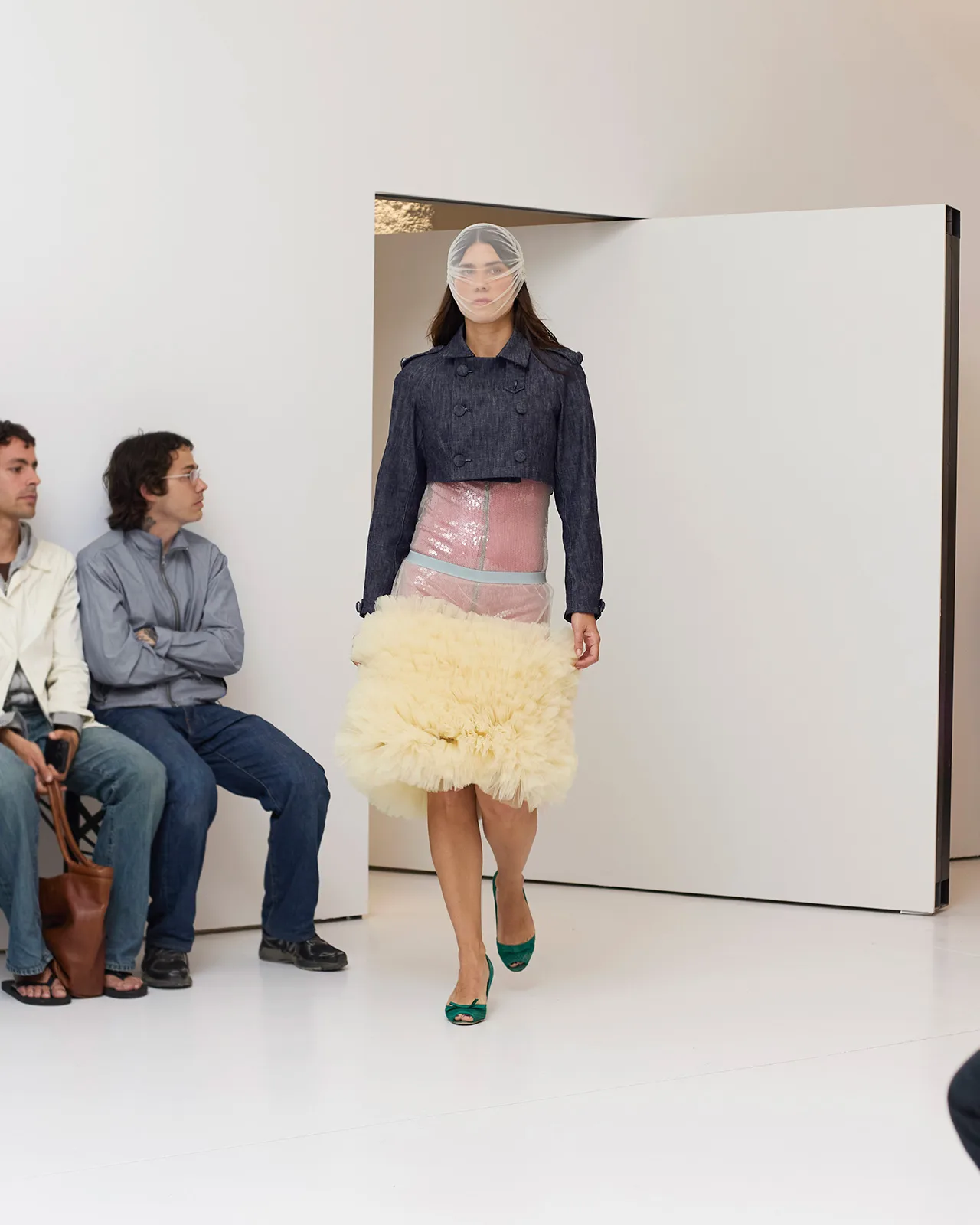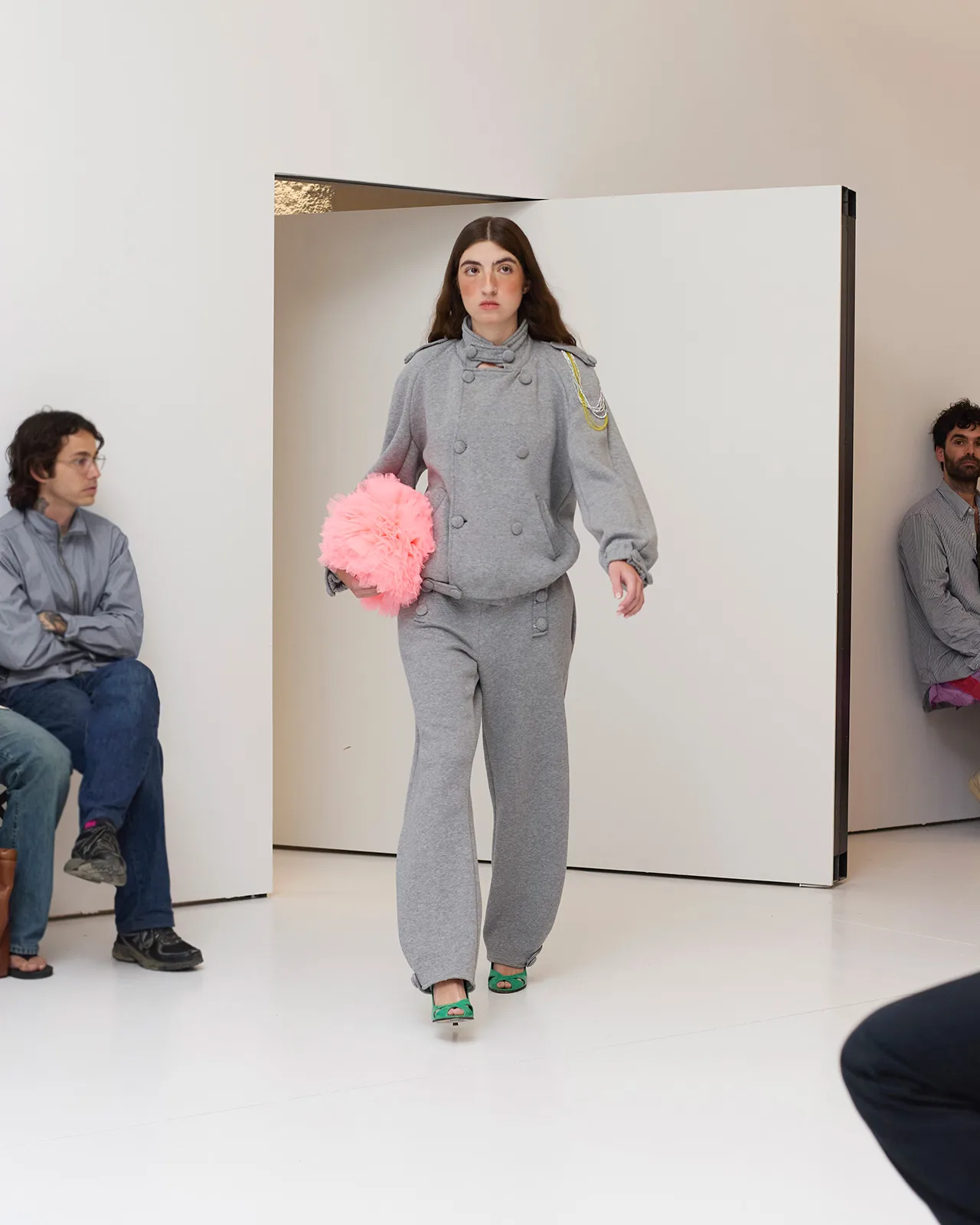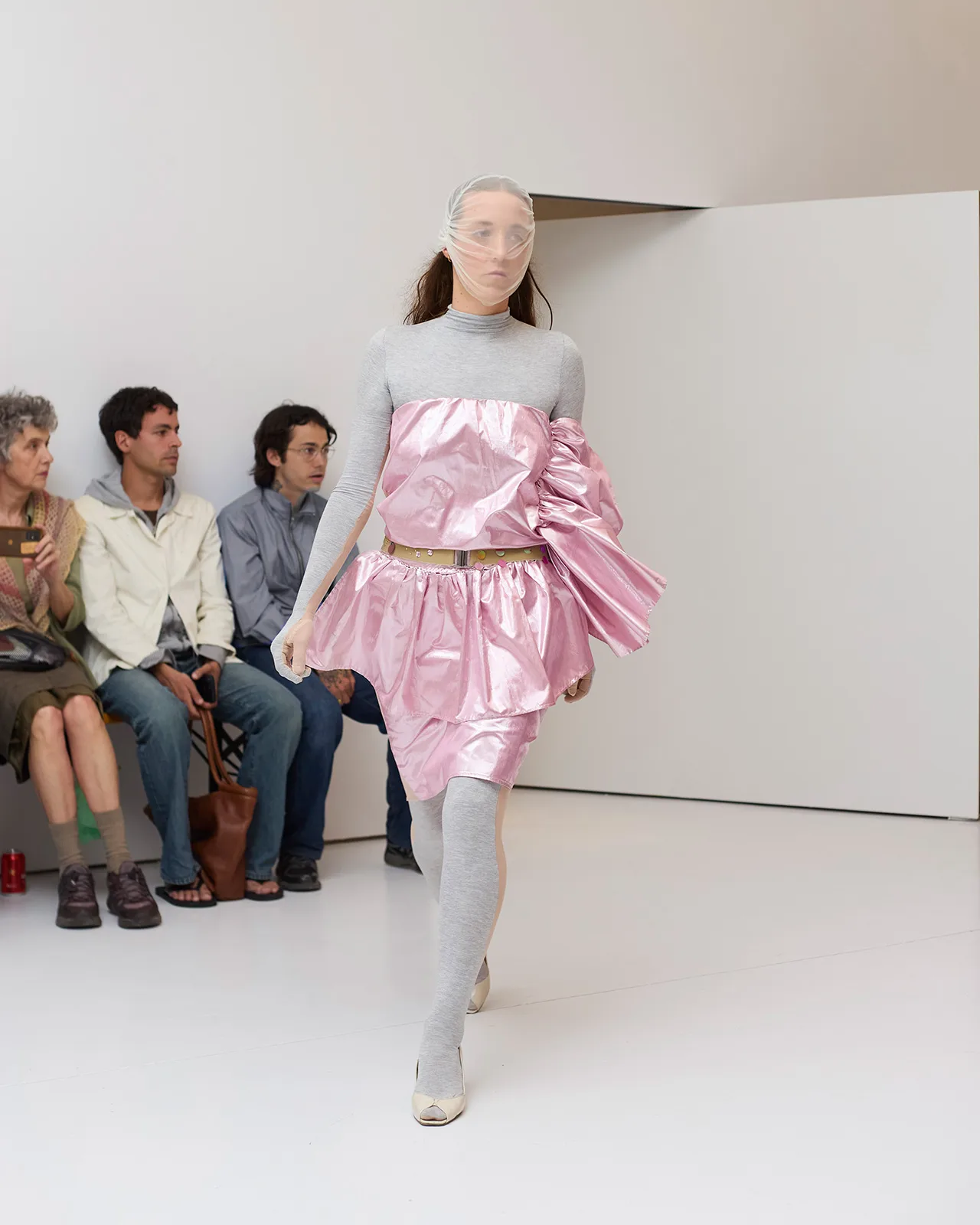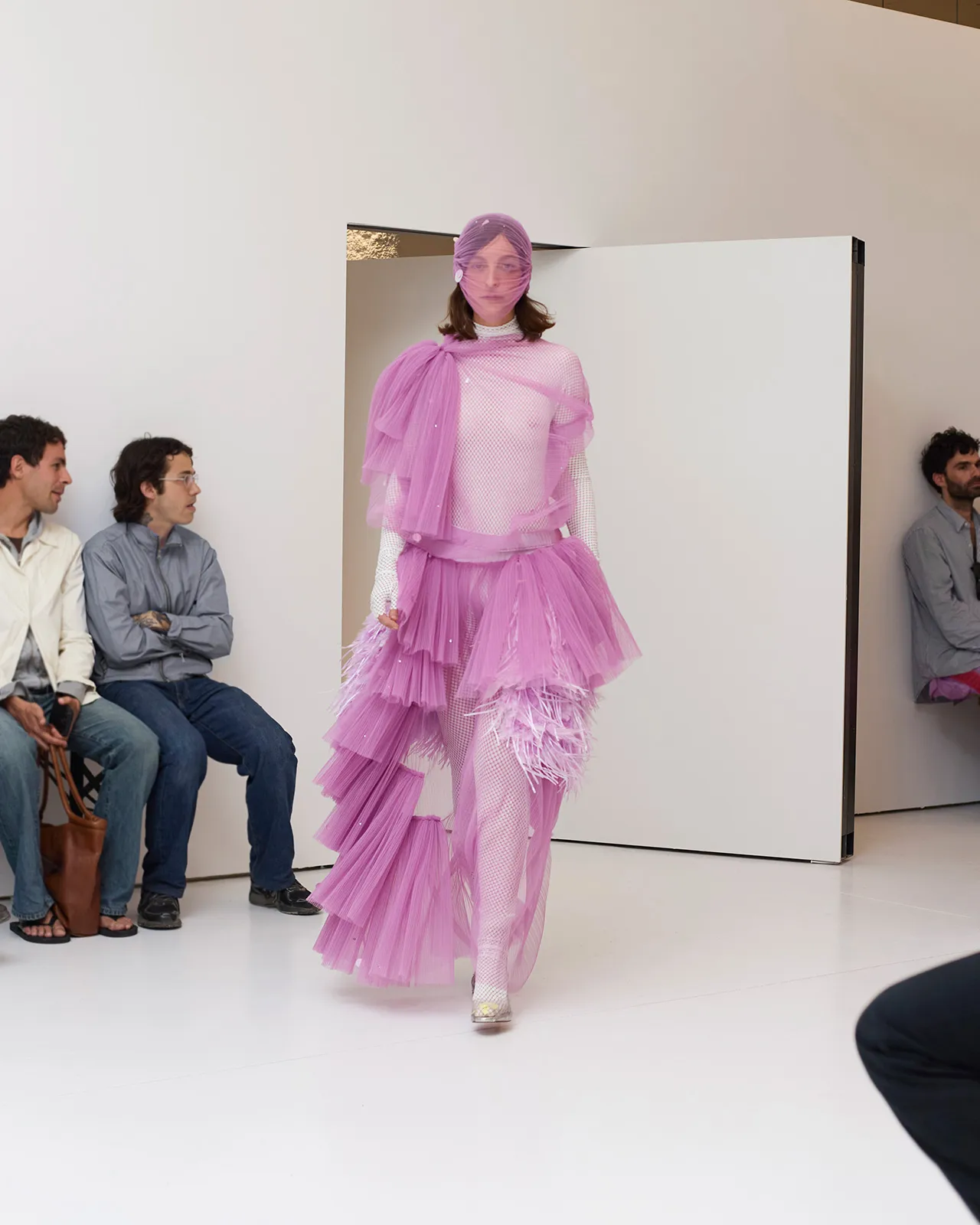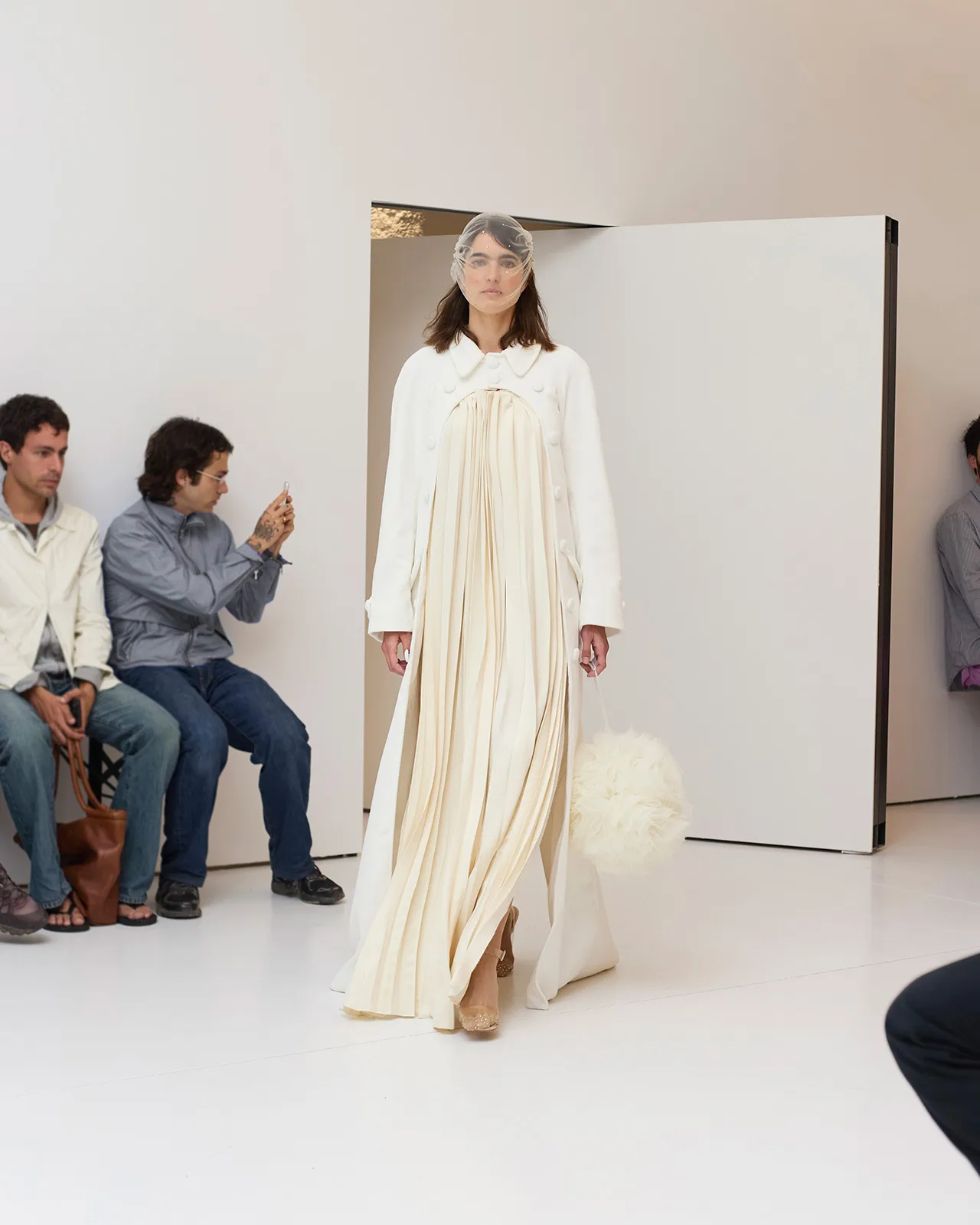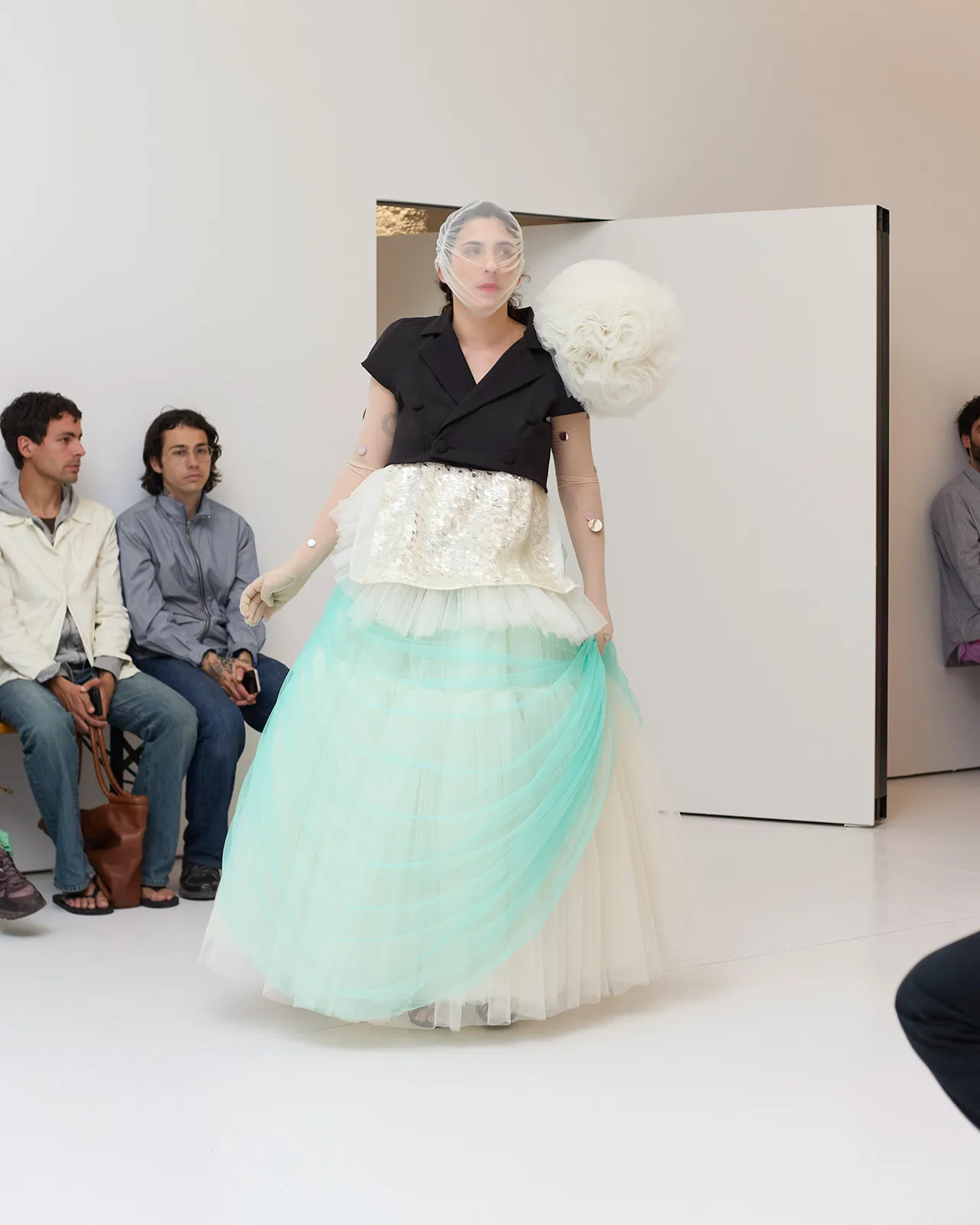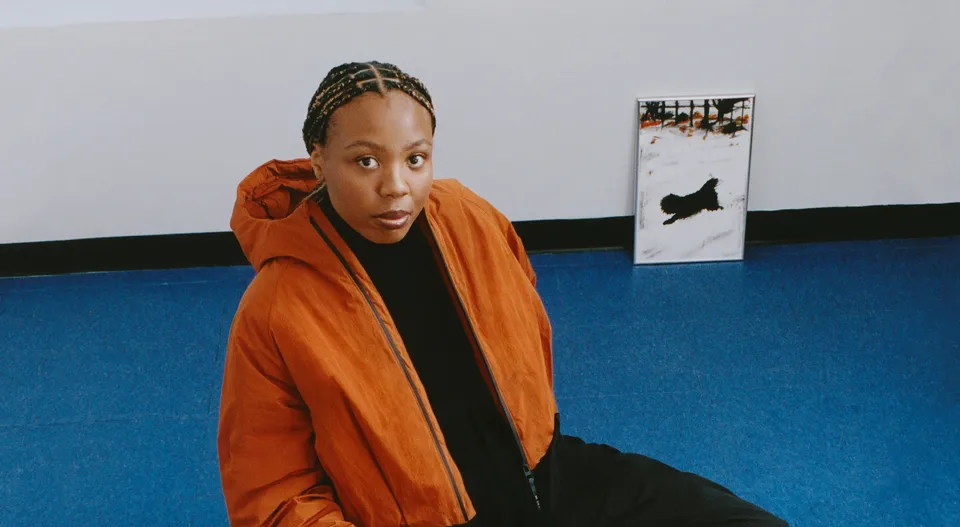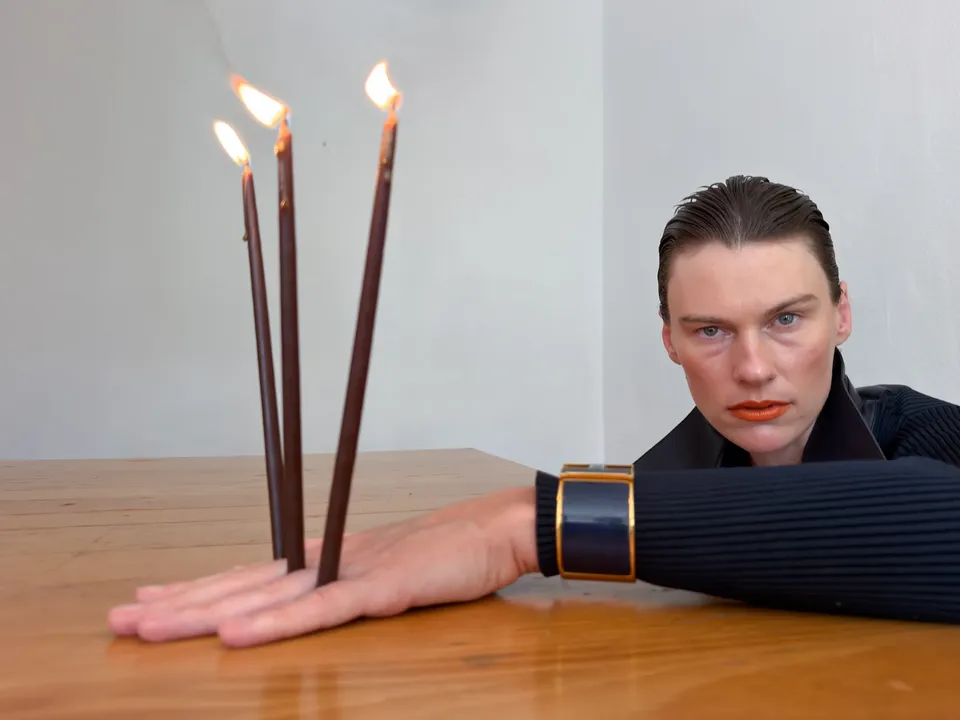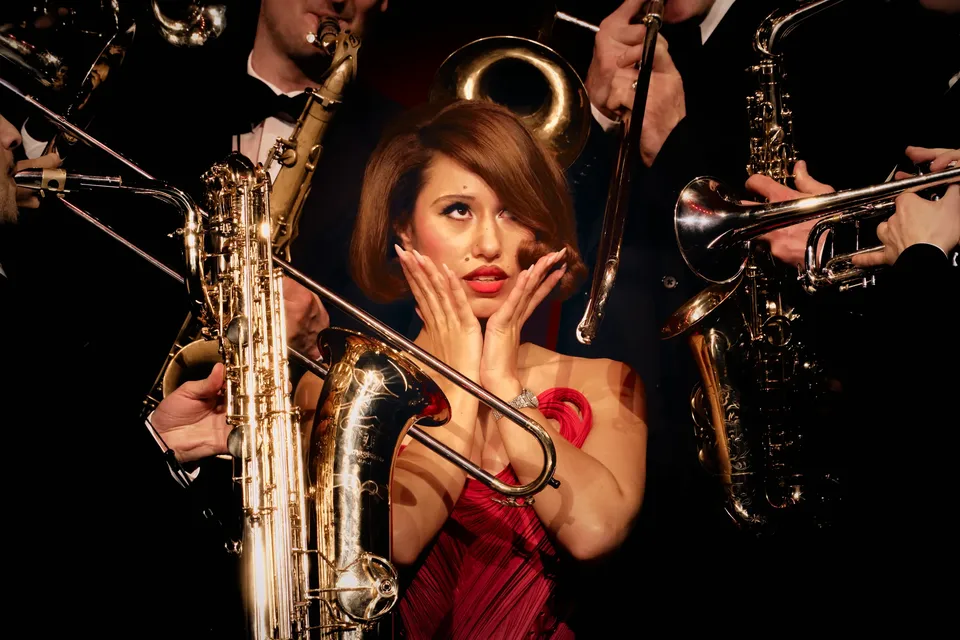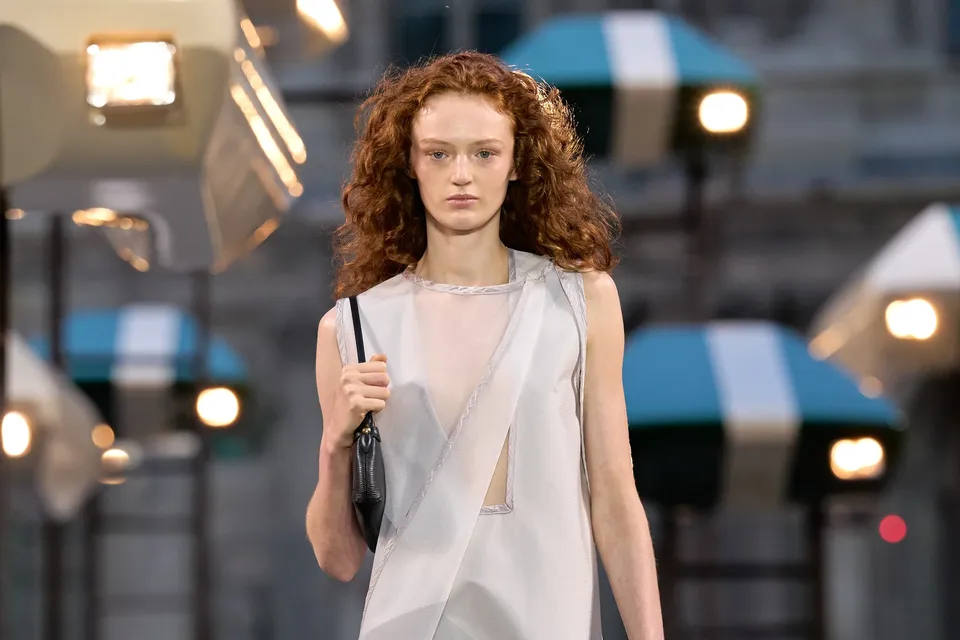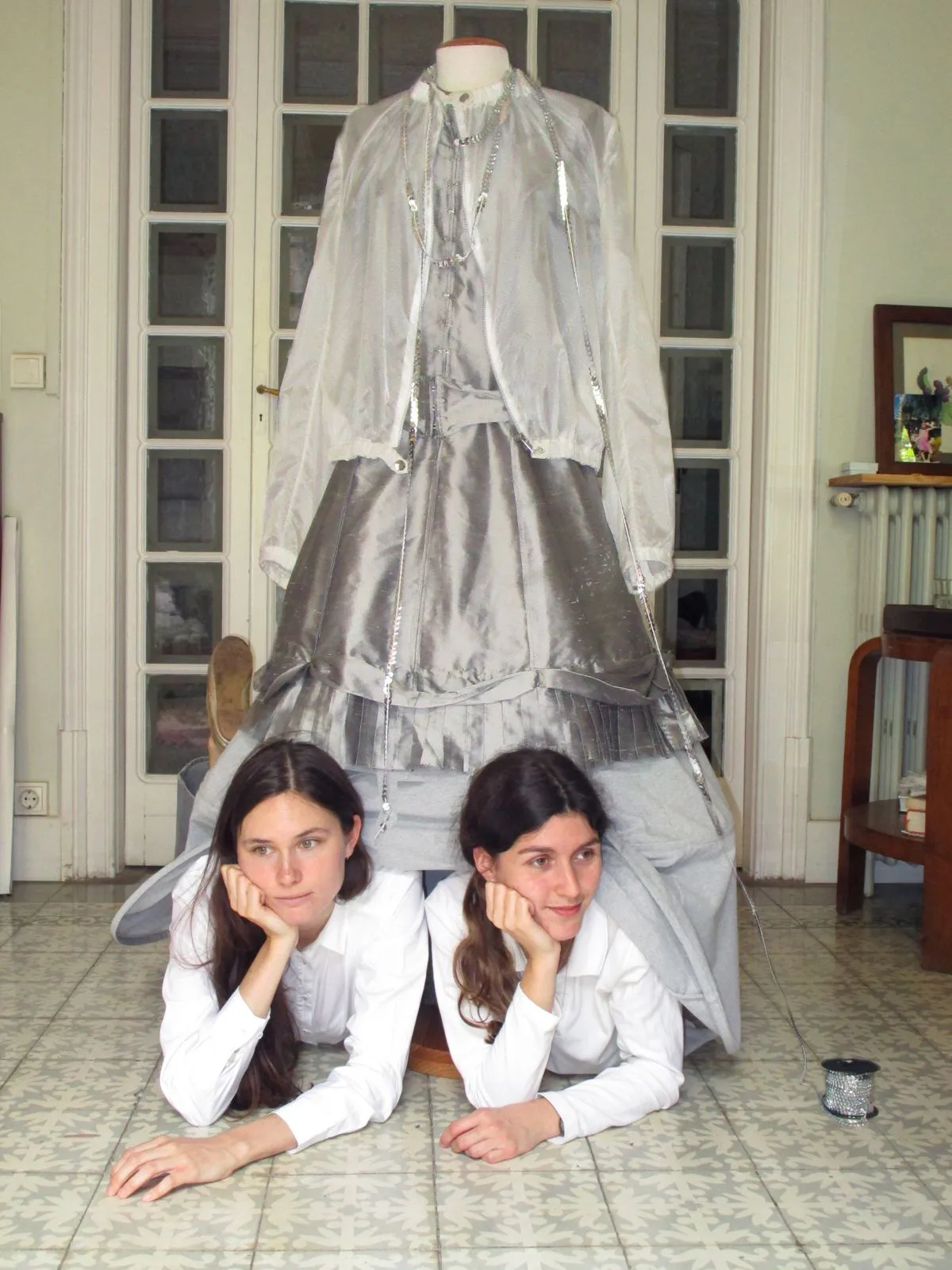
Founded by Flor Violeta Sobrequés and Chloe Campbell, Aurembiaix emerges as a brand built on shared intuition and thoughtful process. Their collections unfold slowly, like stories passed between friends. Rooted in fragments of memory, clothes carry more sentiment than function. Their curated imaginary is shaped by softness and subversion, and garments seem to hold the weight of friendship, time, and a bit of rebellion.
Aurembiaix didn’t emerge from a business plan or a calculated vision. It began with a quiet alignment, two parallel paths drawn together by a shared sensibility and a deep love for clothing as memory and resistance. Their founders, Flor and Chloe, move their Barcelona-based atelier at their own pace, crafting garments that feel like remnants from another time and yet unmistakably anchored in the present. Their latest collection unfolds as a tribute to friendship and the emotional value of what we wear: those pieces that stay with us, not just on our bodies but within us. In this conversation, the designers reflect on the origins of their creative partnership, their quite romantic use of deadstock fabrics, and the quiet defiance of building a world outside the commercial urgency.
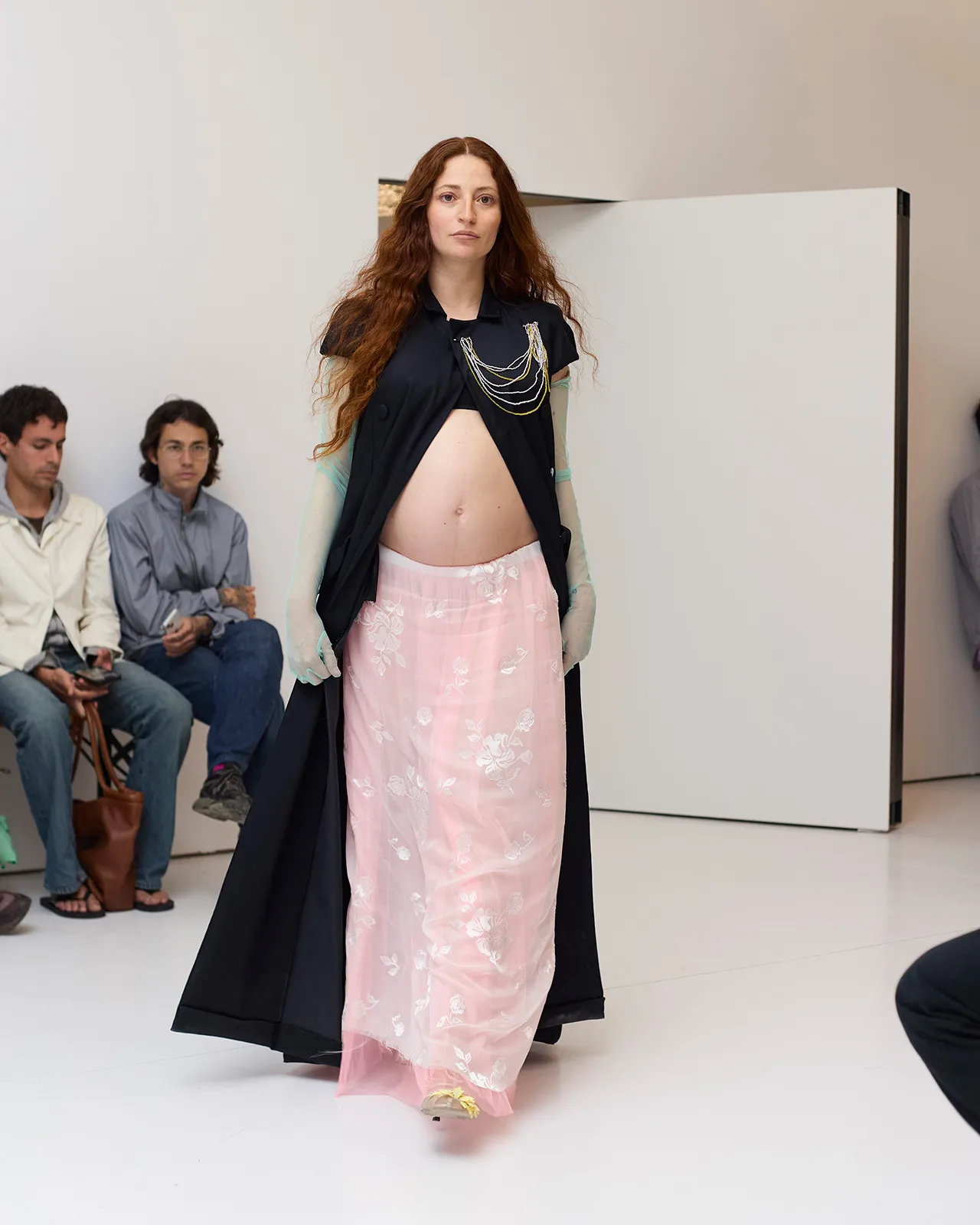
Before founding Aurembiaix, you must have shared a common sensibility. Can you tell us how your paths crossed and what training, experiences, or personal quests led you to this meeting point?
Flor went to school with my boyfriend, Mateo. We didn’t actually become friends until we started the project, but I always had an eye on her because I really connected with her style. She went on to do the same pattern-cutting course I had already done, and we bonded through that. I had always wanted to design fashion even though I didn’t go to uni for it because I was too scared; I didn’t know how to draw very well, and it turned out she had also applied to fashion school but wasn’t accepted. So it’s really an ironic and wholesome full-circle feeling that we were both so connected to fashion since our childhoods, yet studied other degrees (I did fashion photography, and Flor did performance art), and we both reconnected doing a very technical pattern-cutting degree, which led us to start Aurembiaix.
Of all the possible figures, you chose Aurembiaix de Urgell as your name and founding spirit. What resonated in you from her story, and how does it translate into the brand?
Actually, it’s not such an important part of our brand. We wanted to find a female name since our names didn’t sound that good together. She was the last countess of Urgell, but mostly it’s just a name we really liked because you don’t hear it very often. It’s a mediaeval Catalan name, which resonated with our first collection being so inspired by historical garments, and we especially liked it because aurem means gold in Latin and biaix means cut on the bias in Catalan, so it fits.
What other female figures, real, imagined, or historical, have accompanied the imaginary of this collection?
When we started designing this last collection, we felt a bit like, ‘Why are we designing clothes again? What’s the point of producing even more clothes?’ The answer is always because we absolutely love clothes, but we thought if we made them for someone we loved, it might have a bit more sense. So this collection is inspired by our closest friends and the places where we have fun and hang out: going out, half skimpy party dressed and half coat clad, outside chatting in the smoking area, which is where all the fun happens.
In this latest collection, a more vivid palette and a more marked play of contrasts between textures seem to emerge. Where does this chromatic and aesthetic inclination come from? What feeling were you interested in capturing this time, and how have you materialised it in the garments?
Just trying to have a bit more fun, a bit more joy. Life makes it hard to find meaning sometimes. It might feel frivolous, but sometimes a strong colour that pops and a sequin skirt can brighten your energy and inspire you and maybe make a little bit of sense, just to appreciate that feeling. Also, pompoms are real-life ASMR, and it’s impossible you don’t feel happier with a pompom, like watching an old vintage cartoon like Betty Boop, which was the inspiration for all the pin-up-style shoes. For us, dressing the body isn’t just about decoration; it’s about memory, rebellion, and tenderness.
Your work bridges the gap between centuries: conceived with values from the past to speak of the present. What does this temporal connection reveal about your understanding of fashion? How would you define the concept of modernity?
I think modernity should mean being aware of what came before you and choosing what to carry forward. For us, it’s not about doing something completely new but about giving new meanings to old things. We both approach fashion as a way of seeing clothes as beautiful objects, especially vintage or antique garments that have been mended, adapted, and cherished over time. There’s a certain nostalgia in this.
Our first collection was pretty much replicas of clothes we saw in antique pictures and drawings. We like making clothes that feel reminiscent, almost like characters from your own archive of memories. So maybe our idea of modernity is more about connection than innovation.
Our first collection was pretty much replicas of clothes we saw in antique pictures and drawings. We like making clothes that feel reminiscent, almost like characters from your own archive of memories. So maybe our idea of modernity is more about connection than innovation.
In an industry marked by immediacy and repetition, you opt for detail, for time. What do you seek to preserve or protect by creating your own rhythm? Would you say it is an aesthetic, ethical, or emotional decision?
Our rhythm is slow because we need it to be. It’s a mix of aesthetic, ethical, and emotional reasons. Slowing down allows us to stay close to each piece, to work with care, and to create space where things can be felt as they’re made, not just produced. Detail takes time, and time allows intention to show. What we’re trying to preserve is the dignity of making, the intimacy of the process, and the idea that clothing can hold meaning and be personal, not just consumed.
How do you build a brand identity outside of commercial cycles? Has this decision ever been detrimental to you as a brand?
We build identity through consistency of values, not volume or speed. Our pieces aren’t designed to meet trends or deadlines but to feel like they belong to a world we’ve been quietly constructing, piece by piece. Of course, moving outside commercial cycles can make things more uncertain, especially financially, but it also allows for coherence. We’ve had to learn patience and to trust that, with time, we’re reaching the people who understand what we’re building.
The fabrics you choose seem to arrive at the atelier with a previous life. Does this biography matter before becoming a garment? Has there been any fabric that has dictated the course of a collection or a specific piece?
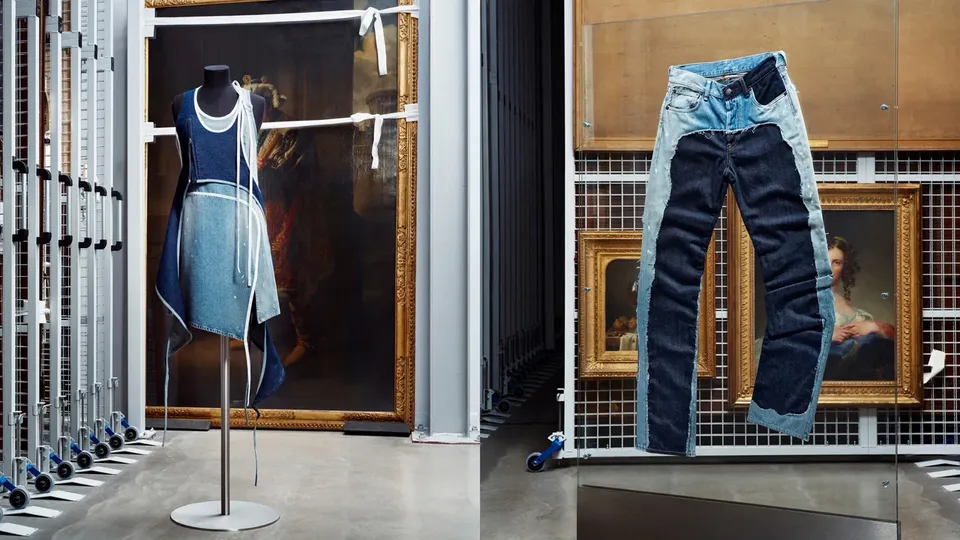
Yes, always. We mostly work with deadstock fabrics, so each material already carries something within it: a context, a past use, or simply a texture that sparks something. That history shapes how we approach it and what we imagine it could become. Sometimes a fabric surprises us and ends up defining an entire piece, or even a small group of looks. We’ve had silks that shifted the tone of a collection or unexpected cottons that grounded what could have been too precious.
We live in a time when many garments have lost meaning, reduced to repetition or trends. Why is it important for you to give them back a narrative? How is this narrative constructed in a garment?
In how we choose materials, take our time, and approach each piece with care. But yes, we do see garments as carriers of meaning. Narrative lives in the process, in the details, and later in how someone wears and lives with the piece. That’s what gives it permanence, not just as an object, but as something felt.
Looking to the past can imply such reverence that it paralyses any new interpretation. How do you manage this respect for tradition with the impulse to create something of your own, contemporary? Where does fidelity end and freedom begin?
We don’t pretend to be faithful to tradition. We’re more interested in the spirit of care and attention that certain traditional practices hold, but we’re also aware that this narrative of craftsmanship and heritage has become almost expected, even romanticised. In that sense, we’re not that different from many other ateliers working today. We approach the past as a source of affection and curiosity, not as something to recreate, but as something to respond to in our own way.
The collection is presented as a small homage to friendship. How do you translate this intimacy into the garments? How have you embodied this bond that moves between the personal and the collective?
The text our friend Mariona Valdés wrote for the press release captures the atmosphere we were trying to create: that emotional closeness, the shared gestures, and the fluidity between friends. It holds the feeling of the collection better than we could ever explain;
“I don’t always feel like getting dressed; sometimes I just want to cover up. Not because I’m cold, but just in case. One more year, I let Flor and Chloe dress me; another provisional version of myself. I couldn’t stop wondering if someone might recognise me. A mix between Tonya Harding and her mom. It wasn’t a costume, but close. A circle of friends outside the club. The sequin I found in my pocket weeks later. In the end I’ll wear the look that was Adela’s, that was Lucía’s, that was María’s, that was Erika’s. Nothing is fully decided. One held her coat shut from the inside with one hand, unknowingly protecting herself. On the ground, a half-finished pompom. She left barefoot; she couldn’t find her shoes. Another shed layers without looking. ⋆ The truth is, there are clothes I can’t remember if they’re mine or if they simply stayed with me. If I hold onto them, it’s for what remains, not on me, but inside. I believe memories are also built in layers: C / F / V / M / P / J / N / J / A / L / C / A / C / A / M / P / J / V / M / G / L / A / E / A / E / M. This is for you, for me, for us. When your glitter transfers from your cheek to mine as we take a selfie. When you hold her skirt so it doesn’t catch under the wheels of a scooter, as if holding the fabric were also holding the moment. When someone paints lipstick on your lips without warning. And for everything we can no longer give back.
“I don’t always feel like getting dressed; sometimes I just want to cover up. Not because I’m cold, but just in case. One more year, I let Flor and Chloe dress me; another provisional version of myself. I couldn’t stop wondering if someone might recognise me. A mix between Tonya Harding and her mom. It wasn’t a costume, but close. A circle of friends outside the club. The sequin I found in my pocket weeks later. In the end I’ll wear the look that was Adela’s, that was Lucía’s, that was María’s, that was Erika’s. Nothing is fully decided. One held her coat shut from the inside with one hand, unknowingly protecting herself. On the ground, a half-finished pompom. She left barefoot; she couldn’t find her shoes. Another shed layers without looking. ⋆ The truth is, there are clothes I can’t remember if they’re mine or if they simply stayed with me. If I hold onto them, it’s for what remains, not on me, but inside. I believe memories are also built in layers: C / F / V / M / P / J / N / J / A / L / C / A / C / A / M / P / J / V / M / G / L / A / E / A / E / M. This is for you, for me, for us. When your glitter transfers from your cheek to mine as we take a selfie. When you hold her skirt so it doesn’t catch under the wheels of a scooter, as if holding the fabric were also holding the moment. When someone paints lipstick on your lips without warning. And for everything we can no longer give back.
⋆ These could be memories, or premonitions, framed within Aurembiaix Collection 4.”
Also mentioned in the show notes is the way in which the garments hold a certain emotional meaning through what we live with them, who we share them with, and their permanence in our lives. How do you approach this idea of emotional permanence in clothing? What challenges are involved in designing from the union of shared memory?
We’ve touched on this in different ways already (on the idea that a garment can stay with someone beyond the moment it’s worn). It’s something that runs quietly through everything we do, maybe more felt than planned. We try to design clothes that remain not just in a wardrobe but in someone’s memory. If a garment ends up holding emotional weight, it’s probably because it was made with a kind of presence. We don’t try to control that part too much. The real meaning often comes later, through how it’s worn, shared, and remembered.
What have you learnt from each other over the course of these four collections? How has your creative dialogue evolved?
We’ve learnt how to trust the space between us. At the beginning, we would each bring our own ideas and try to merge them. Now it feels more natural, more fluid. It’s not really about compromise but about how our perspectives fit together. We’ve learnt to follow the process, to let things unfold, and to lean on what each of us does best. The collections don’t just reflect two people anymore; they come from what happens in between.
How do you approach the future and present of the brand? What obsesses you now? What images, materials, or references have haunted you lately?
Honestly, we’re not rushing toward the future right now. We’re still very much inside this last collection. We don’t work in seasons, and we don’t feel the need to constantly be generating something new. All our collections remain available and alive: we restock them with new deadstock fabrics when one runs out and allow the pieces to evolve subtly over time. There’s something comforting in that continuity, in not having to abandon a design just because the industry says it’s time to move on. Right now, what obsesses us is this idea of permanence and emotional attachment.