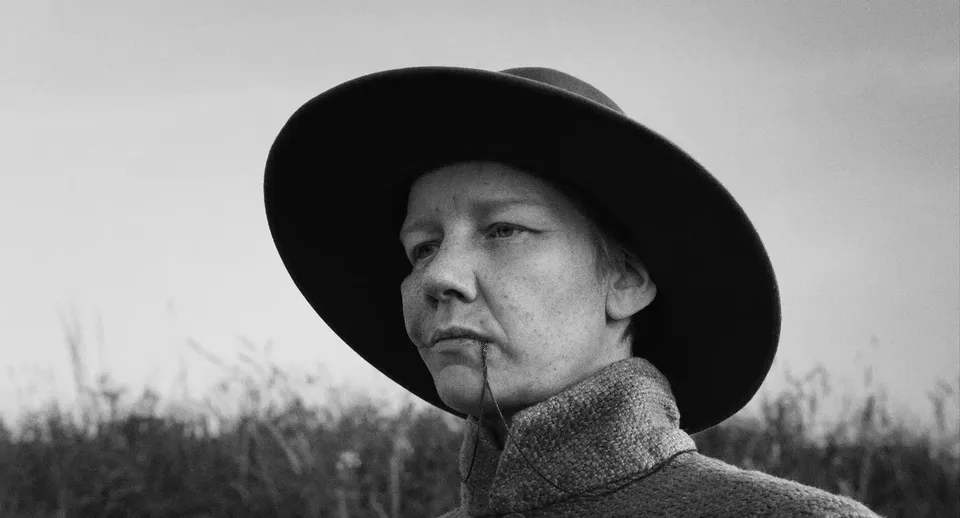
For years, Spanish cinema found itself trapped between two conflicting paths: looking outward or looking inward. There was either a tendency to replicate Hollywood codes, forcing big narrative structures into local contexts, or an obsession with stories deeply tied to historical memory and a rigid definition of Spanishness. Caught in this binary, the industry struggled to find an authentic voice that could resonate abroad. Fortunately, things have changed. Today, Spanish cinema is in the midst of its most fertile and globally open moment yet, a shift perfectly captured by the short films of Where Talent Ignites. Premiered at Cannes, they are the ultimate proof of a new Spanish audiovisual sensibility.
This initial disconnect inevitably trickled down into public perception. For years, Spanish cinema became a recurring punchline within domestic television, dismissed as if it were a minor genre. The rift was real, and it certainly wasn’t helped by the fact that international acclaim was concentrated around a mere handful of names. Victoria Abril famously summed it up when she coined the three A’s: Pedro Almodóvar, Alejandro Amenábar, and Álex de la Iglesia. For a long time, it felt as though Spanish cinema abroad amounted to that, and nothing more.
But the paradigm has shifted. Over the last ten years, Spanish cinema has opened up in a way that hasn’t just pushed boundaries, it has rewritten them. What we’re seeing is a real democratization of fiction: new voices, fresh ways of telling stories, and a newfound confidence in its own cinematic perspective. It’s no longer about trying to look like someone else’s cinema, nor is it about falling back on the comfort of the familiar. Instead, it’s about building from a diverse, pluralistic ecosystem that connects effortlessly with the modern world.
Films like Rodrigo Sorogoyen’s As bestas and Alauda Ruiz de Azúa’s Los domingos have been instrumental in charting this shift. Both prove that the hyper-local can be profoundly universal, that a narrative rooted in a specific territory can engage global audiences without being diluted or sanitized. They share the stage with titles like Estibaliz Urresola Solaguren’s 20,000 Species of Bees, which sparked vital dialogues around identity and generational nuance, and Víctor Erice’s Cerrar los ojos, whose monumental return served as a powerful vindication of contemplative, emotional filmmaking. Simultaneously, boundary-pushing projects like Sirat point toward a freer, more sensory cinematic language, one eager to experiment and deliver a visceral gut-punch.
This creative boom aligns perfectly with a massive spike in the international spotlight. Though not quite at the level of the South Korean cinematic wave just yet, Spain is establishing itself as a force to be reckoned with on the global screen. A powerful showing at festivals like Cannes — boasting three Spanish titles in the running for the Palme d’Or: Pedro Almodóvar’s Amarga Navidad, Javier Calvo and Javier Ambrossi’s La bola negra and Rodrigo Sorogoyen’s El ser querido — proves this isn’t a temporary fluke. It’s a momentum well underway.
Against this very backdrop, the Where Talent Ignites initiative — spearheaded by ICEX Spain Trade and Investment via Audiovisual from Spain — takes on a deeper resonance. Far from a mere promotional push, it stands as a bold statement of intent. The project doesn’t just showcase Spanish talent; it charts how that talent articulates its vision today: through cross-disciplinary fluidity, radical collaboration, and a contemporary cultural ethos that entirely rejects rigid boundaries.
The Cannes premiere of these three short films — Flamenco, La Llama, and La Tarara — is far from accidental. It acts as a symbolic milestone that perfectly distills this entire turning point. Though structurally and stylistically distinct, these three works are deeply intertwined by a collective drive to interrogate what it truly means to create in Spain today.
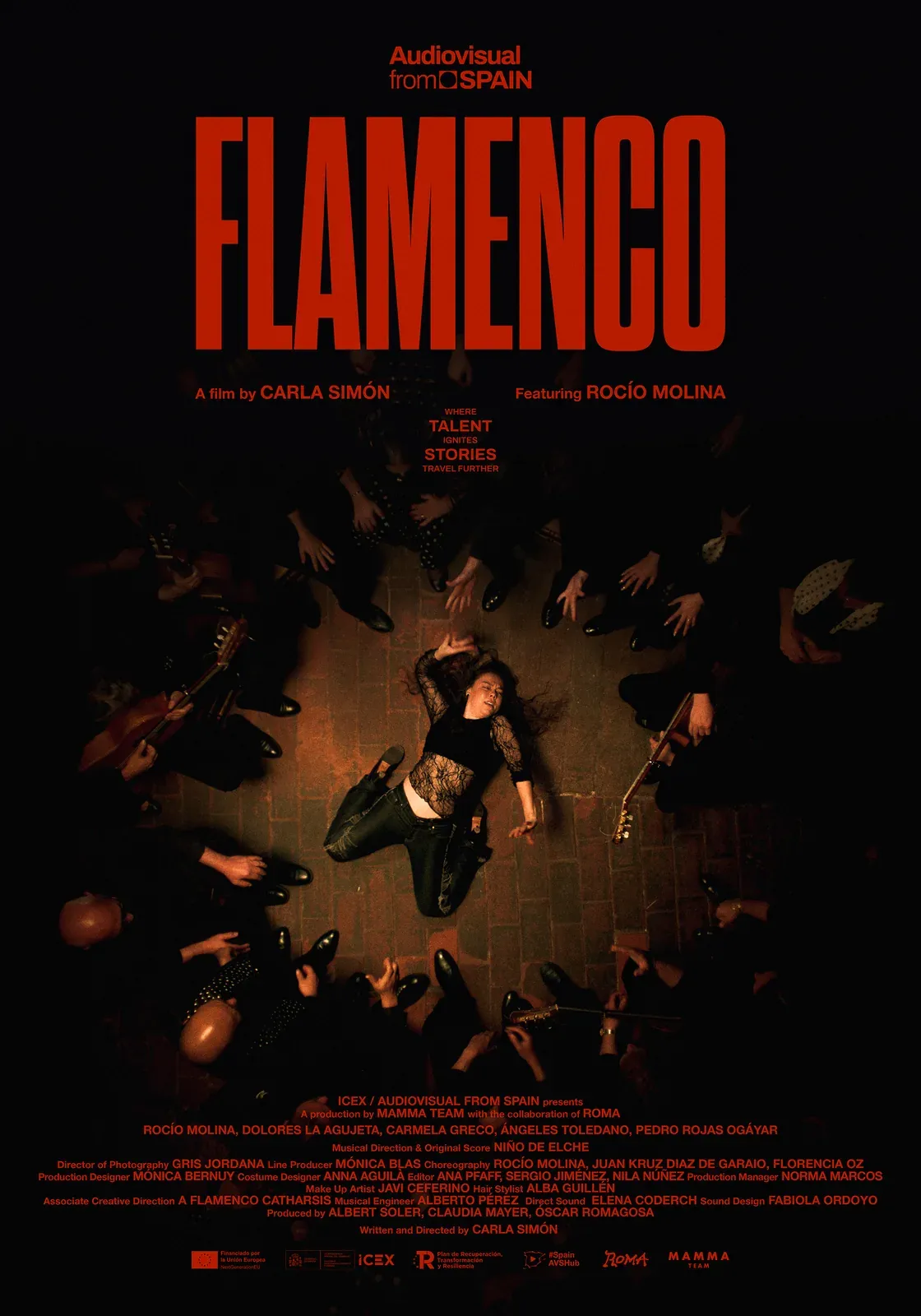
Flamenco by Carla Simón
Directed by Carla Simón and starring Rocío Molina, Flamenco is likely the rawest and most emotional of the three. It delves into grief, generational bonds, and sonic heritage, but also into silence, interrogating what slips away and what remains. There is a heavy, visceral melancholy at play, an absence that speaks directly through the body and movement, yet it’s backed by a fierce strength. Flamenco emerges not just as a cultural artifact, but as a living language that transforms without fracturing. Shifting between memory and reinvention, the personal and the communal, the film creates a space where history doesn’t weigh us down; instead, it talks to the present.
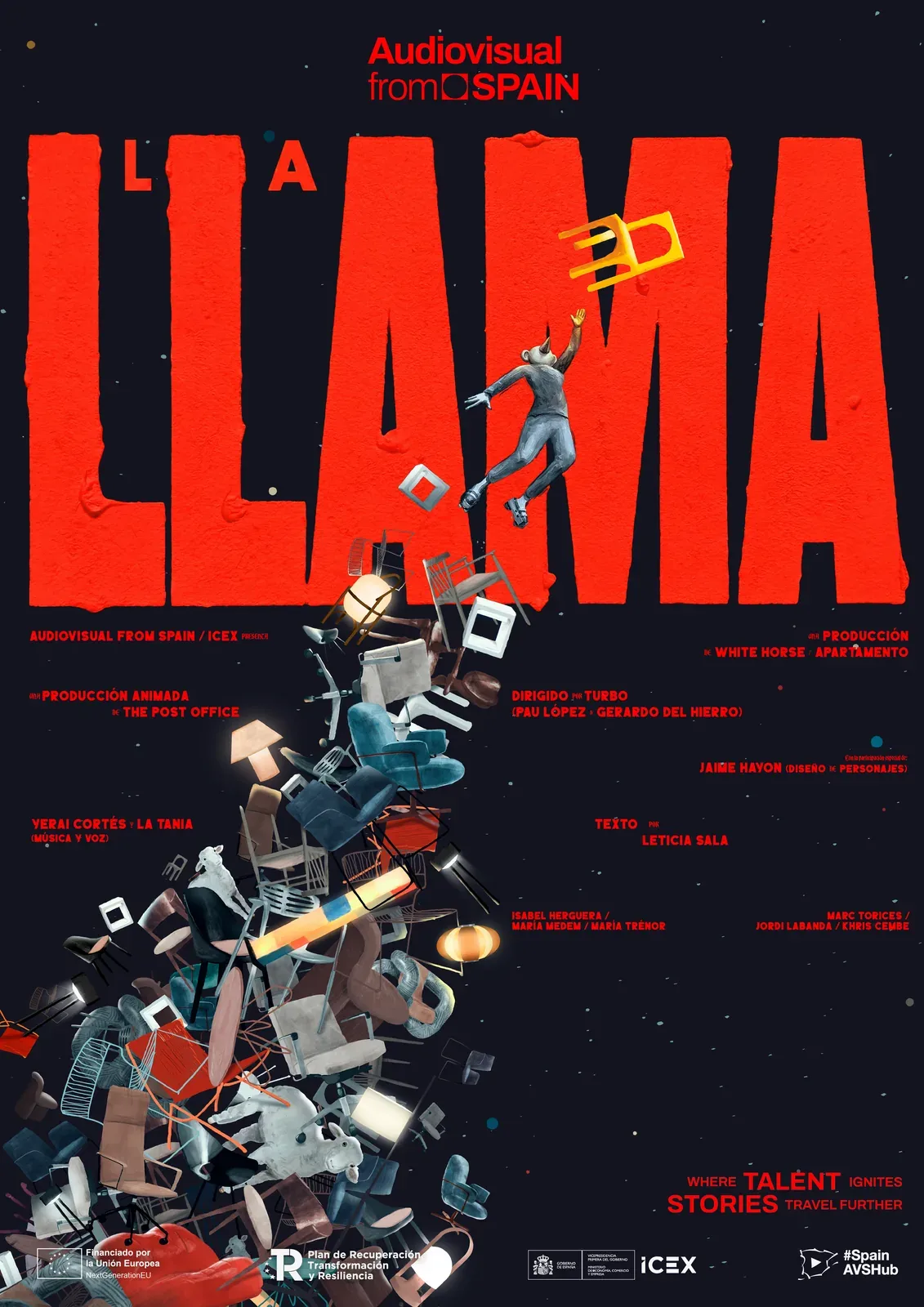
La Llama by Pau López and Gerardo del Hierro
Shifting to a completely different register, La Llama, directed by Pau López and Gerardo del Hierro, plays out like an audiovisual poem. Utilizing animation, the film dives into an almost existential inquiry, where images, characters, and everyday objects constantly question the nature of things while tapping into deeply relatable, universal emotions. The short film resists definitive answers, which is exactly where its power lies. It’s an experiential piece rather than an explanatory one, a canvas that invites viewers to project themselves into the frame. Don't let its visual lightness fool you; beneath the surface is a sharp reflection on creativity, identity, and the endless impulse to seek.
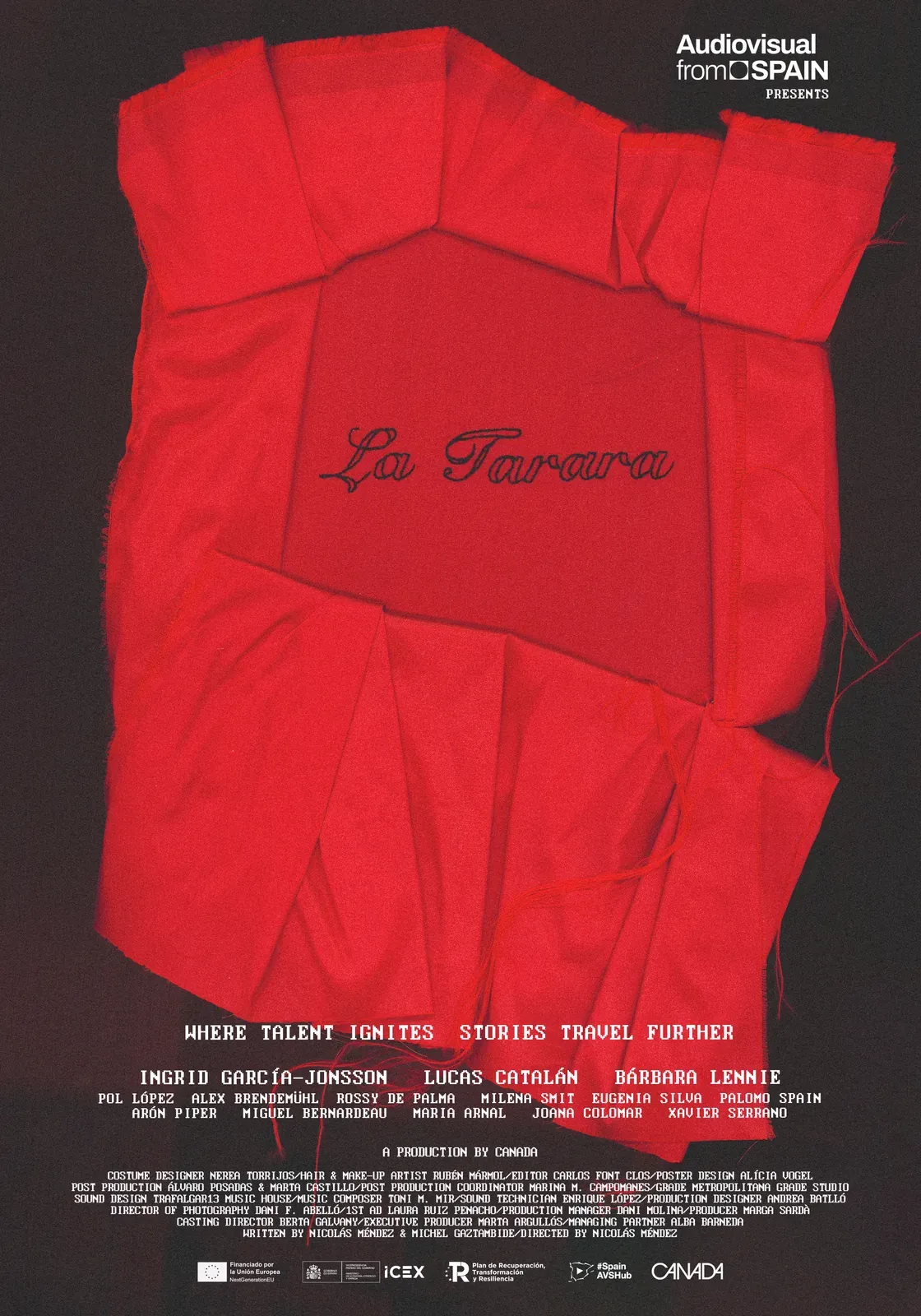
La Tarara by Nicolás Méndez
La Tarara, directed by Nicolás Méndez, moves in the realm of fashion and cinematic narrative to construct a universe of strong aesthetic charge. It is, above all, a lavish display of glamour. The piece traces family relationships defined by silences, by a certain superficiality, and by that emotional distance that sometimes separates even those who share the same blood. Between sisters, nephews, and bonds that seem to dissolve, the story unfolds more in what is left unsaid than in what is verbalized. Added to this is a constant parade of recognizable faces, performers like Ingrid García-Jonsson and Bárbara Lennie, alongside a succession of cameos that turn the piece into a game of appearances. That accumulation of familiar faces is not gratuitous: it reinforces the idea of surface, of image, of representation, but also speaks of a creative ecosystem that recognizes itself.
Together, the three pieces function as a map. They do not explain Spanish cinema, but they do suggest it. They do not attempt to define it, but they do show its possibilities. And above all, they make something key evident: Spanish audiovisual is no longer an isolated territory, but a meeting place where cinema engages with fashion, music, design, dance, and contemporary visual culture. Perhaps therein lies one of the keys to this moment. The change is not only aesthetic or industrial, it is also cultural. It has to do with how Spain thinks about itself and how it chooses to present itself to the world. With the capacity to accept that what is local can be global without ceasing to be one’s own.
This year’s Cannes, bolstered by a formidable contingent of new Spanish cinema and the Where Talent Ignites premieres, reinforces the sense of a definitive turning point. This isn’t an isolated triumph or a fleeting trend, but a long-brewing evolution finally breaking through the surface. While it’s too soon to predict how far this momentum will carry, all signs indicate the dawn of a new chapter, one where Spanish cinema no longer needs to mimic or justify itself, because it has finally claimed its own singular voice.