An exquisite beat starts as you prepare to listen to Doing Laps, the first track of Art School Girlfriend’s new album, Lean In. Before different layers of sound start to intertwine atmospherically, the sound of a ringtone surprises you as part of the hook. It is coded into modern times, with a sense of the frantic, now things are faster than ever. “Delete it all and start again. Just living through a phone. Ah, leave it off, leave it off” she sings, as she opens an album about this moment right here, right now, through her life experience.
The record involves you in dense, immersive spaces where sound behaves like weather, memory, or something half-formed and emotional. The third album from the London-based, Wrexham-raised artist and producer marks a quiet but decisive shift: into something more fluid, tactile, and deeply personal. Entirely self-produced in her East London studio, it expands Art School Girlfriend aka Polly Mackey’s signature blend of shoegaze textures and electronic composition. It’s a record that resists easy categorisation; indeed, it’s in these song spaces in which she redirects her focus.
That sense of total control is hard-won. Over the years, Art School Girlfriend has evolved from a cult favourite into a key figure operating across multiple corners of the music landscape, collaborating with the likes of Daniel Avery and Bonobo, while continuing to refine a practice rooted in autonomy and experimentation. With Lean In, that autonomy becomes the central gesture: written, recorded, and produced in solitude, the album emerges from a moment of disillusionment with an industry increasingly driven by metrics and visibility. The result shows an artist leaning further into her instincts, her process, and the messy, contradictory emotions that shaped the record.
The new album arrives at a time when her audience has grown exponentially, partly thanks to her wide-ranging involvement in the music scene: collaborations with Lane 8, Jasper Tygner and Ghostpoet; a US tour with The Japanese House and Marika Hackman; a notable DJ set for HÖR; production and sound engineering for the promising post-rock band pencil; and the curation of her monthly radio programme on Foundation FM, which has now been on air for five years.
Lean In is, at its core, an album about holding opposites at once. Mackey describes making it while experiencing a lot of things in parallel: grief, joy, love, anxiety, hopelessness, hopefulness, and that simultaneity runs through every layer of the music. It’s intimate but expansive, anxious yet euphoric, grounded in the physical world while constantly slipping into abstraction. In simpler words: you have to listen to Lean In because, besides her vision and sound, it will ignite an emotional experience of your own just by witnessing the “spherical orb of mist”, as she sees it. In conversation with METAL in March, she reflected on building her own sonic language, navigating the politics of production, and the freedom (and isolation) of creating entirely on her own terms.
Hi Polly! I think it’s fair to say happy Lean In release day! How are you feeling?
Feeling light; I’m really happy to have this album out in the world. It’s odd to have just singles lingering around too long for an album like this. Lean In is such a headphones record; for me there was a danger of the whole thing being slightly mis-represented by just single tracks.
I found the construction of the songs on the album very interesting. After listening to it for the first time, it made me think of DNA and the image of the DNA chain that we often see in textbooks. The layers of different instruments and sounds intertwine with each other as they appear in the songs, it seems like you've put a lot of work into it, they sound like a single living thing.
Yeah, it’s a very layered record. In my head I can see it as a spherical orb of mist or haze that the listener sticks their head into. I wanted it to feel like its own world, but for each track to have its own identity.
I read in your bio something that stuck with me: “Lean In contains an electronic-organic hybridity and unparalleled production born from time, expertise and a studio of one’s own.” Inevitably I thought of Virginia Woolf when I read this last idea, and how inaccessible spaces for women to create have traditionally been. I wonder how much of gender experience is in the process of making Lean In, not just because of an unequal industry, but also in your own personal experience.
Every female musician I know has learned production because at some point in their careers, their vision was being derailed or belittled by some guy with a firm grip on the computer mouse. My old band suffered from this a lot. So, Art School Girlfriend was a way for me to gain agency of the sound, and for the last ten years I’ve been blessed to work with lots of amazing collaborators who are not partaking in those particular hierarchies. This album was more about me seeing what happens when I’ve nobody to bounce off, nobody to pull me out of indecision; it meant I could spend an unsociable amount of time deep in sonic rabbit warrens and emotional depths. Having someone else in the room would have prevented those moments that came to define the album.
Doing Laps is, to me, one of the best songs I’ve heard in a long time. It encapsulates so much of our lives now. The inclusion of the ringtone is so strange, but it fits perfectly and makes the song more special and overwhelming, it ties it up with our moment. Also, the chorus says: “Is the radio off? / You've turned an age and back again / It's poetical, I know / The way you are, way you are / You make a deal / Delete it all and start again / Just living through a phone / Ah, leave it off, leave it off”. It’s a poem in itself that reflects so much about our times, it made me think of Carol Ann Duffy and the New Generation Poets. How did you feel when you made this song?
This song was made very much at the point in time that I was thinking about opting out of the industry and just going back to making music in my room for fun, like how I started. The paradigm of how to be an artist was feeling particularly narrow and suffocating at that point; a swirly pressure of social media and the widening wealth gap. The focus seemed to be on everything but the making of the music. I realised I was being encouraged to climb some kind of ladder with each release. One day it all just seemed equally silly and bleak and I was feeling down about the state of technology and youth culture. But I think to reach that point was really important for me to figure out my priorities and not give any serious thought to anything else. The video came to me when I couldn’t sleep one night; it’s a metaphor — the idea that I entered this industry doing something for joy, just here digging my hole, then all this external stuff creeps up and washes things away and seeps into what you continue to do. Bleak stuff but formative!
Speaking of the video for it, directed by Zak Watson, you appear to be at the beach and after listening to the album and its detailed production, a lot of elements that seem to come from personal recordings. Almost Transparent being the prime example; it sounds and feels like a dive into the water. How did you approach this side of the record, both technically and artistically?
I noticed recently that water features in every release I’ve done. Whether it’s in the videos, photos, lyrics or actual field recordings. I feel my most calm when I’m by water but hadn’t realised until recently how threaded through my art it is. From a technical point of view on this record, I was using field recordings of streams, seas, and underwater hydrophone recordings. I also was using Max4Live Slink Devices which are a set of modulators and effects designed to mimic the movement of water.
I feel that in your music there’s always been this connection between organic and electronic music. It truly shines in perfect measures in Lean In. What were the main sonic inspirations during the process of making the album?
I wrote my master’s thesis on how to make electronic music sound human, tactile and fallible. I’m drawn to sounds that sound on the edge of failing, white noise oscillators, unquantised beats, pitch modulation, re-amping, cassette degradation. I come from a band background where music was made in a room by humans and the recording of it was always the final process. Although that’s not my process anymore, it’s in my DNA to pull away from tuned, quantised, pristine sounds. I’m also just combining acoustic and live elements with electronic most of the time.
Both deeper textures and shoegaze-like guitars seem to be more involved in this new album than your previous works, like in Down The Line. Was it something intentional?
Down The Line is one of my favourite tracks on the album. It felt like tapping into my younger tastes as a guitarist. Ironically, a lot of the guitar sounds on the rest of the album are actually synths. The sound of guitars and synths can become very similar when they’re covered in distortion and reverb. I’m drawn to that timbral middle ground.
This is music made to listen to on headphones says the press release and it’s quite true. Hope More, Hopeless, for example, feels like a walk in the park that ends up becoming a fun race alongside someone you love. It feels like this when you listen to it outside. Have you experienced these songs once they were finished by yourself with headphones outside?
I tend to walk around listening to my work on headphones as I’m creating it. Listening outside of the studio in different places can really change how you hear things, especially in liminal environments where there’s a sense of movement and pace, like on the train. I listened to it on Spotify (not on Wi-Fi) recently, the quality was terrible, lots of artifacting in the high-end, which is annoying.
L.Y.A.T.T. is so, so beautiful. It seems to be about real love, in the sense of being able to love somebody even when they’re not with us and enjoying the feeling that we have for another. How was the making of this particular song? Even if it has a more reflective thought in the lyrics, the beat is so bright!
This song presented itself to me. I hit those chords and that lyric came out. This happens sometimes. It was the same for The Peaks and Hope More, Hopeless. It’s like the universe gifts it to you and you have to chase it to the finish line. Those ones are always made in a day in a mystical haze, then you feel crazy afterwards. The simplicity of that song is everything for me. It’s such a pure lyric, but then the chorus lyrics change slightly and alter the lens of meaning.
I found out that you did all the design yourself for the album visual, I smiled when I read that you “exported it”, because it made me think how now for certain generations like ours, we take care of different aspects when creating an artistic piece. You worked with Zak Watson for the photography and also the music videos; what were the main visual references that sparked when making the album?
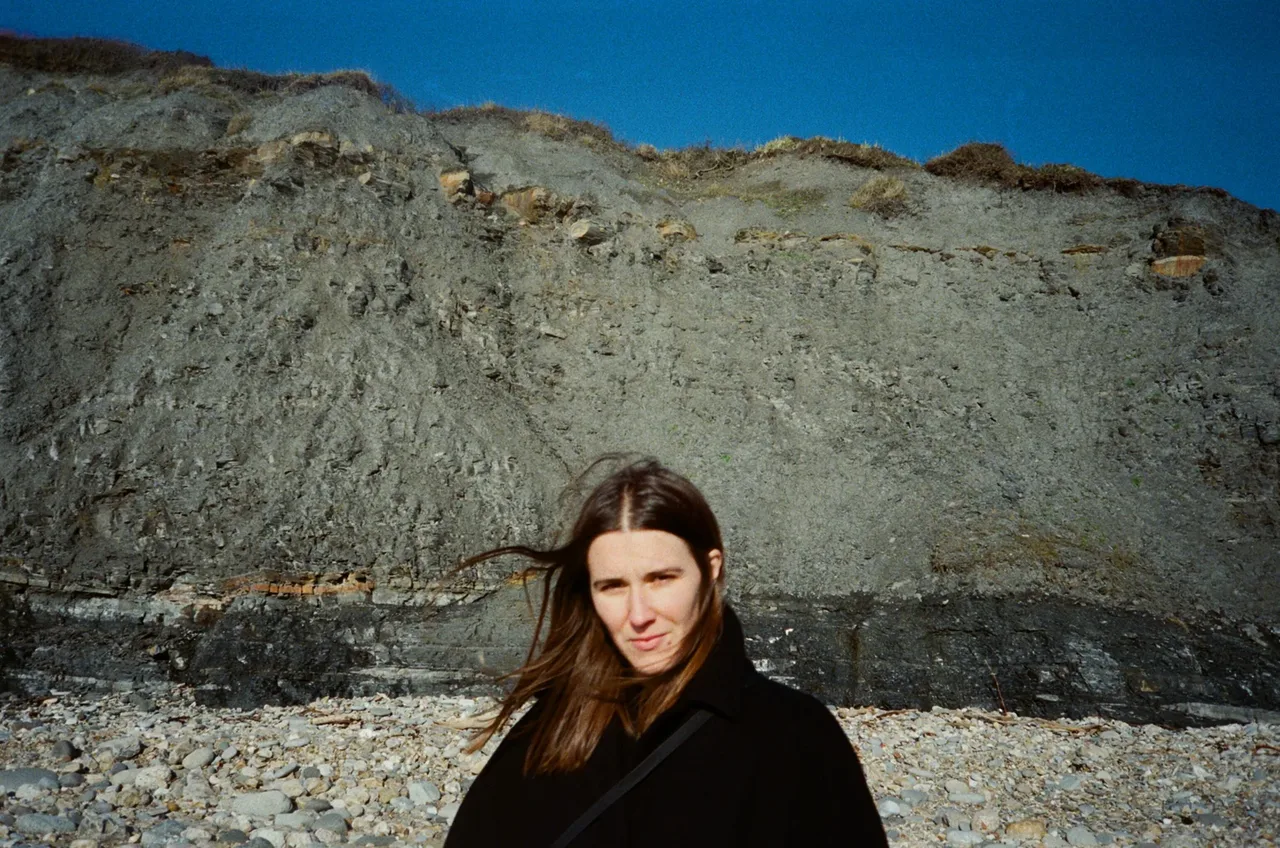
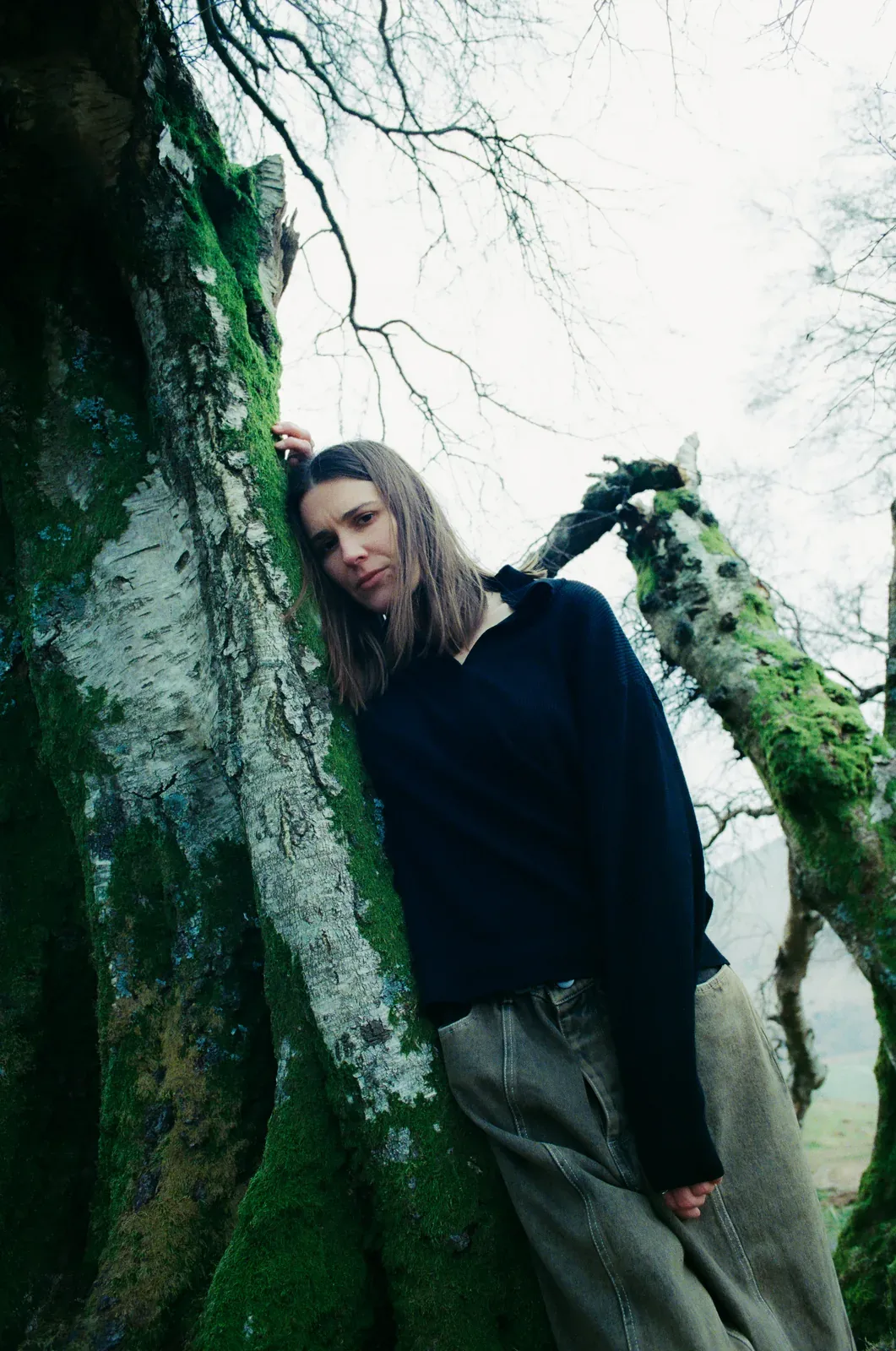
I have always designed my own EP artworks, tour posters, merch etc. But for my first two albums I think I had imposter syndrome, so I designed them with someone else. But for Lean In I was just like, fuck it. Zak and I climbed the Brecon Beacons together and he captured lots of amazing footage and photos, but I made sure he got one of me blurry with the nature in focus, as that was the concept I had in mind for the cover. He was so incredible at interpreting the moodboard for this project, it would be nothing without his photos and films. My label team are really happy with just letting me do stuff, so I insisted on designing it all to the final export.
In Save Something the juxtaposition of subtle percussion with electronic elements, piano, strings, and even small glitch fragments makes everything seem like a time capsule. It's as if we suddenly came across a time capsule from the future with a message inside. And when you listen to the lyrics, it makes sense. It may have nothing to do with this idea, but I wonder how you feel when fans tell you their interpretations of your own songs.
I never like to discuss my lyrics too much. My favourite thing about art is differences in interpretation. I like the mystery of things. It’s like the opening of a film or a piece of good poetry; the emotional attachment or intrigue often comes from filling in the gaps yourself. I also enjoy that I have lyrics that mean a huge amount to me but are meaningless to anyone else. They feel like private moments.
You mention experiencing what you call “Big Life Shit” for the first time while making the record. However, there is a lot of hope in this album, both projected from its music and its ideas. For example, The Peaks acknowledges that the world is not easy but also shares some purpose, to keep trying for things that might matter a lot to us (Frame the mountains you like / I wanna give you the peaks / Don't slip / Hold me). Has the making of this music provided any answers for you?
Yes, I think I’m long overdue to go to some kind of therapy. I feel like I’m always so busy… if it wasn’t for music and the thinking, teaching and research I do around music, I don’t think I would dig inwards and reflect as much as I do.
You describe experiencing grief, joy, anxiety and hope all at once while making Lean In. Do you think we’re culturally more comfortable now acknowledging contradictory emotions? Are we living in times in which these feelings are becoming deeper and therefore harder to manage, in your opinion?
I don’t think I’ve lived through a time of collective emotion like the one we’re currently in. Everyone is exhausted and feeling some grief for the past. We’re helplessly watching the world turn into something quite terrifying. But I think this helps bring important things into focus a bit more.
You have also been working with up-and-coming post-rock band pencil, by producing and engineering their music. How was this experience? Is it more enjoyable or less pressure when you’re producing for other musicians?
I love them! We’ve just been in the studio together and it is such a balm. It’s a very different process to how I make Art School Girlfriend music, all the work is done before hitting record. I set up a bunch of microphones, fiddle around getting a sound, and then they all play live together. It’s all about capturing a magic take. They are some of the best players I’ve ever heard, so I just get to vibe out in the control room with a bottle of wine. Pretty dreamy.
A UK and European tour is about to start, how are rehearsals going? Is it very challenging to take these songs from the warm environment that the studio seems to have been, for its creation, to the stage?
Figuring out how to play my music live is like a puzzle, confusing but satisfying once you get it. Some of these songs really come to life live, rattling around in a big room. They sound different in a good way.