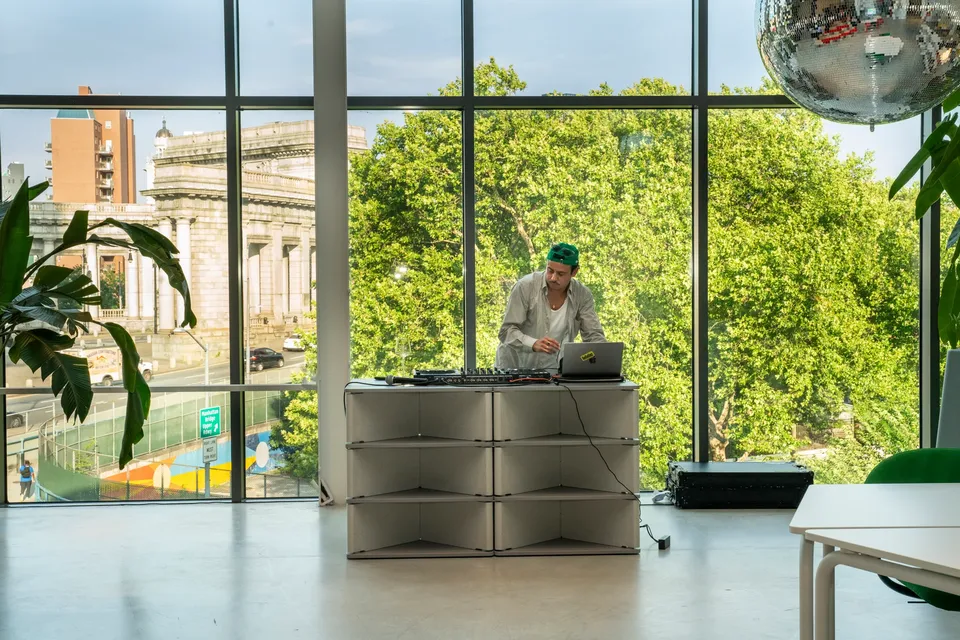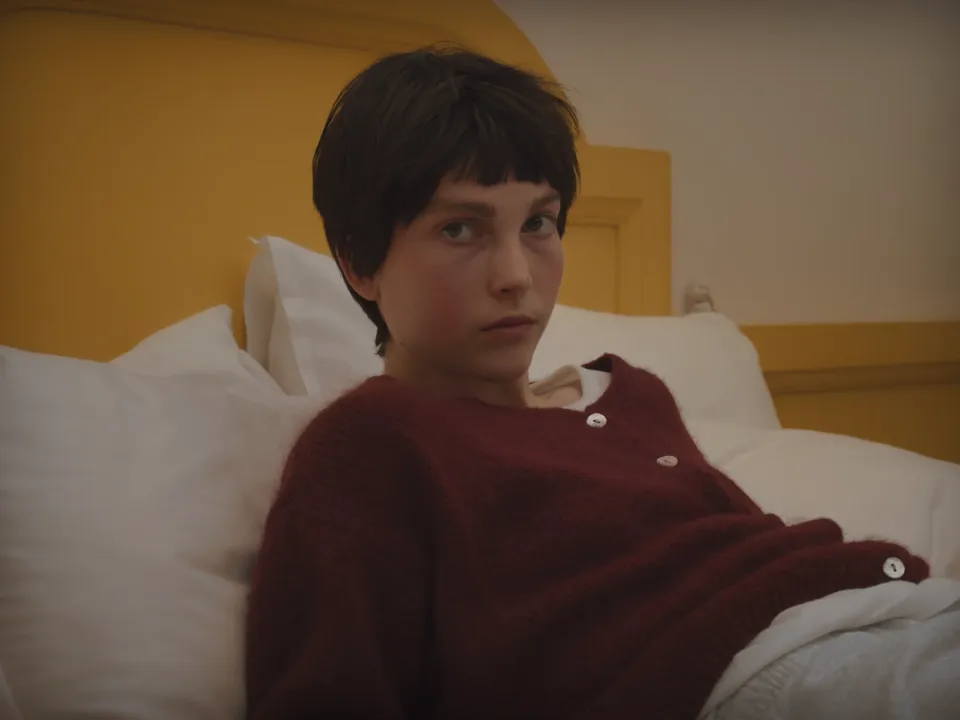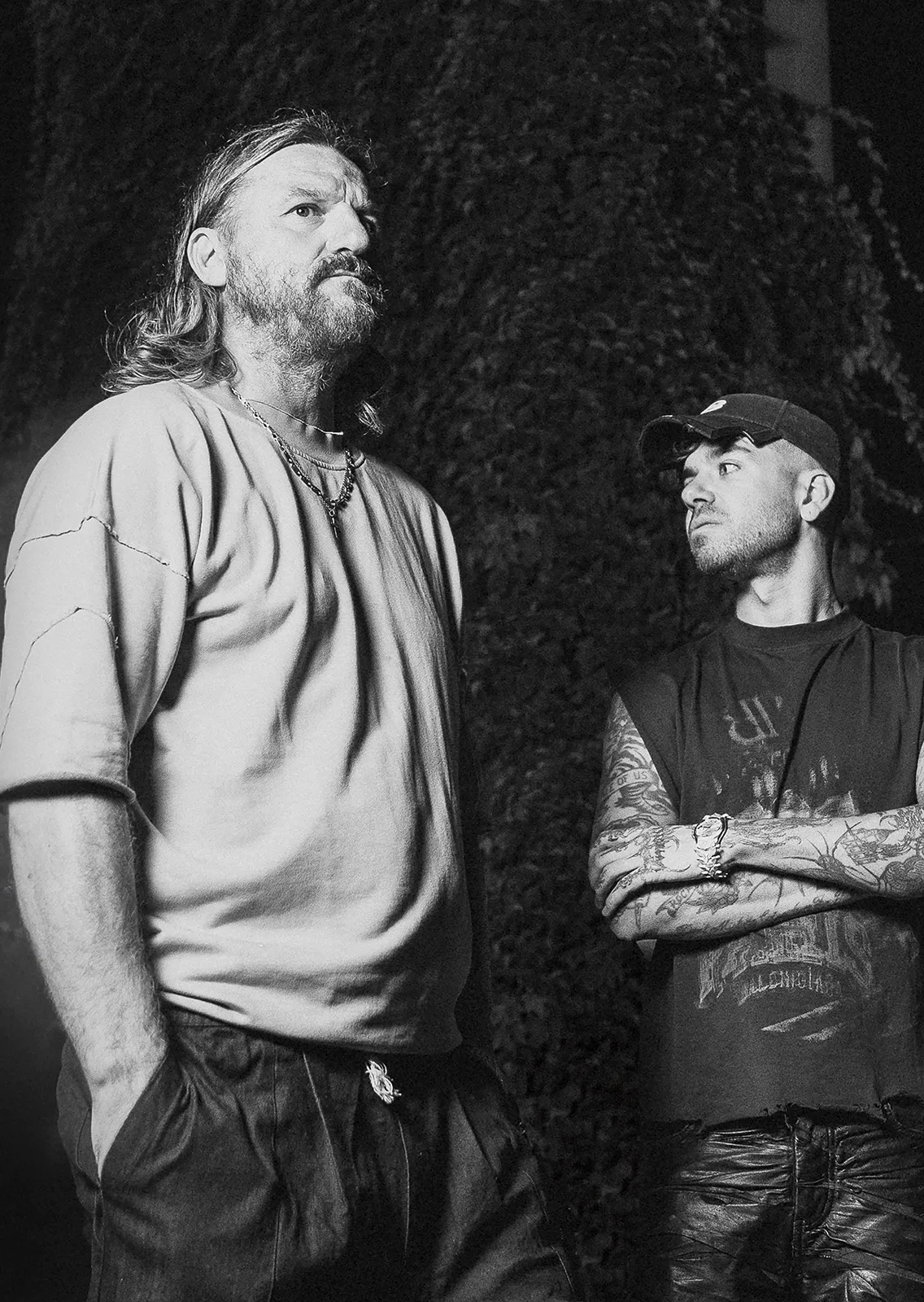
Released in early November, Till I Die arrives as a long-anticipated meeting point between Solomun and Anyma. Speaking with both artists, they walk us through the experience of bringing the track to life, reflecting on a creative process shaped by time, trust, and shared history, while also taking stock of a year marked by constant movement, collaboration, and change. It is a record born in motion, shaped in the spaces where nights stretch longer than expected.
“It’s always difficult to predict how an audience will connect with hearing new music for the first time live,” Anyma reflects, as the track moves beyond the rooms where it was first tested. Solomun frames that shift with calm clarity: “You work on it, test it, reshape it again and again, and then suddenly it belongs to everyone else.”
Beyond the single, our conversation naturally expanded into wider territory, from life on the road to the need for balance after years of intensity. Between studio time, touring, and moments of retreat, both artists spoke openly about routines, change, and the importance of stepping back as much as stepping forward.
It’s a pleasure to speak with both of you, and welcome to METAL. Before we dive into the last weeks and everything surrounding Till I Die, where in the world are each of you answering from today, and what does life look like around you right now?
Solomun: I just returned to Ibiza and will now enter a period of preparation for my sold-out shows at Alexandra Palace in London on February 6 and 7.
Anyma: I am answering from Los Angeles today — I am in and out of studio sessions right now.
Anyma: I am answering from Los Angeles today — I am in and out of studio sessions right now.
In the last weeks since Till I Die came out, the track has already moved far beyond the clubs where listeners first discovered it during your B2Bs. How are you both processing this moment now that the release is finally living its own life?
Anyma: It’s always difficult to predict how an audience will connect with hearing new music for the first time live, but the initial reception of our song was so strong that I’m glad the record is out and belongs to the fans.
Solomun: You work on it, test it, reshape it again and again, and then suddenly it belongs to everyone else. Over time, it changes with every test, and when it’s finally released, there’s a sense of relief; the creative process is complete. From that point on, how it performs almost becomes secondary. What matters is watching people respond in ways you could never have predicted.
Solomun: You work on it, test it, reshape it again and again, and then suddenly it belongs to everyone else. Over time, it changes with every test, and when it’s finally released, there’s a sense of relief; the creative process is complete. From that point on, how it performs almost becomes secondary. What matters is watching people respond in ways you could never have predicted.
You’ve shared countless stages over the years, from Tomorrowland to Ultra and the Sphere in Las Vegas, but translating that onstage chemistry into a studio collaboration carries a different kind of vulnerability. Was there a moment during a set when you both instinctively felt that making a track together was no longer optional?
Solomun: There wasn’t one big moment where we suddenly knew we had to make a track together. It happened very naturally. We’ve known each other for a long time, having played many shows and B2Bs, and last year we already discussed doing more together. From there, it felt obvious to also think about making a track. We started sending ideas back and forth, without any pressure, just curiosity. It was simply about seeing what would happen if we tried to capture that chemistry in a different space.
Anyma: It came about very naturally, especially considering how long we’ve known each other. As Mladen said, it started out more as a curiosity but very quickly became a reality.
Anyma: It came about very naturally, especially considering how long we’ve known each other. As Mladen said, it started out more as a curiosity but very quickly became a reality.
The track holds a late-night emotional tension that never fully resolves. When the first ideas appeared, what feeling did you want to protect above everything else?
Solomun: We tried to find our common ground and work from there, bringing our two tastes together within one track. It was important to preserve a sense of emotional gravity, something that pulls you in without overwhelming you.
Anyma: A true collaboration and the ones I enjoy the most, especially from producers, are ones where you can still hear and sense each individual's parts and influence. I think we were able to achieve that delicate balance.
Anyma: A true collaboration and the ones I enjoy the most, especially from producers, are ones where you can still hear and sense each individual's parts and influence. I think we were able to achieve that delicate balance.
“I think our duality of scale and intimacy helped us find a true medium between our two worlds — I believe our song will stand the test of time when we look back.” Anyma
Your artistic languages come from different worlds. What genuinely surprised you about the other’s way of building energy or leaving space?
Anyma: Mladen’s ability to curate and truly represent the art of DJing on the highest level is something that still continues to surprise and impress me, even after all these years we’ve known each other. I think our duality of scale and intimacy helped us find a true medium between our two worlds — I believe our song will stand the test of time when we look back.
Solomun: What I appreciate in Matteo’s work is the strong visual thinking behind his sound design. He builds scenes in the music, almost like a film. I come more from the narrative arc of a DJ set, so meeting in the middle was interesting, though not entirely surprising, as we’ve known each other for a long time. Because of that closeness, I’ve always been aware of the hard work behind what he does.
Solomun: What I appreciate in Matteo’s work is the strong visual thinking behind his sound design. He builds scenes in the music, almost like a film. I come more from the narrative arc of a DJ set, so meeting in the middle was interesting, though not entirely surprising, as we’ve known each other for a long time. Because of that closeness, I’ve always been aware of the hard work behind what he does.
Some tracks appear fully shaped, others take time to reveal themselves. How did Till I Die arrive to you?
Solomun: It wasn’t a track that appeared fully formed. It developed step by step. We started with a very basic version and kept working on it over a longer period of time, without any pressure. Whenever one of us felt a new direction or had a fresh idea, we explored it. We tested different versions in our sets, and the crowd reactions helped us understand which direction made sense. The first presentable version came out of our B2B at Ultra Miami in March, and from there, we spent a lot of time on details and mixing. Some tracks need time to reveal their shape, and Till I Die was one of those. In the end, we allowed ourselves that time.
Anyma, looking back at everything you've released so far, is there one track or project you consider a turning point for you?
My most recent album, The End Of Genesys, felt like a turning point in many ways. It felt like a marker of time and was the literal culmination of an era for me, with my Sphere shows. It has been really liberating to have that project out in the world and give proper closure to the Genesys trilogy.
Solomun, your catalogue is huge and spans so many moments in dance culture. Is there a release or remix you still think about often, something that stayed with you more than you expected?
I usually don’t think in turning points, but looking back honestly, the remix of Around in 2011 was a defining moment. Still, I try not to focus too much on the past. What continues to surprise me is how some tracks start to live a life of their own many years later. You can never plan that, and it’s what keeps the journey exciting. Being given the chance to remix for so many incredible artists I’m personally a fan of and deeply admire is a gift in itself. That I was able to create remixes for such different and inspiring artists as Lana Del Rey, Fred Again.., Jamie xx, Leonard Cohen, Apparat or José González is something I’m truly grateful for.
You’ve both played Till I Die in different environments these past weeks. Did any reaction surprise you, or make you hear the track in a new way?
Solomun: What surprised me most is how differently the track behaves in each room. Sometimes it feels intimate and almost fragile, and sometimes it becomes more uplifting. The tension leaves space for interpretation, and people respond to that in their own way. It was simply nice to see that it seemed to work for me in very different places.
Anyma, after such an intense few years with the Genesys universe, do you feel your approach to music is changing, or does it still come from the same place?
The last few years have definitely changed my approach. I’m evolving, and so is my sound. I’m working hard to find and retain the core emotion that transcends the spectacle, but my way of expression is definitely shifting. I’m experimenting heavily right now to push myself and my project, so as not to repeat myself.
“I try not to focus too much on the past. What continues to surprise me is how some tracks start to live a life of their own many years later.” Solomun
Solomun, you’ve played thousands of shows in your career. Is there anything about your process now that feels different from the early days?
The principle has stayed the same. I still rely on instinct when I play. Of course, I have much more experience now than in the early days, and that helps me understand the flow of a night in a deeper way. But at its core, my approach has not changed. I choose music I believe in, I try to read the room, and I try to create a journey. The tools and the awareness have grown, but the curiosity and the joy behind it remain the same.
Your careers have evolved from underground beginnings to global, immersive stages. Do you feel the electronic scene is entering a new era of storytelling, or simply circling back to something essential?
Anyma: Storytelling has always been essential to my music, and my favorite electronic music specifically always has this goal to bring the audience on a journey. Now I think we’re widening the scope of what those journeys can be, and I believe, raising the bar of what live music in general can be. To me, it feels like a new era where technological innovation can help artists maximize that core aspect of world immersion for their vision and for their audience.
Solomun: Even before Covid, things were already getting bigger, partly driven by social media. After Covid, that growth really accelerated. The scene has developed into something very visual and ambitious. At the same time, the opposite movement continues to exist. Small and intimate events are still there, and they are essential to the culture because they keep it honest and human. What matters most is preserving that diversity. From big stages to small clubs to illegal raves, electronic music has the ability to reach and move people in any kind of setting.
Solomun: Even before Covid, things were already getting bigger, partly driven by social media. After Covid, that growth really accelerated. The scene has developed into something very visual and ambitious. At the same time, the opposite movement continues to exist. Small and intimate events are still there, and they are essential to the culture because they keep it honest and human. What matters most is preserving that diversity. From big stages to small clubs to illegal raves, electronic music has the ability to reach and move people in any kind of setting.
Both of you live on intense touring schedules. What’s the hardest part of maintaining a real, human rhythm inside such an inhuman pace?
Solomun: Knowing your limits, and accepting that rest is not a luxury but a necessity. The people around me help me to keep perspective, and we’re constantly fine-tuning to find the right balance.
When you’re alone again after days surrounded by crowds, what grounds you the fastest?
Anyma: A priority for me is always to work out and make time for exercise, which is for me the most grounding. Otherwise, I’ve been an avid gamer all my life.
Solomun: My rituals are always the same and very simple. I go to the sauna, and I play tennis. Over the years, these two things have become my most important tools for maintaining balance. When I’m not touring, I do both almost every day. They ground me and help me disconnect. There’s always a strong contrast between the public side of this life and the private one, and these routines make that transition much easier.
Solomun: My rituals are always the same and very simple. I go to the sauna, and I play tennis. Over the years, these two things have become my most important tools for maintaining balance. When I’m not touring, I do both almost every day. They ground me and help me disconnect. There’s always a strong contrast between the public side of this life and the private one, and these routines make that transition much easier.
There’s a part of your work that relies on presence, but also on absence, disappearing to create, reappearing to perform. How do you manage that cycle emotionally?
Solomun: For me, it has become second nature. Touring and disappearing into the studio are two sides of the same process. One gives energy to the other. I see absence as part of creation. You cannot always be visible. Silence is where ideas form.
As the year comes to an end, after such an intense stretch for both of you, what are you each most proud of, and what genuinely surprised you about yourselves?
Anyma: I feel like I have really pushed myself and my project, and it has truly paid off. Closing the Genesys chapter and beginning to build the next ÆDEN chapter has already felt very rewarding. I feel especially very proud of my Sphere residency and all the challenges that came with it. I think just how far and unexpected some of the places my project has brought me have been the most surprising part of what we’ve been able to achieve.
Solomun: I feel grateful that so many producers after so many years still continue to place their trust in Diynamic and me, and still choose to share their music. That’s something I never take for granted. I’m also thankful that I managed to keep a sense of balance during a very intense year. Touring can easily pull you into a rhythm where everything becomes extreme, so finding moments of normality feels more important than ever. I tried to protect the routines that keep me grounded. What surprised me was realizing that I even improved in areas outside of music. I got better at tennis this year, and that genuinely made me happy. It reminded me that growth can happen in unexpected places.
Solomun: I feel grateful that so many producers after so many years still continue to place their trust in Diynamic and me, and still choose to share their music. That’s something I never take for granted. I’m also thankful that I managed to keep a sense of balance during a very intense year. Touring can easily pull you into a rhythm where everything becomes extreme, so finding moments of normality feels more important than ever. I tried to protect the routines that keep me grounded. What surprised me was realizing that I even improved in areas outside of music. I got better at tennis this year, and that genuinely made me happy. It reminded me that growth can happen in unexpected places.
Across your individual histories, where does Till I Die sit in your personal timelines? What does it represent for each of you?
Solomun: For me, it represents a moment of artistic alignment: two different worlds meeting in a space that feels natural. It does not feel like my track or his track. It feels like something shared. Maybe that is why it holds a special place for me.
Anyma: I feel like Till I Die is very representative of where I am right now, and even better to do it with Mladen. To me, this track stands as a testament to our passions.
Anyma: I feel like Till I Die is very representative of where I am right now, and even better to do it with Mladen. To me, this track stands as a testament to our passions.
And looking beyond your own worlds for a moment, is there any artist in the current scene we should be paying attention to, someone you believe has something special and worth following?
Anyma: I’ve been listening to Oklou’s latest album on repeat. Really beautiful and special body of work. She’s absolutely worth following.
Solomun: There are so many interesting voices right now. I enjoy artists who take risks and explore new edges of the genre. There are many rising talents bringing fresh ideas to the scene. Authenticity is what matters most to me.
Solomun: There are so many interesting voices right now. I enjoy artists who take risks and explore new edges of the genre. There are many rising talents bringing fresh ideas to the scene. Authenticity is what matters most to me.