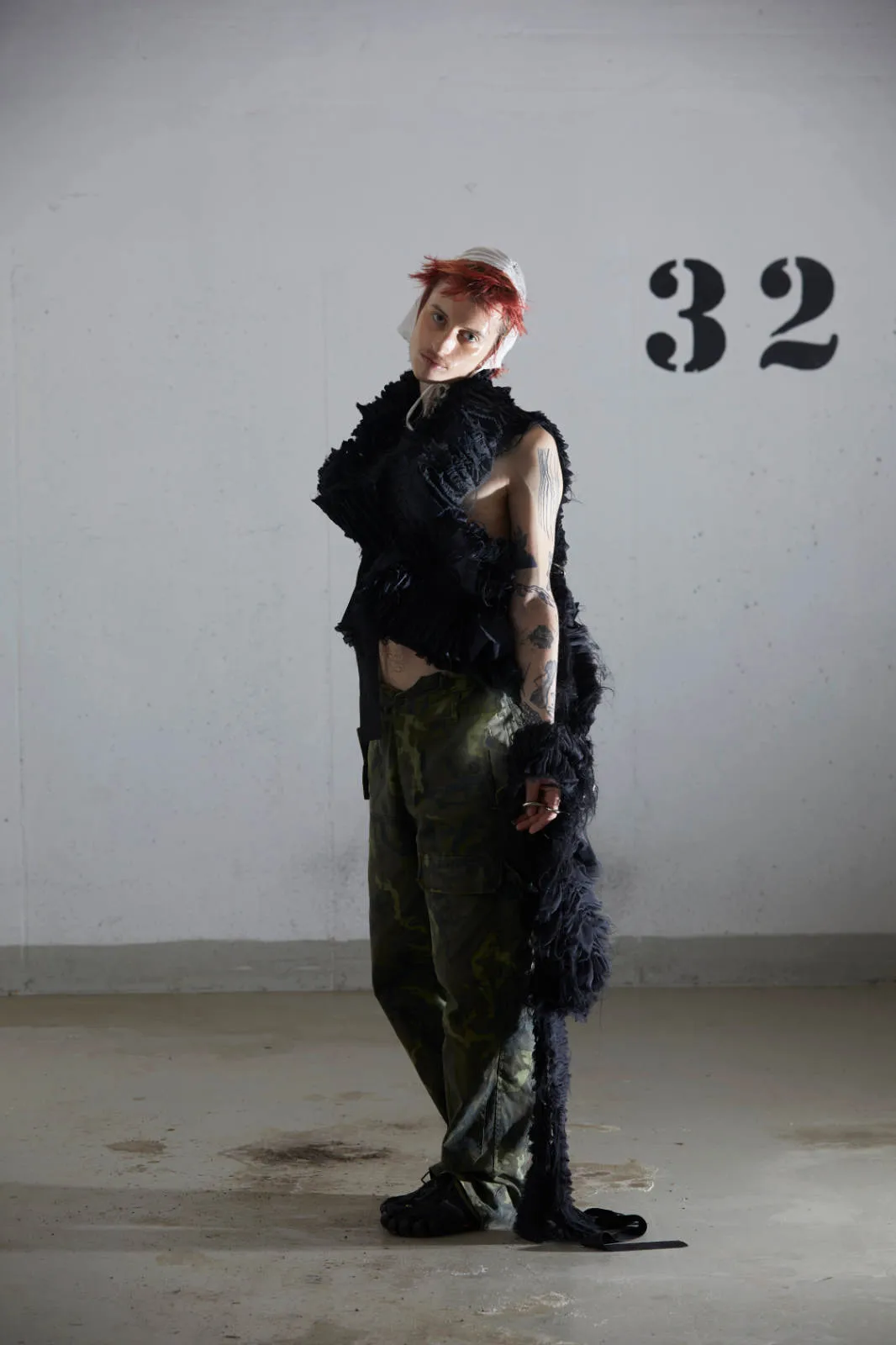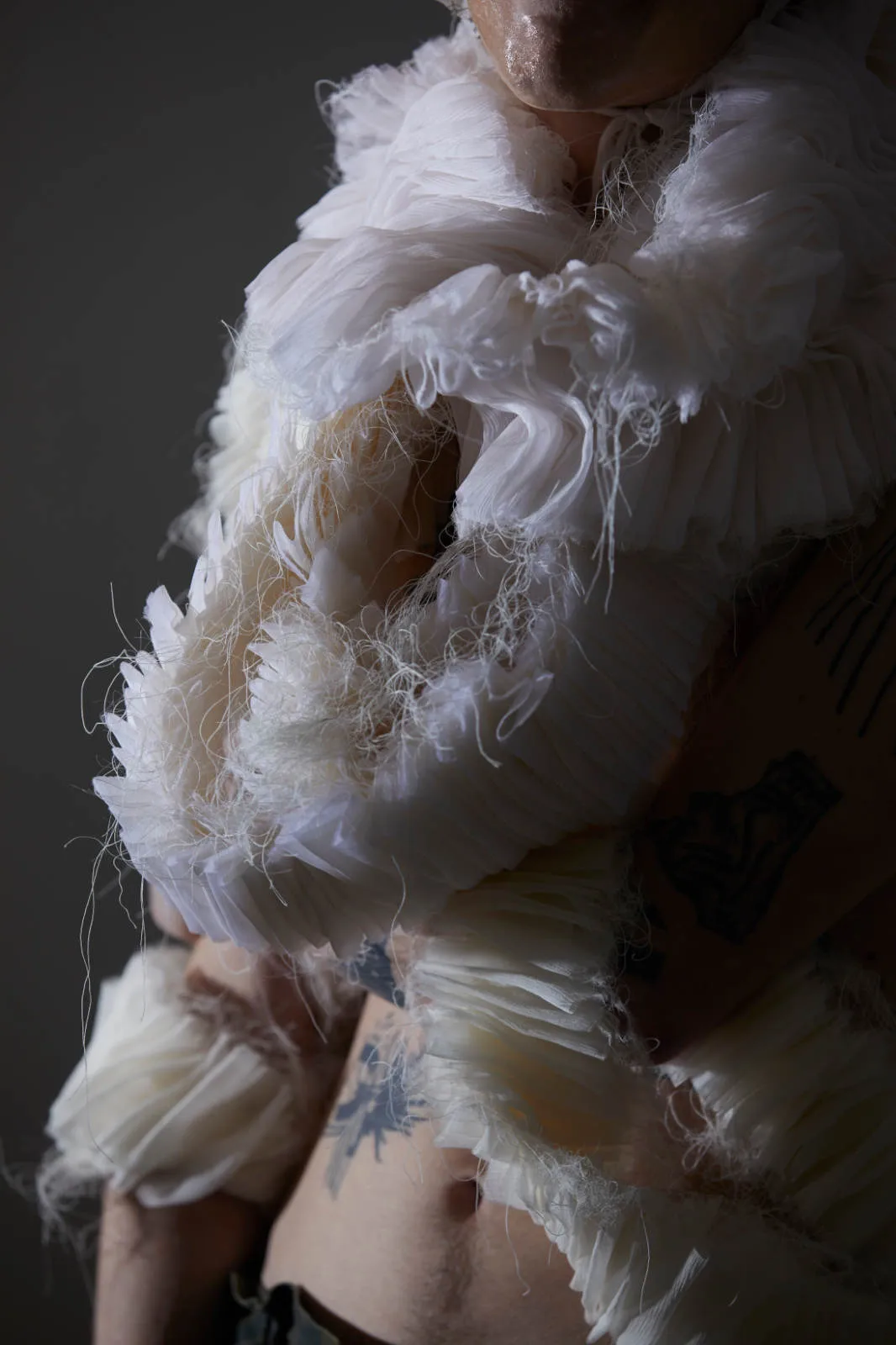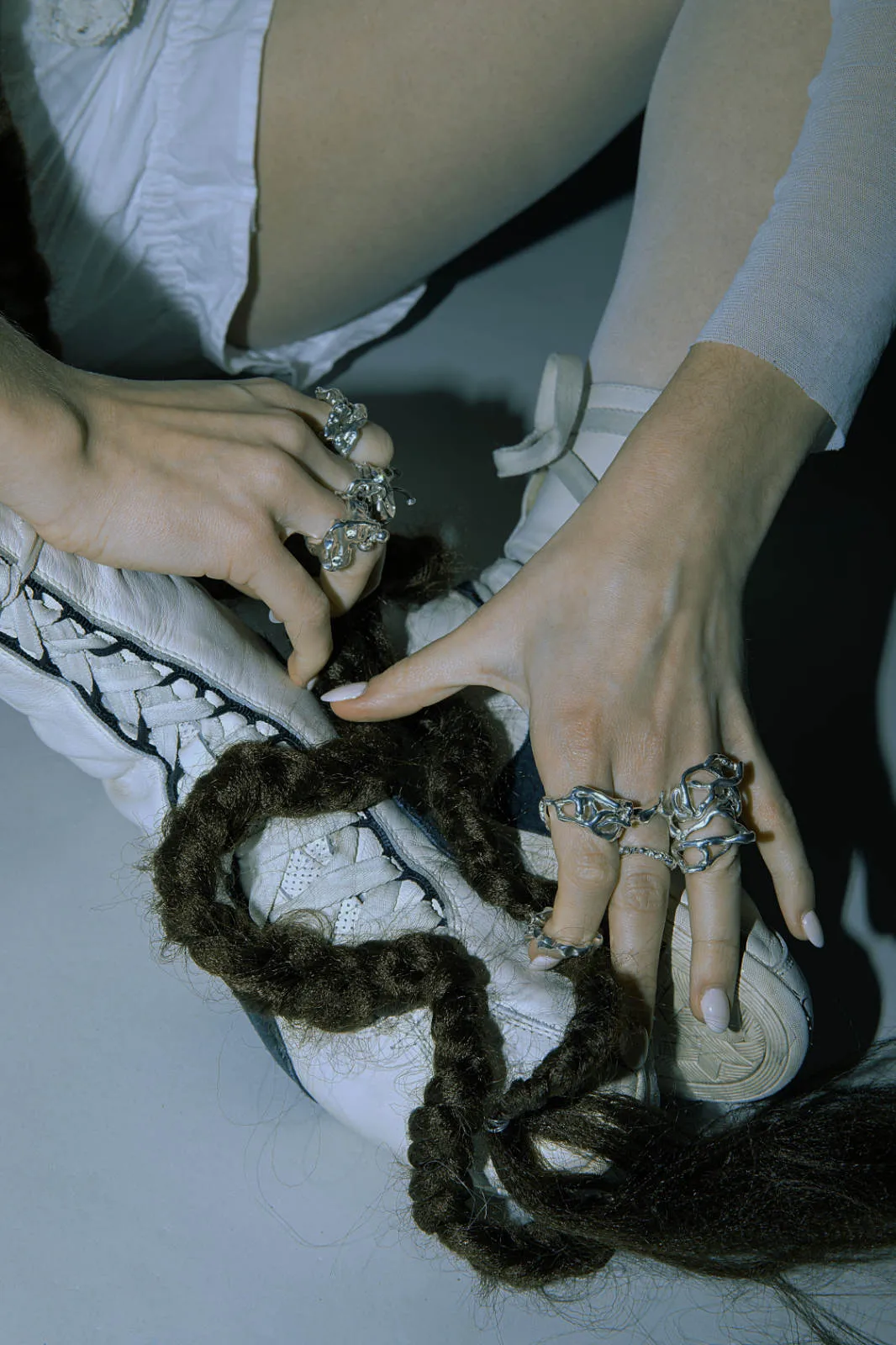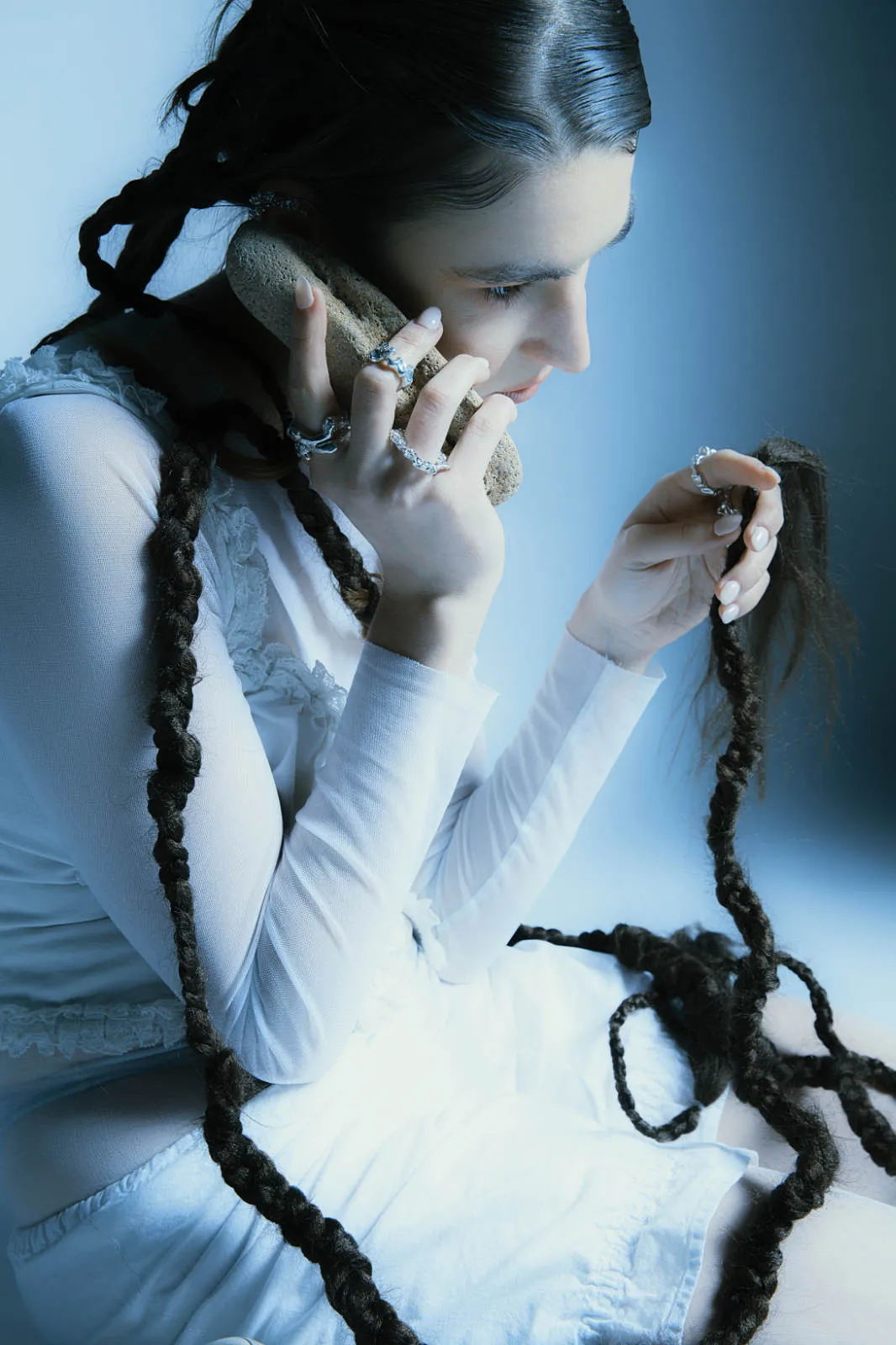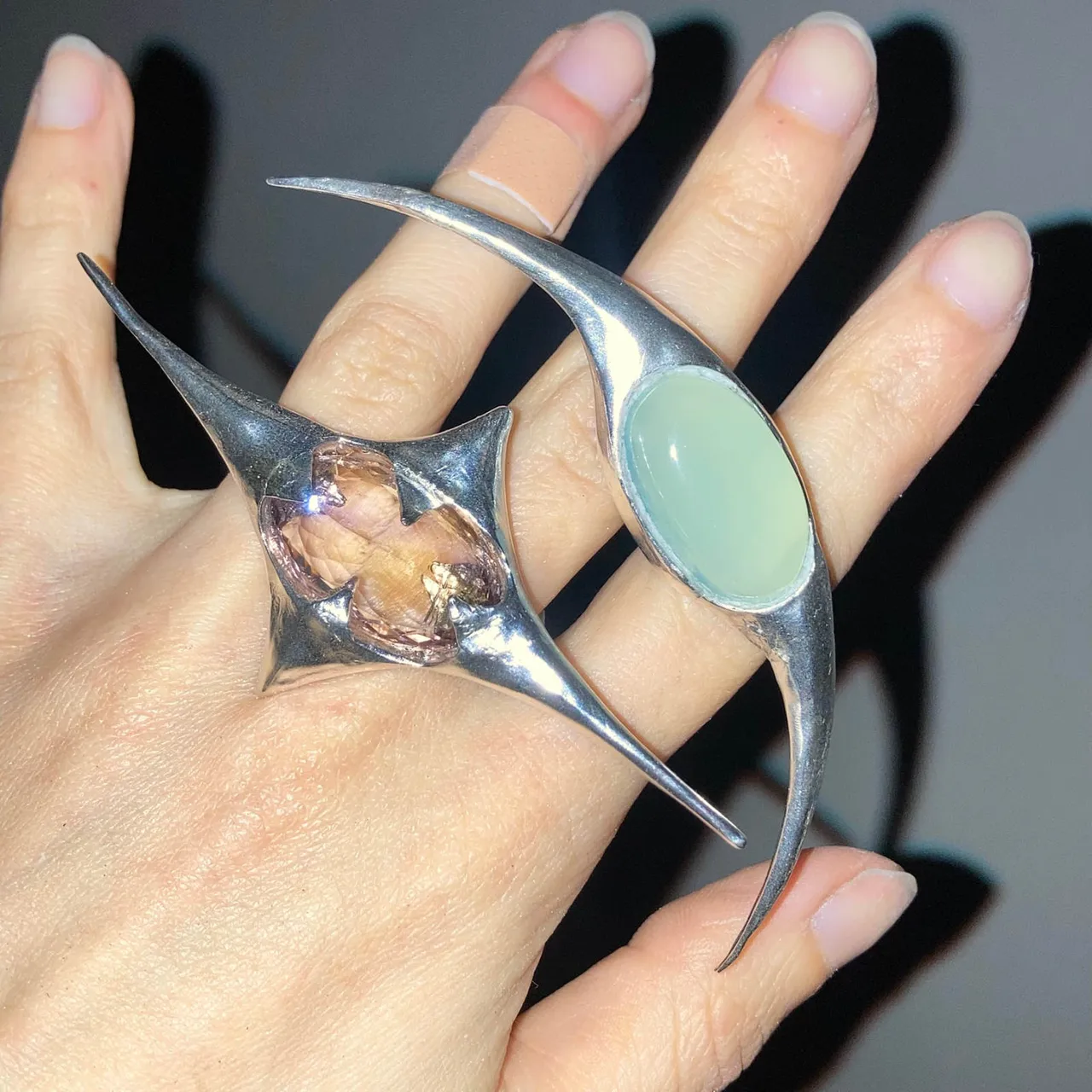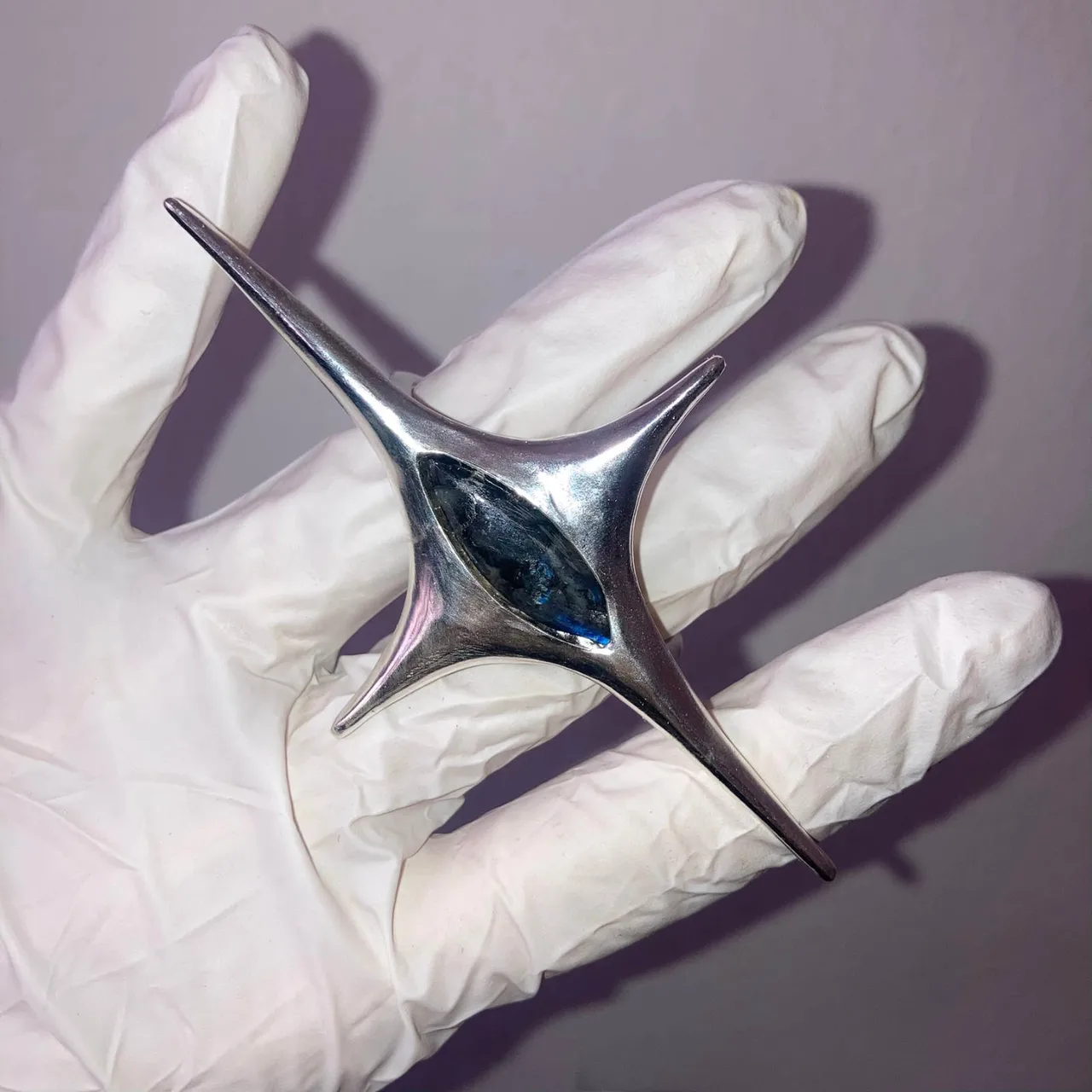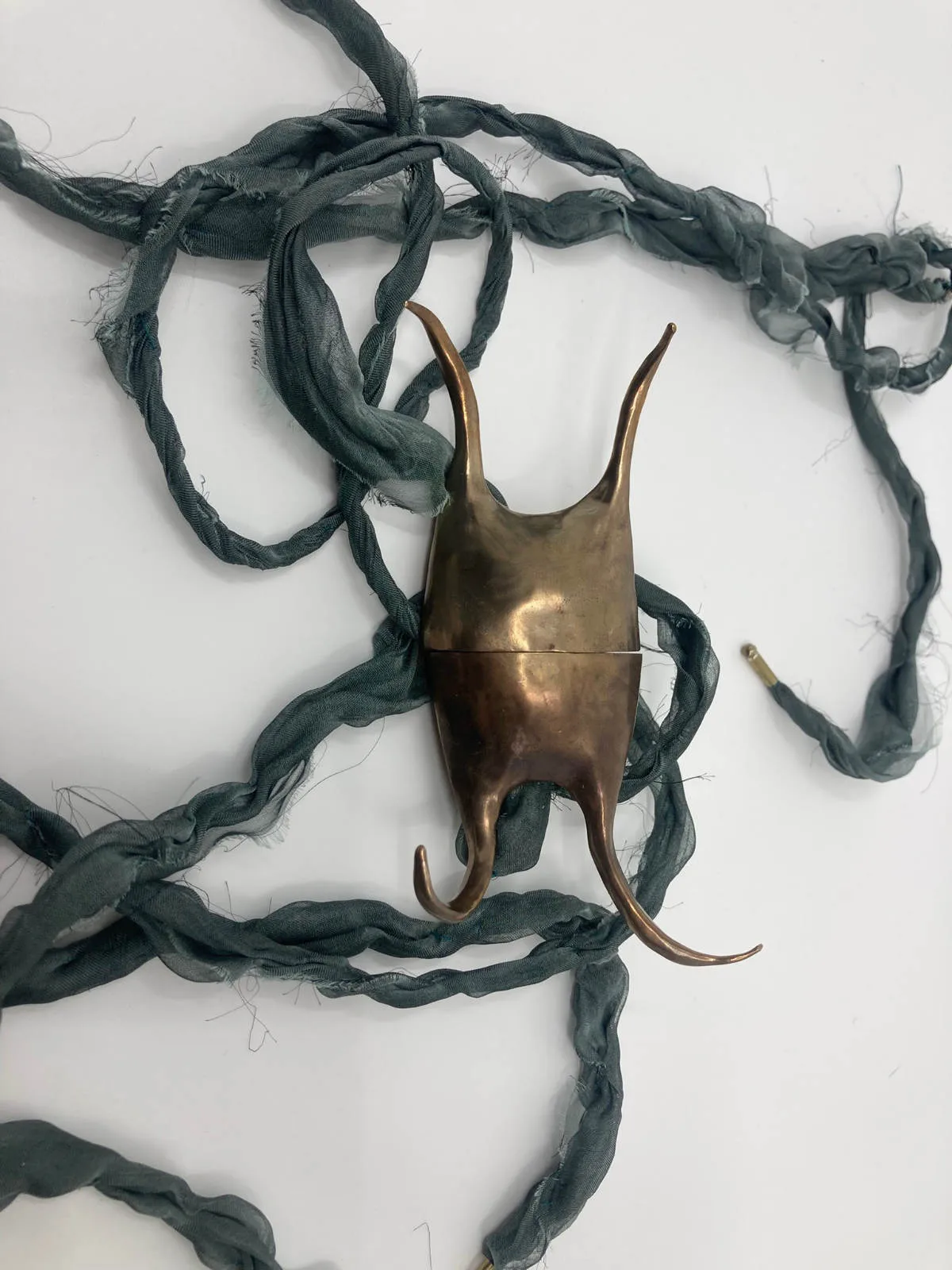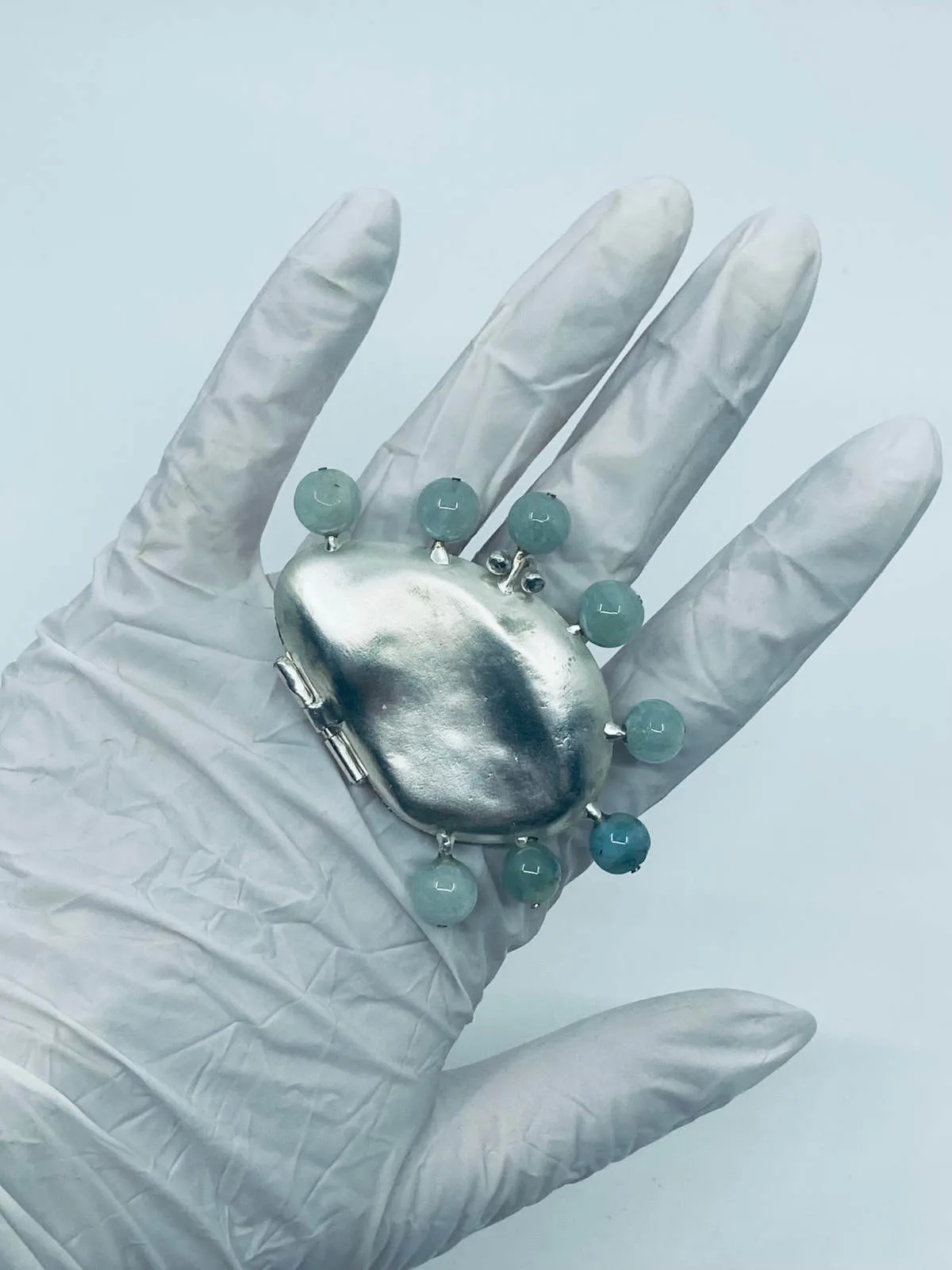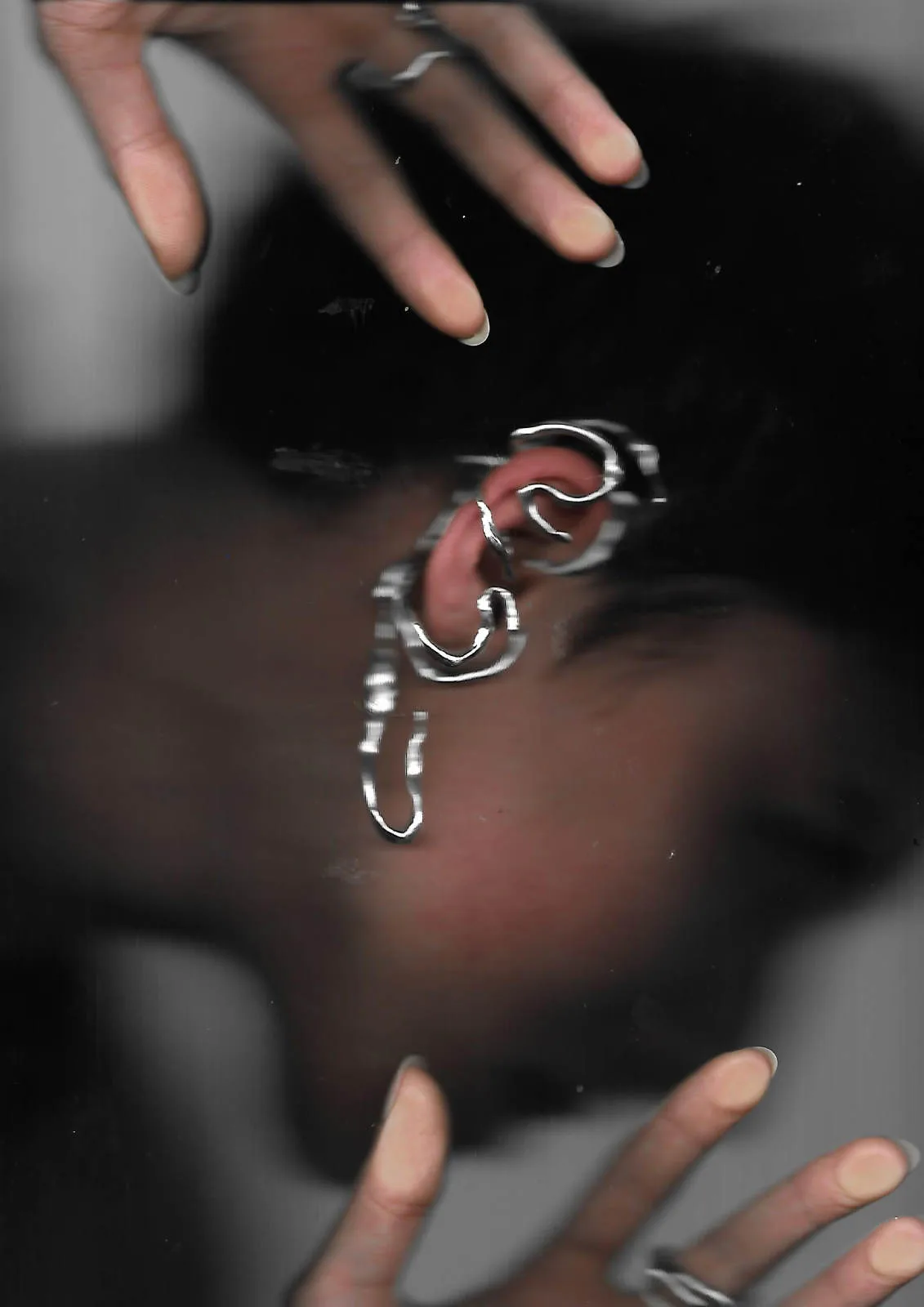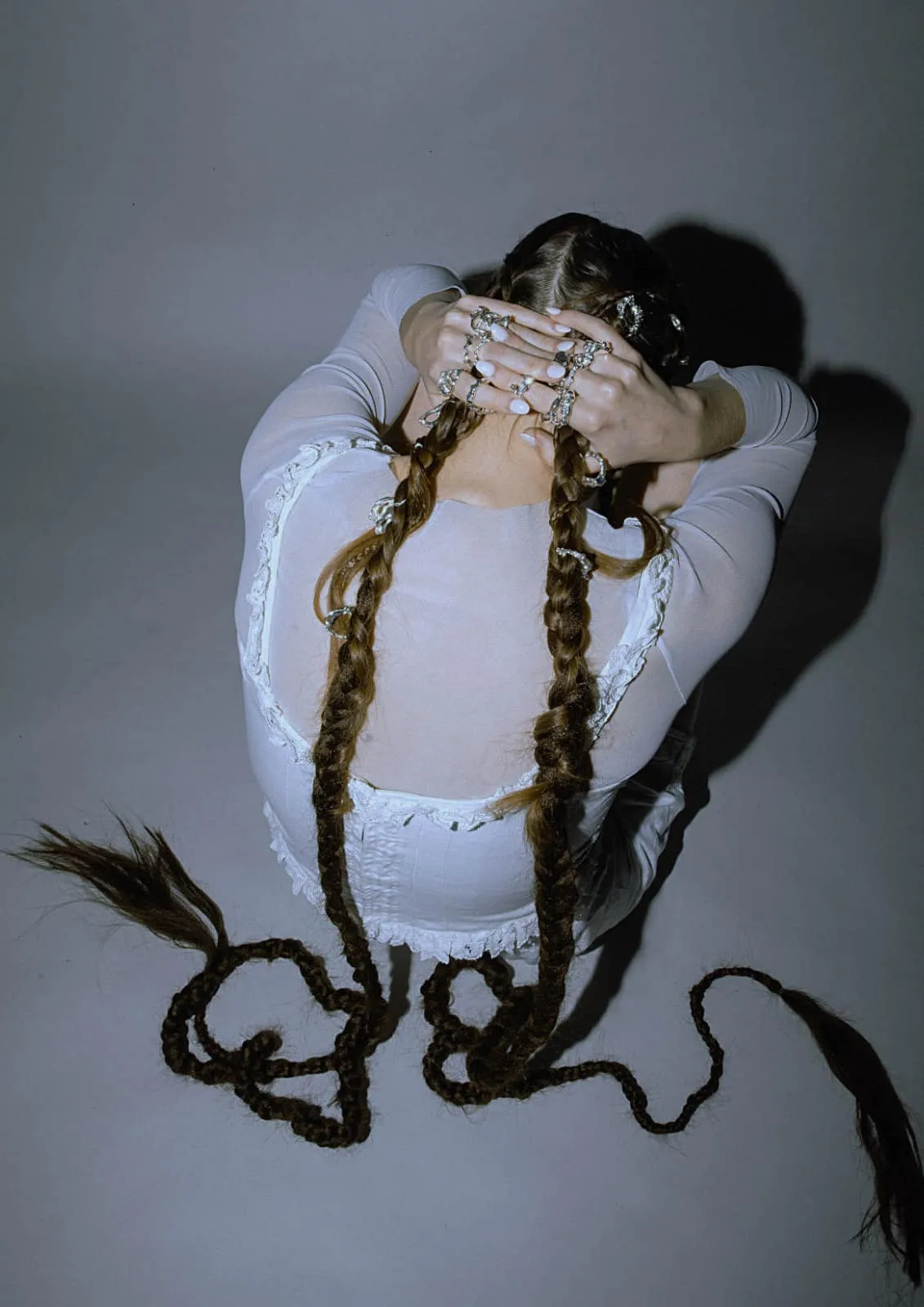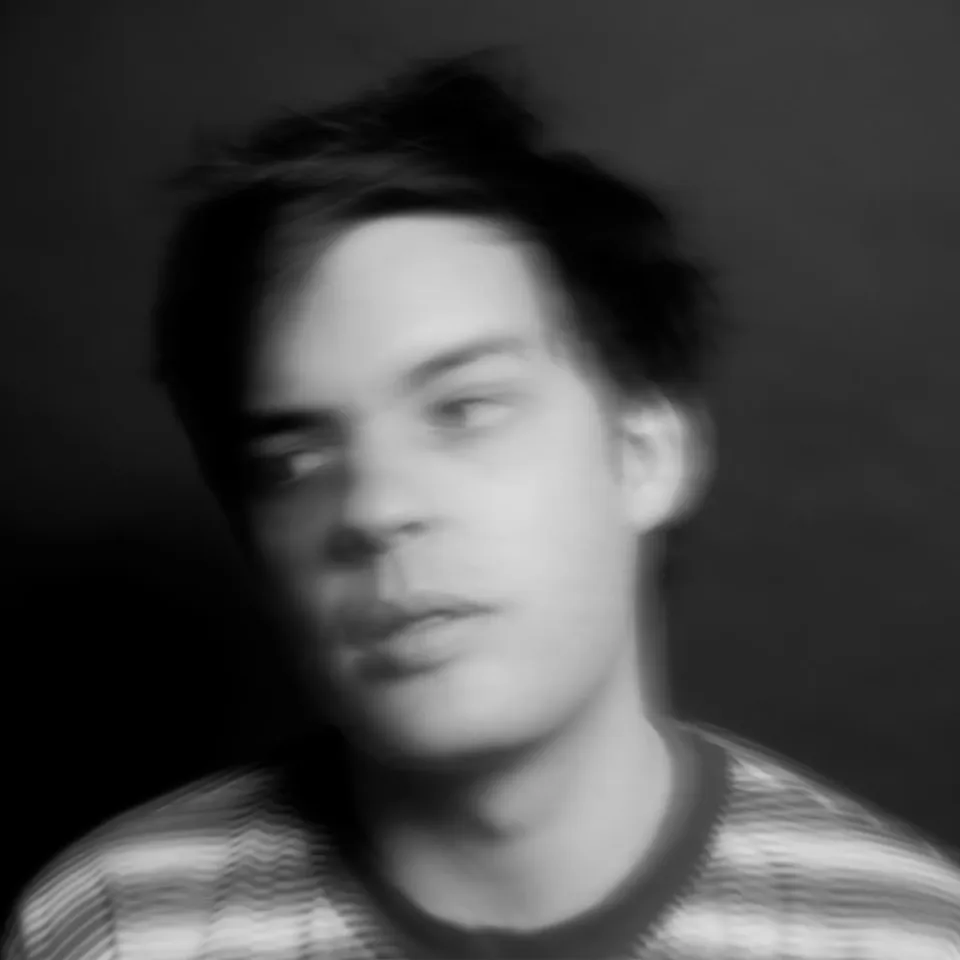
Anna Rusínová is a Czech jeweller and artist, graduated from the K.O.V. Studio at the Academy of Arts, Architecture and Design in Prague. Her practice lies at the intersection of contemporary jewellery and wearable objects that border on small-scale sculpture. Working with historical and past references, she creates delicate pieces, full of details and organic shapes.
Through her creations, Anna Rusínová experiments with how jewellery and body interact, establishing both a physical and emotional connection between them. Blue, green, pink and grey, her pieces are adorned with natural semi-precious stones such as amethyst and chalcedony. With her jewellery tools, Anna Rusínová navigates small and large-scale formats to merge jewellery, sculpture and installation. In this interview, the artist shares with us her work process, inspirations, and reflects on the relationship between object and body.
Can you tell us how your interest in jewellery began and when you decided to make it your profession?
My interest in jewellery began when I first discovered the studio where I later studied for my Bachelor’s and Master’s degrees – Studio K.O.V. at the Academy of Arts, Architecture and Design in Prague. At that time, I had never seen anything like the works produced there – they were able to push the boundaries between design, applied arts, and fine art, which I found fascinating. I applied just to see what would happen and got lucky. Once I started studying, my interest in jewellery only grew stronger.
You situate your practice at the intersection between “contemporary jewellery and wearable objects bordering on small-scale sculpture.” Could you explain how they come together in your practice?
I try to think of every single piece of jewellery I make as a self-standing object, a sort of sculpture. Of course, the piece has to work on the body, but I like to see it as an independent entity as well. I also work on larger-scale pieces and mixed media, but metal and jewellery are always somehow incorporated.
Many of your pieces seem to prolong or extend the body. What relationship do you want to create between the jewellery and the body?
I hope that all of my jewels can become a sort of cohabitant of the wearer. At first, my interest focused mainly on the physical relationship between the object and the person – how weight or size affects one another’s movements and so on. Nowadays, I am more concerned with the emotional connection between the two and how that can mutually change them, both physically and more symbolically.
Your designs are characterised by organic shapes and intricate details. Can you explain your working techniques, from the materials you use to how you work with them to achieve these meticulous results?
I create all of my pieces as one-of-a-kind originals. I carve each one by hand out of specialised jewellery wax, which is then cast using the lost-wax casting method. I am not very used to sketching, although nowadays I am trying to return to it. Usually, I work directly with the material and my drill and just let my hand guide me through the shapes.
In your work, you explore “past or historical references.” What inspires you about history and which references nourish you the most?
My mother is a costume designer, so I grew up surrounded by books about fashion history. An interest in what, and especially why, people wore certain things in the past on a daily basis has always been a great source of inspiration for me. Besides that, I am captivated by discovering seemingly mundane everyday objects and finding out everything I can about them.
I am fascinated by things, not necessarily on a purely material level. I believe that every object has its own special kind of magic, meaning, or secret waiting to be discovered.
I am fascinated by things, not necessarily on a purely material level. I believe that every object has its own special kind of magic, meaning, or secret waiting to be discovered.
If you had a time machine, where would you like to go?
I would say somewhere in the future, but I don’t think I am brave enough. So probably the past, although it’s difficult to pinpoint an exact moment. I’m a bit too greedy for that; I would want to see everything.
Purple, green, pink, grey, orange beads reoccur in your creations. Where do you source your beads, how do you choose them, and based on which criteria?
I work with natural semi-precious stone beads such as chalcedony, amethyst, prehnite, and others, which I usually source locally here in Prague. I think that beads – and their form – are somewhat emblematic of Czechia, given its history of large costume jewellery factories and production of glass beads.
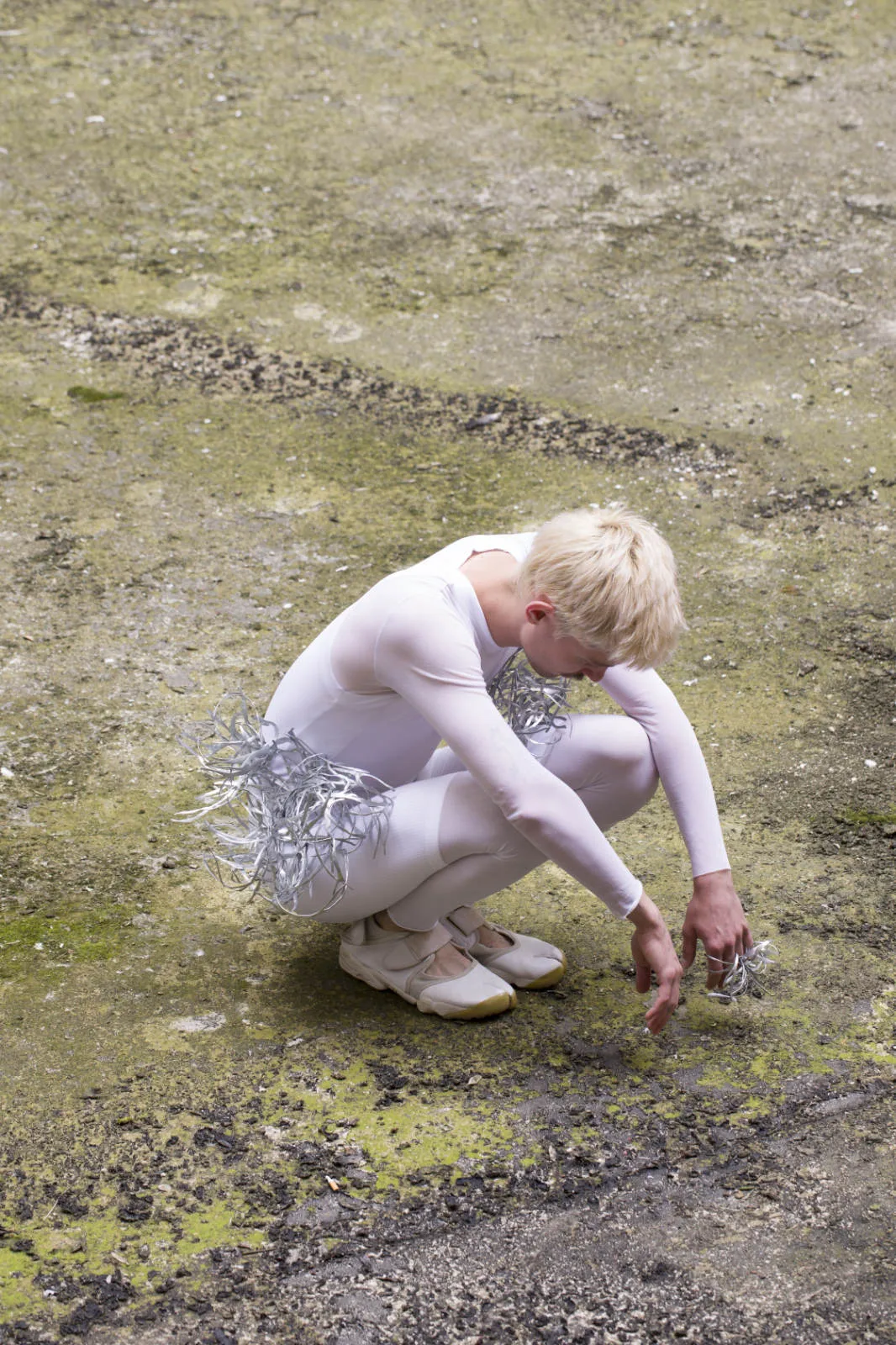
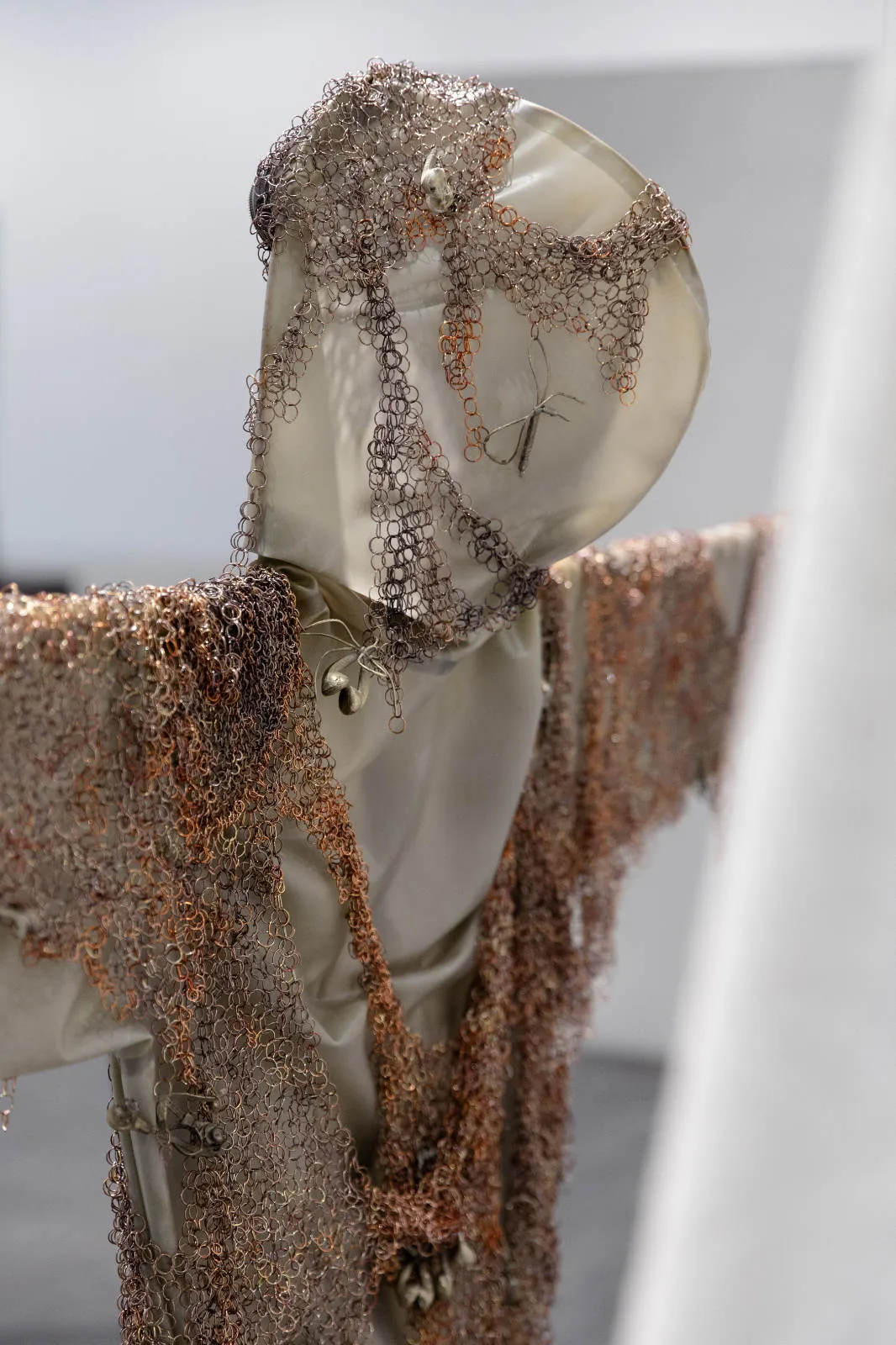
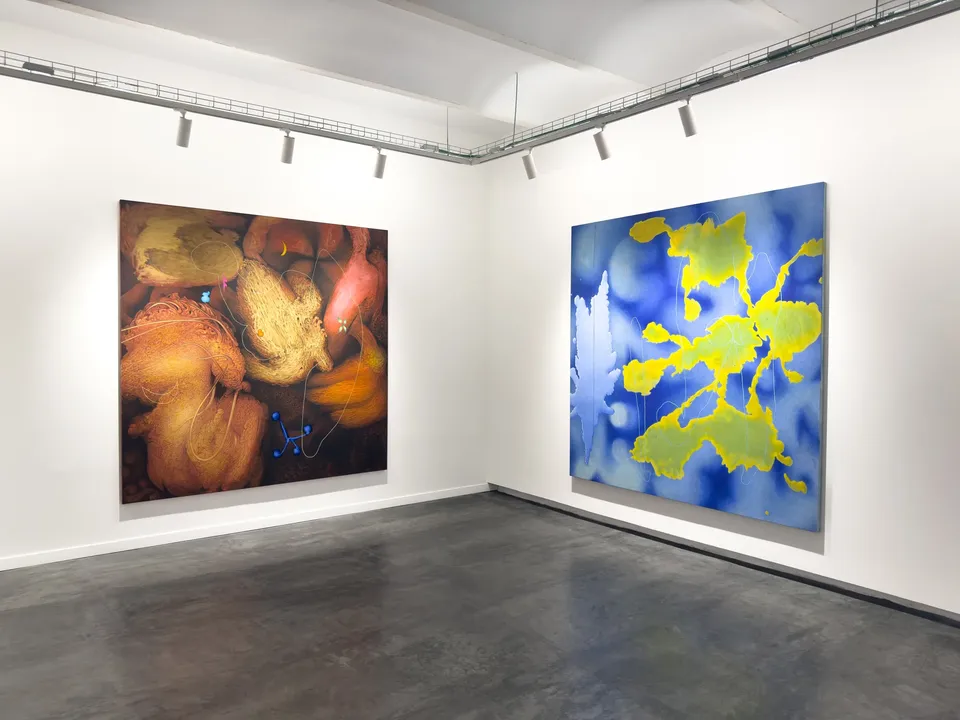
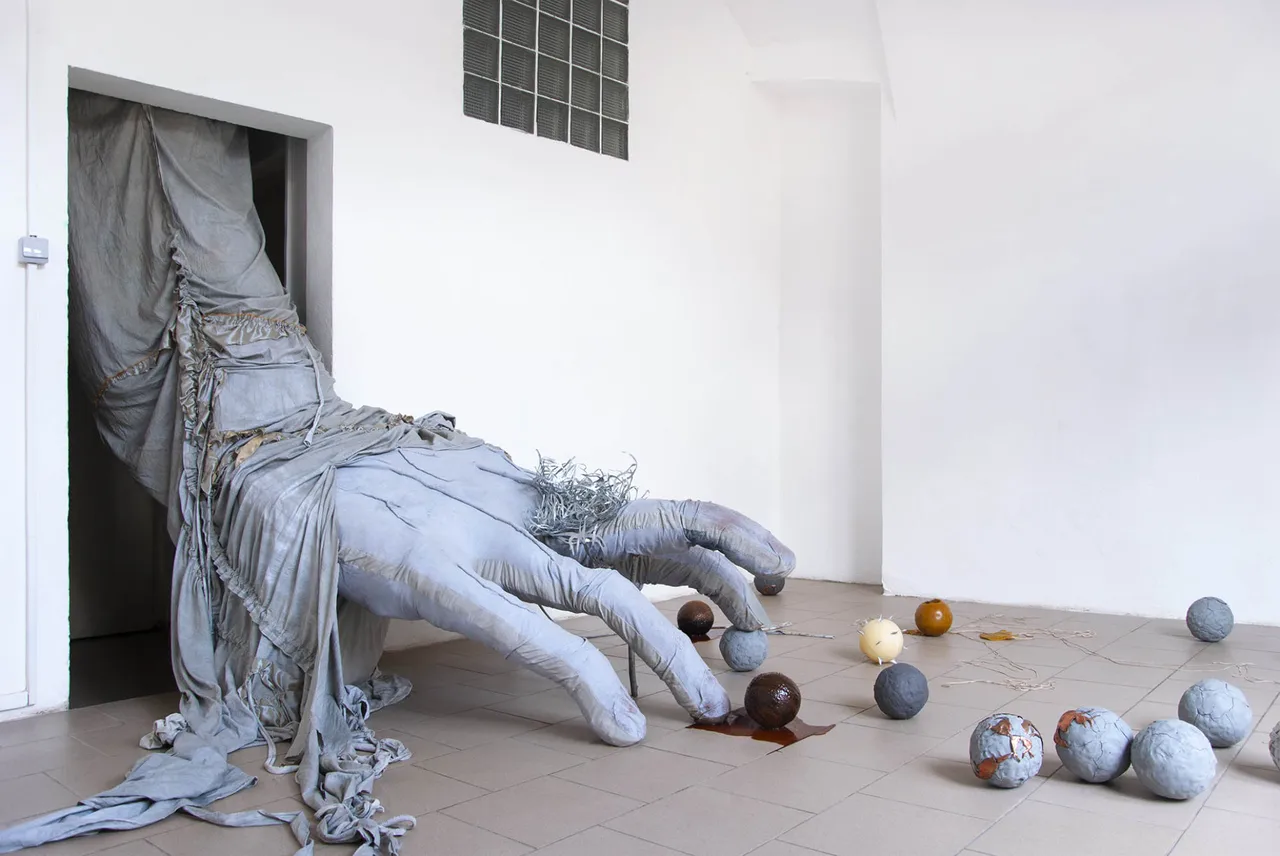
In the last years, you have worked on installations, sometimes in collaboration with other artists like the group show And her Fingertips Chose the One that was Still Rolling, and sometimes on your own, in I Swapped my Silk Slippers for Lead Ones at Nika Street Gallery. Can you tell us about this decision to expand your practice to a larger scale?
I had already worked on a larger scale during my studies, when I had the time and ideal conditions for this type of work. After finishing my Master’s degree, I was afraid I wouldn’t be able to continue this part of my practice, so I became – and still am – very determined to work on a bigger scale. I was very lucky to receive a couple of opportunities to continue working on larger pieces right after graduation. I think combining small and large scale work is very important for my jewellery practice. I was always afraid that if I focused solely on wearable pieces, I might lose the freedom and boldness that come with creating large works. This balance keeps my mind open and, I hope, far from becoming too stiff or overly restrained – even in my smaller pieces.
Your practice moves between jewellery, sculpture and installation. How is the process of production informed by the diversity of scales you work in?
The funny thing is that even when making larger objects, I still reach for my jewellery-making tools – that’s what I am used to, and they are very precise. I suppose I just need a slightly bigger studio than I would if I were ‘only’ making jewellery.
Is there a medium you haven’t worked with yet that you would like to explore?
Definitely glass, which I find very beautiful and powerful as a material.
Where do you see your practice evolving in the next five years?
That’s difficult to predict, and I really don’t want to jinx it. Hopefully forward, with a lot of energy.