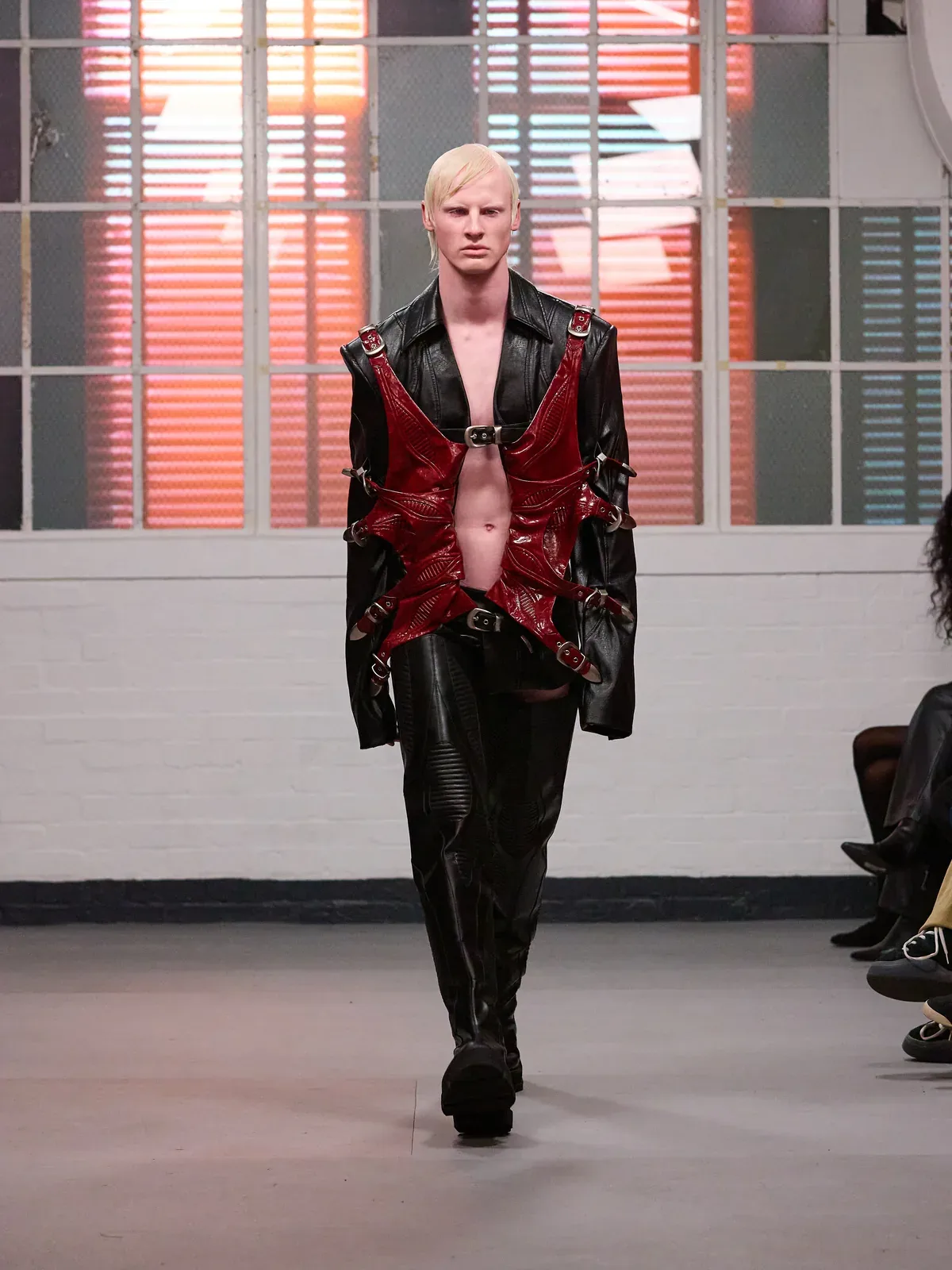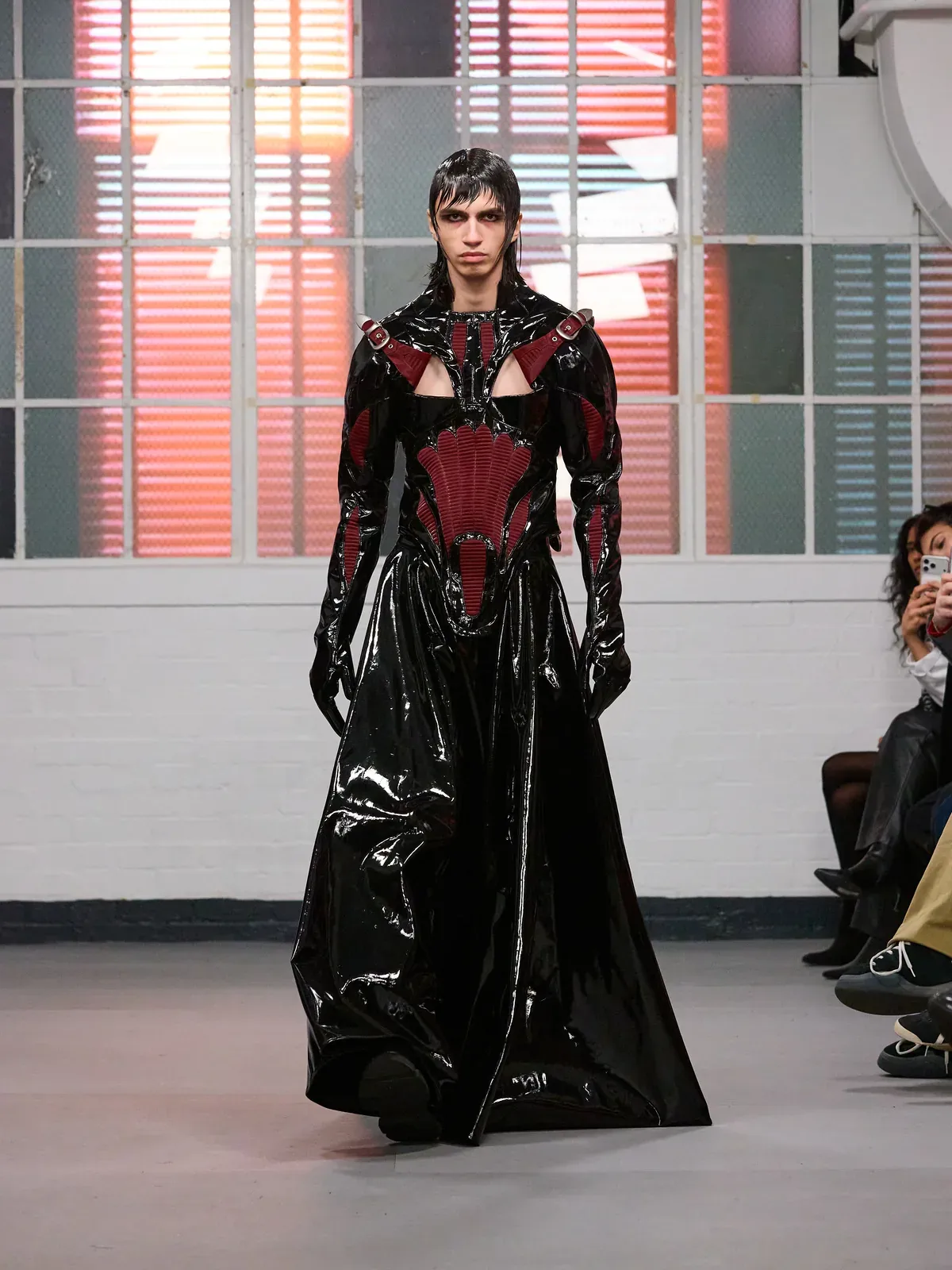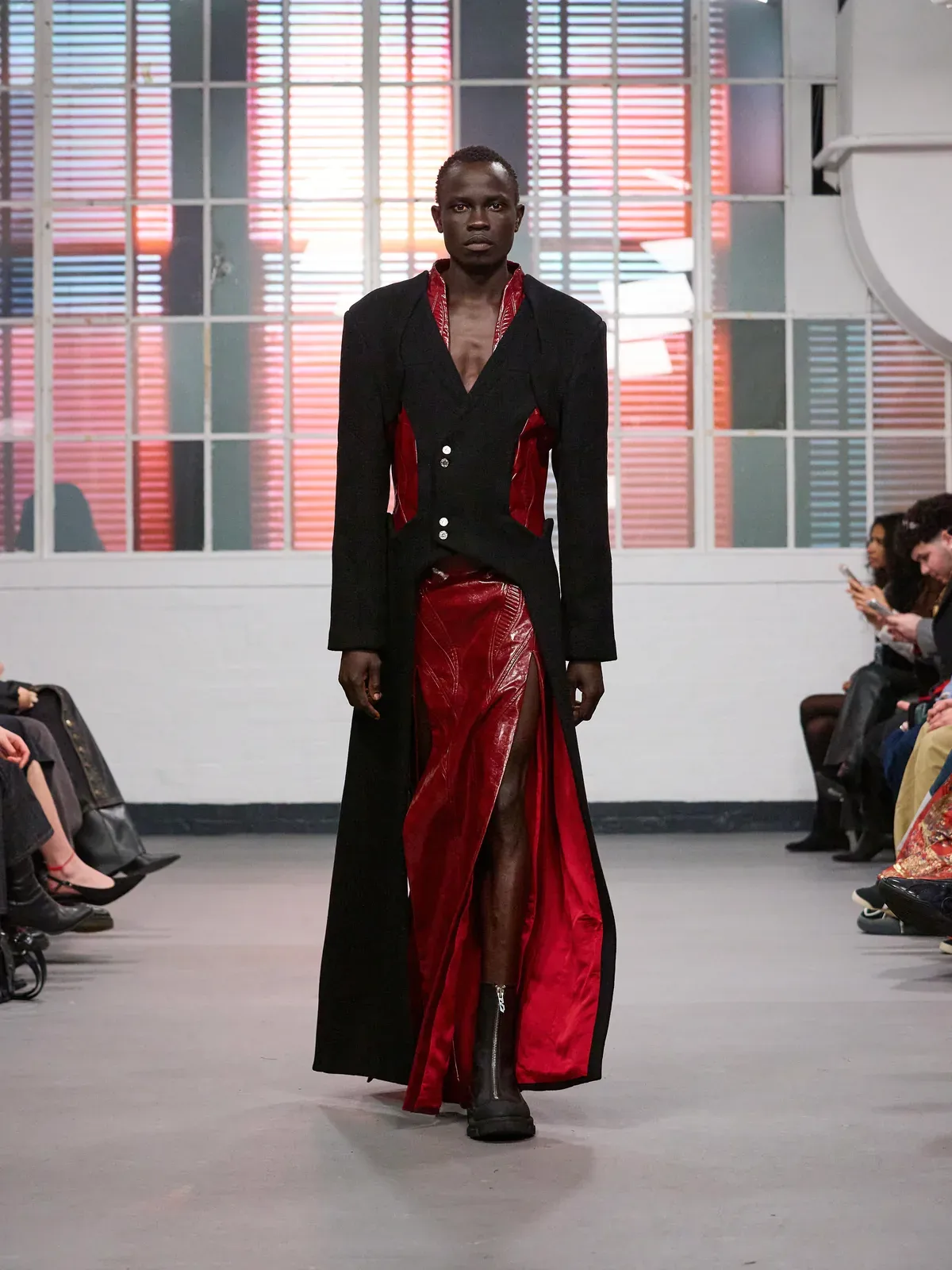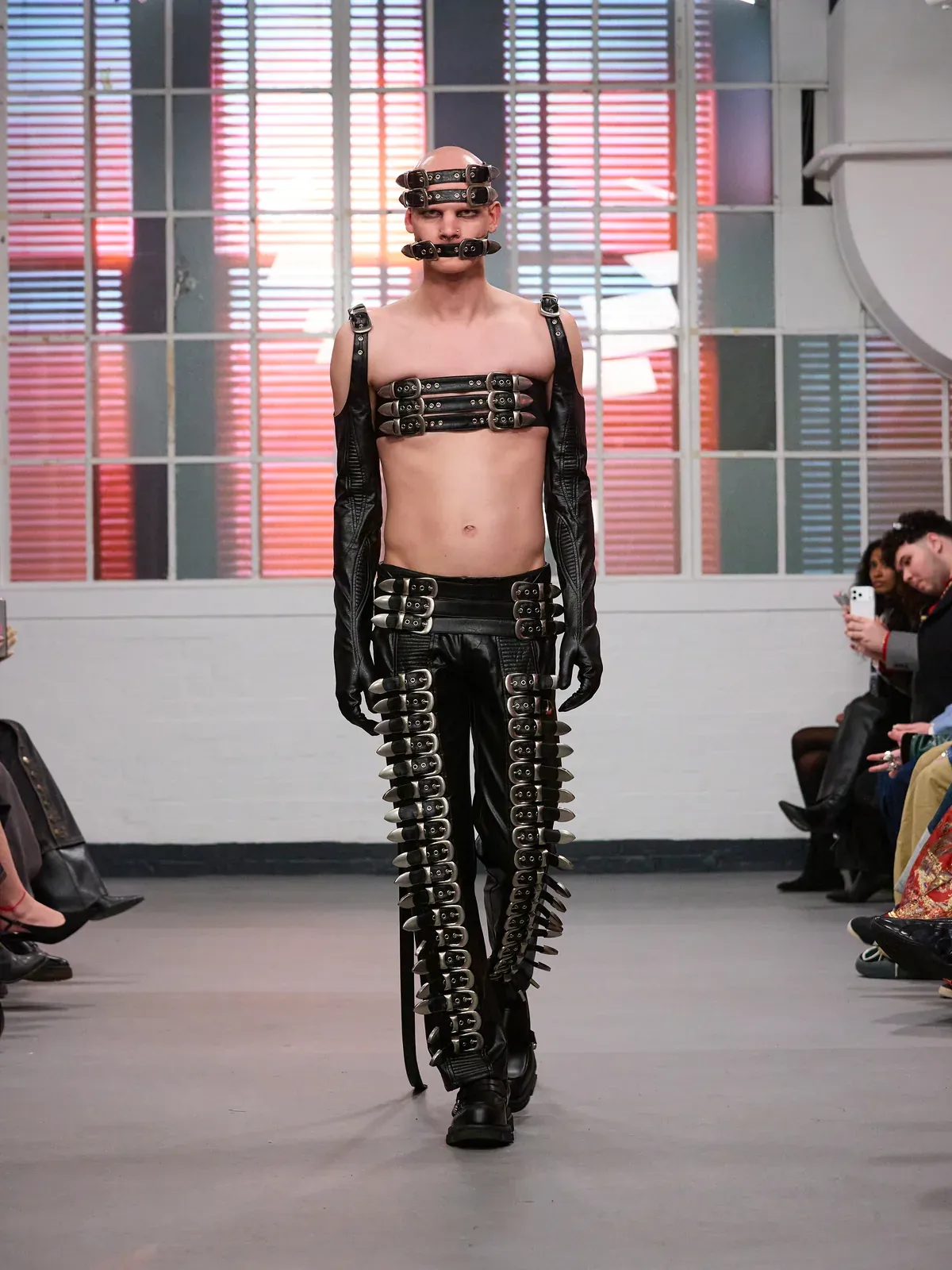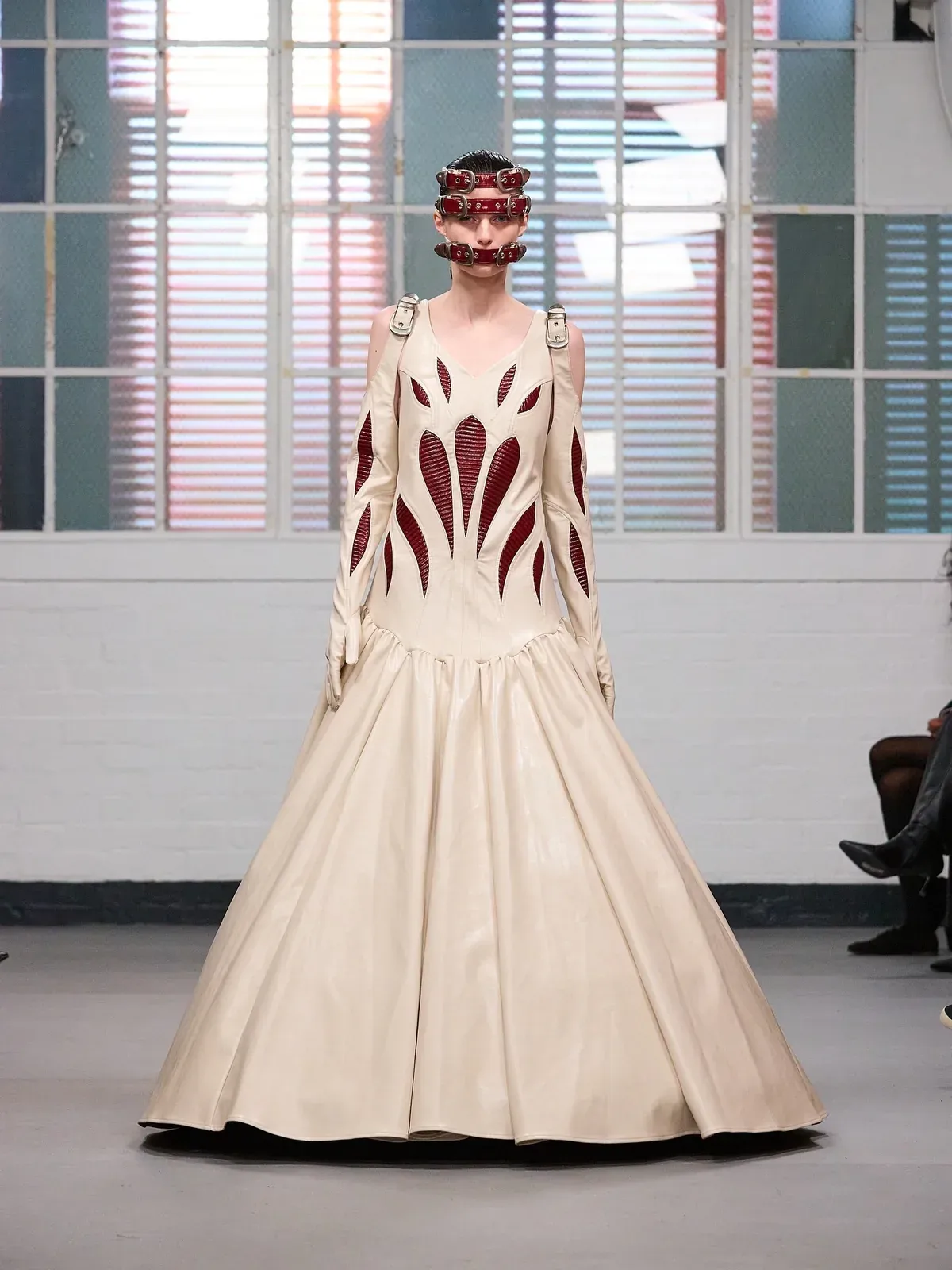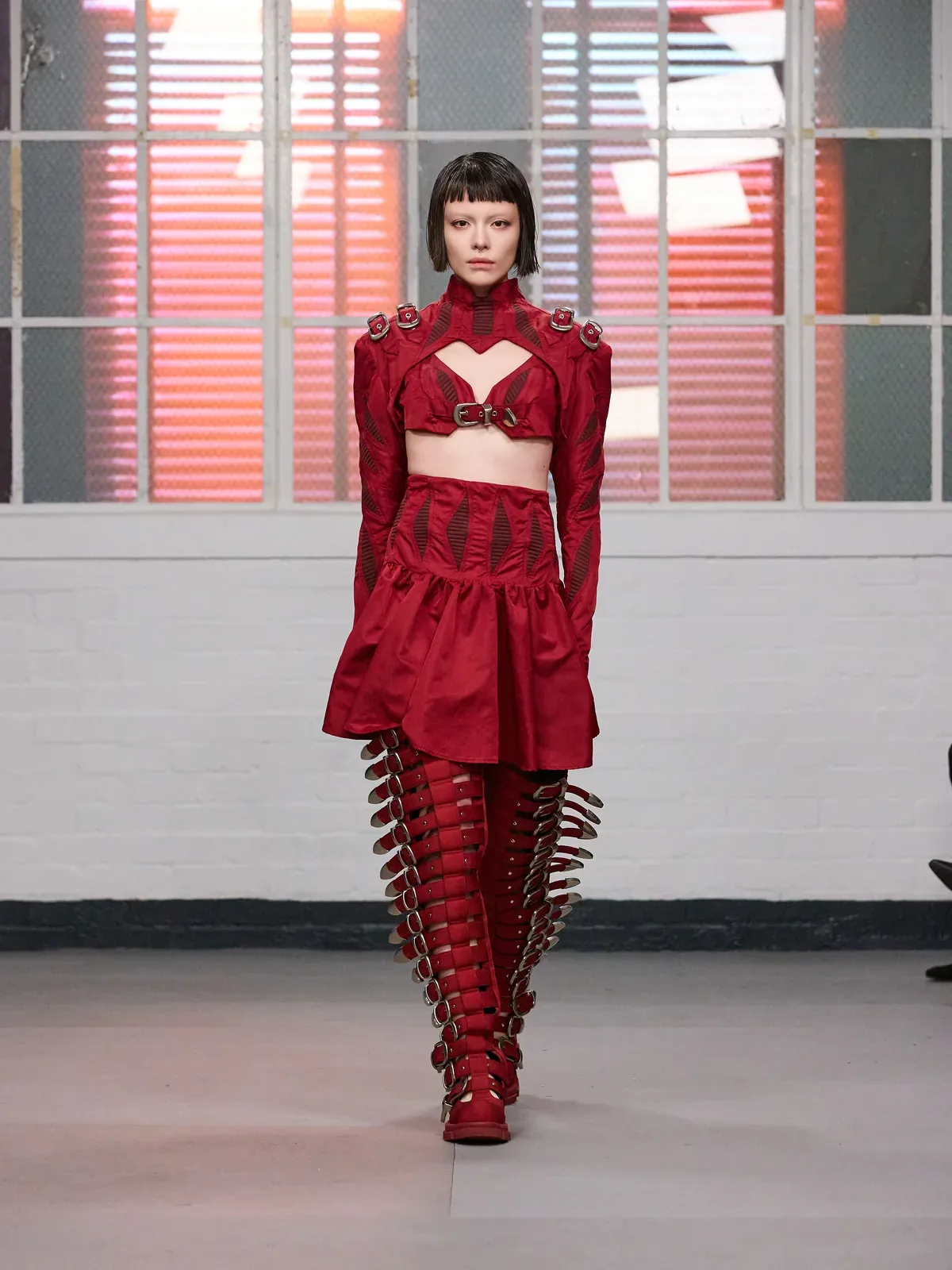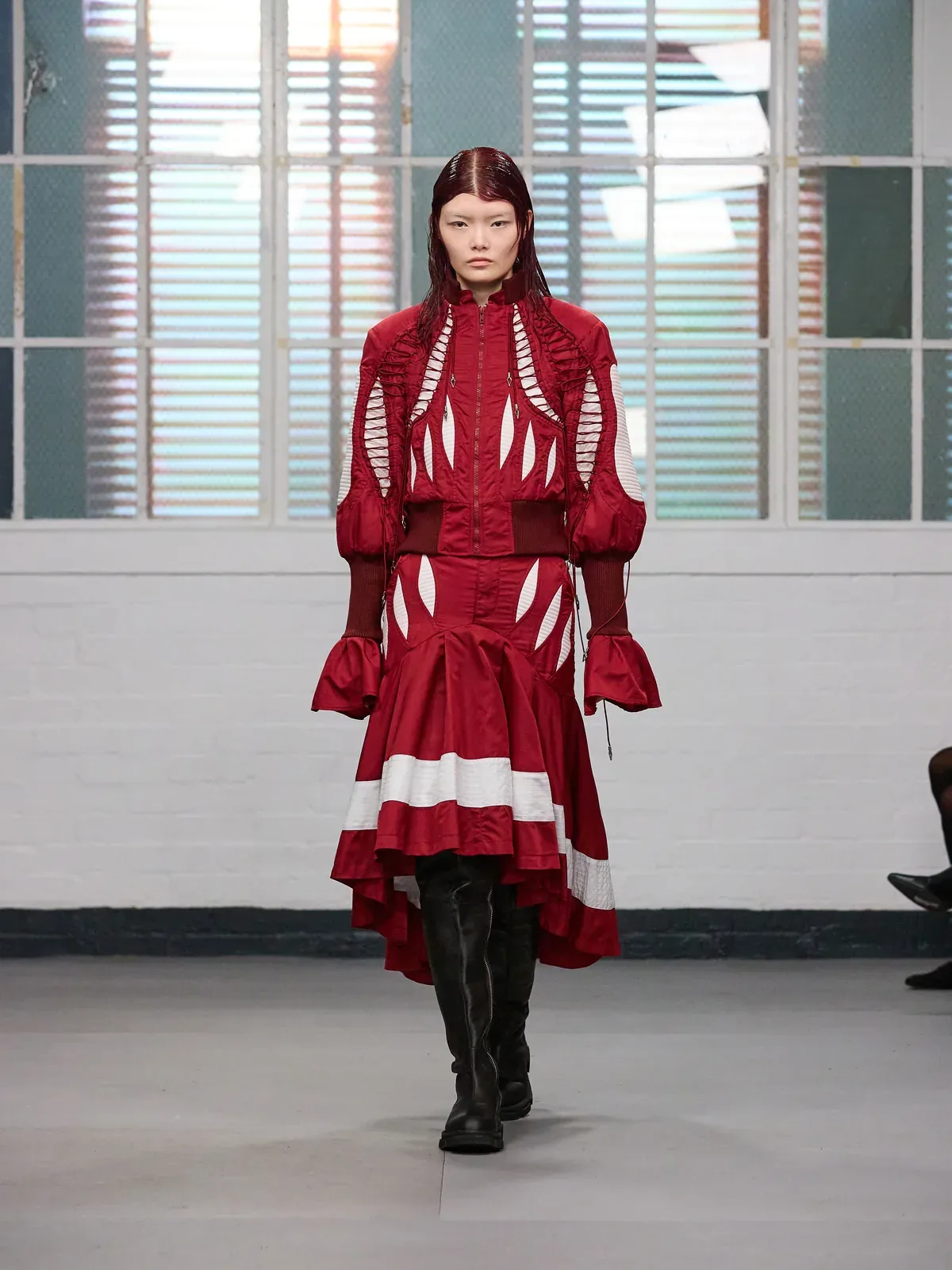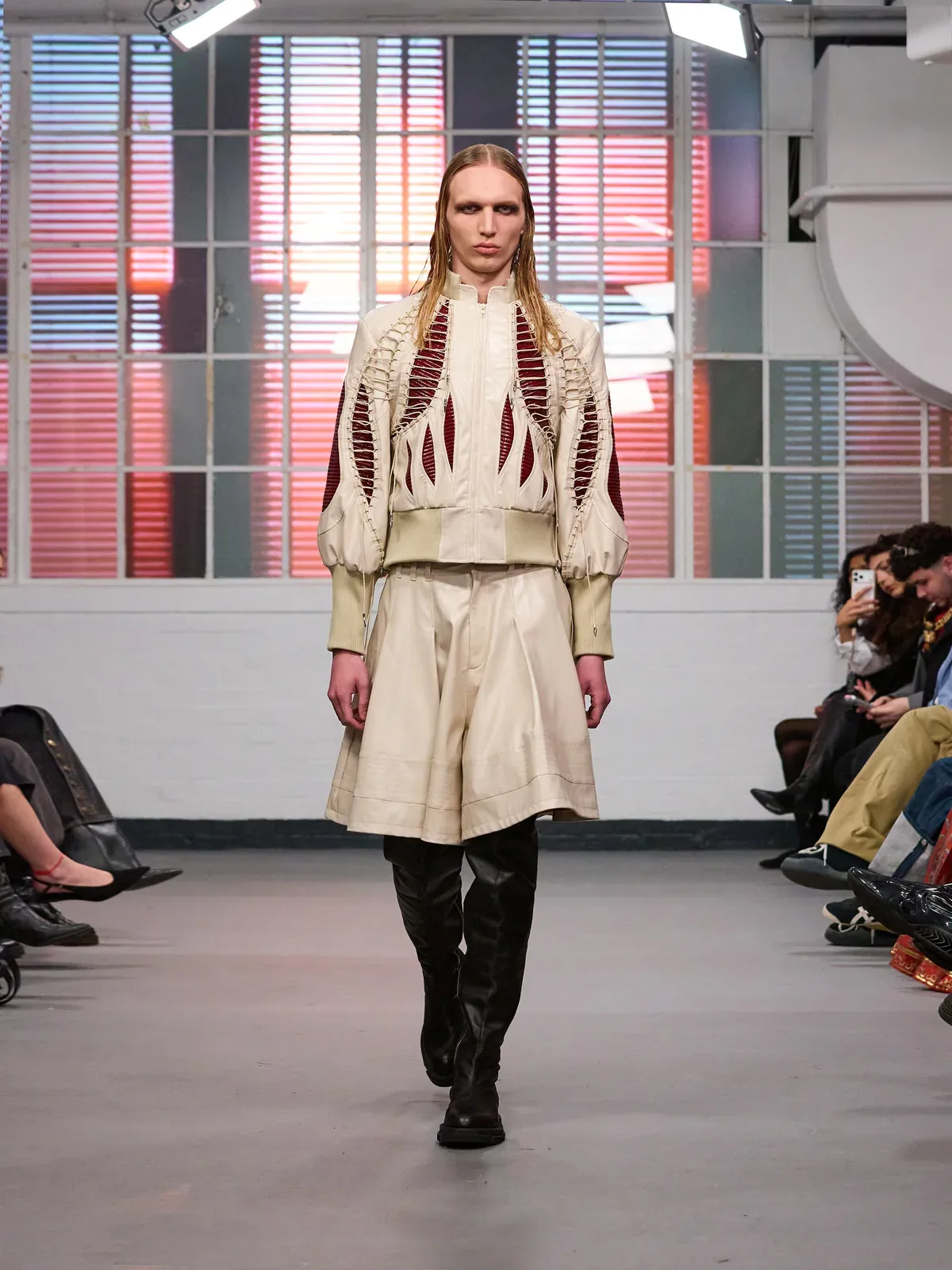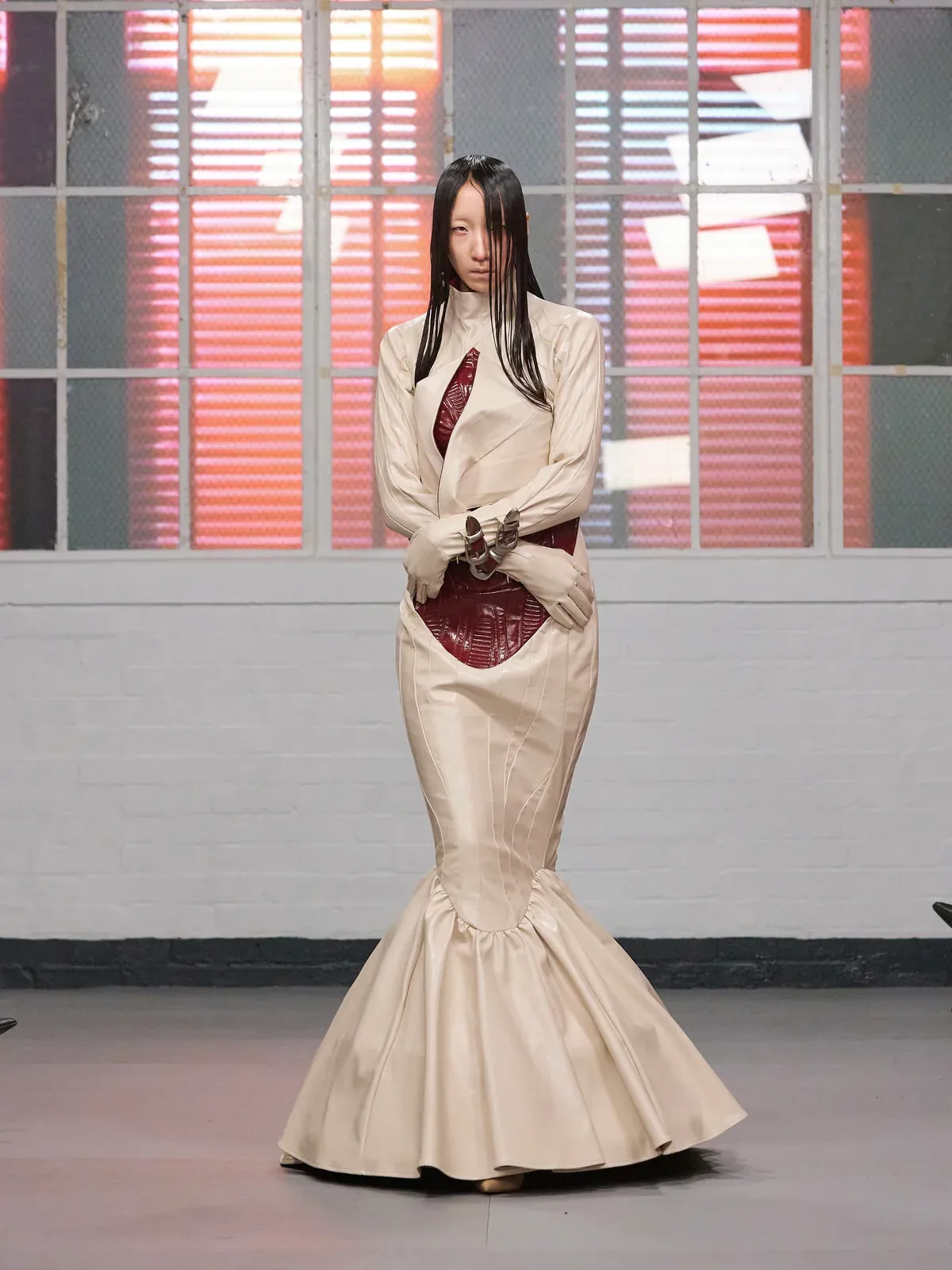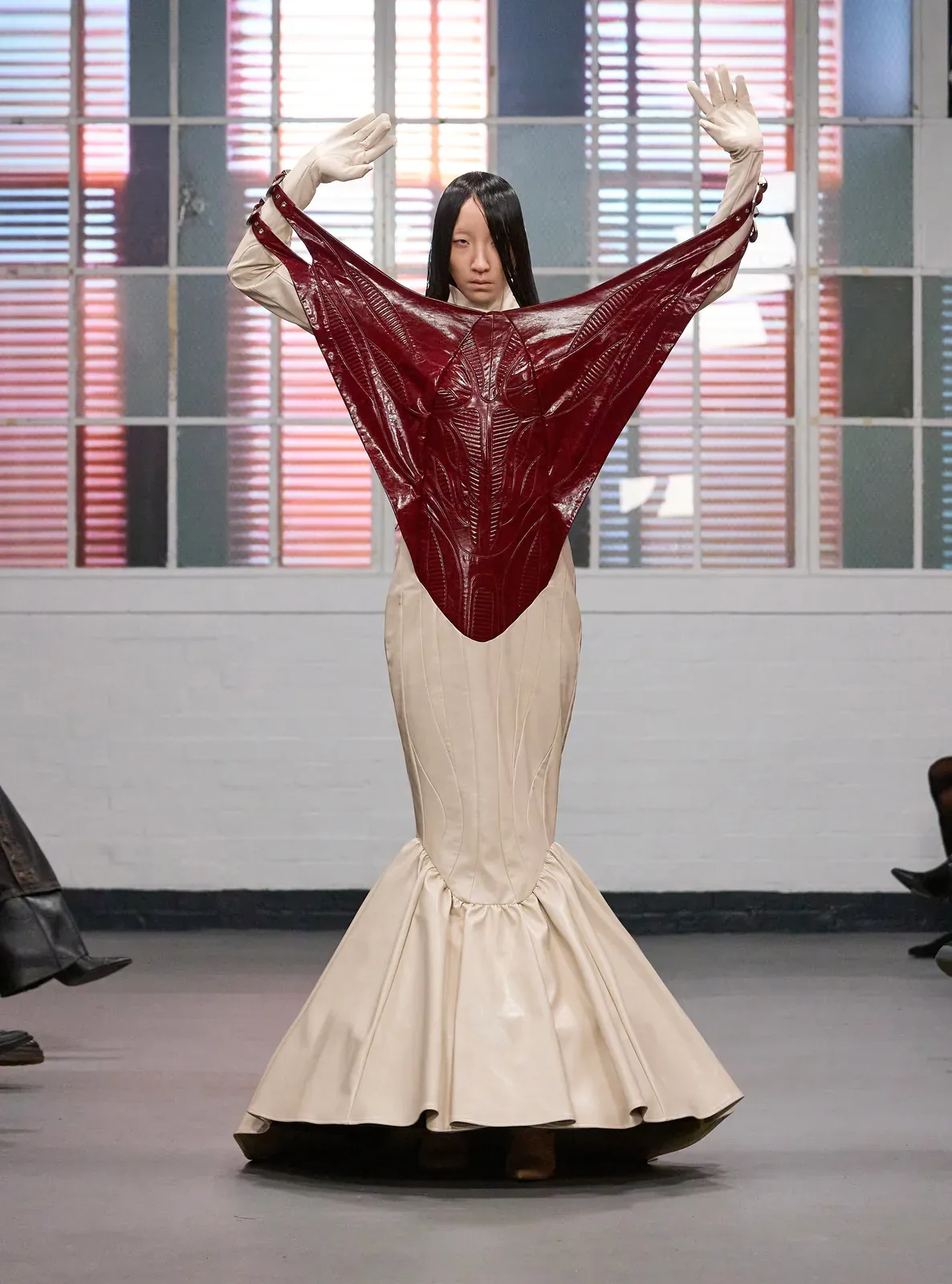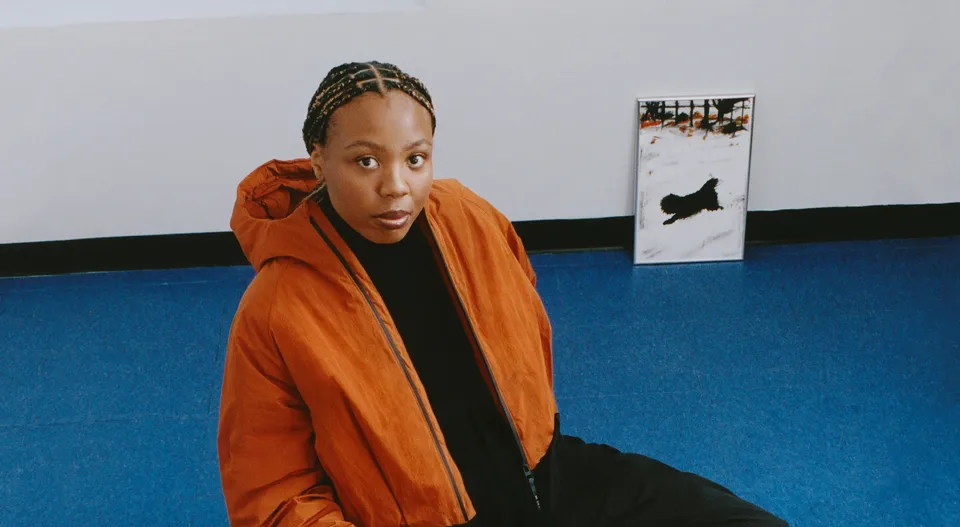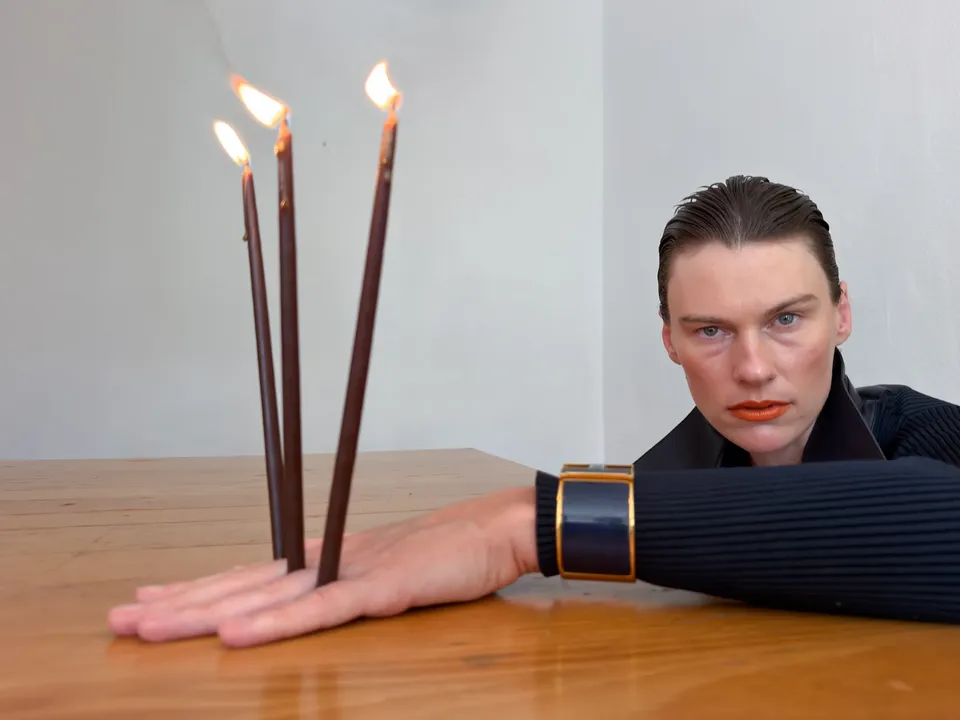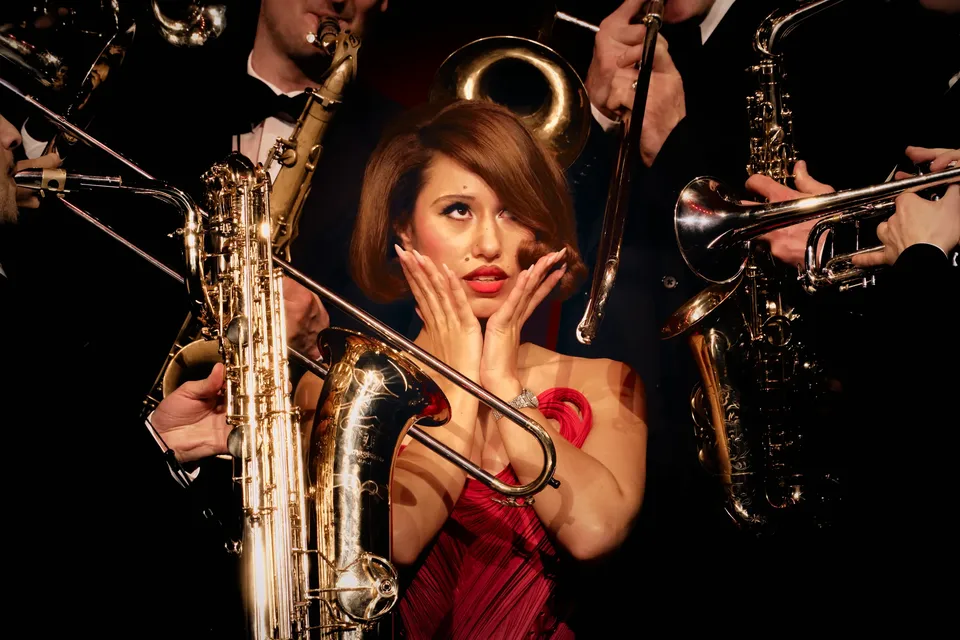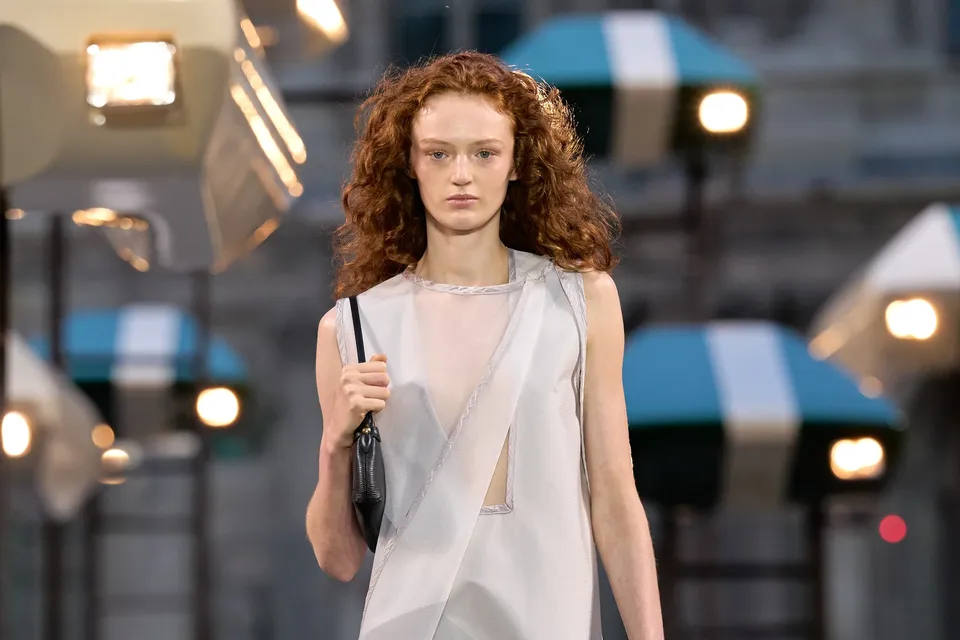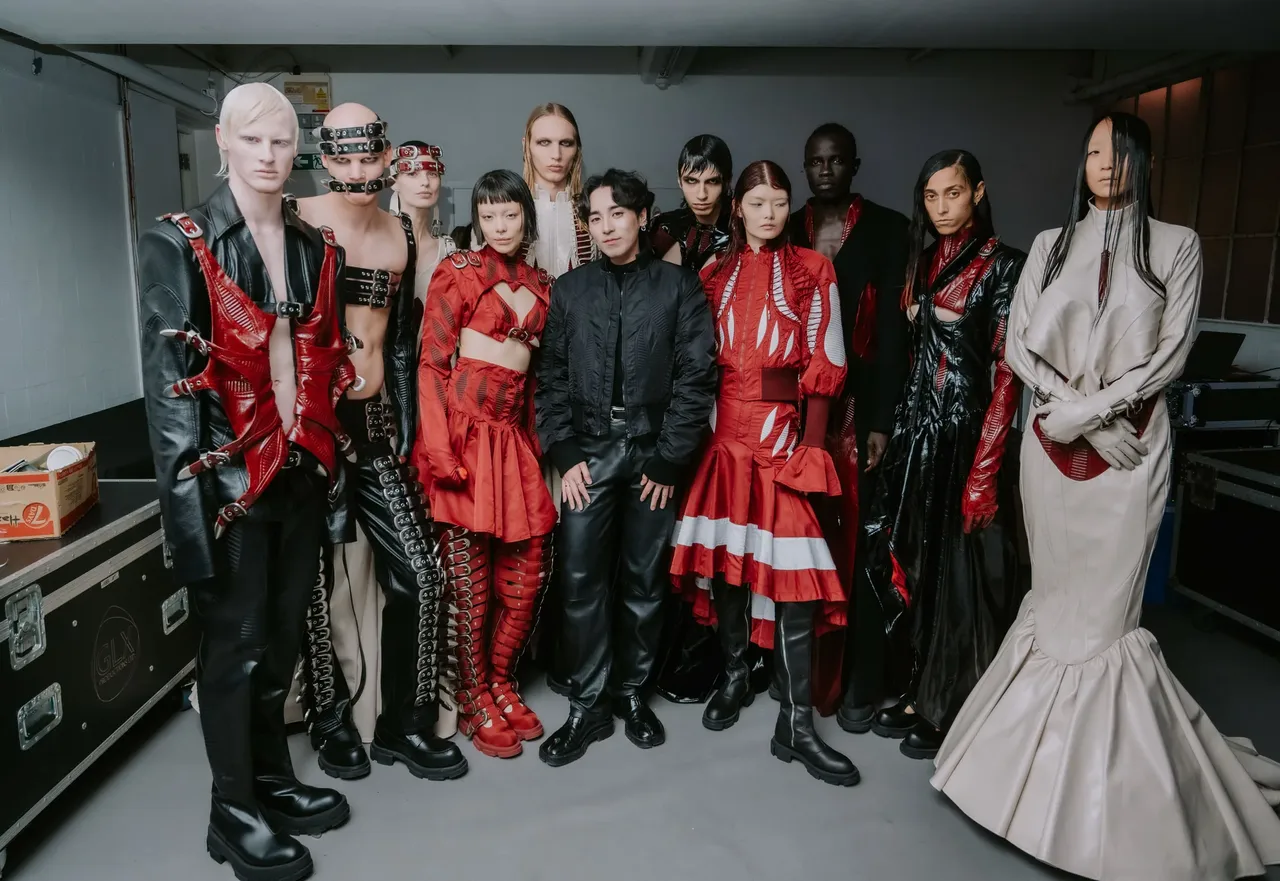
We are living in a world dominated by digital media, exposed in a way no other generation has been. Our psyche is constantly weighed down by the hyperconnected reality we inhabit and its infatuation with exposure. Angus Tsui’s latest collection, 404: Safety Not Found, treads the tightrope between freedom and restraint. It reads like a horror movie narrating the dangers of the current state of the world, one that is transmuting flesh into machinery.
Hey Angus, it’s lovely to speak with you. Your recent collection was incredible. Have you always been interested in horror films?
Absolutely. But my interest has never really been about the thrill of the jump scare. I’ve always been drawn to the art of horror, specifically the body horror genre. For me, films like Alien and Hellraiser aren’t just scary movies; they are masterclasses in surrealist sculpture and biomechanical design.
H.R. Giger and Clive Barker are artists first. They use the body as a canvas to explore the tension between pain and pleasure, flesh and technology. That tension is where my Fall/Winter 2026 collection, 404: Safety Not Found, lives.
H.R. Giger and Clive Barker are artists first. They use the body as a canvas to explore the tension between pain and pleasure, flesh and technology. That tension is where my Fall/Winter 2026 collection, 404: Safety Not Found, lives.
What film would you recommend everyone watch right now?
Hellraiser (1987). Not just because it inspired part of this collection, but because it understands something profound about desire and consequence. It’s a film about looking for extreme experience in forbidden places, which feels very relevant to our current relationship with the internet.
Is there a specific genre or theme in the horror universe that attracts your attention?
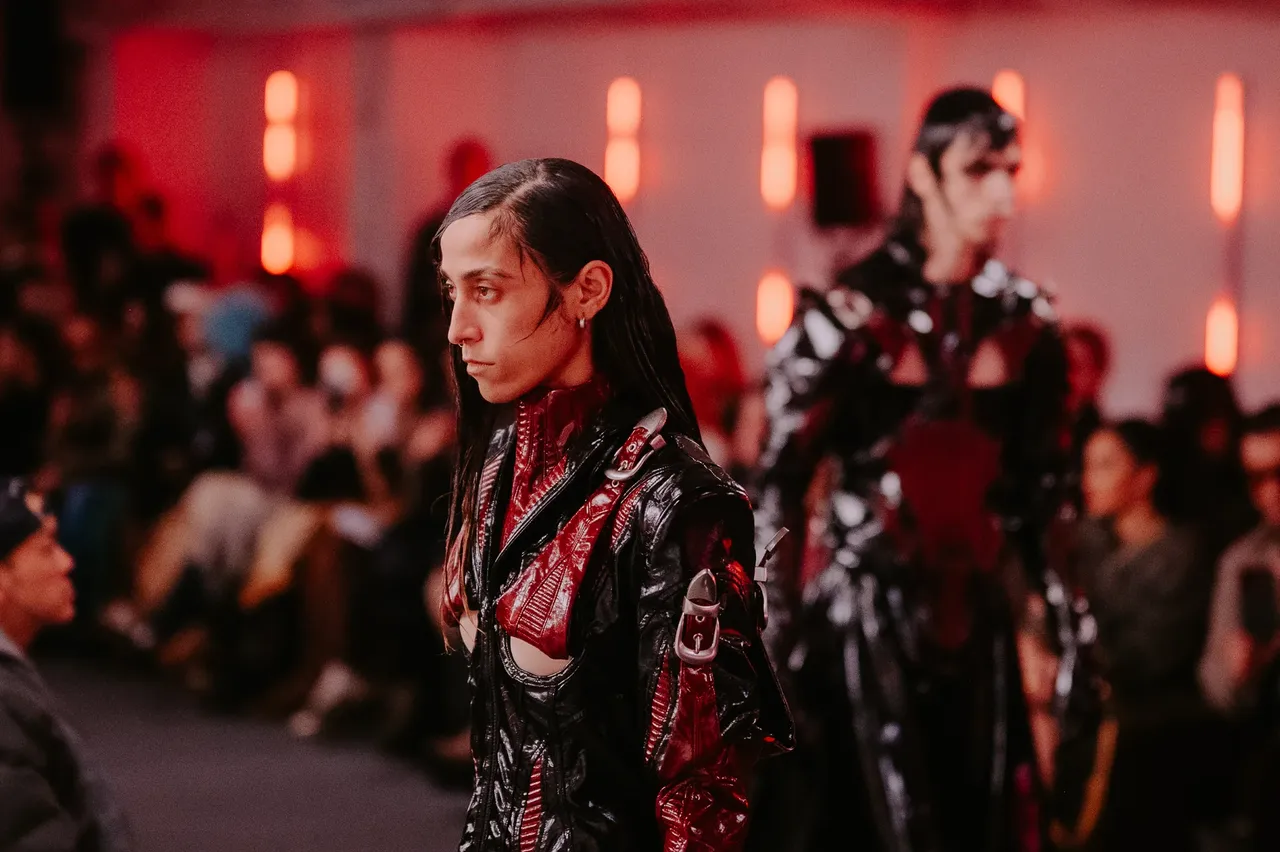
Biomechanical surrealism. I’m obsessed with the idea of the soft machine, where organic flesh meets industrial hardware, where you can’t tell where the body ends and the restraint begins. That blurring line is the exact visual language of 404: Safety Not Found. The belts holding the skin, the buckles digging in; it’s the horror of feeling like your body is becoming a piece of data, something to be constrained and exposed.
In the collection, you had looks inspired by Hellraiser, The Ring and IT. What was it about these three specifically that led you to design looks inspired by their antagonists?
Hellraiser (Pinhead) represents the aesthetic of restraint: the hooks, the chains, the order imposed on chaos. The Ring (Samara) represents digital hauntings: trauma that repeats through a screen, a curse that spreads via VHS tape, an analogue ancestor of our digital feeds. IT (Pennywise) represents the predatory nature of exposure: it knows what you fear and uses it against you. Each antagonist visualises a different way the modern world attacks the psyche: via physical control, digital replication, and psychological manipulation.
Were there any other terrifying characters you wanted to include in the final collection that didn’t work out?
We played with the Cenobites from Hellbound extensively, specifically the character Chatterer. The sound of teeth chattering fits the anxiety of the collection perfectly, but translating that specific jaw mechanism into vegan leather tailoring proved structurally difficult to do elegantly. Maybe next time.
The buckles were a compelling way to illustrate restraint. Why did you choose to demonstrate this idea in juxtaposition with the exposed garments? Did you play around with any other tools to portray this during the design process?
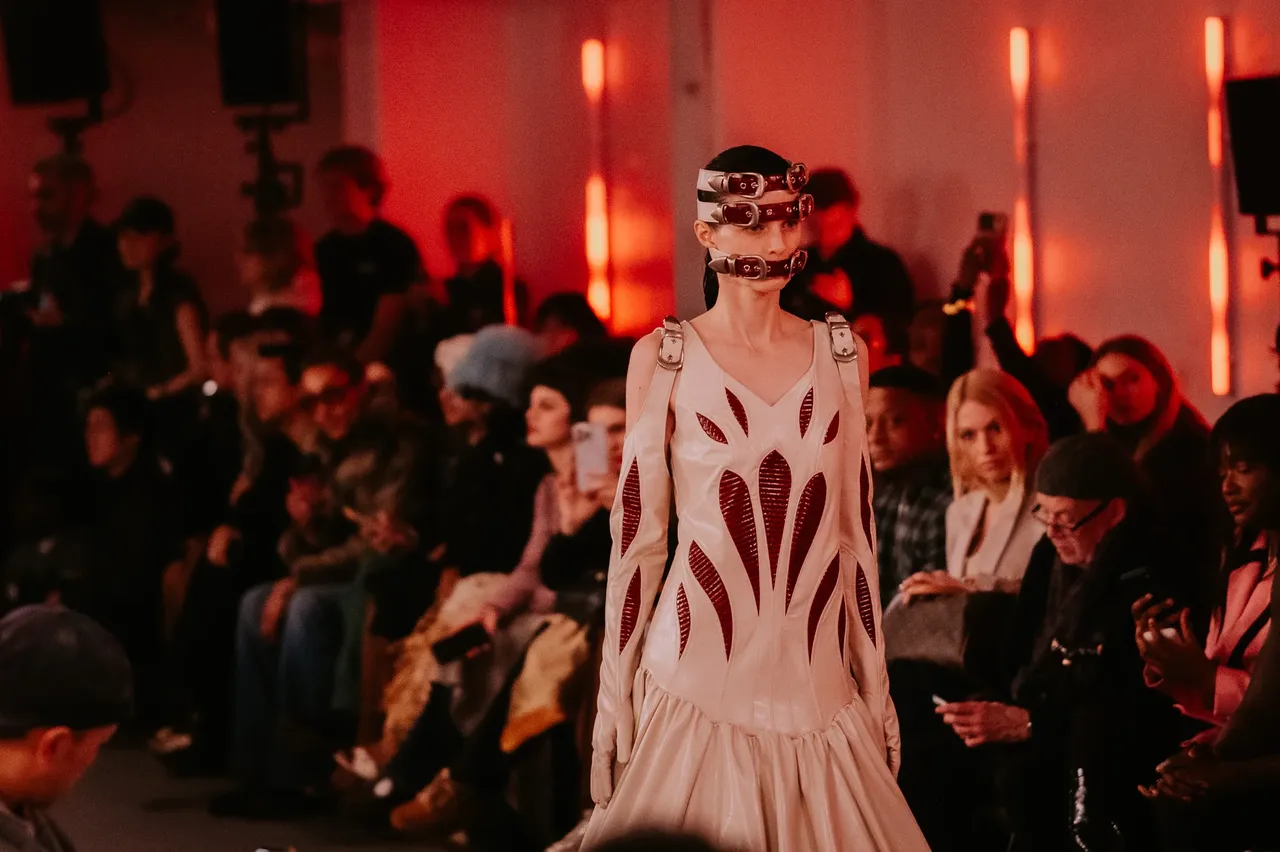
The buckles aren’t just accessories; they are the narrative. You see the MaryJaneeeeeee boot held together by seventeen stacked clasps? That is the story of trying to hold yourself together. The juxtaposition comes from the skin beneath. We used vegan leather that is torn and sutured to look like wounded flesh. So, you have soft, vulnerable ‘flesh’ being pierced by hard, industrial buckles. That push-pull, the desire to break free versus the need for restraint, is the whole thesis. We also experimented with actual corsetry boning in the arms to simulate skeletal deformities, but the industrial belts had a rawness that felt more universal.
“I’m obsessed with the idea of the soft machine, where organic flesh meets industrial hardware, where you can’t tell where the body ends and the restraint begins.”
This collection seeks to uncover the “truth beneath the skin.” Talk to me about what inspired this theme and the early stages of conceiving it.
It started with that feeling of doomscrolling, watching my generation consume violence, trauma, and comparison through a screen, yet presenting a perfectly curated, cruelty-free exterior. We are ethically conscious about what we eat and wear, but we are brutally violent toward our own self-worth internally. The “truth beneath the skin” is the bleeding. We want to bleed our anxiety, our loneliness, our fear. We tear open the vegan leather to show the red lining underneath. That red isn’t just a colour; it’s the raw data of our emotions that we try to hide behind the 404 error of our polished interfaces.
You partnered with collaborators to create two leather boots. Tell me how those partnerships came to be. Take me through the journey from concept to reality.
Footwear was a new frontier for me, and my collaborators understood that we weren’t just making shoes; we were making sculptures for the ground. The journey was humbling. The concept was: grounding the digital body. If the torso is the screen, the feet are the anchor. We designed boots that look almost orthopaedic but aggressive, industrial soles paired with those seventeen stacked clasps. It took months to make the leather sit right against the leg without collapsing. We wanted the walk to sound heavy, deliberate, like you are trying to stomp out the noise.
Sustainability is a core value within your brand. How was this integrated into this collection?
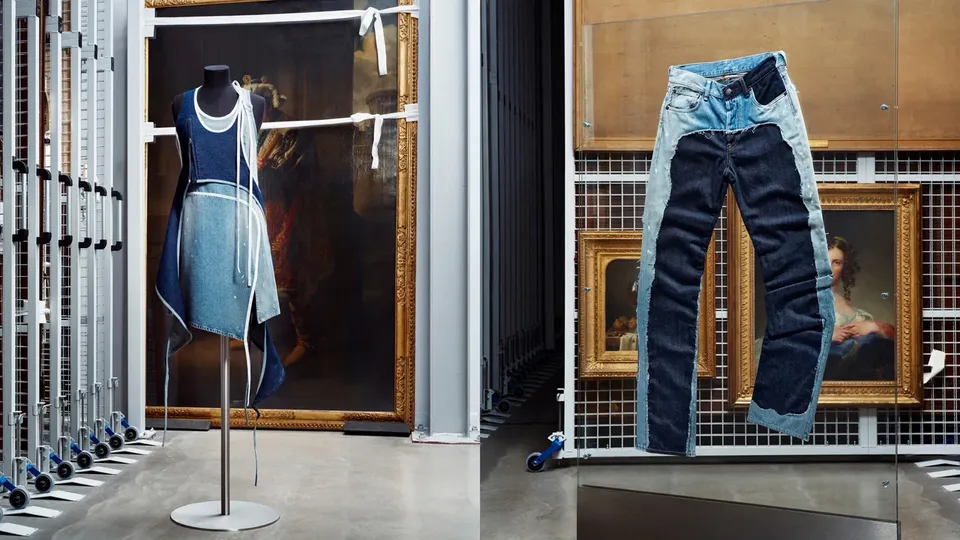
We used vegan leather that is torn and sutured to resemble flesh. There is a profound conceptual irony there: we use cruelty-free materials to depict self-inflicted psychological wounds. It asks the question: we are so gentle to the planet and animals, so why are we so brutal to ourselves? Sustainability isn’t just about fabric; it’s about longevity of thought. We want clothes that last, even if the emotions they represent are raw.
What draws you to futuristic, avant-garde aesthetics in all your collections? And how are they grounded in the present?
I call it Supernatural Future Weirdness. The future isn’t clean and sterile like Star Trek; the future is messy, organic, and weird. It’s cemented in the contemporary because our reality is weird right now. We live in a simulation of data, but we have these heavy, bleeding bodies. My futuristic silhouettes, the exoskeletons, the distorted tailoring, are simply a mirror of how distorted our mental health has become in the digital age. It’s not escapism; it’s realism.
Digital overexposure is a rapidly growing concern. How do you break away and disconnect to keep yourself grounded?
I go back to the tactile. The 404: Safety Not Found runway was set against shadows of office blinds, confinement. To break that, I have to touch fabric. I have to talk with my seamstress, the hero of my studio, and watch a stitch go through a raw edge. You cannot scroll through physical matter. That act of making, of tearing, sewing, buckling, is my meditation.
Strength through vulnerability was a key theme in your last collection. What does the word vulnerability mean to you? How has it helped you navigate a world so hyperconnected and obsessed with exposing each other?
Vulnerability is the willingness to bleed. The hyperconnected world exposes others; they expose data, scandals, curated lowlights. But vulnerability is exposing yourself without a safety net. In 404: Safety Not Found, we removed the safety net. The garments literally have holes in them. If I accept that I am not safe, that I am exposed and wounded, I stop trying to perform perfection. That honesty is the only armour against the curated cruelty of the internet.
“We are ethically conscious about what we eat and wear, but we are brutally violent toward our own self-worth internally.”
How do you envision the future of fashion? What do you hope it will be?
I hope the future of fashion is post-sustainable. Meaning, we stop talking about green collections as a special thing, and it just becomes fashion. I also hope fashion becomes more honest. We are entering an era of raw fashion, where we accept the tear, the wrinkle, the scar. We don’t have to be perfect to be beautiful.
If you could live within the universe of any of your past collections, what would it be and why?
Probably the XenoFuturist universe. It’s a world where humans have evolved past capitalism and entered a symbiotic relationship with alien biology and architecture. It’s weird and dark, but strangely communal. No influencers, just explorers.
To finish, I guess you’re already working on the next one. Could you give us a hint of what’s coming?
Let’s just say we are leaving the screen behind and looking at what happens when the power goes out completely. 404: Safety Not Found was only the first chapter. For the next collection, we are expanding the 404 universe, digging even deeper into the raw, uncomfortable places we usually keep locked away. We’re moving beyond digital overload and into the architecture of inner fear: anxiety, shame, isolation, and the quiet terror of being truly seen. Expect even more emotional exposure, darker textures, and a continued conversation about what happens when you stop performing safety and start confronting what’s really underneath.