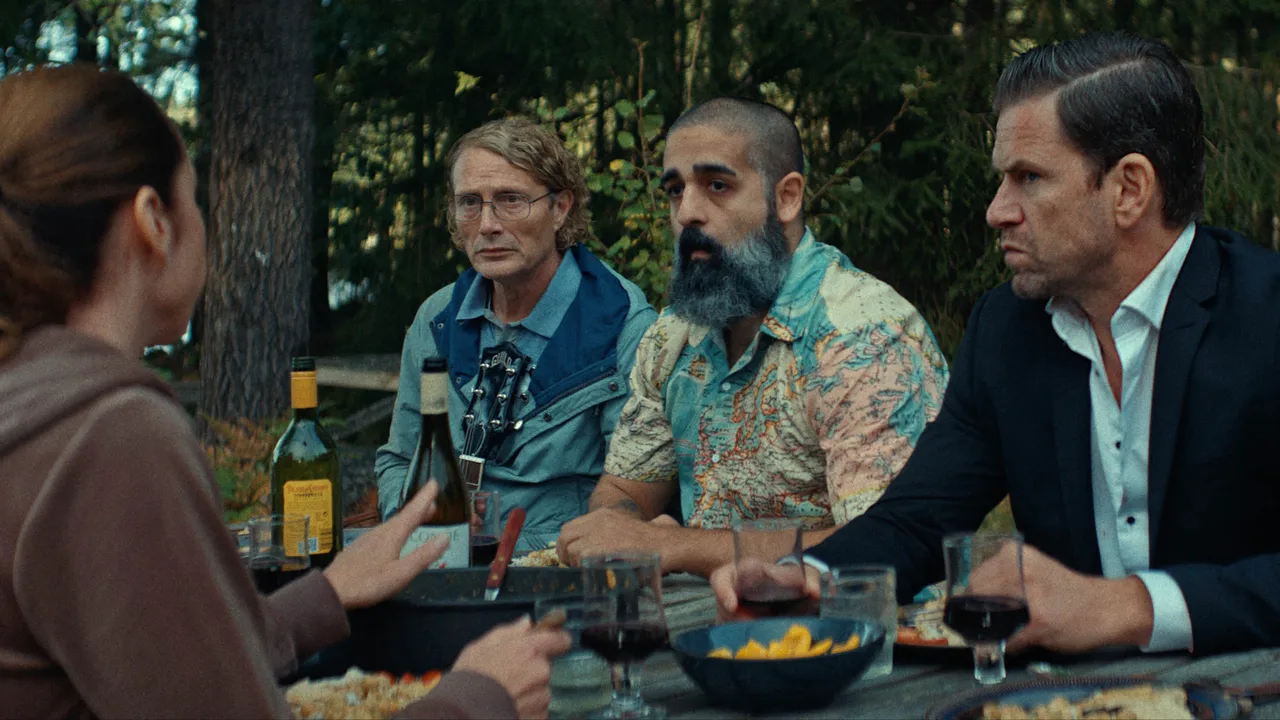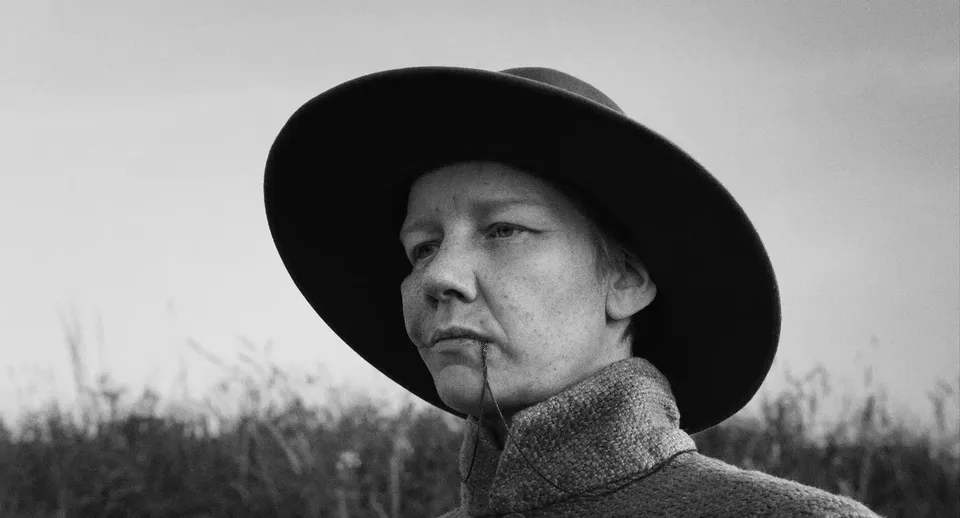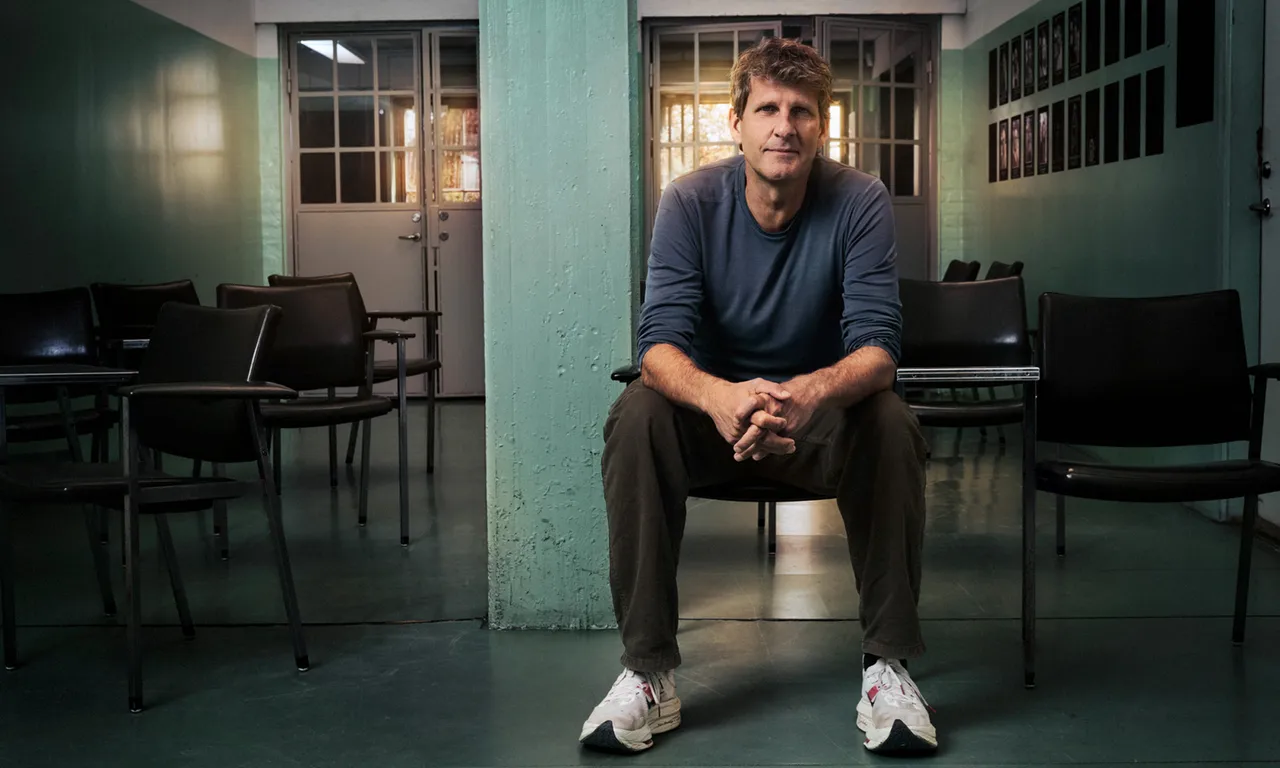
Anders Thomas Jensen returns to cinemas today with The Last Viking, a new film that proves once again the unique chemistry he shares with actors Mads Mikkelsen and Nikolaj Lie Kaas. Dark comedy collides with raw emotion in a story that makes us laugh uncomfortably while crafting a contemporary, thought-provoking fable about identity and the realities we invent to survive. Eccentric, unforgettable characters teeter between the absurd and the deeply human, driving a chaotic yet precise narrative that keeps us awkwardly smiling throughout.
The film became a box office phenomenon in Denmark and took home the Audience Award at the Danish Film Awards. It premiered at the 82nd Venice Film Festival (out of competition) and at the Toronto International Film Festival, before opening the Seville European Film Festival. This trajectory underscores its international momentum and reaffirms, if any doubt remained, the director’s mastery of darkly comic storytelling, creating stories that are both hilarious and emotionally piercing, a combination the mainstream rarely offers. As the film hits Spanish theatres today, we sit down with the director to discuss humour, improvisation, and excitement.
The Last Viking has been warmly received, but beyond the numbers, how satisfied are you with the result?
I’m very satisfied with this movie. If you knew me, you’d know I wouldn’t normally say that if I weren’t. I think no movie succeeds with everything, but I’m very glad. I think we managed to balance the whole thing and these very, very special characters while getting the laughter, the emotions, and conveying the theme, which is what we set out to do.
After directing so many projects, do you still feel the same excitement for each new film?
I’m lucky enough that there’s been almost five years between the last films I’ve directed. I don’t know about you, but if I haven't done something for five years, it’s like I forget it. It's like starting all over every time. So, yes, I am just as nervous and just as ‘how do I do this?’ until it gets rolling.
You reunited with Mads Mikkelsen and Nikolaj Lie Kaas after Riders of Justice (2020), but you’ve worked together multiple times. Does familiarity create freedom, or does it require reinvention to avoid repetition?
We’ve been working together for twenty-seven or twenty-eight years. It’s a gift because we dare to go places I perhaps wouldn’t go with other actors, and they wouldn’t go with another director. That said, there’s also this danger of leaning back and playing the same notes, doing what you know you do well. But there’s something in the dynamics between us. We have a really rough relationship. We’re tough on each other’s work. And, as Nikolaj once put it, we are very bad at being comfortable. Obviously, we snatch pieces from stuff we’ve done before, but every time we try to go down a new way and challenge each other.
Were any scenes improvised on set?
That’s always a tough question. When we shoot, we have so little time, so I never improvise. I’m not a fan of improvisation, but I do the script early on, I bring them on board, and we do a lot of improvisations and I re-write the script. So, we reached a lot of the scenes through improvisation. Not on set, though.
The tale that frames the film has been developed into a book, a project you were also involved in. It’s unusual to see a filmmaker expand a story across different media in this way. Which idea came first, and what was the creative process behind it?
Honestly, I had the script, and I needed something for the character of Werner. He is a representative of the old fool sitting at the end of the table, knowing all about everything and saying that the world can't change. And I needed that aspect. Then, the first act of the movie is really realistic. It could be in any crime show. The first twenty minutes are in a different world. Then you get to the house, and it turns into a fable. So, I needed something that established a contract with the audience from the beginning: that what we’re watching is a fable, a fairy tale. I wrote it as live action, but the producers said, are you crazy?, because it costs more than the whole movie. But it fell beautifully into place by doing a cartoon and then integrating it into Werner’s character.
Did you take inspiration from history, or is it purely a product of your imagination?
This one is absolutely made up. I hope so.
When the king’s son loses an arm, he decrees that everyone must lose an arm in the name of equality. The order is meant as an act of empathy, yet it proves destructive. Do you think we have confused equality with uniformity?
Yes, I rarely see it implemented, but there are some voices. We have an election in a month and one of the issues they’re discussing is equality. It’s like we have to fight the idea that we are not equal, but not being equal is an asset. Difference is a strength, and it’s the opposite of being equal. One politician said that the place where a society is most equal is in a refugee camp when they just got bombed. People who defend uniformity don’t do it because they’re evil, but because they want everyone to do their best. But there’s the world as it is, and then how you would like it to be. I mean, it’s a big discussion. I should have just said yes (laughs).
Most of the characters construct their own reality to be able to keep going. Is this project in any way autobiographical?
Yes. Isn’t that how it is? I think we all construct our own realities. I’d be thinking about death all day if I didn’t. I also see a lot of people who live and act, and then afterwards construct an identity to excuse what they did. And they keep going like this. Now, with all these platforms, you can be eight people at a dinner, and the reality is different for five of them because each has a different feed on their phone.
The Beatles function as an emotional anchor for the patients. Were there any alternative musical choices you considered?
No, it was difficult. I was asked before we started negotiating rights and stuff, but it was very difficult because it needed to be iconic. It had to be two of the most iconic bands. Perhaps we could’ve chosen the Bee Gees, but we didn’t. I was hoping we could land the ABBA thing, and we did.
“We all construct our own realities. I’d be thinking about death all day if I didn’t.”
Dark humour has long been your natural habitat. What does it allow you to explore that straight drama cannot?
I think you can tell every possible story in every possible way, but for me, dark humour allows me to go places thematically and convey things that I would normally have a hard time watching. It also pulls back a little on the emotional, so it doesn’t become too in-your-face. Dark humour lets you back a little, so you don’t feel too manipulated.
You treat dissociative identity disorder with seriousness, yet the film often makes us laugh because of the characters’ particularities. What’s your opinion on trying to put limits to dark comedy?
I never understood that. If you break down what you’re saying, it’s like you should be allowed to make comedy about certain people, but not about others. To me, everybody is equal. I’d be furious if somebody said that now you can’t make comedies about fifty-three-year-old white men. In the name of inclusion, you have to include everybody. So, if you make comedy about one disorder, or whatever we call it, it’s all human. We’ve become so good at being nice to each other in the real world that sometimes we forget that in art you’re allowed to create hatred, love, to be misogynist, to be racist. Art should cover everything. We have to do all these things, and then we can step back into reality and be nice to each other again.
Spain has a strong tradition of dark humour within its cultural identity. Have you sensed a strong resonance with audiences here, and how does that compare to responses in other countries?
Obviously, I’m closer to Germany and Scandinavia. I’ve been to Spain a lot and I’ve been all around, but not with my movies. I’ve occasionally run into Spanish people who have seen Adam’s Apples, but I’m not aware of this.
Are there any upcoming projects you can tell us about?
Yes, there are a couple. I’m a scriptwriter, so I do a movie and then spend a couple of years writing scripts. I’ve done a script with Nikolaj Arcel about Hans Christian Andersen, a fairy storyteller. He’s actually prepping that right next door. And then, I don’t know if that’s out yet, but I'm writing a script with Thomas Vinterberg. I’m a hired gun now, writing for other directors.
Thank you. If there's anything else you want to address…
No, it’s just that when we touch on certain issues, sometimes you miss a little if you can't see me smiling, but it's okay. Thank you very much.