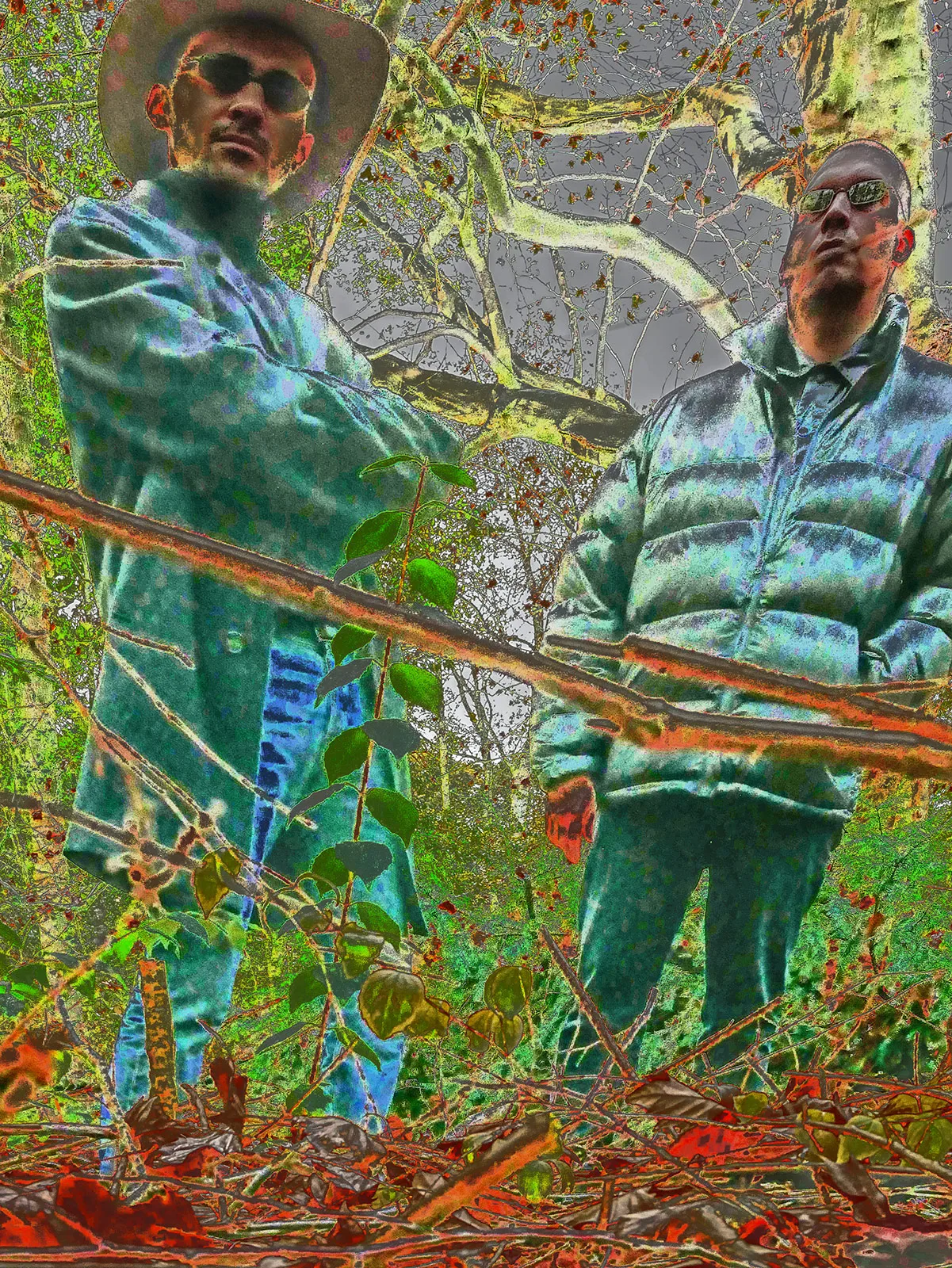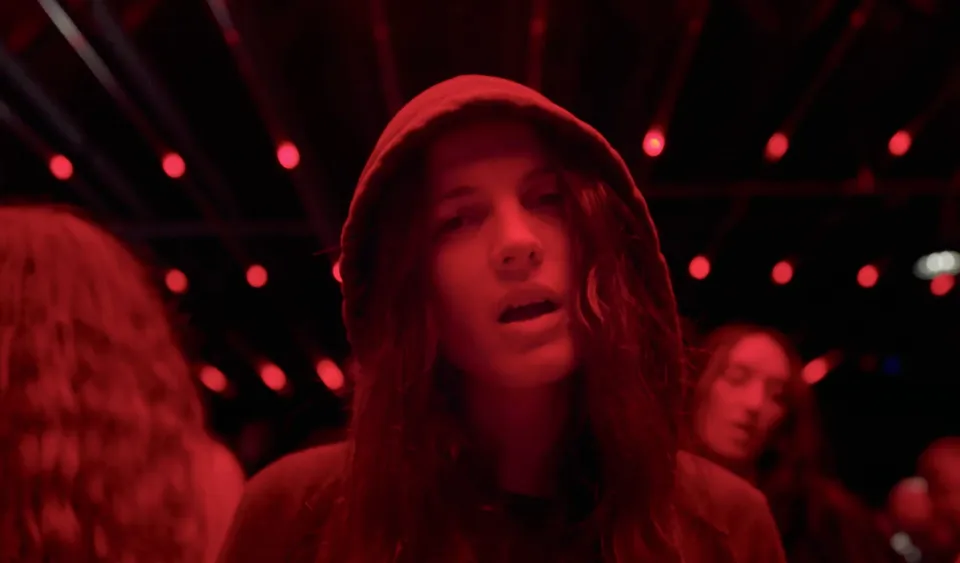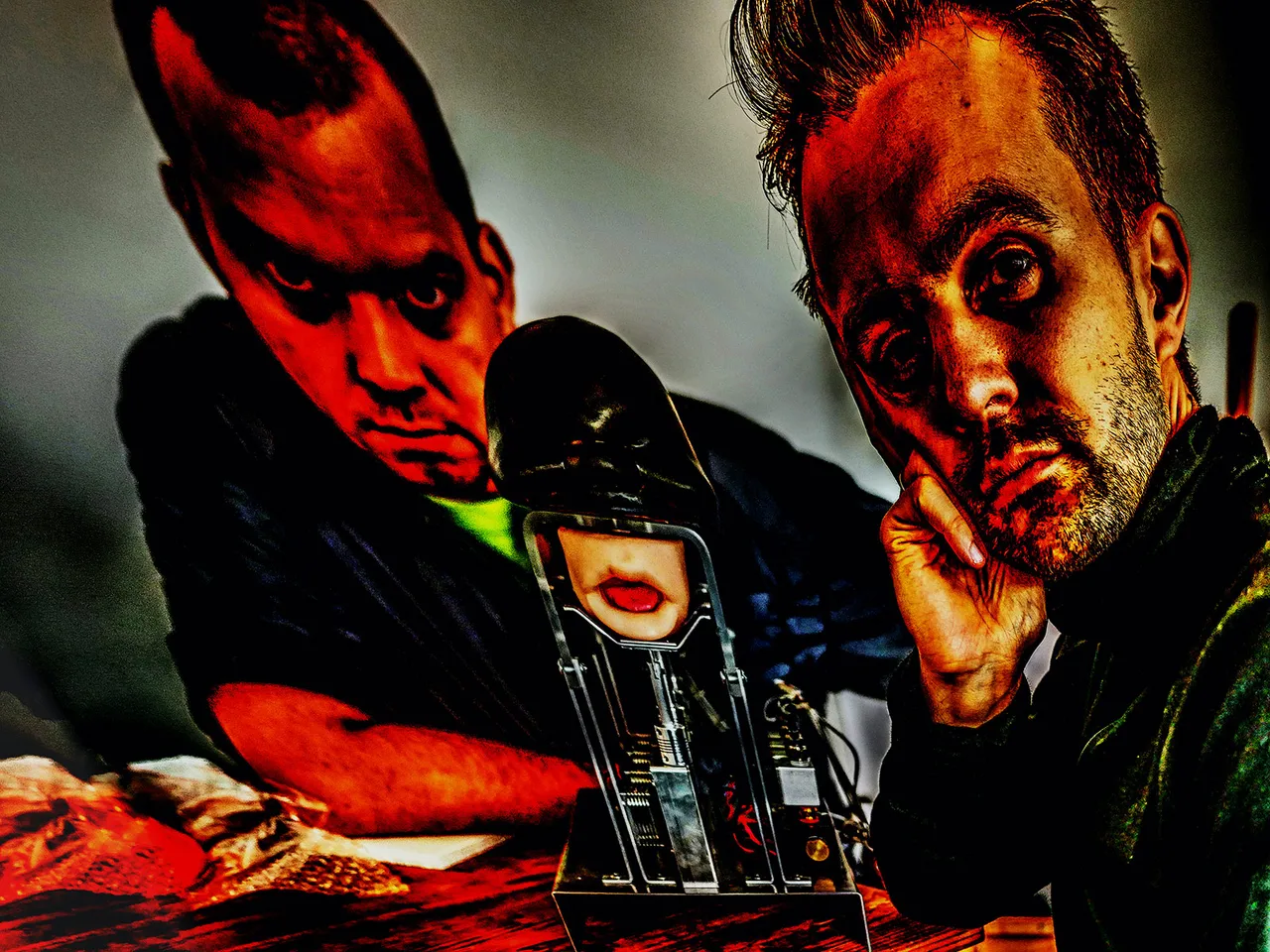
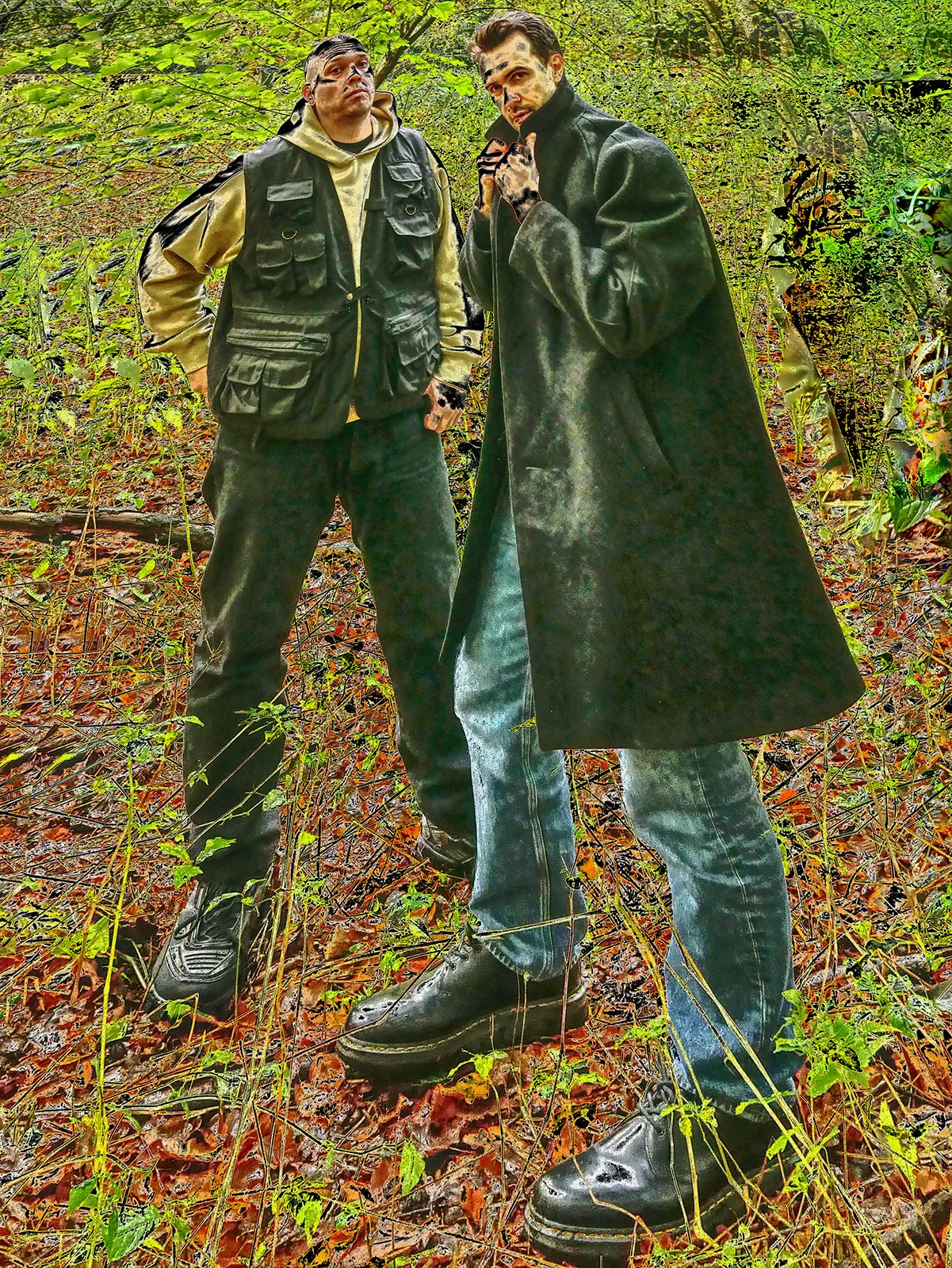
Electronic music transgressors Amnesia Scanner – consisting of Martti Kalliala and Ville Haimala – have increasingly tread the line between the maximalist dissonance they are known for and more pop-style song structures. Aesthetically – through music videos like the recent Marc Elsner production for AS Going (feat. LYZZA) – Amnesia Scanner have built up a similarly contorted world that feels like the machine learning equivalent of the popular unconscious. As unsettling as ever, their second LP, Tearless, arrives on June 19th as an emotive response to the crises engulfing the world, explicitly prior to coronavirus, where the digital ghosts of Another Life have been tamed to offer a more polished snapshot of the zeitgeist.
‘Uncertain times’ is a phrase uttered from countless sources in recent months. Covid-19 has altered preexisting social fabrics prompting various commentators to announce we must prepare for a ‘new normal’; a future beyond existing ways of life; to prepare for an apocalyptic future. Given the mounting interrelated social, economic and environmental crises in recent years, the post-apocalyptic setting of films like A Day After Tomorrow is perhaps edging closer to tomorrow.
Yet, for those outside wealthy nations or the established taxon of society within them (typically the white, heterosexual male), this future already has and continues to arrive and unpack its suitcase to varying extents. Colonialism, and the various other adversaries of subjugation under capitalist imperatives, are simply inseparable from many past and present abuses – and apocalyptic settings of tomorrow – one just has to look to the tragic killing of George Floyd in the United States to see these sorts of legacies in action. Accordingly, ‘apocalyptic’ conditions exist as both a space of haunting potential and a continual presence in the present. Living in constant fear with no end in sight is not new to all people.
Given these conditions are yet to arrive for the minority of elites – who have the most structural responsibility and power to better them for the many –, attempting novel ways of helping these groups apprehend the majority’s collective consciousness and lived realities can only be productive to addressing systemic abuses and potential future collapses of say, the global ecosystem. Whilst not offering the roadmap to solving these crises, nor proclaiming to – as their continual distancing from Pitchfork’s tag of ‘Conceptronica’ shows –, Amnesia Scanner offer their emotional response to this insistently bleak era that could perhaps provide this apprehension.
Far from tearless, their 2nd LP has gut-wrenchingly dejected moments corresponding with the sense of fatality and fury many feel today – like the slower-paced, black-metal ballad AS Flat. Elsewhere, more chaotic energy is found on tracks like AS Too Late and AS Acá – featuring Peruvian artist Lalita’s incredible vocal performance – that showcase Amnesia Scanner at their absurd best. The closer – AS U Will Be Fine – offers a reprieve from the chaos to provide a moment of hope in amongst the tragedy, with grunge track assuring the listeners: “You will be fine / If we can help you lose your mind”. As a sonic experience of an era where collapse is the prevailing narrative, it dutifully provides the beat.
I meet the duo online – as per Covid-19’s rewriting of the social sphere – to chat across our three respective time zones. Following an audio mishap, this would be our second conversation that offered an opportunity to delve a little deeper into some initial remarks surrounding their histories, practices and outlook on the music industry’s soft underbelly. Whilst there has been financial solidarity through Bandcamp purchases and charity efforts, artist’s reliance on live events has been spot-lit by coronavirus – although, those involved in professional music will tell you has been obvious for a long time. Except now, artist's hands are tied and interdependence rather than independence is waiting to be seized upon. Amongst treasure maps to Amnesia Scanner Easter eggs, Martti and Ville discuss this side of the music industry as well as the ins and outs of their outwardly cryptic, decade-plus association.
Yet, for those outside wealthy nations or the established taxon of society within them (typically the white, heterosexual male), this future already has and continues to arrive and unpack its suitcase to varying extents. Colonialism, and the various other adversaries of subjugation under capitalist imperatives, are simply inseparable from many past and present abuses – and apocalyptic settings of tomorrow – one just has to look to the tragic killing of George Floyd in the United States to see these sorts of legacies in action. Accordingly, ‘apocalyptic’ conditions exist as both a space of haunting potential and a continual presence in the present. Living in constant fear with no end in sight is not new to all people.
Given these conditions are yet to arrive for the minority of elites – who have the most structural responsibility and power to better them for the many –, attempting novel ways of helping these groups apprehend the majority’s collective consciousness and lived realities can only be productive to addressing systemic abuses and potential future collapses of say, the global ecosystem. Whilst not offering the roadmap to solving these crises, nor proclaiming to – as their continual distancing from Pitchfork’s tag of ‘Conceptronica’ shows –, Amnesia Scanner offer their emotional response to this insistently bleak era that could perhaps provide this apprehension.
Far from tearless, their 2nd LP has gut-wrenchingly dejected moments corresponding with the sense of fatality and fury many feel today – like the slower-paced, black-metal ballad AS Flat. Elsewhere, more chaotic energy is found on tracks like AS Too Late and AS Acá – featuring Peruvian artist Lalita’s incredible vocal performance – that showcase Amnesia Scanner at their absurd best. The closer – AS U Will Be Fine – offers a reprieve from the chaos to provide a moment of hope in amongst the tragedy, with grunge track assuring the listeners: “You will be fine / If we can help you lose your mind”. As a sonic experience of an era where collapse is the prevailing narrative, it dutifully provides the beat.
I meet the duo online – as per Covid-19’s rewriting of the social sphere – to chat across our three respective time zones. Following an audio mishap, this would be our second conversation that offered an opportunity to delve a little deeper into some initial remarks surrounding their histories, practices and outlook on the music industry’s soft underbelly. Whilst there has been financial solidarity through Bandcamp purchases and charity efforts, artist’s reliance on live events has been spot-lit by coronavirus – although, those involved in professional music will tell you has been obvious for a long time. Except now, artist's hands are tied and interdependence rather than independence is waiting to be seized upon. Amongst treasure maps to Amnesia Scanner Easter eggs, Martti and Ville discuss this side of the music industry as well as the ins and outs of their outwardly cryptic, decade-plus association.
We started off last time with you guys telling me about your first collective venture – a monthly club night called Now! that started in 2007, playing largely house and techno. Could you relay your memories and emotions of this time? Was this the moment where you began to think music could be a viable career alongside architecture?
Martti: When that started, at least personally, it definitely didn’t from a place of imagining that it could establish us a career in music. It was a very casual, fun thing to do, and in its first iteration it was much more focused on local artists and weird live shows – people doing something that they wouldn’t normally get to do, like special live shows of some sort. After some time, a third friend – whose office we worked for at the time – withdrew from the club night, so Ville and I continued as just the two of us. That’s when we started to bring in artists from abroad and mostly people coming up from this ‘blogosphere’ moment. Artists like African Boy, with big Internet hits like Shoplifting from Lidl or Radioclit; and Duke Dumont, who released that one track at the time and has become a super successful mainstream house producer. That's how it began.
It definitely didn’t feel like it was a step towards a viable career, but through that we began making music together – Ville and I. Through the kind of people we met and the people we brought to play there – more specifically, Duke Dumont, who was releasing on label Dubsided, which was run by DJ Switch (David Taylor), who was producing for M.I.A. at the time – our record became signed to Dubsided and the project Renaissance Man sort of started. It was a series of serendipitous events.
Ville: I think it was also a sort of weirdly golden era in the sense that there was so much freedom in terms of the press side of music because there were all these blogs and it was a much more organic field for artists to get covered. Yet, at the same time, you could still actually sell records – the record business was still a business. I’m not saying we made a fortune on our first record but it still went globally and did enough to provide a platform for us to then suddenly get booked to play places outside of Finland. From there, this window opened where we thought, ah, maybe this won’t be for the rest of our lives, but if I could focus on this now, I could support myself.
Martti: Yeah, it was a weird media landscape in retrospect because as Ville was saying, this media landscape was much more decentralised. Blogs – citizen journalists (laughs) – were much more prominent. But also thinking about the distribution of music like Zshare – as Ville said, you could sell records but also a lot of Electronic Dance Music was distributed on file-sharing websites –, that was a major music distribution channel at the time. So, it was a time before streaming took over. Even blogs themselves would share tracks using these different file-sharing platforms, it was a really interesting, quasi-utopian moment where you could own your culture.
Ville: But at the same time, two guys from Helsinki could get in touch with any artist anywhere in the world. Of course, those connections happen today and even more so through Instagram and platforms like that, but I think we just happened to be in a pretty lucky window. Finland is like a weird island almost – there’s not so much natural movement of artists back and forth over the borders, but at this current moment, it felt like we had this chance of being part of some kind of scene internationally and that helped us start to do stuff.
Martti: The landscape changed very quickly after that. Artistically, we weren’t necessarily on the same page as a lot of the other artists that came out of that moment. Other people wanted to make more sustainable or less risky careers out of this success that they got and pretty quickly became part of a more established circuit for techno and house. So, in the end, it was an amazing moment but also a window of opportunity that closed very quickly.
It definitely didn’t feel like it was a step towards a viable career, but through that we began making music together – Ville and I. Through the kind of people we met and the people we brought to play there – more specifically, Duke Dumont, who was releasing on label Dubsided, which was run by DJ Switch (David Taylor), who was producing for M.I.A. at the time – our record became signed to Dubsided and the project Renaissance Man sort of started. It was a series of serendipitous events.
Ville: I think it was also a sort of weirdly golden era in the sense that there was so much freedom in terms of the press side of music because there were all these blogs and it was a much more organic field for artists to get covered. Yet, at the same time, you could still actually sell records – the record business was still a business. I’m not saying we made a fortune on our first record but it still went globally and did enough to provide a platform for us to then suddenly get booked to play places outside of Finland. From there, this window opened where we thought, ah, maybe this won’t be for the rest of our lives, but if I could focus on this now, I could support myself.
Martti: Yeah, it was a weird media landscape in retrospect because as Ville was saying, this media landscape was much more decentralised. Blogs – citizen journalists (laughs) – were much more prominent. But also thinking about the distribution of music like Zshare – as Ville said, you could sell records but also a lot of Electronic Dance Music was distributed on file-sharing websites –, that was a major music distribution channel at the time. So, it was a time before streaming took over. Even blogs themselves would share tracks using these different file-sharing platforms, it was a really interesting, quasi-utopian moment where you could own your culture.
Ville: But at the same time, two guys from Helsinki could get in touch with any artist anywhere in the world. Of course, those connections happen today and even more so through Instagram and platforms like that, but I think we just happened to be in a pretty lucky window. Finland is like a weird island almost – there’s not so much natural movement of artists back and forth over the borders, but at this current moment, it felt like we had this chance of being part of some kind of scene internationally and that helped us start to do stuff.
Martti: The landscape changed very quickly after that. Artistically, we weren’t necessarily on the same page as a lot of the other artists that came out of that moment. Other people wanted to make more sustainable or less risky careers out of this success that they got and pretty quickly became part of a more established circuit for techno and house. So, in the end, it was an amazing moment but also a window of opportunity that closed very quickly.
Right, that post-blog era with the Janus nights in Berlin and the corresponding scene coming out of New York around 2013. You guys spoke quite fondly of this time – and you had your label Black Ocean if I’m correct.
Martti: Yes. We had the project Renaissance Man and I think somehow, the structures of the music world around us, and perhaps some people we worked with, tried to shoehorn us into this more established circuit. It wasn’t particularly interesting to us, artistically or socially, so we started to feel and be quite distant from it, so we started the label Black Ocean, which was a great platform for us. I am really proud of all the releases – I wouldn’t say they are ‘timeless’ but they definitely still hold their ground. With that, we started to carve out a new space for us – I mean we were still working under the name Renaissance Man and some other made-up pseudonyms.
Parallel to that, we also started this club night in 2012 in Berlin and Paris called Import/Export with artists like Mykki Blanco and Physical Therapy – it was a similar era of newfound freedom that wasn’t so much about blogs or the distribution of music but more about artistic freedom. Around the same time, Janus started and, on the side, we started the project Amnesia Scanner, which was parallel to Black Ocean.
We realised very quickly that there was much more potential here artistically for us to explore, so we threw ourselves fully into Amnesia Scanner. Yeah, it was a really interesting moment. Suddenly, there was a landscape in club culture and electronic music where different identities were being represented. The social and culture make up of this world suddenly became so much more diverse and interesting – it was a great moment.
Parallel to that, we also started this club night in 2012 in Berlin and Paris called Import/Export with artists like Mykki Blanco and Physical Therapy – it was a similar era of newfound freedom that wasn’t so much about blogs or the distribution of music but more about artistic freedom. Around the same time, Janus started and, on the side, we started the project Amnesia Scanner, which was parallel to Black Ocean.
We realised very quickly that there was much more potential here artistically for us to explore, so we threw ourselves fully into Amnesia Scanner. Yeah, it was a really interesting moment. Suddenly, there was a landscape in club culture and electronic music where different identities were being represented. The social and culture make up of this world suddenly became so much more diverse and interesting – it was a great moment.
It sounds like perhaps, given the warm way you’re referring to this era there, that this could be something missing today? Or is it simply that you are both in a different sphere – so to speak – right now?
Martti: A lot of these things [experimentalism] are generational as in they are driven by people who are young and who don’t have responsibilities outside of music (laughs).
Practically speaking, you are in a different place.
Martti: Yeah, and now a lot of these artists from that generation have matured as well – so have their practices.
Kind of related to that, it was interesting to read with hindsight you – Ville – said in 2011 how you were “trying to learn to love dissonance”. Obviously, since then you released quite dissonant early works but returning to more pop-structured tracks with Tearless, as we noted last time. Listening to Gabriel Szatan talk with Grimes recently, she noted how her preferences never centre on genre and can glide between sounds pretty easily. Is this a way of thinking you align with? As last time I mentioned how this album felt more guitar-based – nu-metal influenced – than Another Life and by the way you spoke, it sounded like it was something that emerged without intention?
Ville: Yeah, I mean, I don’t think we ever set out to make a nu-metal track. We consume a lot of culture – we are into a lot of things –, so I guess it’s always quite a lot of influences fused together in our process and then what comes out of it… Funnily, we just had another interview and I was saying a similar thing in that I feel that maybe, and this applies to both the last album and the new album, these albums are more direct communications of feelings than the previous works. Or there was emotion but it was more hidden under the experimentalism (laughs).
I think a lot of the expression of the emotion on these records brings back angry guitar riffs or essences of metal, punk or things like that, which connect to my own personal history as pure expressions of anger. You know, these feelings are quite teenage somehow and that’s how I expressed myself as a teenager, so maybe there are some weird subliminal ideas pushing through the surface when I want to make a really pissed off or sad song. The expression can maybe come from that rather than a calculated reference of, ah, it’s 2020, we need to bring back this and this genre – if that makes sense.
I think a lot of the expression of the emotion on these records brings back angry guitar riffs or essences of metal, punk or things like that, which connect to my own personal history as pure expressions of anger. You know, these feelings are quite teenage somehow and that’s how I expressed myself as a teenager, so maybe there are some weird subliminal ideas pushing through the surface when I want to make a really pissed off or sad song. The expression can maybe come from that rather than a calculated reference of, ah, it’s 2020, we need to bring back this and this genre – if that makes sense.
Yes, understood and, as you briefly mentioned last time, and alluded to then, what were the tastes of your youth?
Ville: Now that I think about it, it’s so weird as when I was really young, I would listen to Guns N’ Roses and Alice Cooper and shit like that (laughs). But then from that to more sort of punk – I was skating and snowboarding, so hardcore was really big there. And then from that to more metal and nu-metal, of course, and I guess, I’m embarrassed to say but my introduction to electronic music was all these people who were scratching nu-metal projects (laughs). That’s how I discovered turntablism.
“There’s no way for them to try and there’s no room for them to fail.” – Ville Haimala
Amazing – what about you Martti?
Martti: You mean the full trajectory?
Yeah, around your youth.
Martti: Funnily enough, when I was about 9 (or really young), the first music I got obsessed with was Jean-Michel Jarre and that kind of synth music – Vangelis and things like this. I remember how, even if it was already ‘retro’ at that point, it still felt ‘from the future’ somehow. Later on, in my teens, I had the same kind of skate punk (American West coast punk) phase that moved into hardcore. I think I skipped the nu-metal phase because at that point I got really into drum and bass – hardcore to drum and bass was quite a quick transition.
From there on, I just got quite into DJ culture of various different phases from the nerdier, cosmic-disco that was popular to like and then later hardstyle. The latter was much more framed in the context of DJ culture, of combing and contrasting things side by side and the freedom that comes with that.
From there on, I just got quite into DJ culture of various different phases from the nerdier, cosmic-disco that was popular to like and then later hardstyle. The latter was much more framed in the context of DJ culture, of combing and contrasting things side by side and the freedom that comes with that.
We also spoke of Bill Kouligas (PAN founder, experimental artist and AS collaborator). I think he grew up on punk as well, and Martti, you said it’s always been pretty natural with Bill – more so than under Amnesia Scanner. So, I was wondering if you recall the first time you guys met?
Ville: Yes, correct. I think it was in those Janus kind-of circles. At that time, I met Bill and we became really properly friends when somehow there was studio space open upstairs of PAN’s office and that’s how we started seeing each other on a daily basis – or rather we shared the studio with Bill, it was a shared kind of thing. And quite naturally from that, it took off and we’ve been friends ever since.
We talked a bit about learning production, and Ville, you mentioned about how it took you a long time to understand that there isn’t one way to make music, instead it’s all about the sonic crumbs you build up as your distinct library. You cited how a British student reverse engineered AS Chaos to exemplify this.
Ville: Oh, yeah! (Laughs) He made a whole thesis on the Another Life album and a few months later he sent that reversed engineered track.
So, you have the original piece?
Ville: Yeah, I still have it somewhere here.
Martti: It’s fascinating. I mean, he got very close!
Martti: It’s fascinating. I mean, he got very close!
But, off the back of that, I was wondering… Given the residency opportunities you guys have had – be it for music or otherwise at places like Lighthouse and Mobius, as well as Matti’s role as a creative consultant –, do you feel access was most crucial to your growth in your production knowledge, aside from obviously passion and drives for music? Or perhaps you’ve had more formal training and that’s made an impact…
Martti: It doesn’t apply exclusively to music production, but in general, there has been a massive flattening of institutional knowledge. What I mean is, formal training, whether that’s for music production or computer science or whatever, has seen a lot of hard competition from free online resources. As long as you have the interests and ability to focus, I think you absolutely don’t need formal training.
I suppose the landscape has changed a lot since you guys started out as we spoke about as well.
Ville: Yeah, absolutely.
Martti: And I think also, those two residencies I did were quite different in that they weren’t really related to music at all.
Martti: And I think also, those two residencies I did were quite different in that they weren’t really related to music at all.
It was architecture or visual arts, wasn’t it?
Martti: Yeah, or I did a research project as part of this institution and organised events around that. Ville, you worked on a piece, right?
Ville: Yeah, and I also worked on organising a curated event and stuff like that.
Martti: But hmm… I had an idea about residencies but I lost it, sorry (laughs) – I’m going to check my notes.
Ville: I feel the biggest challenge in music production especially, although I guess it applies elsewhere, is that if you’re kind of working on computer-based music production (DAW), it’s more like finding yourself from within all those tutorials as there is an abundance of tools and tips saying ‘this is how you should do it’ and ‘this is how you should get this and that sound’. It’s a matter of confidence; there’s some sort of skill in listening to your heart. So then you start discovering ‘this is how I do things, and it’s ok I do things like this’ even though this nerd on this channel says the thing I do is completely wrong. For me at least, that was the most difficult thing to learn in this trade – to trust your ears and your tastes.
Ville: Yeah, and I also worked on organising a curated event and stuff like that.
Martti: But hmm… I had an idea about residencies but I lost it, sorry (laughs) – I’m going to check my notes.
Ville: I feel the biggest challenge in music production especially, although I guess it applies elsewhere, is that if you’re kind of working on computer-based music production (DAW), it’s more like finding yourself from within all those tutorials as there is an abundance of tools and tips saying ‘this is how you should do it’ and ‘this is how you should get this and that sound’. It’s a matter of confidence; there’s some sort of skill in listening to your heart. So then you start discovering ‘this is how I do things, and it’s ok I do things like this’ even though this nerd on this channel says the thing I do is completely wrong. For me at least, that was the most difficult thing to learn in this trade – to trust your ears and your tastes.
Sure.
Martti: Ok, now I remember. Of course, tools are very accessible now, there are cheap computer chips, so a very large part of the population – if they want to become electronic music producers – has the means for it. But access to tools is just one part of it. Of course, it’s not a world where you are rewarded without dedication to learning how to use those tools. Expression is automatically rewarded by your success as a musician. For example, in contrast to this late-aughts era we were discussing – the music blog/Soundcloud/Myspace era –, we are now living in this world of manufactured scarcity with pay-to-play access for listeners – streaming platforms like Spotify. So, there are these deep rifts between the tools and the access you mention to work as an artist and then the distribution of your art.
The front and back ends of music.
Martti: Yeah.
Ville: And I think the cruel reality is that in this current day and age, the music is not enough. If you’re introducing a new music project, I’m pretty sure – no matter how good the music is – there is not a single record label who will jump on it if you don’t have something else to offer like already having a ton of Instagram followers or looks or some kind of other skill or method of creating engaging content. Music has fallen into this weird secondary role where it only works when paired with something else (laughs).
Martti: And there’s hardly any ‘music industry’ left in the sense that formerly, they would sell the records as the carrier of your arts, which was the closest we ever kind of got to being directly rewarded for our art. That industry simply doesn’t exist anymore.
Ville: And I think the cruel reality is that in this current day and age, the music is not enough. If you’re introducing a new music project, I’m pretty sure – no matter how good the music is – there is not a single record label who will jump on it if you don’t have something else to offer like already having a ton of Instagram followers or looks or some kind of other skill or method of creating engaging content. Music has fallen into this weird secondary role where it only works when paired with something else (laughs).
Martti: And there’s hardly any ‘music industry’ left in the sense that formerly, they would sell the records as the carrier of your arts, which was the closest we ever kind of got to being directly rewarded for our art. That industry simply doesn’t exist anymore.
On that topic, the theme of the record is “a breakup album with the planet”, and Ville, you felt it was a common sensibility that we are at a tipping point for a lot of crises, even before coronavirus. In particular, we mentioned how the current crisis has vividly highlighted musician’s reliance on live events, and it reminded me of your PAN affiliate Mat Dryhurst, who wrote last year about how under today’s world of platform capitalism – say Spotify –, small scenes, artists, publications and labels need to be interdependent and create their own communities rather than expect top-down aid. Obviously, mutual support like that exists, but given places like Berlin Community radio had to shut down even before coronavirus, I was curious as to your experiences on this?
Martti: It’s quite a multi-faceted question. Mat’s specifically talking about, or at least my interpretation of it is, having a goal to build a culture that somehow holds itself, that somehow has equity in the value it creates.
Like a cooperative.
Martti: Whether it’s a cooperative or… there are different forms, be it a space, a property, a club. You know, you could see it in Berlin before the Covid-19 crisis, where four or five of the remaining more important clubs suddenly disappeared because of property prices, speculation or developers taking over the spaces as none of those clubs actually own the spaces – the land – they operate on, and as such, they have no leverage over these processes. And that’s one of the reasons places like Berghain are likely to persist [Berghain has owned their premises since 2011]. So that’s true on one level.
Ville: Especially for underground or experimental music (or whatever you want to call it), I think how the whole system is structuring itself is more and more in a place where there are extremely small, local DIY scenes and then there is – well, let’s see after Covid-19 whether there is – this other tier, which is more like this festival circuit, grandstand.
The jump from that small DIY scene to the festival tier is harder and harder to bridge because the expectation on the festival circuit is that you deliver somewhat of a show that needs a ton of resources, which is hard to get to from this small DIY scene where there is hardly any money or any kind of resources to even try things out. There are all kinds of local music support initiatives – some work better than others. But we’re from Finland, which has a fairly good funding system, and Berlin also has music funding.
But, in my opinion, this is a bit of a blindspot since the whole music economy – on the personal level, how you live off of music – is so much based upon the live. I’ve noticed a lot of people who are just starting up who have a music site figured out but don’t even know where to start with the live side of things. There’s no way for them to try and there’s no room for them to fail. They might be lifted for one round of this festival circuit, and if they don’t deliver a mega-show on that first chance they have, then they are doomed to go back to their DIY scene. So that’s kind of the rough reality if you don’t have any place to rehearse or develop your output as it’s based so much on actual space (live performance) or stage technology – or whatever you need for accommodating your show. That has led to there being only a few ways of doing your live show for it to work and be engaged with. And that only supports certain artists who are willing to put their bodies on the lines so to speak.
Martti: And just like in many other sectors of culture, it creates this ‘winner-takes-it-all’ economy. You can see it, for example, with artists who were big in the ‘90s but just don’t disappear because they shifted to that reality and thereby had a head start in terms of resources and attention capital. They’ve become fixtures – I’m not going to give particular names (laughs). If you look at the rosters of big festivals, it’s mind-boggling how certain artists who haven’t released anything significant in twenty years can still occupy these headliner slots. It can be extremely difficult to work your way up the ladder under the dynamic Ville just described, when you start from ‘the bottom’ so to speak.
Ville: If you don’t have some kind of independent wealth or some Scandinavian-style funding, it’s hard because you need to hire people. Even if music production is free until that point, from that point on, things are hard-cash kind of interactions most of the time if you don’t have a ton of talented friends who are willing to help you at every corner of that process. It is a very physical and costly operation, and that’s why I think these local funding initiatives should focus on maybe creating physical spaces that they could lend to people to try out, rehearse and develop their shows instead of elsewhere since the music production itself costs next to nothing as we discussed – it’s this different part of the industry that would, in my opinion, need the support more.
Ville: Especially for underground or experimental music (or whatever you want to call it), I think how the whole system is structuring itself is more and more in a place where there are extremely small, local DIY scenes and then there is – well, let’s see after Covid-19 whether there is – this other tier, which is more like this festival circuit, grandstand.
The jump from that small DIY scene to the festival tier is harder and harder to bridge because the expectation on the festival circuit is that you deliver somewhat of a show that needs a ton of resources, which is hard to get to from this small DIY scene where there is hardly any money or any kind of resources to even try things out. There are all kinds of local music support initiatives – some work better than others. But we’re from Finland, which has a fairly good funding system, and Berlin also has music funding.
But, in my opinion, this is a bit of a blindspot since the whole music economy – on the personal level, how you live off of music – is so much based upon the live. I’ve noticed a lot of people who are just starting up who have a music site figured out but don’t even know where to start with the live side of things. There’s no way for them to try and there’s no room for them to fail. They might be lifted for one round of this festival circuit, and if they don’t deliver a mega-show on that first chance they have, then they are doomed to go back to their DIY scene. So that’s kind of the rough reality if you don’t have any place to rehearse or develop your output as it’s based so much on actual space (live performance) or stage technology – or whatever you need for accommodating your show. That has led to there being only a few ways of doing your live show for it to work and be engaged with. And that only supports certain artists who are willing to put their bodies on the lines so to speak.
Martti: And just like in many other sectors of culture, it creates this ‘winner-takes-it-all’ economy. You can see it, for example, with artists who were big in the ‘90s but just don’t disappear because they shifted to that reality and thereby had a head start in terms of resources and attention capital. They’ve become fixtures – I’m not going to give particular names (laughs). If you look at the rosters of big festivals, it’s mind-boggling how certain artists who haven’t released anything significant in twenty years can still occupy these headliner slots. It can be extremely difficult to work your way up the ladder under the dynamic Ville just described, when you start from ‘the bottom’ so to speak.
Ville: If you don’t have some kind of independent wealth or some Scandinavian-style funding, it’s hard because you need to hire people. Even if music production is free until that point, from that point on, things are hard-cash kind of interactions most of the time if you don’t have a ton of talented friends who are willing to help you at every corner of that process. It is a very physical and costly operation, and that’s why I think these local funding initiatives should focus on maybe creating physical spaces that they could lend to people to try out, rehearse and develop their shows instead of elsewhere since the music production itself costs next to nothing as we discussed – it’s this different part of the industry that would, in my opinion, need the support more.
On a more positive note, we talked about the amazing support for artists via Bandcamp – I think it was $4.4. million for a one of those fee waiving Fridays in March alone.
Ville: Yeah, and I think the most recent one was even bigger.
“I think the cruel reality is that in this current day and age, the music is not enough. Music has fallen into this weird secondary role where it only works when paired with something else.” – Ville Haimala
Yeah, it’s been great to see that direct support. Without the live scene though, musicians have been turning to streaming performances – you mentioned the kinks you found with your own experiences of crypto raves a while back, and perhaps if VR could make strides, it could be a viable performance route for the online sphere in a post-quarantine era. In a similar way, traditional live settings often put you in a prescribed setting or what have you, as we touched on, so I was wondering how much input you had on your Anesthesia Scammer show in Berlin’s Kraftwerk, and what the thinking was behind the set-up?
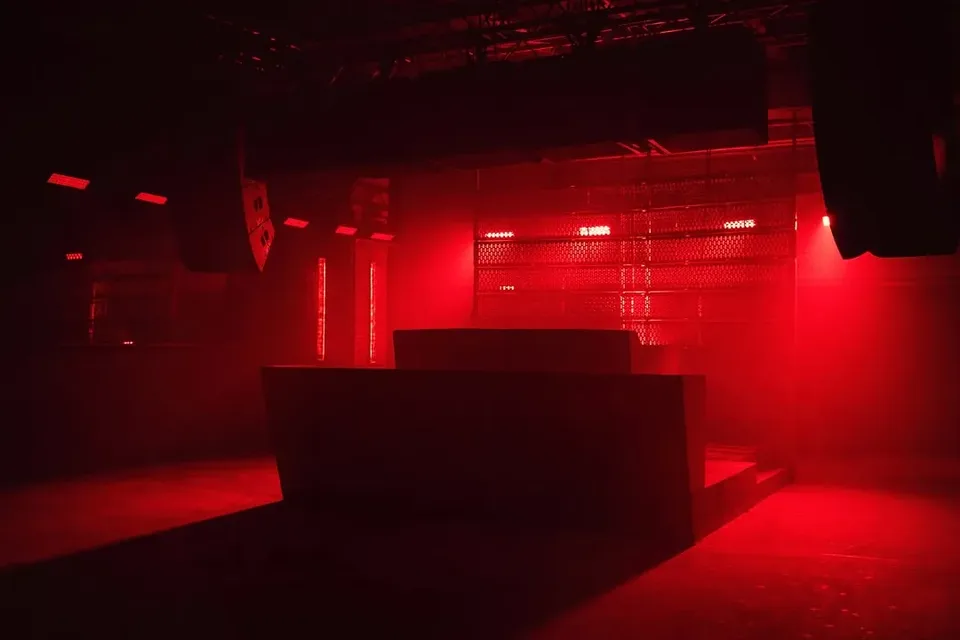
Martti: One of the themes we’ve always been interested in (since beginning to perform live) has been how you can take us out of the equation; how to decentre the artist. Of course, it’s based on something basic: as a spectator, for some reason, there needs to be a living body – like Deadmau5 still has to sit inside his LED cube. With Kraftwerk, it was a great opportunity to work on that idea and take us outside of the equation.
We’ve always been interested in making the stage itself into the performer to remove the necessary trope of the producer standing on stage. I feel it was quite successful in this sense – of course, it was a very unique space. It’s quite rare to work in a place that has multiple levels and you can set up a stage in a 360-degree fashion. So, it was a sort of realisation of this idea that we’ve been working on for a long time, but also combining other elements: narrative, visuals, stage tech and animatronics that we wanted to explore and integrate into a live show for a while. In a sense, it was a prototype of a new live show that’s… ‘post-Covid’ (laughs).
We’ve always been interested in making the stage itself into the performer to remove the necessary trope of the producer standing on stage. I feel it was quite successful in this sense – of course, it was a very unique space. It’s quite rare to work in a place that has multiple levels and you can set up a stage in a 360-degree fashion. So, it was a sort of realisation of this idea that we’ve been working on for a long time, but also combining other elements: narrative, visuals, stage tech and animatronics that we wanted to explore and integrate into a live show for a while. In a sense, it was a prototype of a new live show that’s… ‘post-Covid’ (laughs).
It did look very effective.
Martti: It was a very uniquely powerful set-up, but of course, there was an architectural and spatial freedom that rarely exists so that you can set up your stage in specific ways and so forth. Normally, there’s fairly limited freedom in terms of the fundamental architecture for a live show.
And lastly, we spoke briefly about the more cryptic side of your aesthetic from the Oracle.zip file you weren’t too sure about, the existence of a file somewhere on the websites with links to early works – and Martti, you hinted for people to look at the t-shirt labels. It reminded me how you released music via an Internet hotspot. What was the story behind that? And are there any ‘Easter eggs’ located in Tearless?
Martti: (Laughs) They wouldn’t be Easter eggs if we told you them!
Ville: I think it’s also been one of our interests although we’ve had less and less time to dabble on it, but the ways of distributing music and questioning them were very much on the table since the beginning. For example, for that Wi-Fi we created together with Canadian designer Vincent De Belleval, we thought, what if we made it very local but free so that if you found that Wi-Fi network and logged into it, then it gave you an EP? To this day, it hasn’t been available through any other way.
We made another iteration of the Wi-Fi at Unsound festival, where both before and during our show (in the space where we performed), there was this Wi-Fi network that people could log into and we could actually interact on there.
For instance, at certain parts of the concert, we could make their phones do things (laughs). I’d had this personal fantasy of being able to infiltrate festivals because you are put on the stage and, as we spoke about before, you have very little freedom – the screen is already up there, the stage is this shape and you have fifteen minutes to set up, etc. It’s very hard to bring your full ‘flavour’. We had this fantasy where the moment we set up, we could already be present by, for example, setting up the Wi-Fi network that is up there the whole day and could even fuck with all the other shows. It could be this weird presence of Amnesia Scanner the whole day.
Ville: I think it’s also been one of our interests although we’ve had less and less time to dabble on it, but the ways of distributing music and questioning them were very much on the table since the beginning. For example, for that Wi-Fi we created together with Canadian designer Vincent De Belleval, we thought, what if we made it very local but free so that if you found that Wi-Fi network and logged into it, then it gave you an EP? To this day, it hasn’t been available through any other way.
We made another iteration of the Wi-Fi at Unsound festival, where both before and during our show (in the space where we performed), there was this Wi-Fi network that people could log into and we could actually interact on there.
For instance, at certain parts of the concert, we could make their phones do things (laughs). I’d had this personal fantasy of being able to infiltrate festivals because you are put on the stage and, as we spoke about before, you have very little freedom – the screen is already up there, the stage is this shape and you have fifteen minutes to set up, etc. It’s very hard to bring your full ‘flavour’. We had this fantasy where the moment we set up, we could already be present by, for example, setting up the Wi-Fi network that is up there the whole day and could even fuck with all the other shows. It could be this weird presence of Amnesia Scanner the whole day.