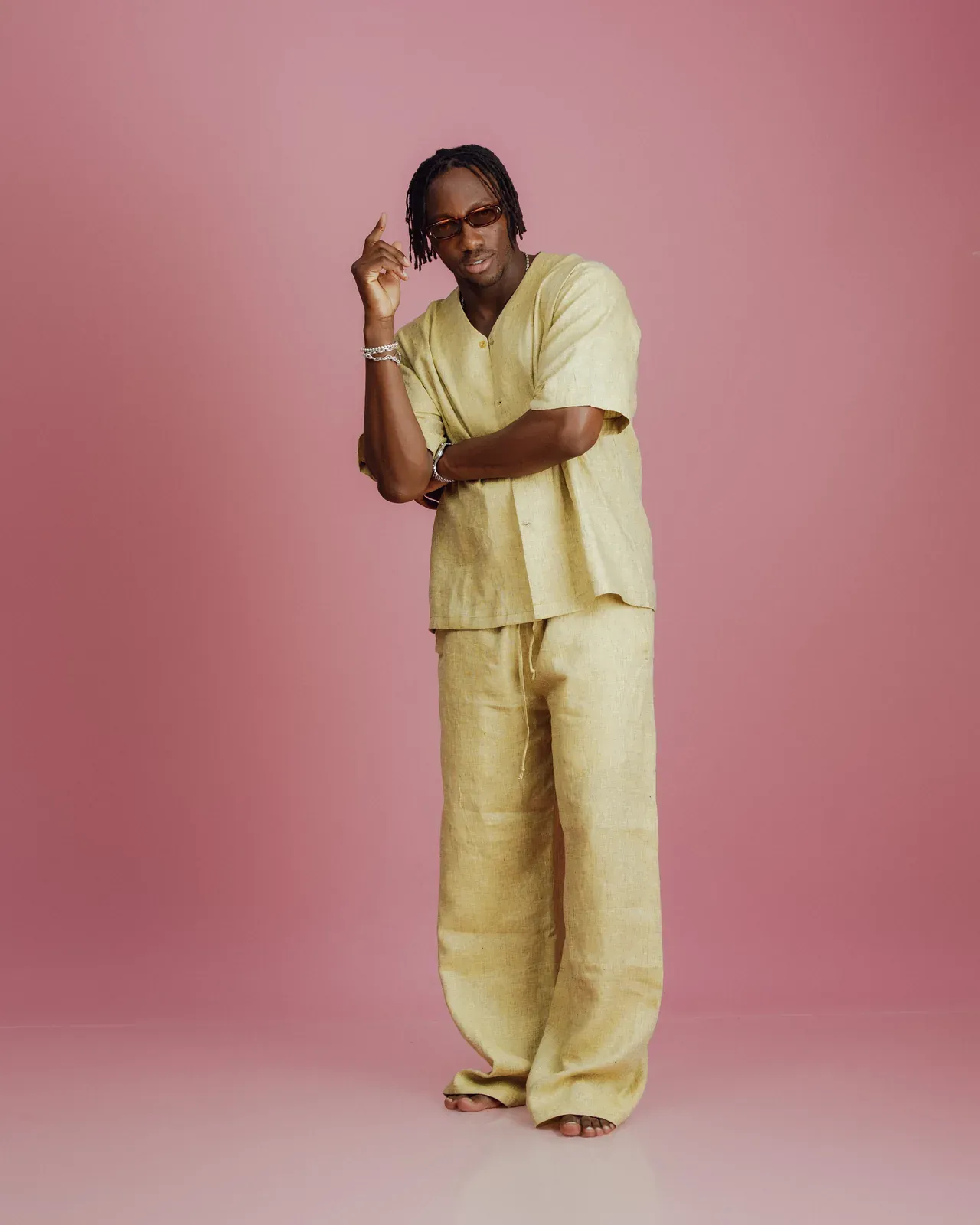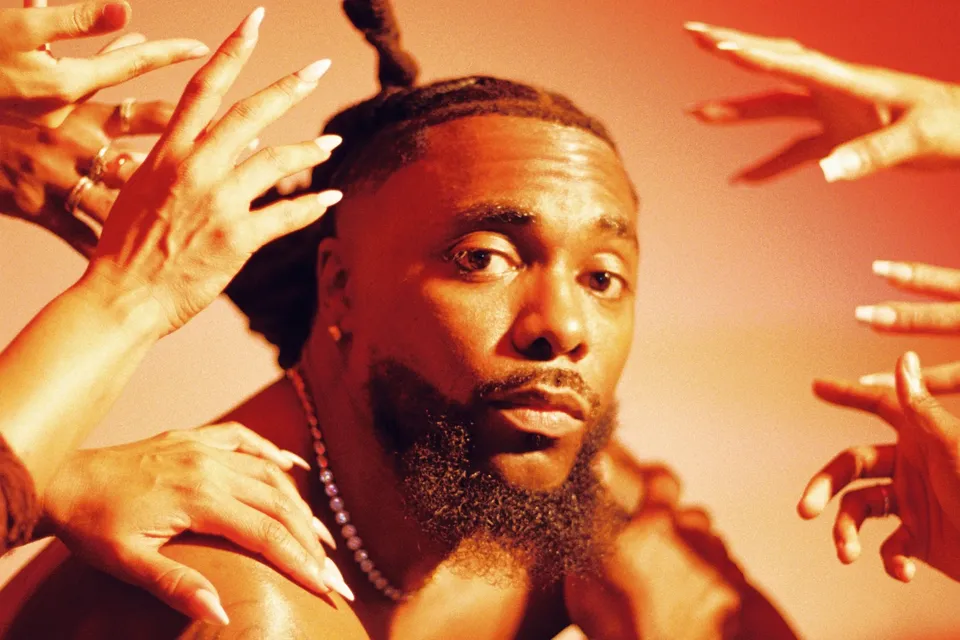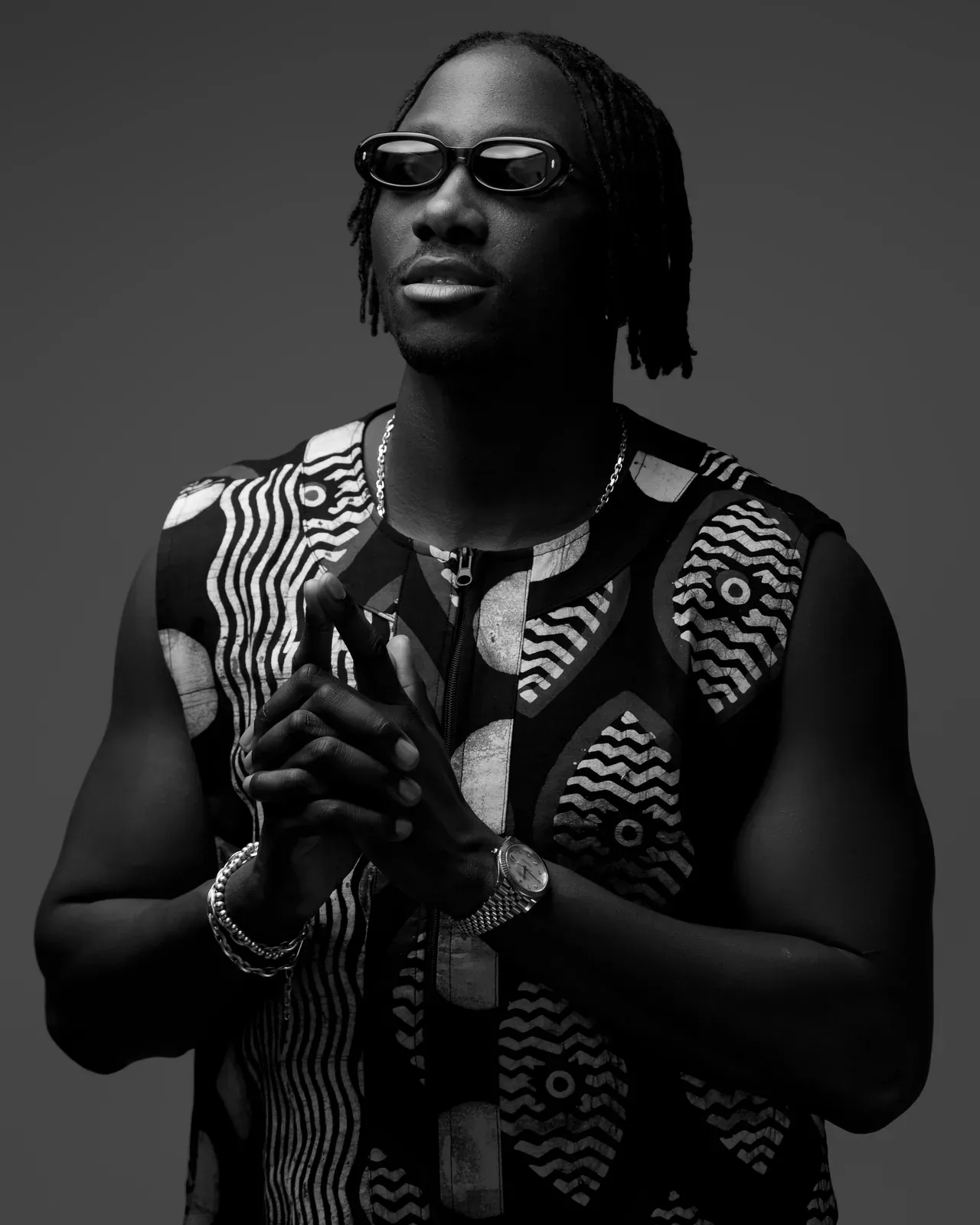
Born in Benin, built in Brooklyn, and now a regular presence on dance floors around the world, AMÉMÉ has spent years turning cultural distance into musical connection. His latest move is a reimagining of Panjabi MC’s Mundian To Bach Ke, transforming a bhangra anthem that sold ten million copies worldwide into a hypnotic Afro-house journey built on mutual respect and a day spent with the man who made it.
This project follows his rework of Angélique Kidjo’s Agolo and a run of milestones that includes a second Coachella performance and the launch of One Tribe’s inaugural residency at Cova Santa in Ibiza this July. We sit down with him to talk about the records that shaped him, the community he built from scratch, and why music has always known how to travel.
You just remixed Mundian To Bach Ke, a song that soundtracked a generation across at least three continents. When did you first hear the original growing up in Benin, what did it mean to you, and when did you know you wanted to put your hands on it?
Growing up in Benin, we were exposed to music from all over the world. People might not immediately expect that from a small country in West Africa, but we were consuming sounds and culture from everywhere. Bollywood, for example, was a big part of that exposure. A lot of my first connection to Indian music came through Indian films. But Mundian To Bach Ke was different.
How so?
It was the first time I remember hearing an Indian song on such a global scale: on TV, on the radio, everywhere. It was so catchy, so powerful, and it felt like it crossed every border. Then, when Jay-Z jumped on it, that was a huge moment. Around that time, there was also this wave of hip-hop artists sampling or collaborating with Indian sounds, so it really felt like Indian music was entering global pop culture in a major way. To be honest, I never imagined I would have the chance to remix a record with that kind of cultural impact. It is such a massive song, and I have a lot of respect for what it represents.
And how did it come to be, then?
The opportunity arose from a conversation with Boris at Altra Moda. I was going through the catalogue and was impressed by the records they had. I told him that if there was ever something they felt I could work on, I would love to be considered. From there, we started discussing possibilities, and when Mundian To Bach Ke came up, I couldn’t believe it. I told him, ‘If you give me the chance to touch this record, I’ll do something special with it.’ He gave me the opportunity to try, Panjabi MC loved the direction, and here we are today.
You spent the day with Panjabi MC before getting his blessing to release this. What was that conversation like? What do two diasporic artists from completely different traditions talk about when they finally meet?
The funny thing is, before meeting Panjabi MC, I didn’t know what to expect. I knew the record, I knew the videos, I knew how important the song was culturally, but I didn’t know the man behind it. Spending the day with him changed that. He welcomed me into his world: I met his family, his kid, his friends, and got to spend time with him in his city. It wasn’t just a studio session; it felt like being invited into someone’s life. I think he could feel that I was genuinely curious and respectful, not only about the record, but also about his story and where it came from. One of the most powerful moments was in the studio when he showed me the tumbi. Hearing him play that iconic riff right in front of me was surreal. It’s one thing to know a sound from a record that travelled across the world, but it’s another to see it come alive in the hands of the person who created it. We spoke about music, culture, identity, and how sounds from very specific places can become universal. We also went to the record store where he bought his first records, filmed some moments together, and later shared a beautiful meal at his house. For me, meeting him before releasing the remix was important. I didn’t want to just touch the record from a distance. I wanted to understand the person behind it and make sure there was mutual respect. He could have given this remix to many people, including many Indian artists, so the fact that he trusted me with it is something I don’t take lightly. It means a lot.
“I see music as culture. For me, it has always been about bridging worlds, taking sounds, stories and traditions that mean something to people and allowing them to live in a new context.”
Two of your most celebrated moments involve reimagining music by icons: Angélique Kidjo’s Agolo and now Panjabi MC’s Mundian To Bach Ke. What draws you to taking something already beloved and finding something new inside it? And what do both of those records tell you about where Afro-house can go?
I see music as culture. For me, it has always been about bridging worlds, taking sounds, stories and traditions that mean something to people and allowing them to live in a new context. With records like Agolo or Mundian To Bach Ke, you are touching music that already carries history. So the goal is never to erase what made it special, but to respect it, protect its essence, and then bring it into the world we live in now. Everything moves so fast today: social media, new music, new artists. But I think it’s important that we keep these traditions alive and let them transform with us. The approach was different for each record. With Angélique Kidjo’s Agolo, I leaned more into a classic Afro-house interpretation. With Mundian To Bach Ke, the original already has so much energy, so I wanted to push that further. I brought in a more high-energy, club-driven sound, mixing Afro drums with Indian percussion and a more tech-house edge. For me, that shows where Afro-house can go. It doesn’t have to stay in one lane. It can carry tradition, but it can also travel, evolve, and connect with other cultures and sounds.
One Tribe started as a party in Bushwick and is now a record label, a philosophy, and a residency in Ibiza. What holds all of that together?
The community is what holds everything together. One Tribe was never created as just a party or just a label. It started in Bushwick with a group of people coming together around a sound, but really it was about creating a space, a place where culture, music, identity, and creativity could meet. A lot of people don’t know that at our first party, we also released our first fashion pieces, including African bomber jackets. So from the beginning, One Tribe was always bigger than one format. Music is a huge part of it, of course, but the real foundation is the community. What keeps it alive is the people around it: my family, my friends, the team, the artists, and everyone who believes in it. I feel very blessed to have people who are genuinely engaged and helping carry the vision forward. At this point, it is bigger than me.
Is there a version of One Tribe that fails, and what would that look like?
The version of One Tribe that fails is the one that forgets that. If it ever becomes just a brand, just a party, or just a label without the community and the purpose behind it, then it loses its meaning. As long as we keep the people and the culture at the centre, One Tribe can keep evolving.
“Everything moves so fast today: social media, new music, new artists. But I think it’s important that we keep these traditions alive and let them transform with us.”
Cova Santa has a particular mythology in Ibiza: ancient cave, outdoor terrace, a crowd that takes the setting seriously. Why that venue for One Tribe’s first full residency on the island?
Cova Santa has a special place in my story with Ibiza. It was one of my first official shows on the island, right after COVID, playing alongside Jamie Jones. So bringing One Tribe there for our first full residency feels like a full-circle moment. In a way, it feels like coming back home. I have a lot of respect for what Cova Santa represents. For me, they keep a very real part of the Ibiza spirit alive. It is such a beautiful, vibrant island, and I think there is something powerful about experiencing that energy during the day: being outside, feeling the sun, dancing in that natural setting, and then letting the night unfold from there. When I look back at old footage, so much of the magic was happening in the daytime. People dancing outside, connecting, feeling free. That is an energy I want to bring back through One Tribe and our community. For this residency, we are creating an all-day experience. It starts outdoors, in the sun, and then moves into the club room. That full journey is what Ibiza means to me: not just the night, but the whole spectrum of the island’s energy.
One Tribe Records is actively platforming a new generation of artists in Afro-house and organic house. What do you look for in someone before you decide to put the label’s name behind their music?
One Tribe is very much a community, so for me it starts with the person. I usually like to connect with the artist, speak with them, and understand their mindset. Of course, the music has to speak to me, but the energy behind the person matters too. The record needs to be something I can genuinely stand behind, something I can imagine playing in my own sets and something that fits into the world of One Tribe. We’ve had moments where the music was strong, but the connection with the person wasn’t right, so we didn’t move forward. At the same time, we try to keep One Tribe open. I understand how hard it is for new artists today, especially when follower counts can sometimes matter more than the music. For me, that’s not the priority. If the music is good and the energy is right, that’s what matters.
Ibiza has a reputation that precedes it. How did your relationship with the island develop, and at what point did it start to feel like somewhere One Tribe belonged?
My relationship with Ibiza started in a very unexpected way. I met someone at Burning Man who basically said, ‘If you’re trying to be a DJ, what are you doing not going to Ibiza?’ He invited me to come and crash on his couch, and that was the beginning of my connection with the island. When I first arrived, I was thrown straight into this incredible world: beautiful house parties, amazing people, and a very special energy. Then, after COVID, I started playing my first shows on the island, including Cova Santa, and little by little my name began to grow there. Over the years, I’ve been lucky to play many different sides of
Ibiza: from Paradise with Jamie Jones, to Pacha, Music On with Marco Carola, Hï Ibiza, Ushuaïa, Rumors, and more. Through that, I started to understand why the island is so magical. It’s not only the big clubs or the commercial side; it’s the energy, the people, and the different communities that exist there. That’s when I started to feel that One Tribe could belong. Ibiza has always been about communities, and now the island is embracing Afro-house and Afro-influenced sounds more than ever. You can see it with the artists, the residencies, and the nights happening across the island. For me, One Tribe is coming to Ibiza to tell its own story. We are putting in the work, building the community, and bringing our energy to the island in a way that feels honest to who we are.
Ibiza: from Paradise with Jamie Jones, to Pacha, Music On with Marco Carola, Hï Ibiza, Ushuaïa, Rumors, and more. Through that, I started to understand why the island is so magical. It’s not only the big clubs or the commercial side; it’s the energy, the people, and the different communities that exist there. That’s when I started to feel that One Tribe could belong. Ibiza has always been about communities, and now the island is embracing Afro-house and Afro-influenced sounds more than ever. You can see it with the artists, the residencies, and the nights happening across the island. For me, One Tribe is coming to Ibiza to tell its own story. We are putting in the work, building the community, and bringing our energy to the island in a way that feels honest to who we are.