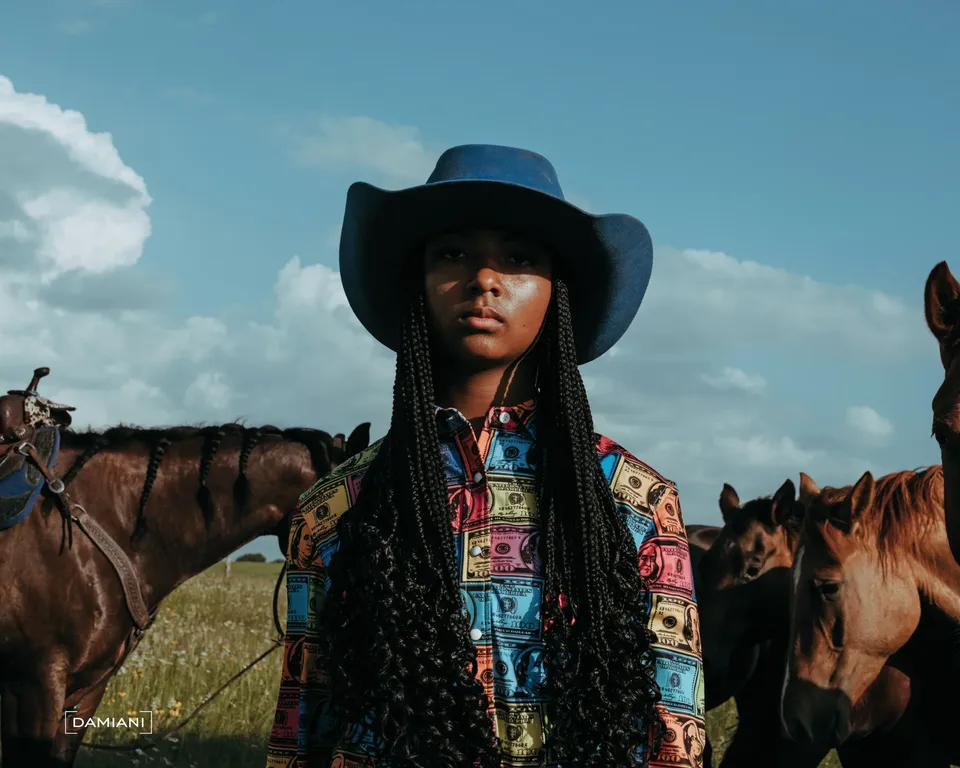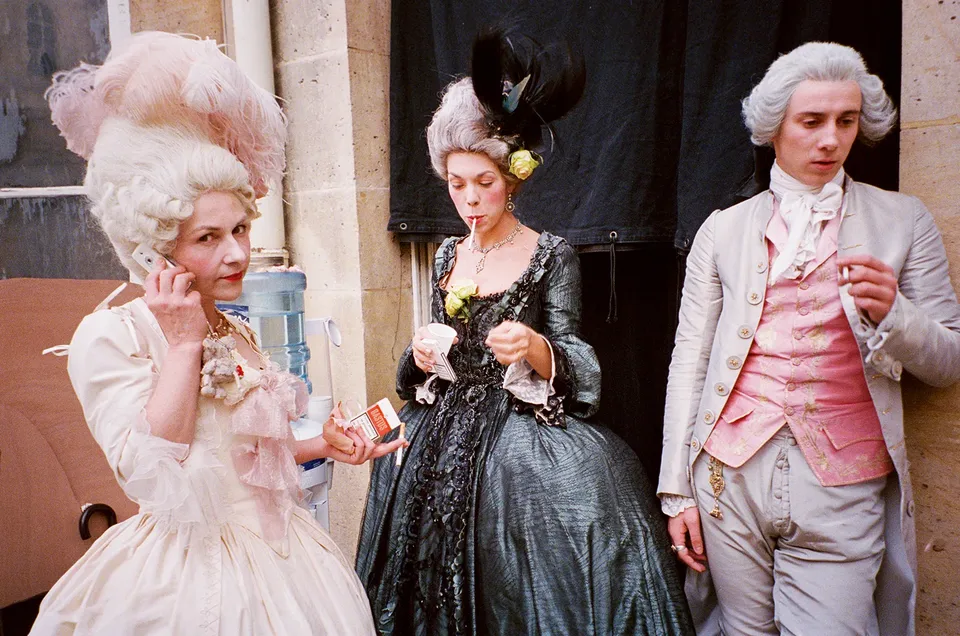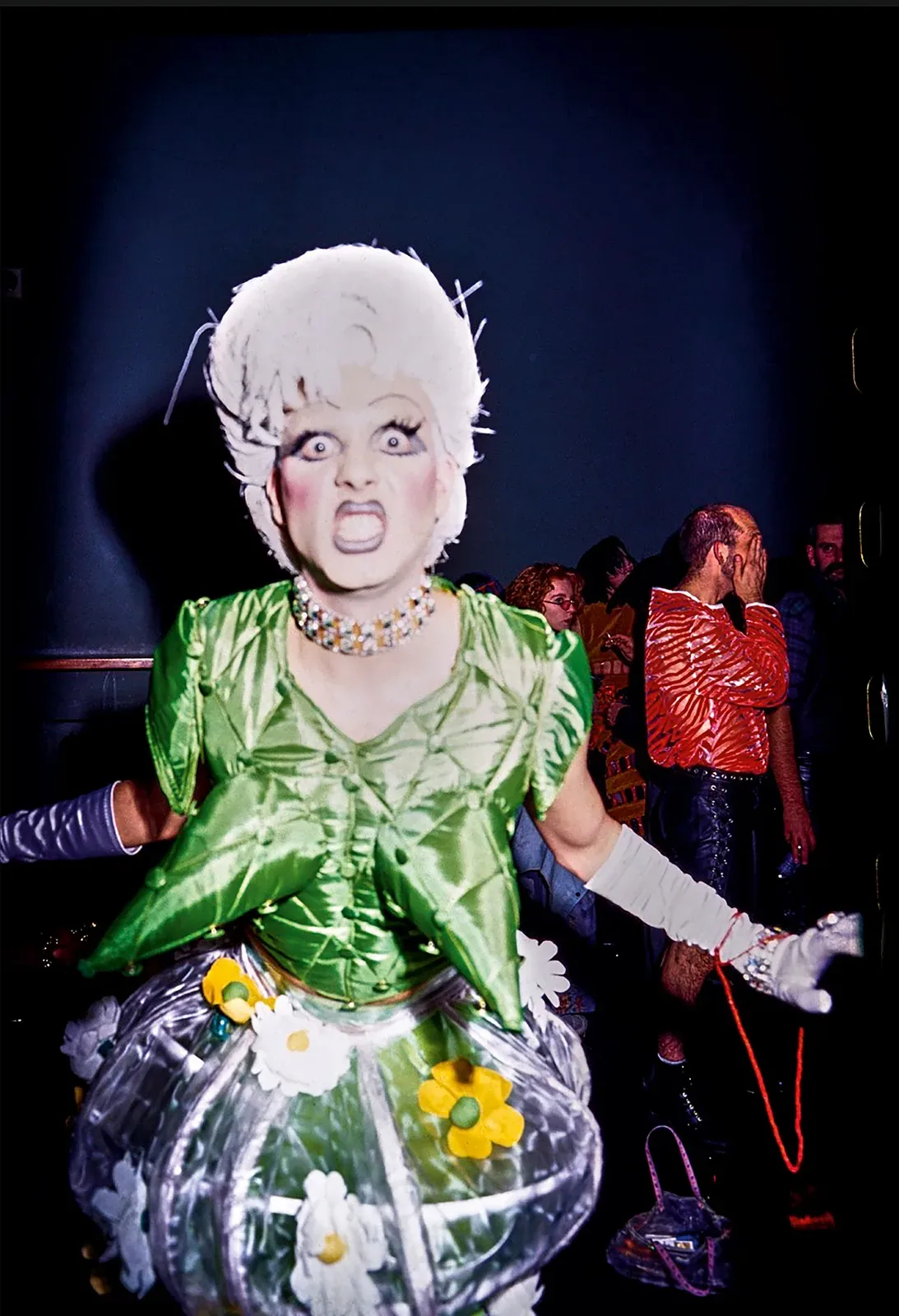
The night has long been a space of possibility. A temporary suspension of everyday rules, where identities can be tested, desires acted upon, and people become their truest selves. For those whose lives, bodies or relationships have existed at the margins, that promise has often carried even greater weight. Amelia Abraham’s Sex, Clubs, Dissent: Visualising Queer Nightlife arrives as a timely intervention.
At a moment when queerness is both increasingly visible and persistently taboo, celebrated in some contexts while censored or commodified in others, the book brings together photographic works and essays from artists such as Ajamu X, Rene Matić, Tourmaline and Roxy Lee, seeking to “echo the sensation of a night out”.
For much of modern history, photographs of queer people were used to expose, shame, blackmail or criminalise. Here, that visual legacy is turned on its head. These images celebrate pleasure, desire, community and people.
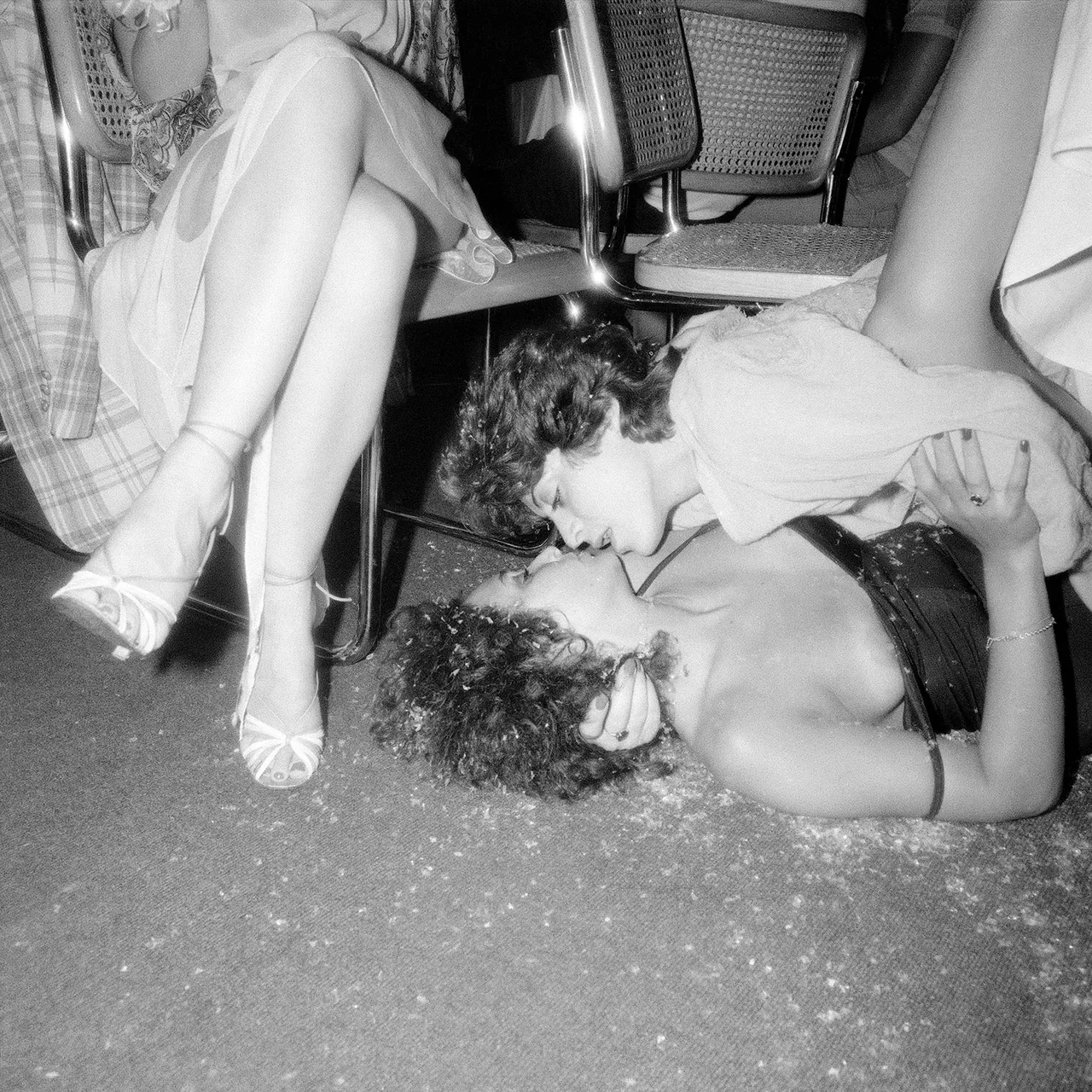
Meryl Meisler, Two Women Embrace on Floor Next to Judi Jupiter’s Legs, Les Mouches, NY, June 1978. © Meryl Meisler. From Sex, Clubs, Dissent: Visualising Queer Nightlife by Amelia Abraham (MACK, 2026). Courtesy of the artist and MACK.
Your book feels both long overdue and, somehow, impossible to imagine not existing before. Beyond the images themselves, what stayed with us were the questions and tensions running through it. We would love to explore some of those with you.
To that first point, there are so many archives, images and bodies of work out there in and around this subject. I feel like this book is just a start, or at least, I could have included so much more.
The word “dissent” is the most intriguing part of the title. I kept wondering whether these photographs are records of resistance or simply records of people living. Is there a risk that, in retrospect, we turn every queer image into a political statement?
This is a really interesting question and one that I don’t necessarily have a definitive answer to, but some thoughts. I think that is a risk, yes. Queer and trans bodies are inherently politicised, against the backdrop of a history of violence and regulation. Across the history of photography, the camera has been used to fetishise, other and expose queer or trans people. We are operating against a history of underrepresentation, misrepresentation and negative representation. So political statements are, as you say, imposed on us for this reason, and because, as many theorists of photography point out, there is something in the nature of a photograph itself that encourages this effect, since it turns its subject into spectacle. But at the same time, images are open to interpretation, they make different statements to different viewers, if any at all. Some of the photographers in the book were deliberately making a political statement, say, those photographers like Phyllis Christopher who were thinking about rejecting moralism and sexual stigmatisation in the context of the HIV/AIDS crisis, to name one example. Others, less overtly or deliberately so, photographing out of love or for the memory of a person or an evening. When queer existence and space are fragile, maybe that is political too. Alongside the more expected dissent photos, like the ones of punk performances, or sex, or protests, I wanted to include images that think about “dissent” in a different way. For instance, the image of two people peacefully waking up in the sunlight in the grass at Camp Trans by Jesse Glazzard; is tranquillity a form of dissent in a world that rarely lets trans people just be? Is there something in the stillness of photography that allows for a sense of rest or respite? Or in the formal element of a photograph that can offer or uphold opacity or resist categorisation? Or, in the case of the images from Archivo de la Memoria Trans Argentina, can offer what its founders call “a loving gaze” — are these photos simply records of trans people living, since they are photographs mostly from personal collections, of trans women photographing other trans women in their domestic or private spaces? I don’t have all the answers but I hope the images themselves prompt these questions.
When queer nightlife emerged, the structures it was pushing against seemed relatively clear: shame, censorship, social exclusion. What does dissent look like now, when queerness is increasingly visible and commercially valuable?
I agree that queerness is more visible and commercially valuable on the one hand (Heated Rivalry, say no more). But on the other, I think about ongoing censorship; for instance, my friends at BUTT Magazine had their Instagram removed by Meta recently, and the US administration is removing LGBTQ+ related images and historical references from state archives, to name just two examples. Dissent looks like many things but, in the context of this book, for me, it was the artists who have and continue to make work that presents alternative ways of doing, seeing, being. So many of the artists across the book could have been in the dissent section, really. Like Rene Matić and Ajamu X, who (in the Sex section) talk about their work as a form of Pleasure Activism, defined by adrienne maree brown as “the effort to reclaim our whole and most joyful selves in the face of oppression”. This, to me, is dissent, and a kind of dissent that queer nightlife can specifically facilitate. I think and hope Matić’s generous selection of photos in the book demonstrate that; they are sexy, sweaty, tender and joyful. That’s dissent, given the current climate of nationalism, systemic racism and anti-trans erasure that Matić is working within and against as a British artist, and photographing it is dissent, when we think about ongoing censorship, whether that censorship is explicit or more subtle and exclusionary.
“When queer existence and space are fragile, maybe that is political too.”
Many of the images in the book depict forms of intimacy, sex and community that would probably never appear in a corporate Pride campaign. Why do you think contemporary culture is comfortable celebrating queer identity, but not always queer sex?
I have mentioned that when I approached a US publisher about this book, initially they suggested that we would not be able to include some of the more “explicit” sexual imagery. Ajamu X puts it succinctly in the book: “Many of us are out around our sexual identities but not our sexual behaviours.” While contexts change across time and place, it’s the same reasons it’s always been; sexual puritanism and the hegemony of heteronormativity die hard.
You’ve said that many of the photographers in the book were participants rather than observers. Does being part of the scene make the camera a witness, or is there always an element of intrusion the moment you decide to turn an experience into an image?
I think there is an element of intrusion, yes, especially when there’s a history of exposure or overexposure in terms of queer nightlife. A lot of older images I was seeing in archives were police surveillance photos of gay bars, or newspaper images of bathhouses that had been subject to arson attacks, or even tabloid photos outing people. This is the history a lot of these photographers are working against. They’re trying to find ways to document queer nightlife that are less othering or intrusive, by us, for us. Sometimes that means photographing your immediate community, friends, lovers; sometimes it means finding ways to anonymise the people in the pictures; sometimes it means deciding not to take or show the photo at all. Especially when, with queer nightlife, exposure is a risk right now, globally. Both in terms of violence and, on a lesser scale, dilution. While in the UK queer nights might no longer be subject to, say, actual police raids, violence and disrespect are still a threat. A UK queer club night I loved in the 2010s had to fake its own death, and then restart in secret, because too many straight people came. It no longer felt safe. It no longer felt like the party it was. Images can play a role here, insofar as they can make visible what is subcultural or underground. Across the years working on the book, I talked at length about consent and permission with several of the photographers; most told me they can’t ask permission first in a nightlife space because it ruins the picture, the person or people in it instantly pose, you lose the alchemy of the moment. At the same time, I tried to work with people for whom trust and care is important, so usually they ask afterwards for consent or permission. I think it’s easier when a photographer is known at the queer night, they are part of the community themselves, they have photographed the space over a long time: less outsider intruder, more inside documenter, although complications around where images end up remain. As Ariel Goldberg writes in their essay: “Those behind and before the frame might have been more or less cautious with the power of hindsight.”
And where do you place yourself in that equation as the editor of this book? Do you see yourself as a witness, or as someone intruding?
I hope, due to the amount of research I did, the breadth of other people’s perspectives in the book, and the work I did to make sure as many people involved felt as happy with it as possible, that I am more of an intermediary than an intruder. But you never know. I guess a lot of the places and communities photographed in the book are of the past now, so there’s a less direct risk of exposure. But there are images I didn’t include because I felt like maybe they sexualised their subjects, for example, the approach felt voyeuristic, or they echoed the violence of surveillance. At the same time, we have to talk and think critically about these kinds of representations, too, rather than pretend they don’t exist. Again, as Ariel Goldberg writes: “The more we talk about cameras not being static or objective, we might be better guarded against images of the queer club being mixed up with state and vigilante violence that currently takes the form of doxxing and surveillance. I think a little suspicion of cameras in clubs means we are starting to draw on the lessons of living history.” This book does a little of that work but is primarily a celebration of photography made in and around queer nightlife, an attempt to bring together a canon and draw connections within it, and to think about how queer nightlife has influenced queer artists/photographers and vice versa.
The book can be read very differently depending on who’s looking at it. For some people, it might be an introduction to a new world; for others, it may feel like recognition. Who did you imagine this book speaking to?
First and foremost, people who are really interested in queer nightlife and queer image-making; nerds who are in love with both, like myself. I think of those people as mostly queer people, and I think of the book as for queer people, ultimately. It doesn’t over-explain. It’s feelings-led. It’s meant to echo the sensation of a night out; the befores, the afters, the discoveries, the highs, the lows, the chance encounters, the communities forged, the anger and grief that comes with loss, and the euphoria that comes with self-expression. I hope it makes whoever reads it and looks at the photos want to go out immediately. I’ve had that response a few times, which is nice.
“I think ultimately the most interesting forms of queer community are the most underground.”
Did your own understanding of queer nightlife change while making the book? Did you come away with a different relationship to those spaces than the one you started with?
I came away with more knowledge, but also more questions. I came away knowing the work of several photographers that I didn’t before. I came away grateful for elders and intergenerational knowledge and practices. I came away just as in love with queer nightlife as I was when I started, if not more. And also, hungry to experience new forms of queer nightlife — funnily enough, around the time I discovered Alex Burholt’s amazing image of dancers at Stud Country, I went for the first time myself.
The book brings together decades of photographs, but it is also, in itself, an act of exclusion. How did you decide which images stayed and which didn’t? What made an image feel essential?
A different editor would have made a different book and there is no doubt that subject position (white, Western/London-based, lesbian-identified and so on) would influence my curatorial perspective. The best I could do to step outside of my subject position was a lot of reading and archival research into this subject matter, to discover work I did not know, and perspectives I had not encountered. I invited photographers' suggestions for both photo selections and also other photographers to include. There were networks, one photographer might suggest another and so on. I wanted to include a broad range of writers, and ask: how would you take on this topic and whose work do you think is relevant? I did not want the book to resemble a representational checklist, although the fact of it being the first book of its type and a survey necessitated a certain breadth and inclusivity. I looked for images that had been lesser seen, or depicted what had been lesser seen; images that seemed to distil the essence of why we go out in the first place, what we’re looking for, why queer nightlife has been so important to so many; finally, I was particularly interested in images which formally stood apart or seemed to move forward what it is that photography can do or make us feel. As I write in the foreword: Nightlife photography is a category that, for many, conjures fast flashes on the dancefloor and has long been dismissed as formally inferior; what if we looked again?
How did you build the dialogue between images and text in the book? Did the photographs guide the writing, or did the writing change your reading of the images?
Both, at once! If a writer wanted to talk about a photographer badly, we’d try to get an image by them, but that wasn’t always possible.
To finish, and borrowing Tourmaline’s question: Now what? This book looks back in time, but where do you think the most interesting forms of queer community are emerging today?
Queer nightlife and community respond to or reflect the times, I guess, and that’s always interesting to me. During the AIDS crisis we saw more phones in clubs for phone sex, people shaking pots for HIV charities, the creation of parties that are fundraisers, safe sex materials in clubs, and the formation of radical activist groups, many of whose members met in nightlife spaces. To skip forward, I’ve been chatting with friends about how because of PrEP and G, the last few years have been very sexually loose in places where those drugs are accessible/available. I am also interested in the attempt to create gender-inclusive sex spaces and dark rooms in more mixed clubs. If I had to conjecture, I think that’s partly due to acceptance around more fluid sexualities than gay and straight, improved education around consent in nightlife spaces (particularly post-#MeToo and due to the work of promoters), because of the increased visibility of S&M and kink leading to more interest. But also, a tactile pushback against hookup apps, maybe? And dykes and trans people seeing the histories of cis gay male cruising and casual sex and thinking, why not us, now? I think ultimately the most interesting forms of queer community are the most underground (as they always have been). The ongoing fundraising auctions for trans healthcare in smaller cities, the secret queer techno festivals with 200 people outside New York, the parties in living rooms, the book clubs, the grassroots recovery meetings, the illegal queer raves happening in countries where it’s criminalised. Not all of this needs to be photographed, but from what I’ve seen and been told, it’s definitely happening.
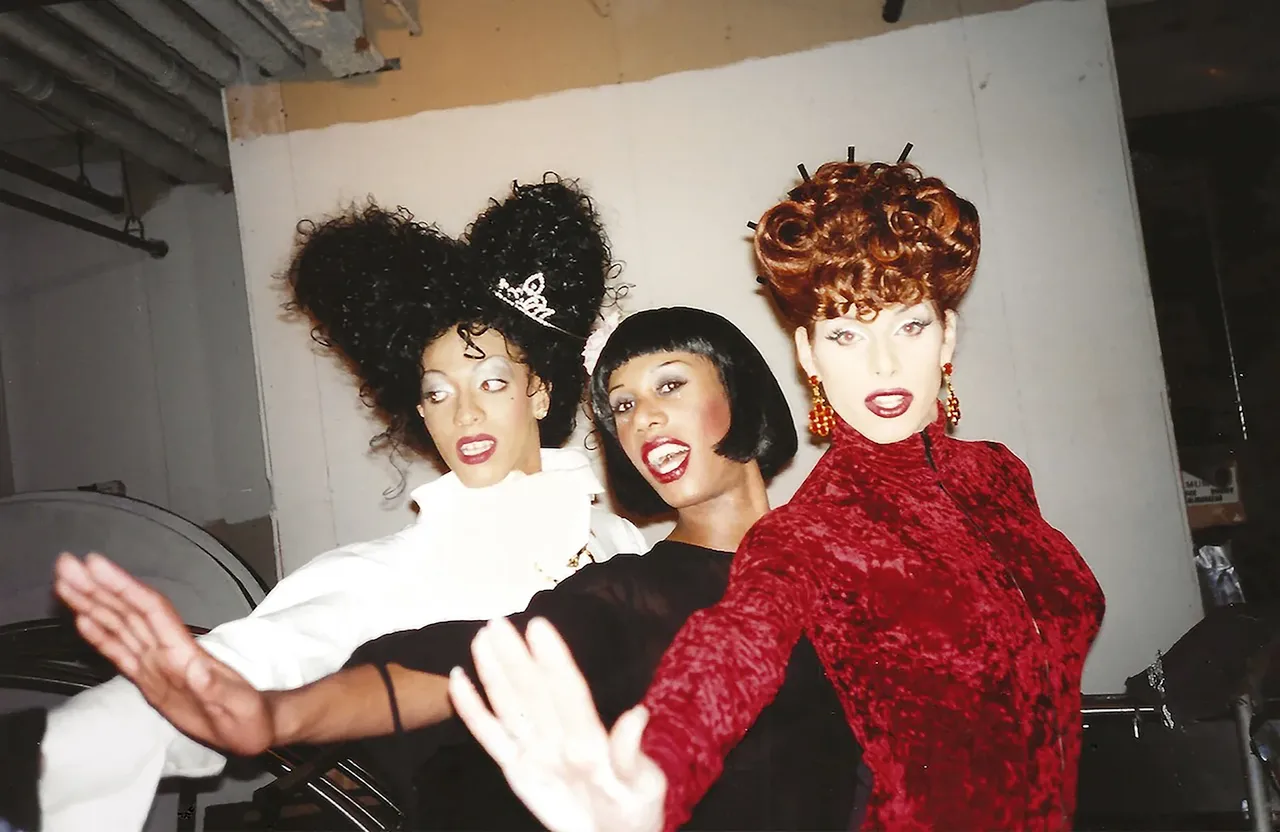
Linda Simpson, Linda Simpson, Gillian, Honey Dijon, and Candis Cayne at Wigstock at the Palladium, 1995. © Linda Simpson. From Sex, Clubs, Dissent: Visualising Queer Nightlife by Amelia Abraham (MACK, 2026). Courtesy of the artist and MACK.
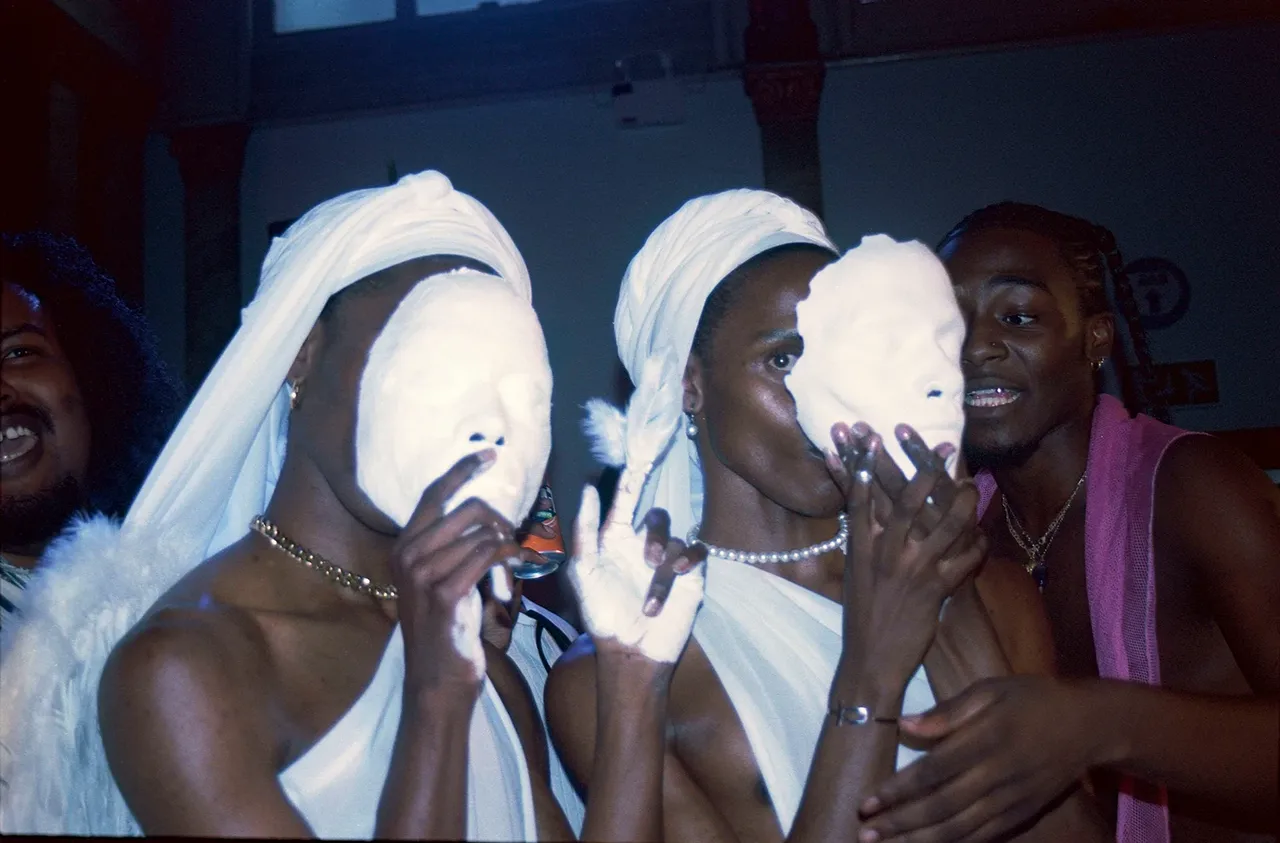
Bernice Mulenga, Priince & Majeesty, 2021. © Bernice Mulenga. From Sex, Clubs, Dissent: Visualising Queer Nightlife by Amelia Abraham (MACK, 2026). Courtesy of the artist and MACK.
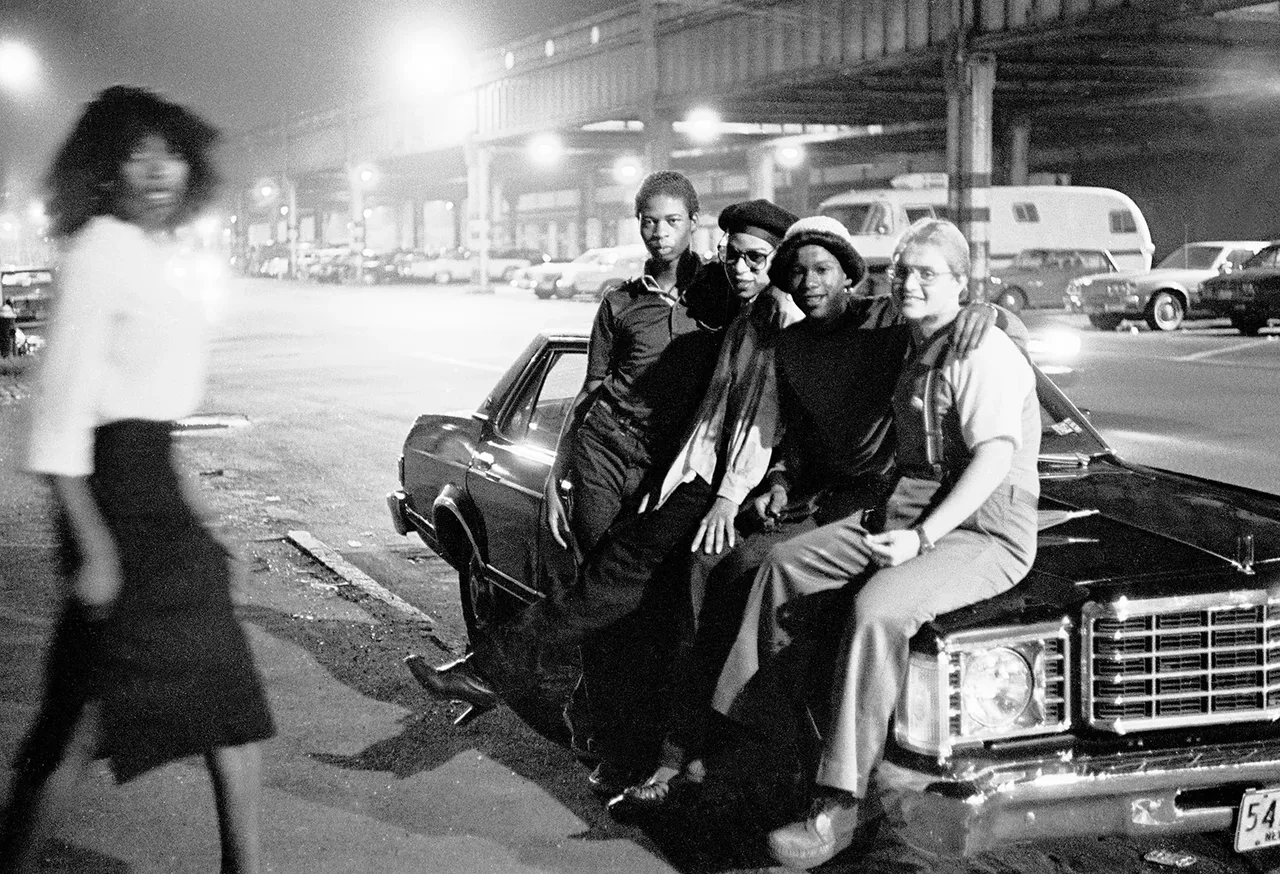
Efrain Gonzalez, On the West Side Highway, 1982. © Efrain Gonzalez. From Sex, Clubs, Dissent: Visualising Queer Nightlife by Amelia Abraham (MACK, 2026). Courtesy of the artist and MACK.