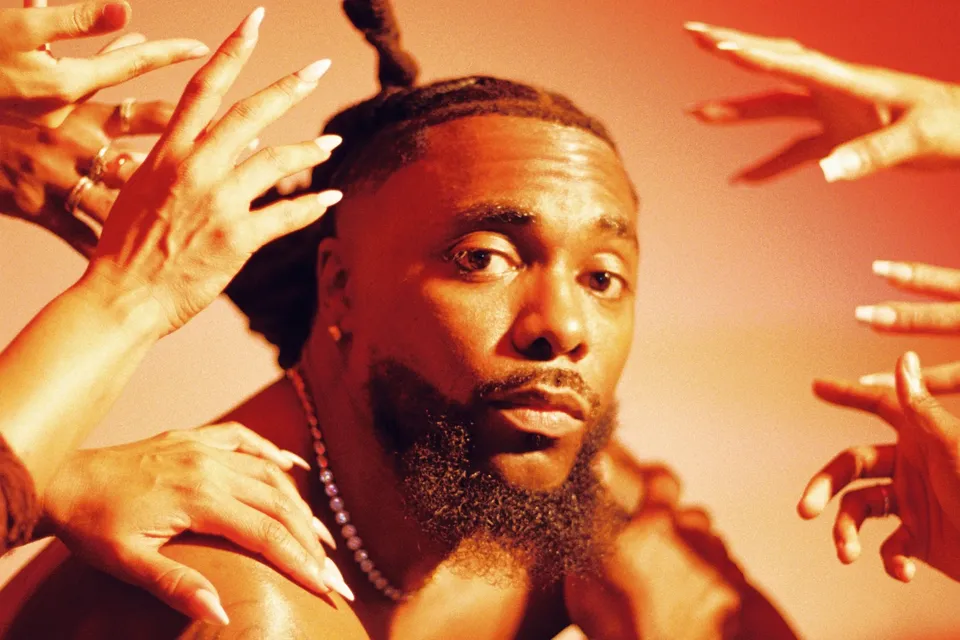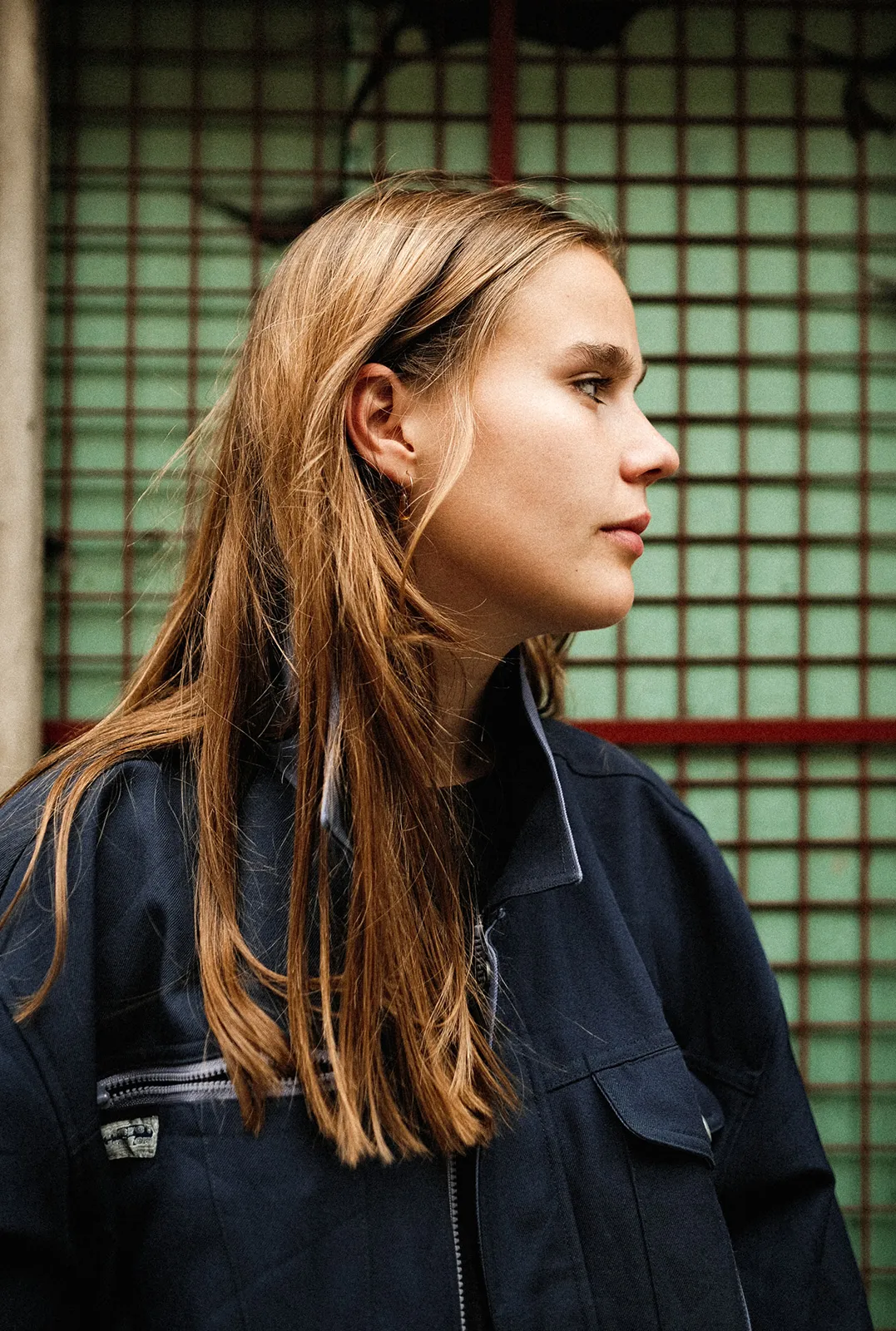
Imagine going from festival attendee to one of the event’s most respected resident DJs. For AliA, real name Alyah Rivière, this is not only a fantasy but her reality. Driven by a genuine love for a different variety of genres, particularly within electronic music, her sharp rhythm and texture have set her apart and consolidated her as one of the leading Belgian DJs of the moment. If you haven’t yet, get into her futuristic and groovy sound.
The young Leuven native has been attending Horst Arts and Music Festival since the first edition, only to eventually end up as a permanent resident following her debut in 2018. For that reason, she has not only watched Horst evolve but also been part of its substantial transformation. Still early into her career, her thorough and well-rounded knowledge has allowed her genre-hopping mixes to get her into acclaimed festivals, as well as receiving support from local legends like Lefto Early Bird.
This year at Horst, Alia had double duties: being in charge of soundtracking the Peloton on the first day of the festival and an exciting back-to-back with London jungle/dubstep DJ Mia Koden at the Weaving Weeds stage. Being humble seems to be the norm in Brussels as her approachable and ‘cool girl’ energy as if she were any other festival goer immediately resonated when we sat down together backstage. AliA’s calm, collected and even tight-lipped responses just made us even more curious about the set she was set to deliver that same afternoon and deliver she did. We spoke to one of the leading Belgian DJs of the moment about her experience with Horst over the years, nightlife in Brussels and her career amongst other things in the interview below.
I read you were only fourteen when you first attended Horst, and you essentially went from being part of the audience to being in the lineup. How was that transition for you?
I have to say that period in my life is a bit vague in my head for some reason (laughs). The festival used to be super close to Leuven, the previous location and also where I grew up. The people who organise Horst are also kind of Leuven based, so immediately it became this thing that all the Leuven people went to. I was always checking out music because of my dad: he taught me a lot, and from that point, when I was thirteen, I started digging myself.
I remember the first edition of Horst, I checked out the lineup and I was really hyped to go see all these artists in this first festival experience. It was impressive. I was always fascinated by and busy with music, and I never had the intention of being on a stage myself. I started to dig music and enjoyed myself doing that for fun. Then I started to do random mixes and uploading them on SoundCloud, but not with the intention of being on that stage as well. It kind of happened spontaneously, I would say. I'm really thankful to Horst for giving me that chance to be able to do that.
I remember the first edition of Horst, I checked out the lineup and I was really hyped to go see all these artists in this first festival experience. It was impressive. I was always fascinated by and busy with music, and I never had the intention of being on a stage myself. I started to dig music and enjoyed myself doing that for fun. Then I started to do random mixes and uploading them on SoundCloud, but not with the intention of being on that stage as well. It kind of happened spontaneously, I would say. I'm really thankful to Horst for giving me that chance to be able to do that.
Did you instantly know you wanted to come back to play Horst after your first time?
I think so, yeah. The first time I played was in 2018, still in the previous location, and then the year after they changed to the current location and from that year on, I played almost every year with the exception of last year. They also gave me the chance to play in different formats, from opening sets to closing sets, to a back-to-back and like a mid-day set in different stages. So, it teaches me a lot as an artist to play in these different contexts.
Do you have a preference?
Yeah, I love opening sets. It's my favourite. There's so much music that I love to listen to which you can't play unless you set the tone. I love the head-shaking stuff and it's not specifically danceable sometimes, but I like these deep tunes that you listen to at home. Especially in a club, when you can do this long, four-hour opening set, that's my favourite.
What do you think makes up the essence of Horst?
I think creating a crazy atmosphere with this architectural stuff going on and having new stages every year, as well as a lot of different kinds of music. Also, discovering new music is an essential, for me at least. Getting to know new things and artists, giving them the chance to play this festival, which is big. You have the Kiosk stage, for example, where they put all these locals, and I think that's a super important thing to have — this balance between headliners and local artists. Basically, having a good time, discovering music, and meeting new people.
Do you think that’s what sets Horst apart from other festivals?
Yeah, I think so. Living here in Brussels and nearby, we’re kind of used to this, but then we go abroad to other festivals and you realise that Horst is something very special — it’s not common to have this outreach with all the stages and stuff.
In a few hours, you're playing back to back with Mia Koden. Have you prepared anything, or is it fully freestyled?
It's funny because we were supposed to send tracks to each other over the last two weeks. We've been chatting and stuff, and it was super nice, but we're both ill. I think we just have an intro track that she sent over, but I can't check it now, it's kinda late. We're just gonna improvise (laughs).
How was soundtracking the peloton on the first day of the festival?
It was fun because I had to play in this little space, and someone was biking me, so it was a bit sketchy with the road and the bumps. It was very hard to mix but it was fun, and a lot of friends came and the sun was out. It was super hot. It was vibes.
It's fair to say Horst acts as an incubator for talent in the sense of discovering new talents. Are there any other incubators for creatives in Brussels?
I think the main problem in Brussels is that we can't open a lot of spaces. The most important are these small collectives in these temporary spaces, which are doing great stuff, but they have to close after half a year or a year. It's always temporary because the government doesn’t allow them to stay open, or you have neighbours complaining. I think the most important or special occasions are happening in these small, temporary places with the small collectives not having this capitalistic mindset. There are many small collectives in Brussels and you can feel that.
I think that's a big difference with the UK or France, where you have twenty clubs where you can go. In Brussels, we don't have that. You go to Kiosk and you don't really know what's happening that night, and you end up meeting these random people and there will be always something that comes up that's in a temporary space you never heard of. For me, that’s what going out is in Brussels.
I think that's a big difference with the UK or France, where you have twenty clubs where you can go. In Brussels, we don't have that. You go to Kiosk and you don't really know what's happening that night, and you end up meeting these random people and there will be always something that comes up that's in a temporary space you never heard of. For me, that’s what going out is in Brussels.
Have you felt a shift in the creative scene or has it always been like that?
Honestly, I feel like there are fewer young people starting initiatives. Covid had a big impact on teenagers going out, and I think this passion to organise is coming back just now. But the younger generation got a bit sick of this or didn't learn to go out and organise, so in that way, yes. But I feel like all the collectives before that, who’ve been stable for many years, still like to be there and do stuff.
Do you have hope for the future?
I would say music-wise, I really hope the hard stuff is going down, which I already feel happening and I'm happy about. I hope this more house, soulful music scene from back in the days is coming back.
Dream festival?
There are many, but I would say We Out Here because the founder is a selector that I looked up to for a long time. I think the artists playing there are a good mix of people coming together in the most beautiful way, where we have these originators but also the newer people bringing something fresh. For me, that's like the perfect mix in between live artists and DJs doing quality stuff.
Lastly, you also frequently collaborate on Kiosk radio, so I wanted to ask what you think sets it apart from platforms like NTS or Rinse?
That it’s in a public space. Most radios are in buildings, but Kiosk is also a meeting point in the middle of a park. You go there, you meet new people, which is super important. Before Kiosk, the scene was a bit more divided in Brussels. When it started, the scene got super united, and people are not hating anymore on each other and just respecting each other. The public space aspect is very important.