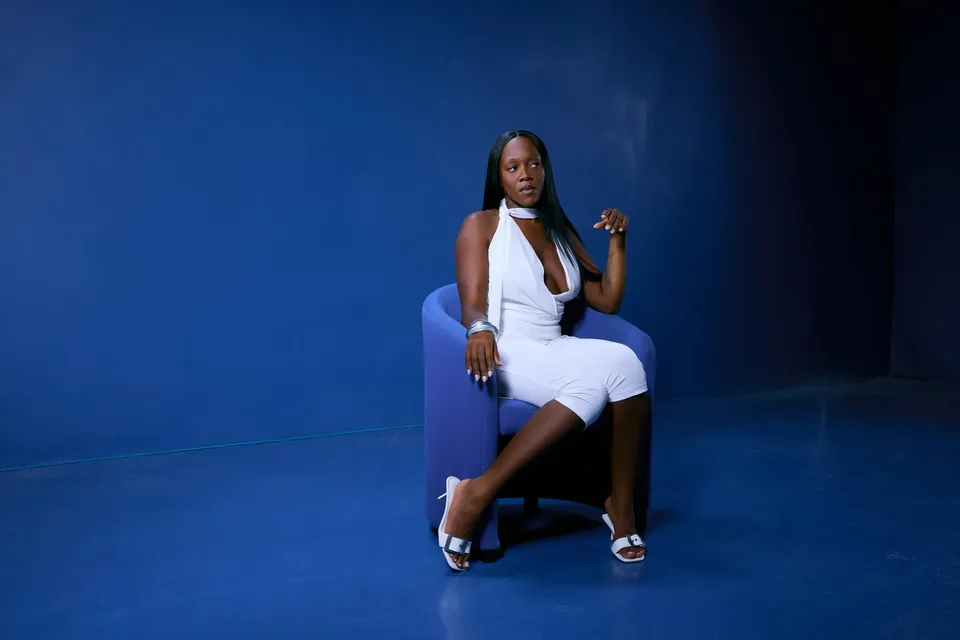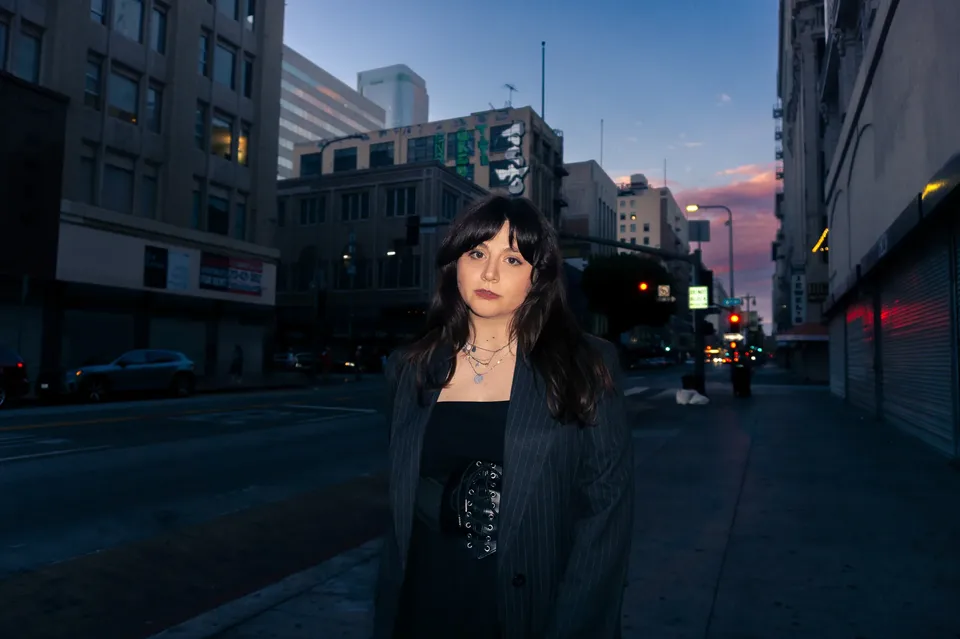
With only one official release so far, Alexa Joyce is still in the early stages of defining her sound. The Liverpool-born artist introduced herself with I Want Ya, a bright and flirtatious first step, and now returns with Sex on TV. Where her debut leaned into immediacy and playful energy, its follow-up moves towards something darker and more controlled.
A pulsing bassline and driving drums sit at the centre of Sex on TV, surrounded by glossy disco production that feels built for the hours when the lights are already low. Madonna’s Confessions on a Dance Floor is an important reference for Joyce, particularly in the way the record balances darkness with unabashed pop. “The song is super dark yet still disco,” she explains, adding that its bass and drums feel especially reminiscent of an album she considers one of pop’s greatest.
That connection is also personal to the artist’s evolution. Joyce describes Sex on TV as “my lightning-in-a-bottle moment,” recalling it as the first track she played to people that made them see her differently as an artist. The song does feel more focused than her debut, with the production giving the groove enough room to carry the track while her delivery settles comfortably into its seductive, late-night atmosphere.
Joyce grew up immersed in artists including Kylie Minogue, Donna Summer and the Spice Girls, absorbing their approaches to reinvention, performance and personality. Those references are still easy to trace, but Sex on TV begins to show how she might translate them into her own pop language. It is still early, but that is partly what makes this second release interesting: not because everything is already fully formed, but because the direction is becoming easier to read.