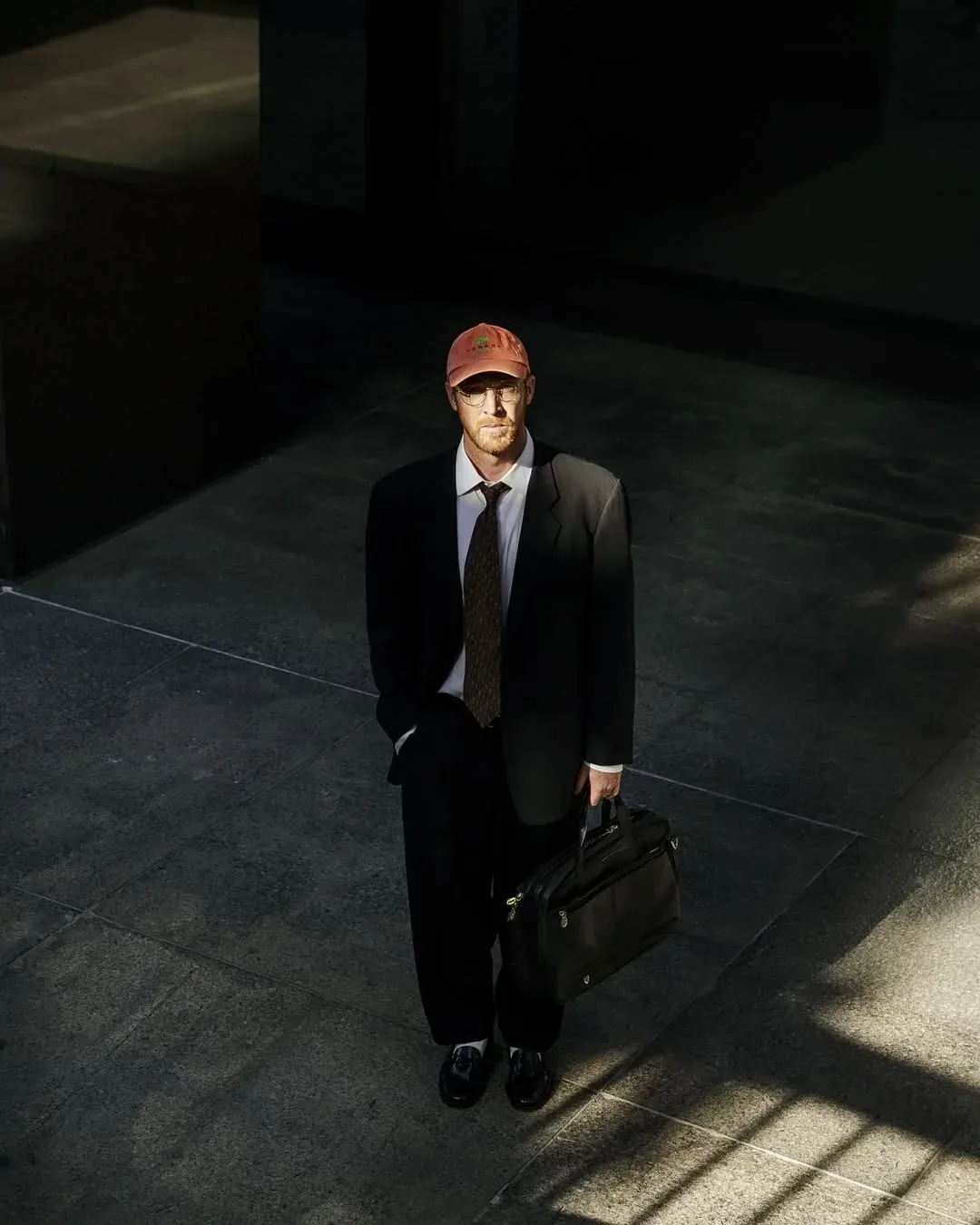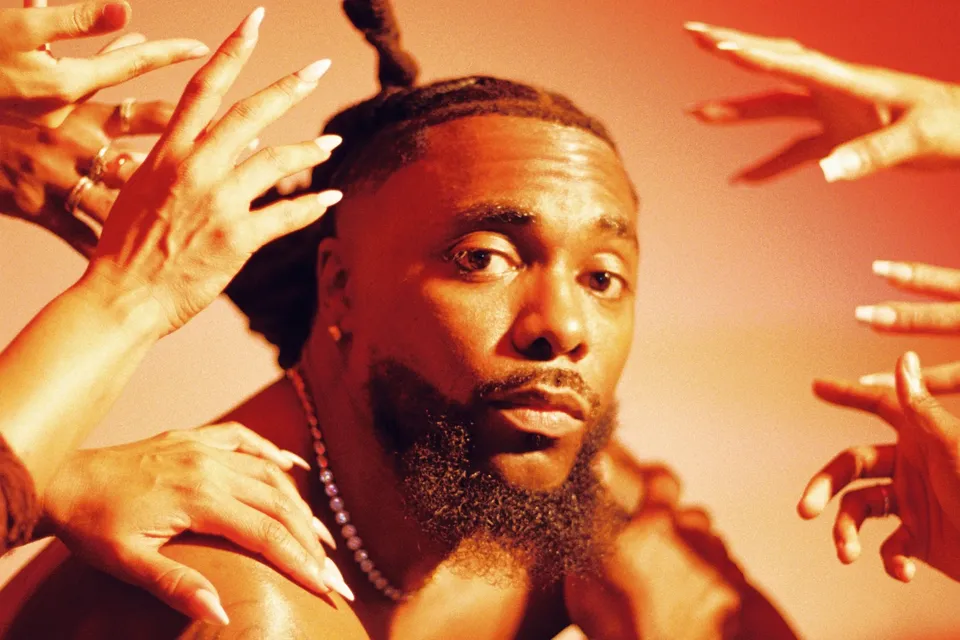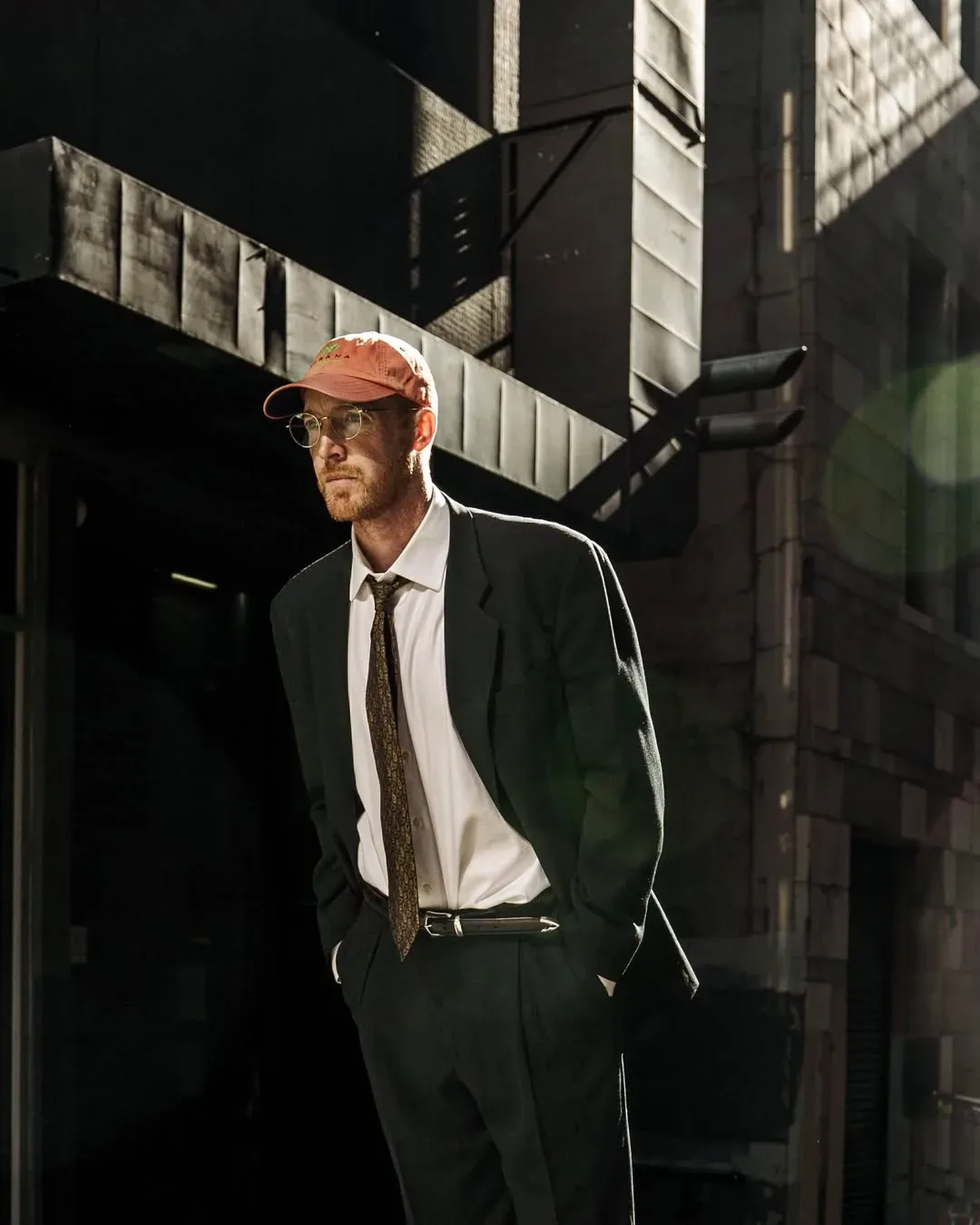
The opening bars of Roll the Dice give the impression that we are drawing ever closer to a scene: a few chords are introduced, and Active Child’s musical universe emerges with a sense of familiarity. The artist has created one of the most distinctive soundscapes in contemporary music and, after a hiatus of around five years, is back with a new self-titled album.
As he explains, the album feels like a fresh take on his work. This draws attention to the creative process: although we haven’t heard from him for some time, his musical drive has never wavered and, on this occasion, it’s evolving. There comes a moment in many people’s lives when the narratives that once seemed separate begin to collapse into one another. The artist, Pat Grossi, becomes the parent. Ambition collides with responsibility. Solitude becomes difficult to distinguish from loneliness. The future arrives carrying traces of the past. What once felt like freedom starts to resemble uncertainty. What once seemed impossible suddenly becomes necessary.
Active Child, the album, was born to inhabit a space that reflects human experience from a very specific point of view, enriching both his discography and the current alternative pop landscape. At the centre of the record sits a guitar; not just any guitar, but one that carries decades of accumulated memory. Custom-made in Manhattan in 1941 by legendary luthier John D’Angelico, it belonged first to Patrick Grossi’s great-grandfather, then remained untouched in a New Jersey attic for nearly forty years before finding its way into the musician’s hands. “My most prized possession,” he confesses. It features throughout almost the entire album, its sound woven into songs that continually return to themes such as legacy, identity and the invisible threads that bind one life to another. In many ways, it becomes the perfect symbol of the album itself: something old transformed into something new without losing sight of its origins.
Since emerging with You Are All I See in 2011, Grossi’s work—his ethereal falsetto, intricate arrangements and ability to merge electronic experimentation with emotional intimacy—has influenced an entire generation of artists working within alternative pop. Yet Active Child feels less concerned with expanding a signature sound than with examining the person behind it. The mythology surrounding the artist gradually gives way to something more human. Across twelve songs, Grossi traces the fault lines between devotion and obligation, creativity and stability, individual desire and collective responsibility.
There is a striking sense of reflection throughout the album. This is not nostalgia, but reflection in its truest sense: looking at oneself through the distortions of time and experience, but from the present. Songs such as Fault of God, Needed You, Money and I Know What to Say Now confront questions that rarely receive easy answers.
What emerges is perhaps Active Child’s most vulnerable and revealing work to date. Tender, restrained and deeply contemplative, the album understands that identity is never fixed. Like the family guitar at its centre, it is shaped by everything that came before while continuously becoming something else. We spoke with him about fatherhood, songwriting, inherited objects, artistic purpose, the economics of contemporary music and the complex beauty of creating from life’s most uncertain places.
Hi Pat! Thanks so much for your time. How are you?
I’m great, thanks for reaching out!
You’re back with a new self-titled album after a five-year break. Self-titled records usually feel like introductions or reintroductions. Which one is this for you?
I’m not really sure it feels like either to me. I go away on these long breaks between releases, but I don’t ever stop working, so there’s this strange delusion in my mind that I’m still present, even if, for everyone else, it feels like I’ve completely disappeared. I chose to self-title this album simply because it felt like a distinct departure from my previous work.
One of the first things I noticed about this new album is that, while it keeps your signature sound, it leans more into folk music, and the acoustic guitar seems to play a central role throughout many of the songs. Was that a conscious decision, or more the result of experimenting with different ideas?
It was more a result of experimentation. I spent a lot of time writing and building ideas that were iterations of things I had done before. I kept hammering away, but I wasn’t getting that feeling I look for to know I really love something. There were a few ideas that started to crop up that led with guitar, and I found myself returning to those a lot, so that became my path forward.
Fault of God is one of the most powerful songs on the album. It presents a really interesting tension between devotion and responsibility. The video, directed by Keegan James Hurley, is also striking, especially with its use of archival footage inspired by the cultural upheaval of the 1960s. How did the idea for the song first come about? And was it difficult to select the imagery for the video?
Thanks. Fault was one that was sort of dropped in my lap. I find that, lyrically, the music sets a tone for me, and that mood informs the words. It started with just the guitar progression, which has this quiet, brooding quality. I recorded the vocal really quickly, and most of what you hear on the final master is from that initial demo.
The visual world of the album felt archival to me from the start, and when it came time to flesh out the video for Fault of God, I knew that I wanted to incorporate this imagery to elevate the emotion of the song, to highlight the beauty and the horror of it all. It was inspired in part by the work of archival documentarian Adam Curtis.
The visual world of the album felt archival to me from the start, and when it came time to flesh out the video for Fault of God, I knew that I wanted to incorporate this imagery to elevate the emotion of the song, to highlight the beauty and the horror of it all. It was inspired in part by the work of archival documentarian Adam Curtis.
We first heard Coming Up at the end of 2025, and in it you sing: “But they keep coming up a long time now with yourself / They keep coming up a long time now with yourself.” The album feels like a body of work that must have required a lot of introspection, and also the willingness to sit with those emotions for long periods of time. How cathartic was the process for you?
Making the music itself is certainly cathartic in a subconscious way, but lyrically, the meaning of things is not top of mind for me. I try not to make sense of things too much in the moment. It’s about the sensation the music and words combined give me.
Needed You feels almost like a poem. The lyrical structure may seem simple at first, but it touches on such an existential feeling: “There’s some days / Memories hard to take / It’s like your living proof of / It’s like you never left me.” I really like the way it describes how our past and experiences will always be with us, and how sometimes it is difficult to manage that. How did this song come about? I also read that you used your grandfather’s guitar to record it. That must have been a very special moment.
The mood of this one took me into a more romantic space. Reflection, not so much nostalgia, is a big emotional trigger and one that I lean on continually. And yes, the entire record is built around a guitar that was given to me by my grandfather, but actually belonged to my great-grandfather. He had it custom-made in Manhattan in 1941 by legendary luthier John D’Angelico, eighty-five years ago. It has this really rich tone to it. I used it on every song except Core Memory. After my great-grandfather passed away, it sat in its case in an attic in New Jersey for the better part of forty years. I remember playing it briefly as a kid, and now it’s mine. It’s my most prized possession.
I Know What to Say Now feels like one of the most resolute moments in the emotional journey of the album. There’s something incredibly fresh about the way it sounds: the mix between the processed effect on your voice and those almost soulful textures. I also noticed the album cover was shot in the same location as the video. How important was it for you to release this track as one of the singles?
I pushed hard for this as a single, even though it didn’t have particularly ‘single’ qualities. Of all the songs I had made for the album, it felt the most exciting to me; it pushed into territory I hadn’t really heard before. It was cool to see it connect with people in the same way. This album was about breaking away from the confines of what I felt had become my understood footprint as an artist.
The arrangements and instrumentation across the album are superb. The whole sonic architecture feels incredibly rich. You co-produced the record alongside Mike Montgomery, Alex Goose, Brennan Rhodes and others. What were the main inspirations guiding the writing and production process?
Alex, Brennan and I were the core three who worked together every day to carve out the record. Near the end, when we had everything in place that we wanted, Alex started suggesting musicians he had used in previous projects, who came in and completely elevated the entire album. It was such a pleasure watching them add their touch to each record, very emotional for me at times. I wanted to make something that had a timeless quality to it but also felt like it was pushing those boundaries into a more modern space. It was the first time I actually approached songs as a songwriter, and I realise that sounds insane.
On tracks like Witness and Happiness Is a Game, there are incredible instrumental passages that contribute to the narrative of the record almost like a voice between the words. Then there’s Core Memory, which develops that feeling even further while also reconnecting with some of the more ethereal qualities of your earlier work. In that sense, the album feels very cinematic. Did you have any visual or film references in mind while making it?
Not particularly, but those are some of my favourite moments on the album, especially the ending of Happiness Is a Game. I’ve always admired the connective tissue of songs, and less so the meat of it. I find that, many times, at the end of a song and after working away at it, you can really get at the heart of the elements and organise them in a way that the combination of words and music cannot. I need those instrumental moments on an album for it to feel like the world is building. Albums are like movies in that sense; you need dialogue, but also silence and stillness, for it to move you properly. The Beatles did this masterfully on lots of their work, like at the end of Glass Onion or A Day in the Life. I remember hearing those moments as a kid and being completely transfixed.
Money is one of the most interesting songs on the album. The story may come from personal experience, but it also feels very universal. And I think there’s another layer to it as well, especially regarding how difficult the music industry has become for independent artists. In recent years, we’ve seen the growing pressure of algorithms, the financial realities of touring, and the increasing difficulty of distributing music within such a saturated system. After spending so much time immersed in the creative process, how do you see things for independent musicians today?
One day it feels incredibly bleak, and the next I feel more optimistic. Today I feel like the whole AI panic will fade, at least on the creative side, but I’m also concerned by how we value music now. People appear willing to spend on experiential moments around music, festivals, concerts, etc., but not for the music itself. There was a period when I felt my life’s career could be in the arts and making music, but that seems less realistic now, and that anxiety wove its way into the music for sure.
“The period I came up in seemed to have more genuine musical discovery and interest from both listeners and the media. Things are far more viral-seeking or tabloid-adjacent now.”
You’re a father now, and I wonder what role music plays in your home life today, and what your kids think about the fact that their father is such an incredible musician. How has fatherhood influenced this album, both lyrically and logistically?
Early on, they knew I made music, but I never really played it for them. I don’t listen to my own music other than what I’m working on in the current moment. They are always around while I’m working, and they are woven into the fabric of everything I make. When the Coming Up video came out, I suddenly started hearing from their teachers that they had all watched the video in class together. So, all their friends think I’m a famous singer now, which is really cute. I love being a father, they are my entire world, and they have influenced my work in so many ways that I think I’m still unravelling.
One of my favourite collaborations of yours is New Normal with Khalid. The first time I heard it, I was confused because the backing vocals sounded so familiar, and then I realised it was you. Are there any collaborations currently in progress, or any artists who have particularly caught your attention in recent years?
Yeah, Khalid is a friend, such a massive gift he has, and we worked together for a period for his album. I don’t currently have any collaborations in the works; I tend to be a pretty solitary guy, but this album process has opened me up to collaborating more. I definitely plan on collaborating more with the artists and musicians who contributed to this album. Some specific artists that come to mind outside of that are Junior Mesa, Nick Hakim, Annahstasia, Celeste, Perfume Genius and Blake Mills. Blake’s self-titled debut album is a great inspiration to me, especially his song History of My Life.
You emerged from a very specific musical era, and when listening to many newer artists today, you can really hear traces of your influence, especially in the way they approach ethereal indie pop. What aspects of music culture from that period do you miss, and what are you happy to leave behind?
The period I came up in seemed to have more genuine musical discovery and interest from both listeners and the media. Things are far more viral-seeking or tabloid-adjacent now, as everyone is engagement-farming or deciding who gets coverage based on follower count. Maybe I’m just getting old and salty, though. I don’t know.
You mention in the press notes that making art feels “less romantic and more chaotic” as you get older. What parts of the mythology surrounding the idea of being an artist have fallen away for you over time?
As my life has transitioned away from the freedom of youth and chasing my next creative fix, and towards fatherhood, the pressures of providing and being surrounded by people who have more traditional jobs have made me more insecure about my own path. Logistically, I’m finding it more difficult to see how I sustain a life as an artist, but making this album and seeing the response has been encouraging.
And finally, what are the plans for the album now? Are you hoping to bring these songs to a live setting sometime soon?
I would really love to perform this album live; I think it naturally lends itself to a live setting because of its more organic arrangements. But financially, it’s more difficult than ever to tour. Time will tell!