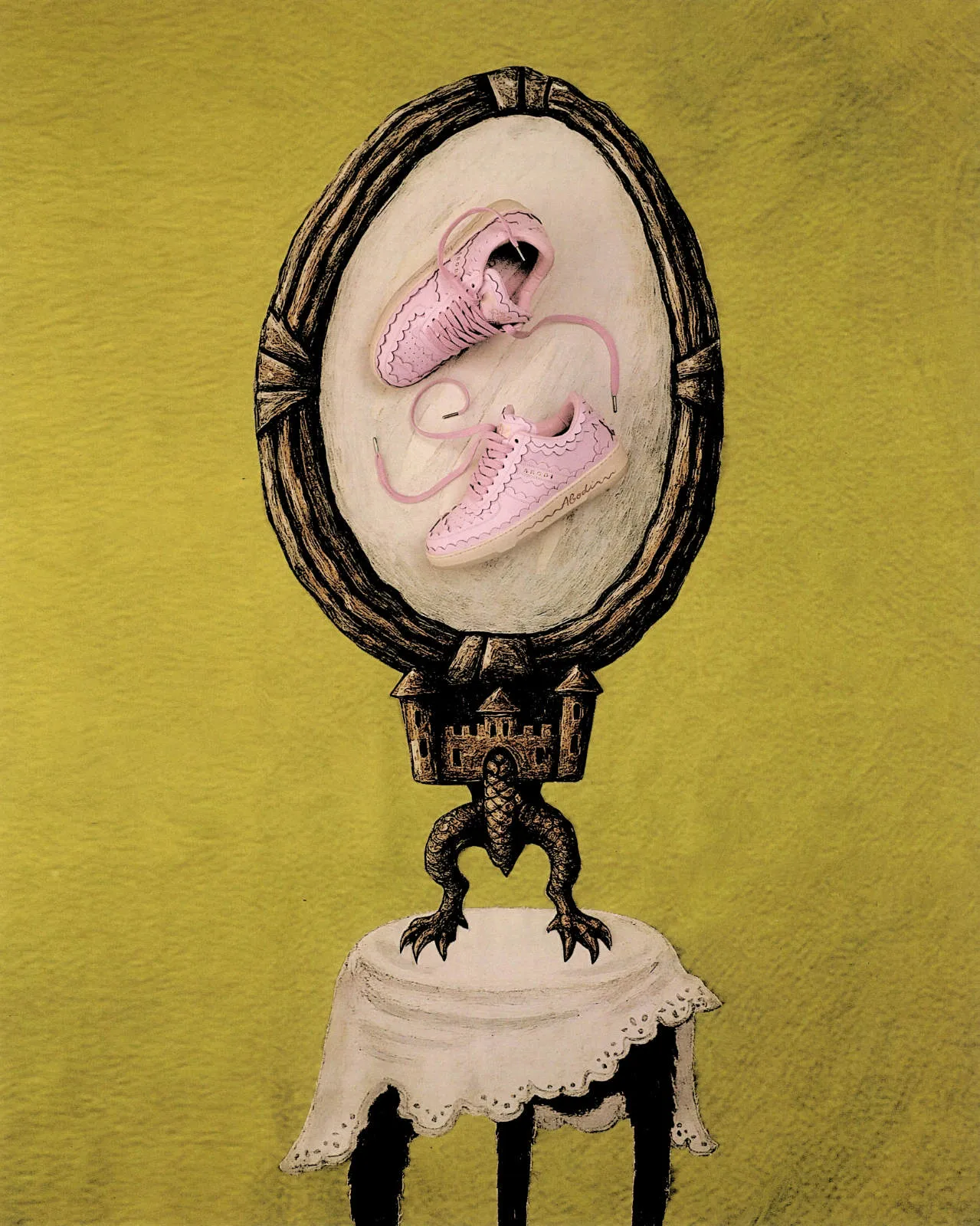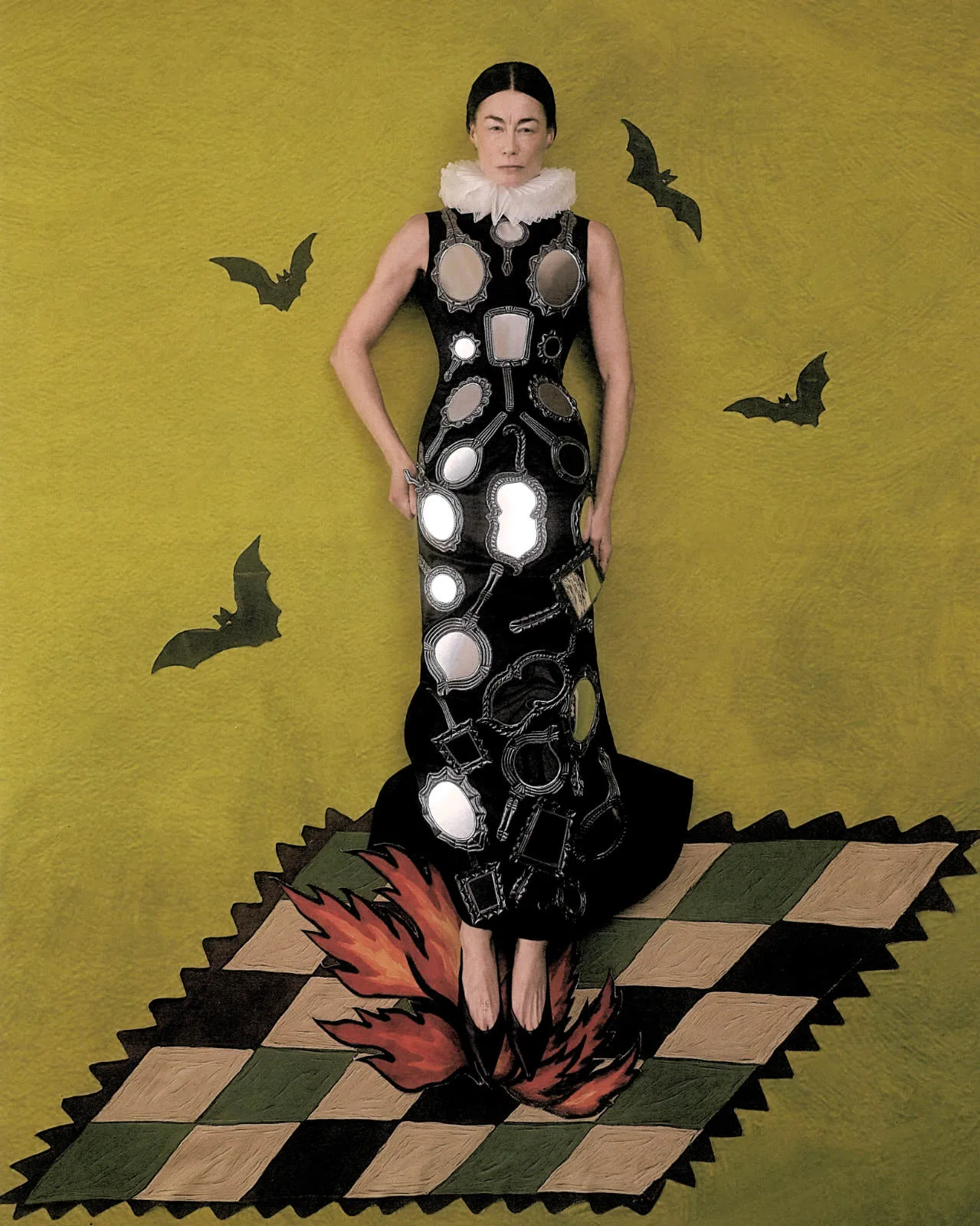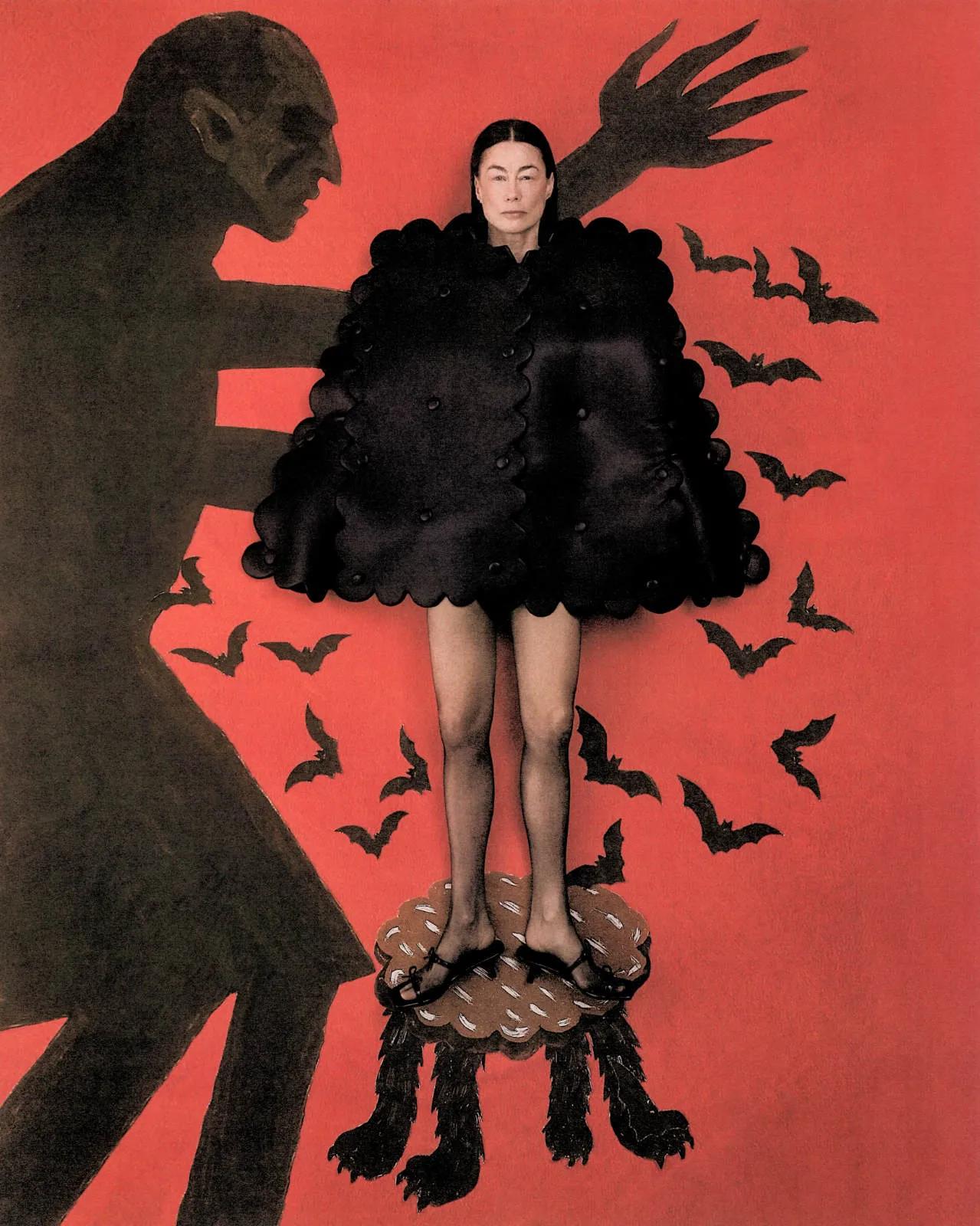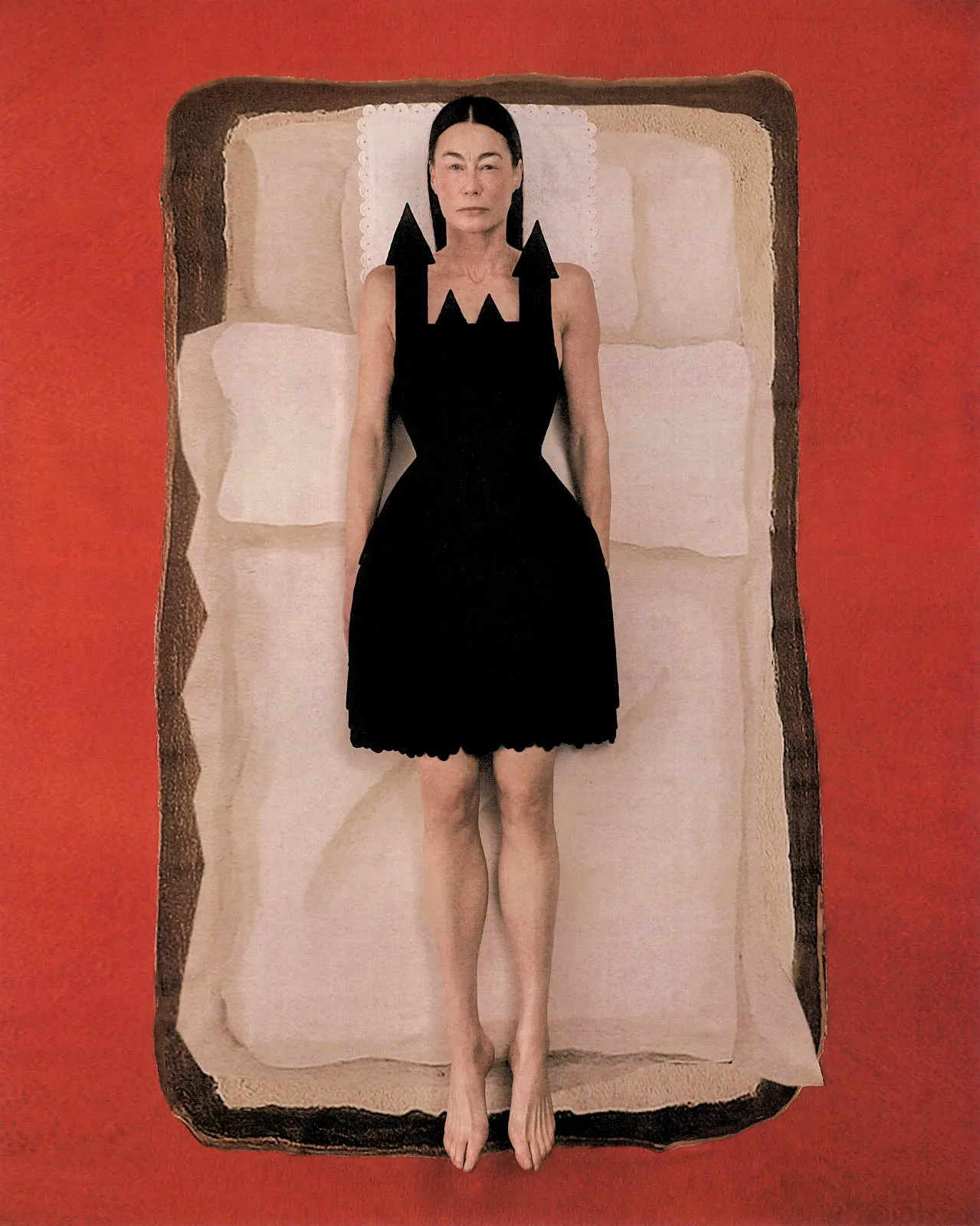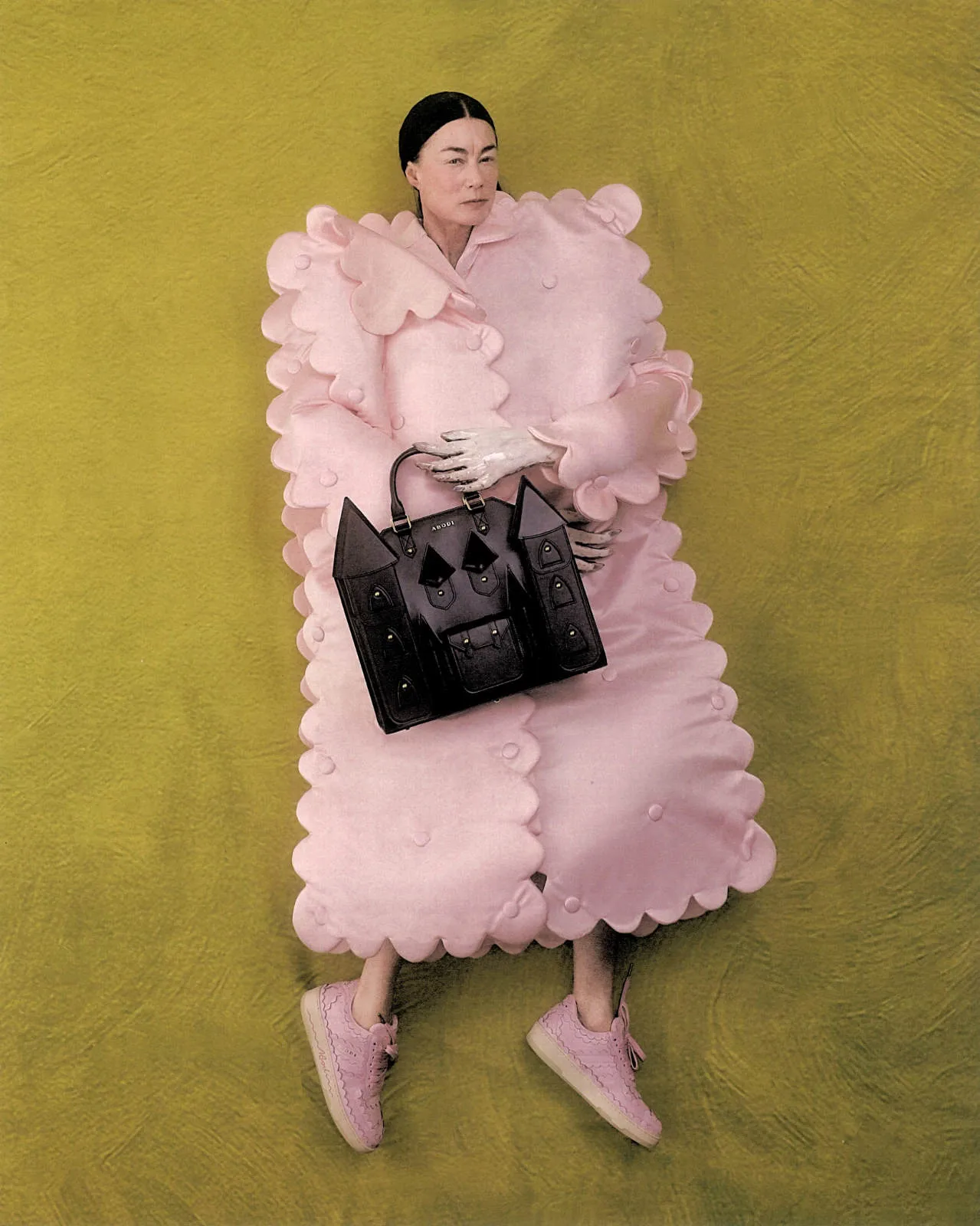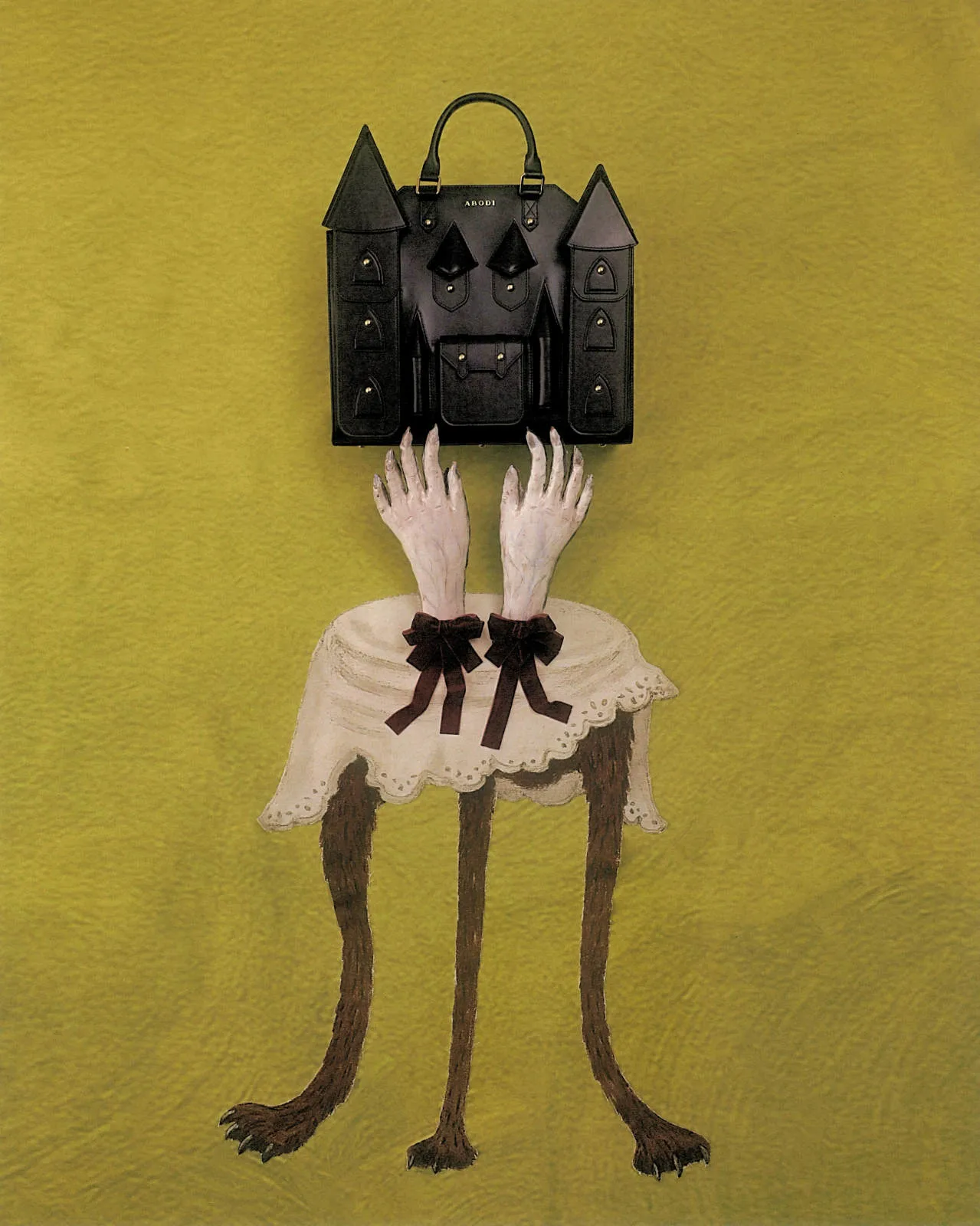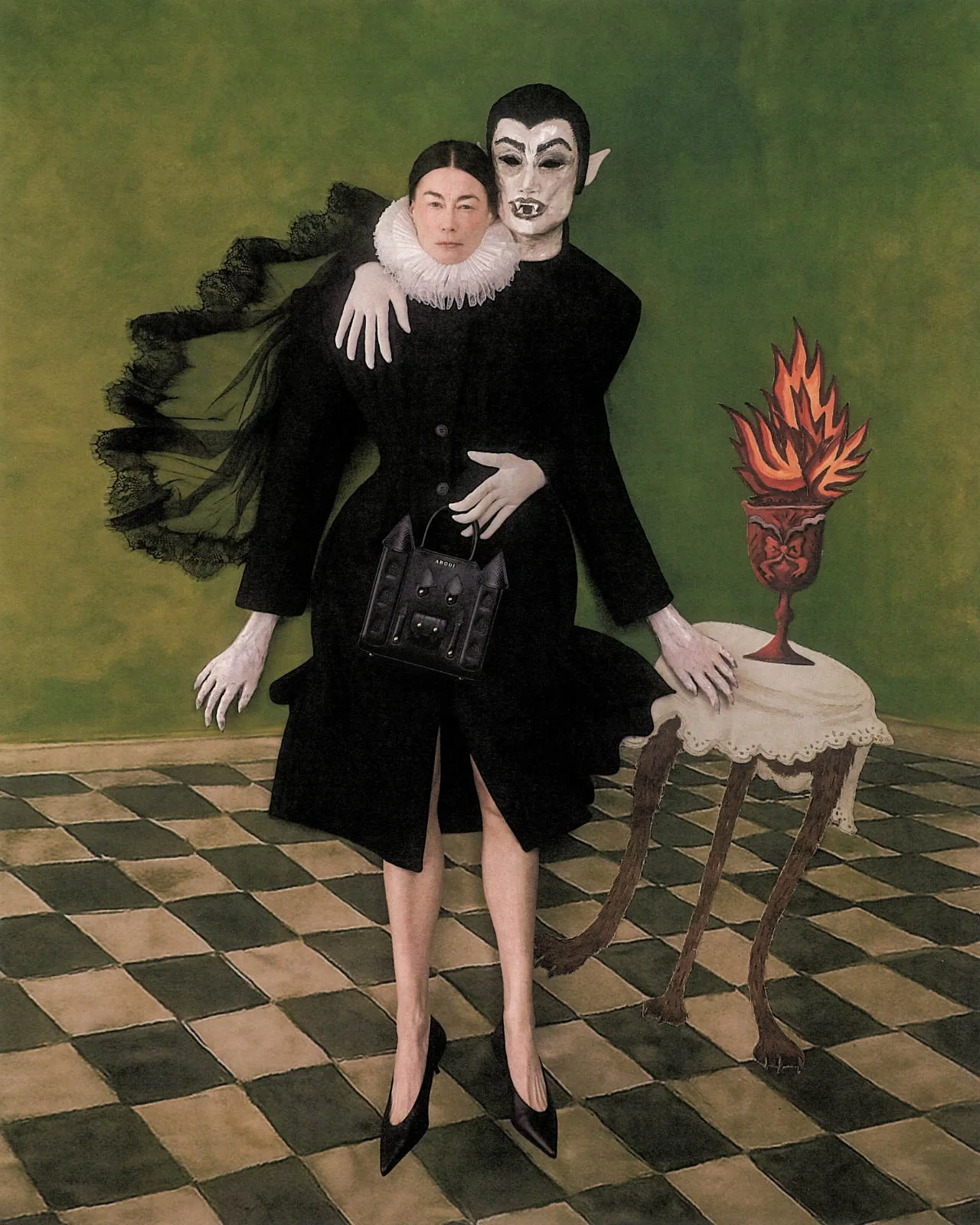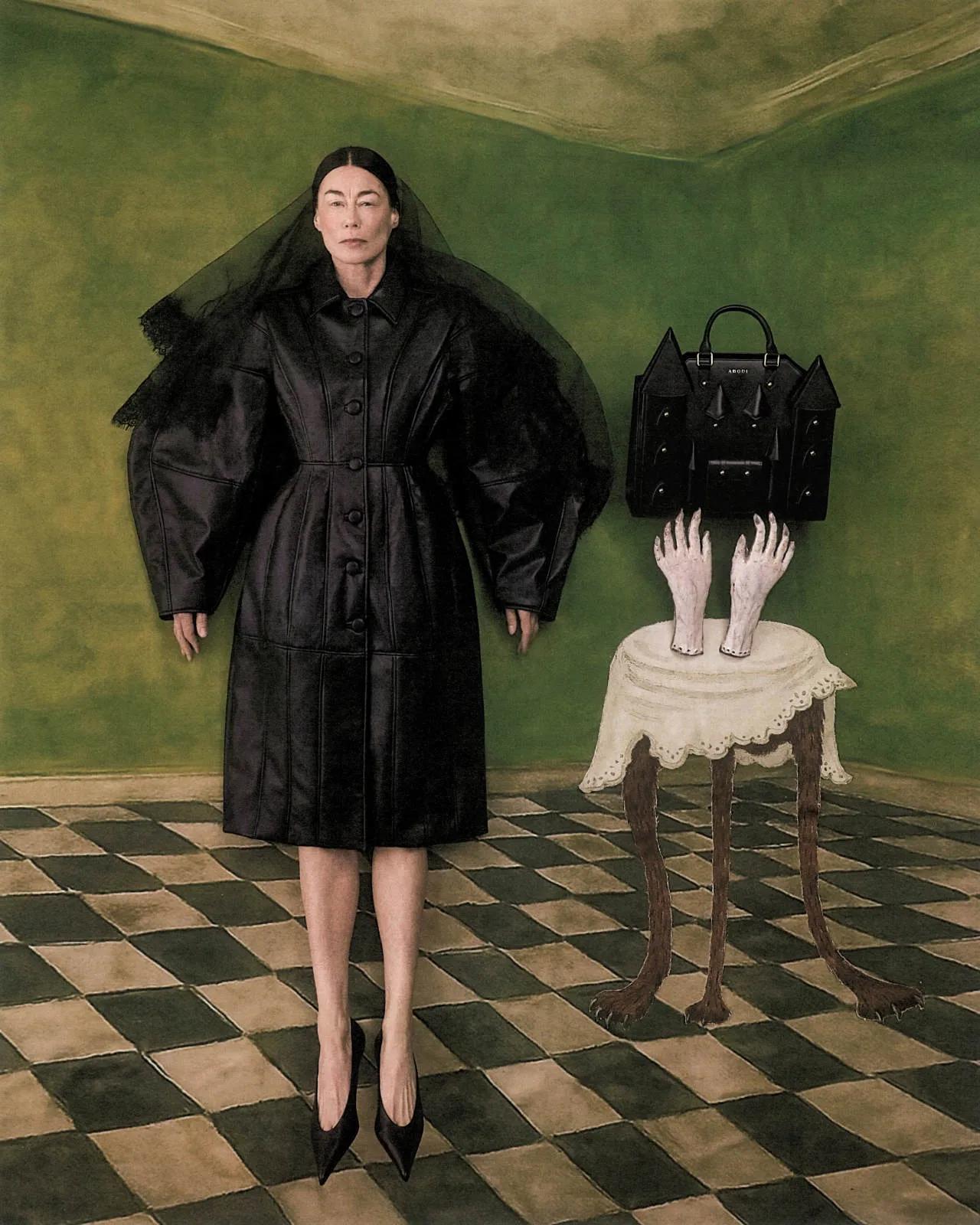
Sometimes it seems like in this modern world there are no fantastical stories being told. Everything feels too real, too raw; the whimsy has been lost, and if we want to feel even a hint of magic, we are forced to look back in time, when myths, legends and narrations represented the cultural weight of humanity and were valued not only for their aesthetics and physical elements but also for the strong symbolism hidden in every single detail. ABODI Transylvania hails from one of the regions where it seems like this love for tales and the need to tell them has been preserved in time, with Dora Abodi as the voice and hand that turns ideas, heritage, history and chronicles carried from generations into the new myths of the XXIst century.
“I often feel I am being burnt at the stake just because I have always refused to give up that wonderful strange power I have inside me,” said Leonora Carrington in one of her literary works, The Hearing Trumpet. Seeing the work that ABODI Transylvania has managed to create in an era where it's almost impossible to undress the hypertechnologisation of it all from everything we create must feel similar to what art lovers felt when seeing what filled the canvases of Carrington or her dear friend Remedios Varo in the mid-twentieth century. Works infused with the kind of mystical and magical female power that doesn't need words to be explained or to be understood. The type that had some of our kind burnt at the stake in the past; frequencies so high that could not be understood by men.
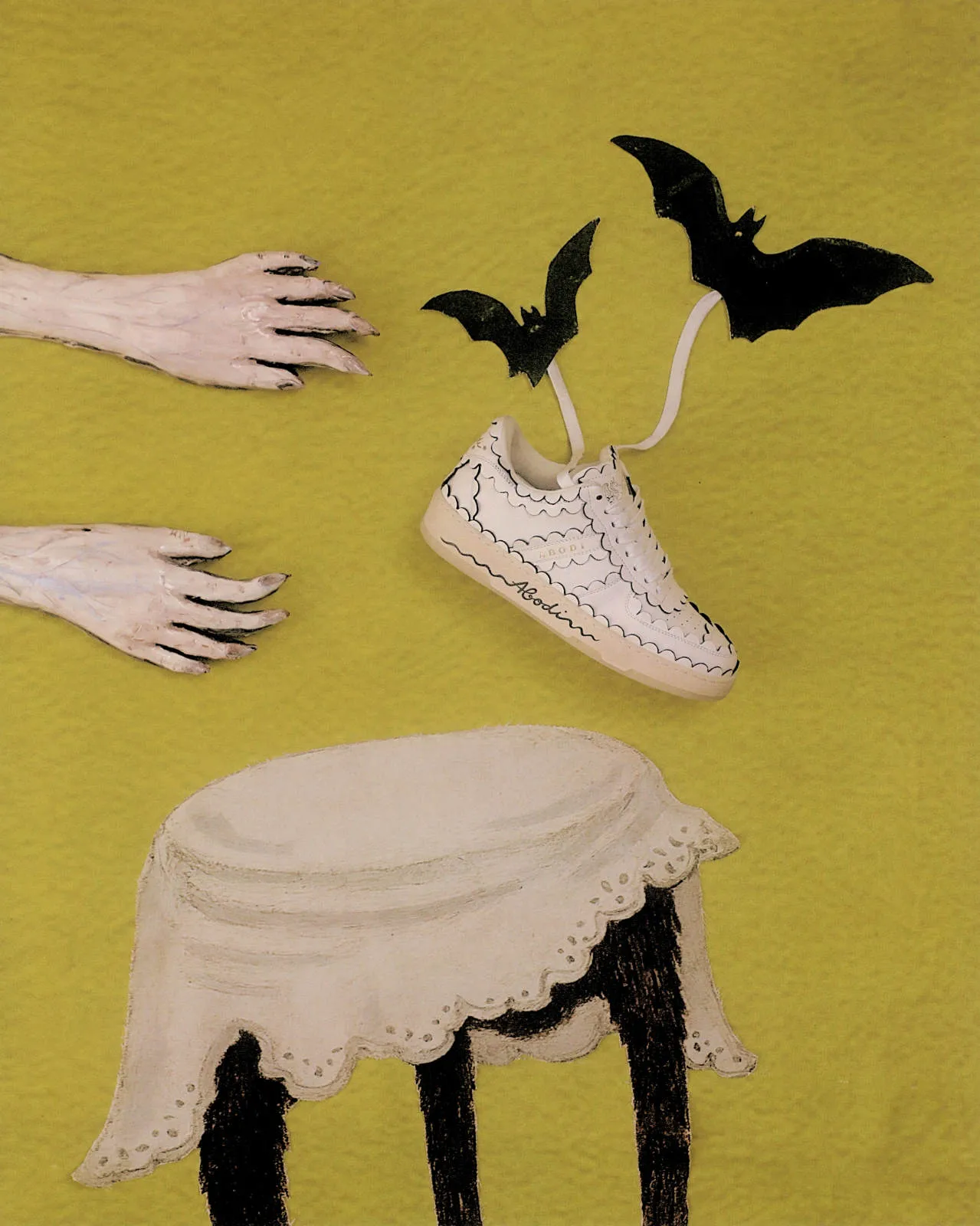
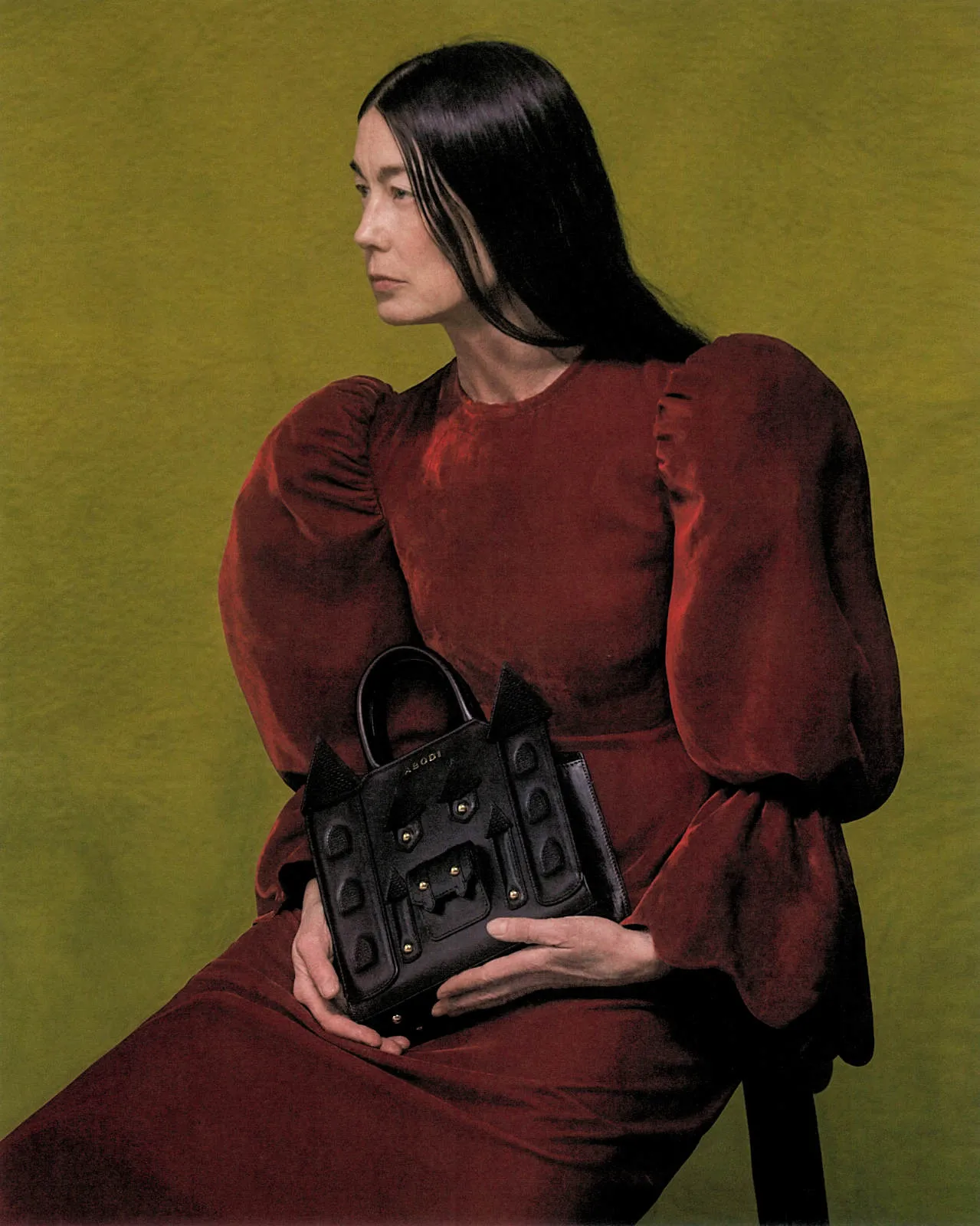
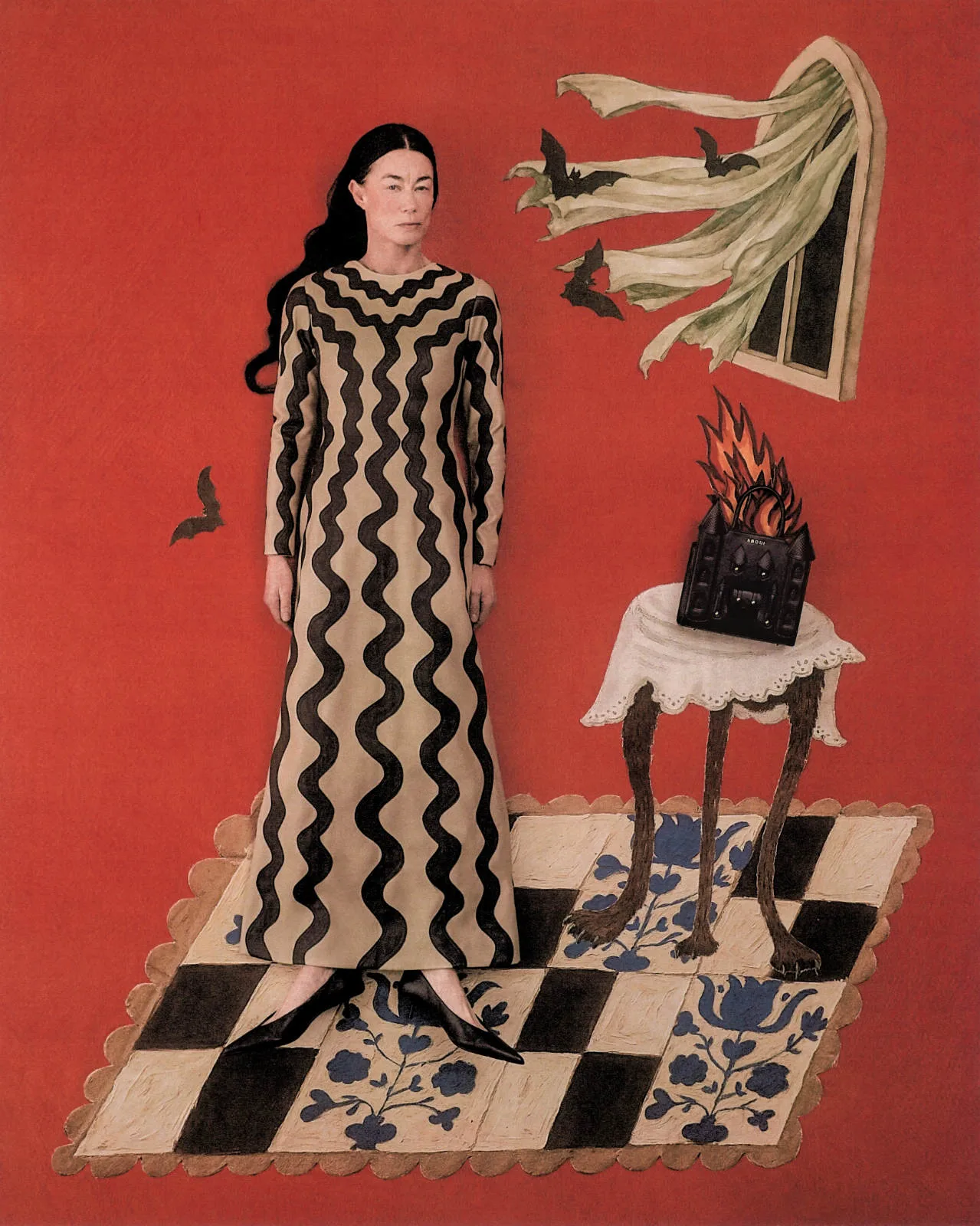
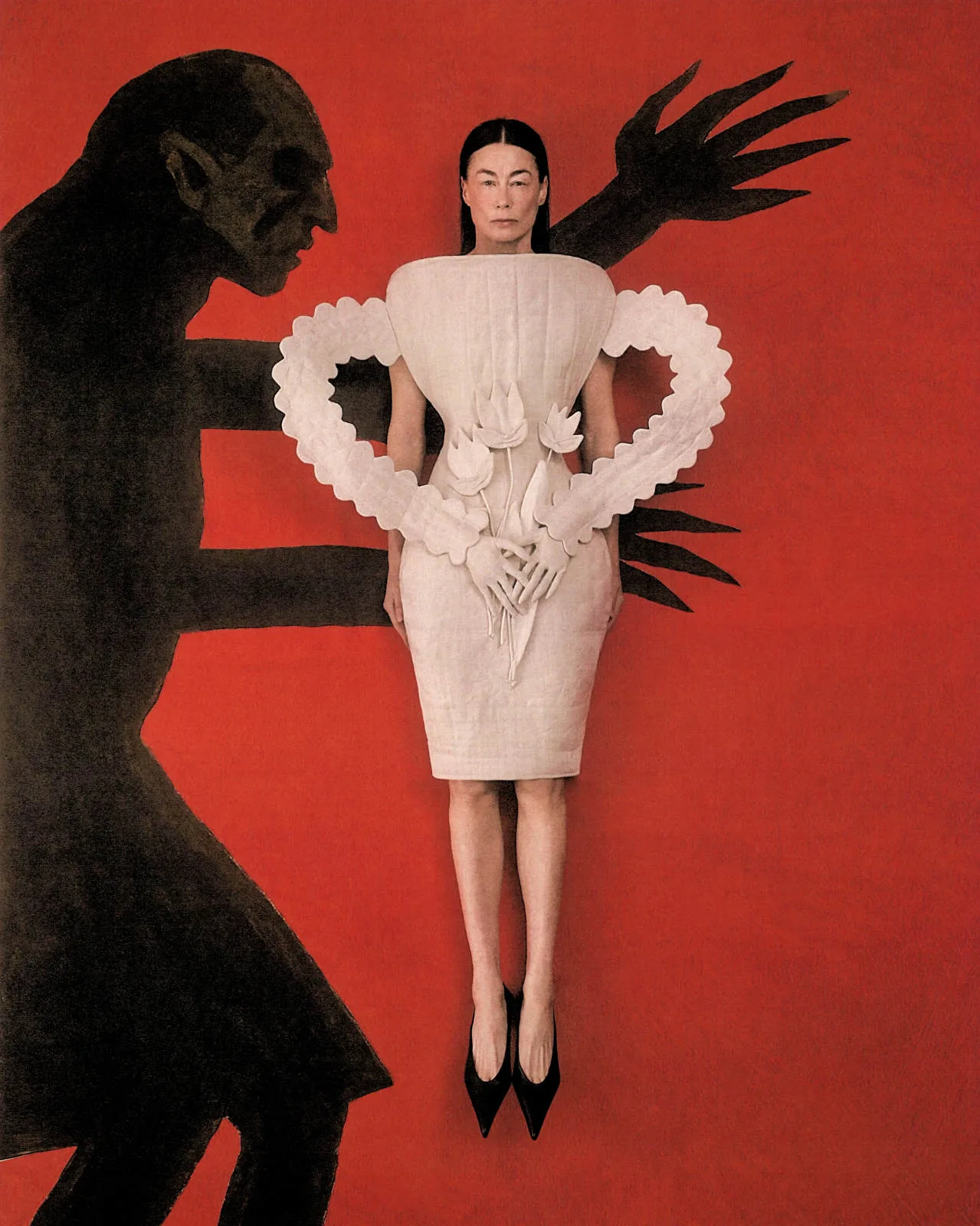
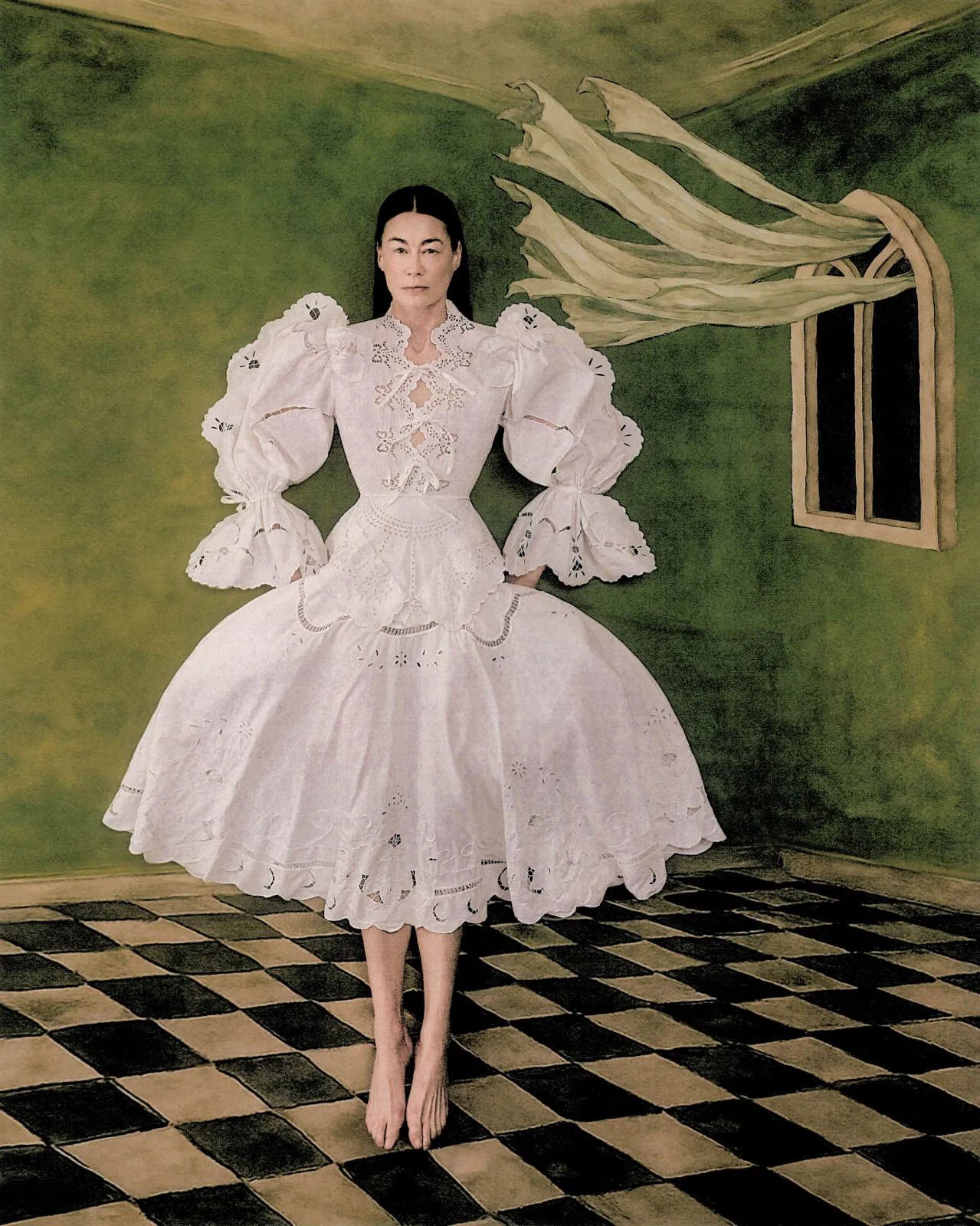
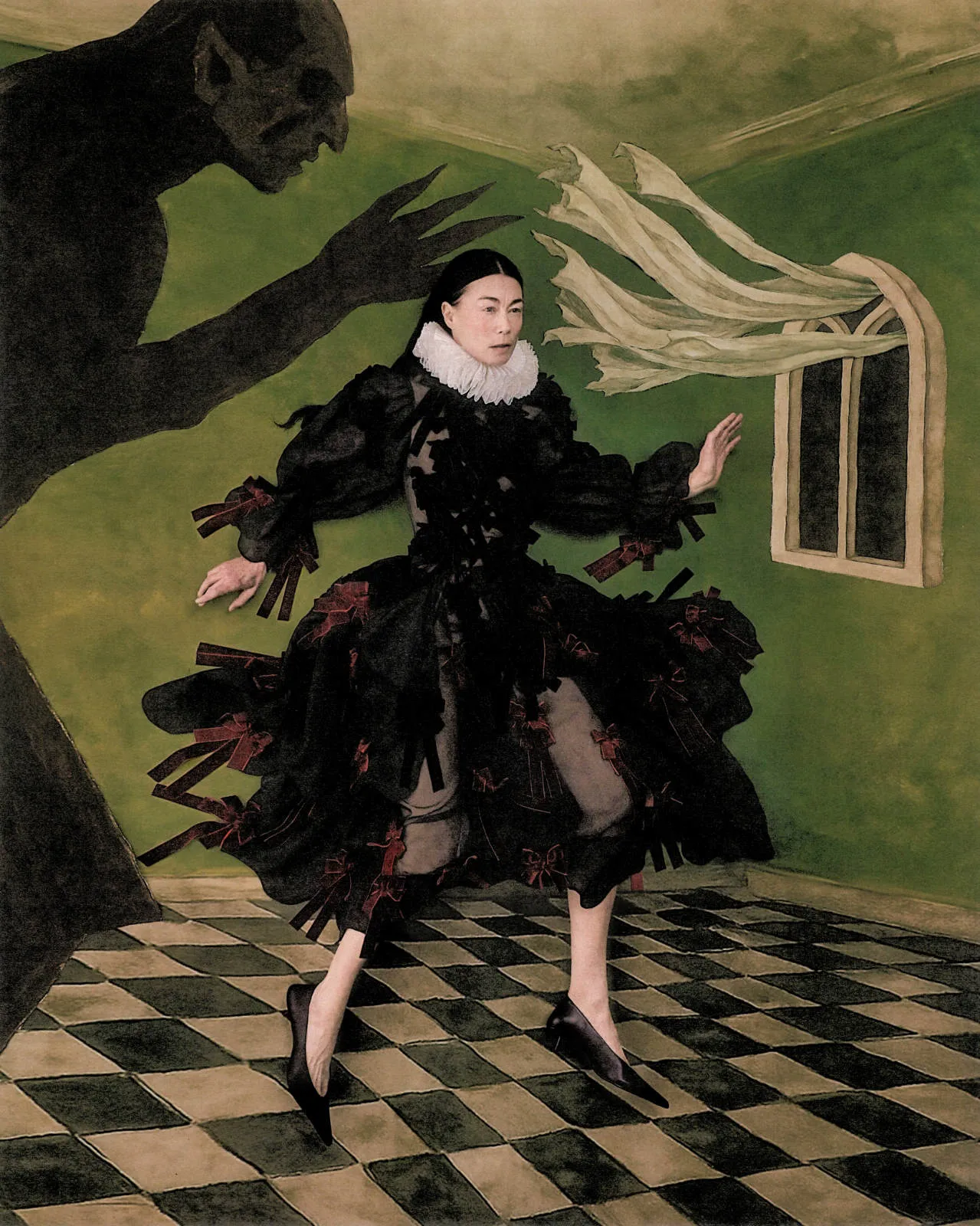
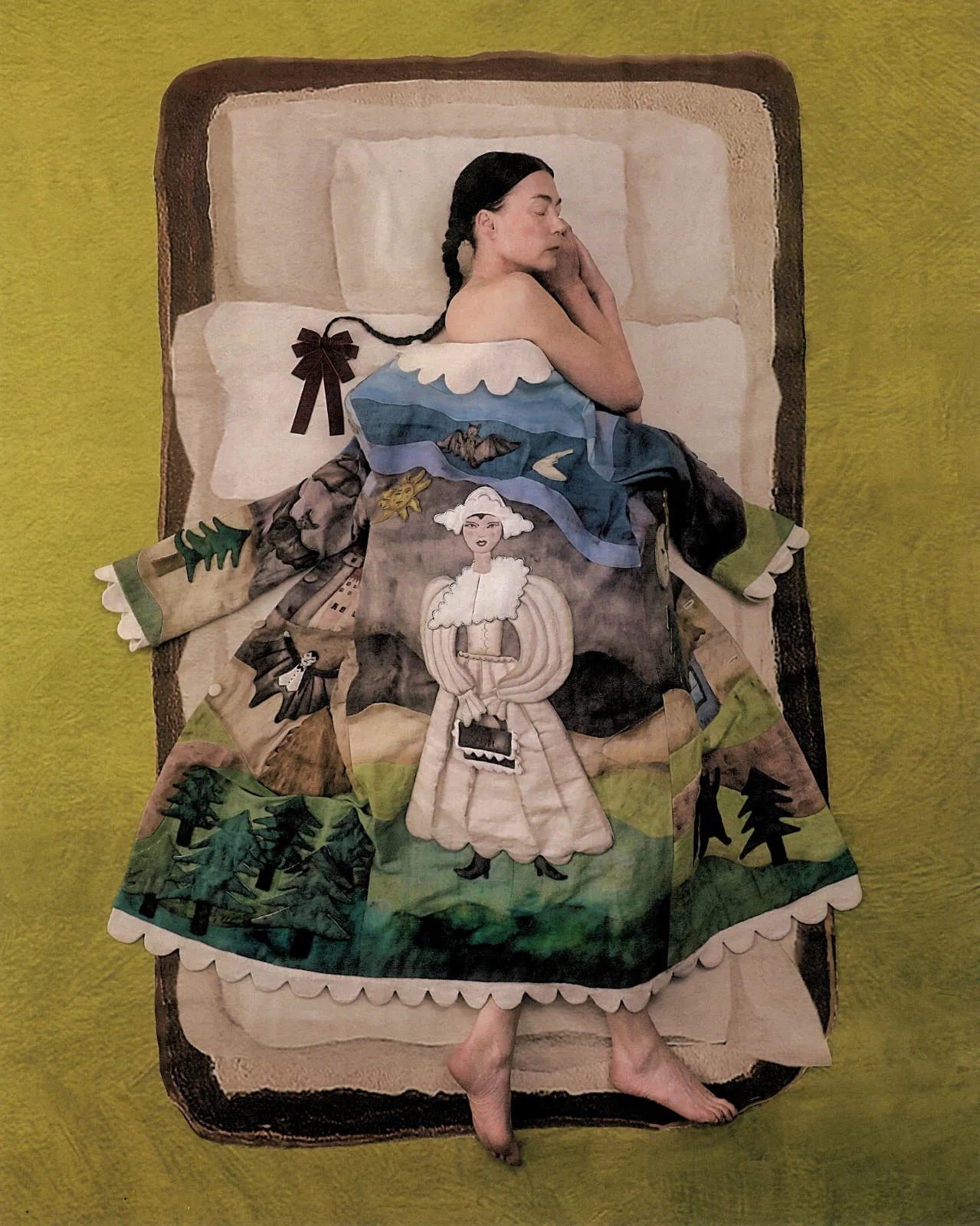
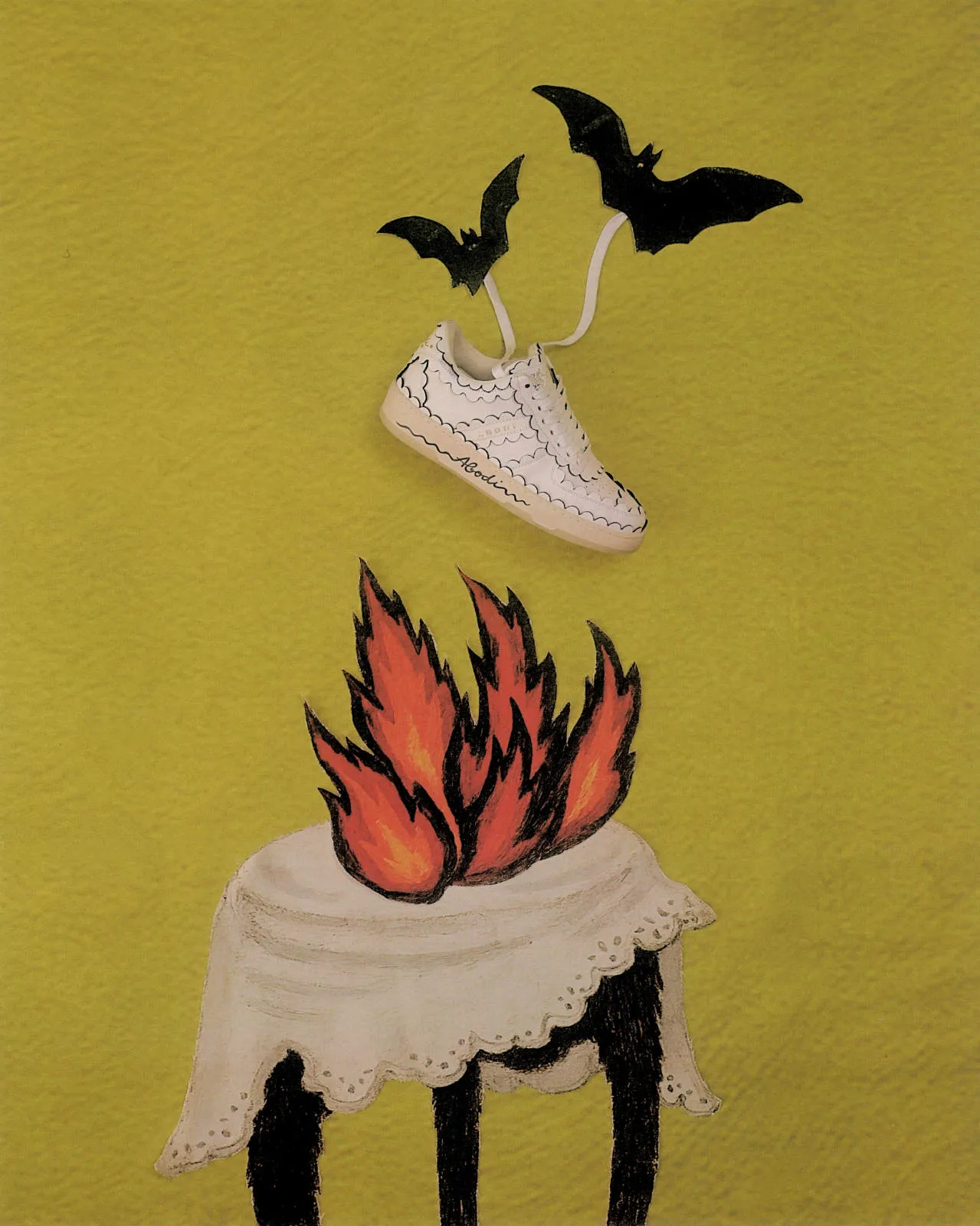
Lucky enough to be born in one of the lands with the most intricate and prolific folkloric heritages in history that have permeated the cultural landscape for centuries and wise enough to make use of it and honour it in every seam and every thread, Dora Abodi presents The Transylvania Chronicles. Photographed by another of the great storytellers of our time, Szilveszter Makó, the campaign has seen the light of day, despite it seemingly being more comfortable under the dark, moonlit skies of the eastern European nights. We talk with Dora about her wearable statues, the surrealism elements implicit in every step of her work, the dark feminine energy in past and present figures and the perfect witchy, ritualistically techno and pop soundtrack.
Hi Dora! Thank you so much for your time. Congratulations on your new collection and campaign. It has been massively well received. How do you feel about it?
Hi Natalia! Thank you for reaching out. The Transylvania Chronicles is both an experimental collection and an art project, so in that sense it’s also a new story even for me. I’m genuinely happy it resonates so strongly. I’ve been building this narrative universe for a while, and people have already responded to the storytelling — it brought in new audiences who don’t necessarily come through just “fashion” first. These actual pieces hadn’t been seen by the wider public yet, so watching them land is exciting. You post something, and suddenly the Instagram response goes wild, the messages start coming in, and you realise: okay, people are not just looking; they’re feeling it. That’s the best kind of validation.
Tales, myths, and narrative worlds often shape our earliest years, forming part of the magical landscape we inhabit as children. Did your interest in these stories begin in a similar way — something that emerged early on and stayed with you throughout your life?
Yes, absolutely. Part of my childhood was spent in Transylvania, and then we kept returning later, so those stories, the art, and the atmosphere of the place simply entered my system. It’s not something I “researched” — it’s something I absorbed.
The region has a very distinctive visual culture: architecture, village textures, folk art, the way objects and houses carry meaning. What’s really culturally close to the Balkans and Eastern Europe is this blending of rural superstition with urban life. Even in cities, people still believe in these little prophecies, sayings, and protective gestures — sometimes poetic, sometimes ridiculous, and sometimes used to scare children into behaving. It’s in everyday language. It becomes an aesthetic and a psychology.
The region has a very distinctive visual culture: architecture, village textures, folk art, the way objects and houses carry meaning. What’s really culturally close to the Balkans and Eastern Europe is this blending of rural superstition with urban life. Even in cities, people still believe in these little prophecies, sayings, and protective gestures — sometimes poetic, sometimes ridiculous, and sometimes used to scare children into behaving. It’s in everyday language. It becomes an aesthetic and a psychology.
As we move into adolescence and adulthood, we tend to become more “realistic”. Fairy tales begin to reveal darker layers and hidden meanings we couldn’t see when we were still naïve. Was there a particular moment when the obscure, sometimes unsettling nature of folk tales truly revealed itself to you?
Honestly, adolescence and my early twenties were… not exactly a scholarly folklore phase. I was more interested in dating and techno parties than ghosts. That period was more shaped by pop culture. But even back then in pop culture, I was already drawn to a certain kind of magic female archetype — the self-possessed, wild, autonomous woman. My faves Gaga, Madonna, Britney, Lana… if you think about it, they’re all variations of the same powerful mythology. So the folklore came back, but it was never completely gone. It was just wearing different makeup. But later, when my creative path became more serious, I returned to the Transylvanian stories and suddenly saw what I couldn’t see before.
Craftsmanship is not only one of the most careful and deeply personal ways of creation in fashion, but it also carries an antique, old-school feeling — the idea of doing everything by hand, of time slowing down. That sense of timelessness feels central to a brand like yours. Where do you place artisanal elements within your creations: as the foundation of everything, or as key details that bring the pieces to life?
For me, craftsmanship begins with one simple question: are you willing to accept that it won’t work the first time and still keep going? Real craft means repetition, failure, patience, and obsession. It’s not a romantic slogan; it’s endurance.
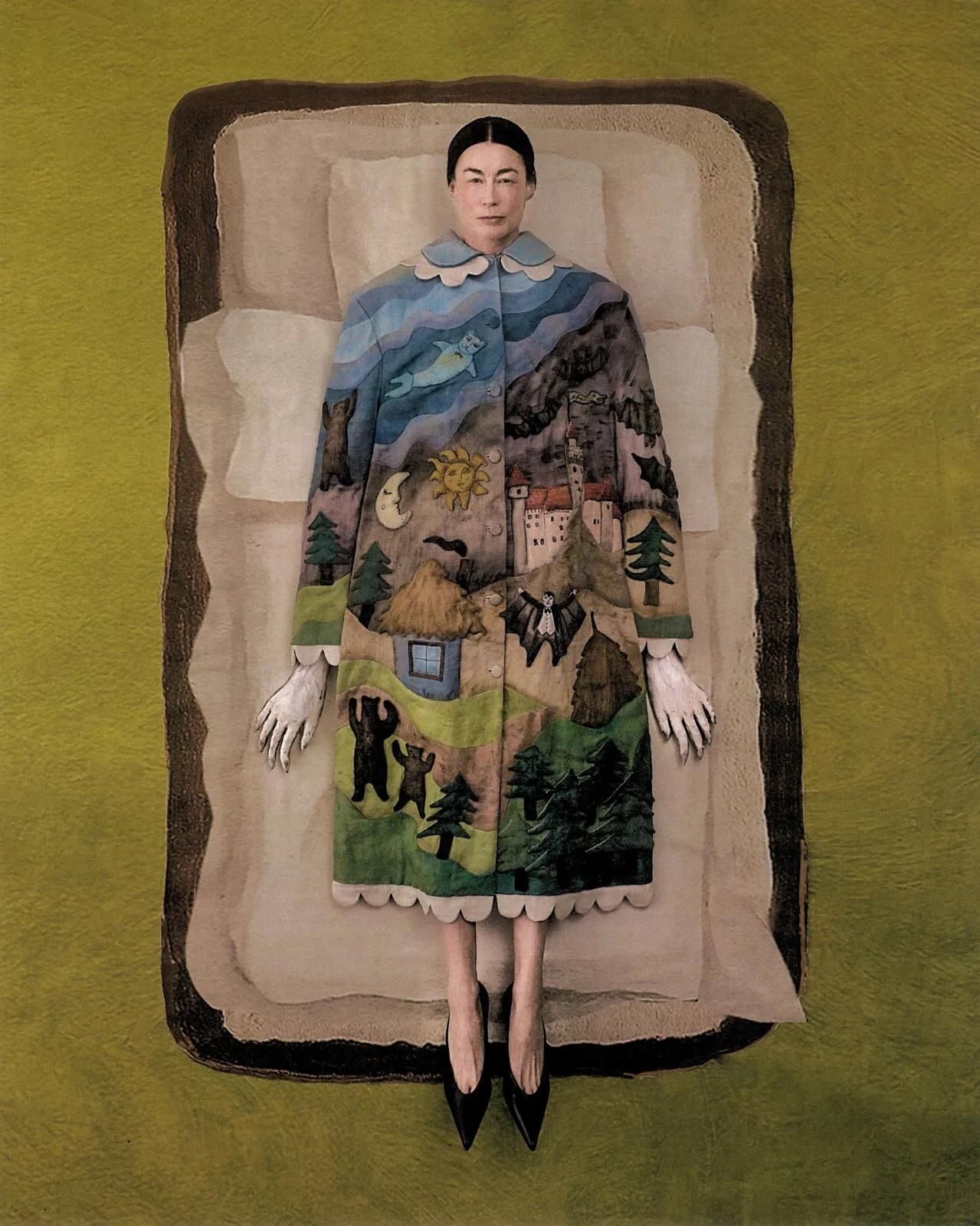
I love vintage and antique materials. I’ve had the chance to work with handwoven hemp fabrics and old canvases, in larger quantities, and build pieces from them. Some garments were extremely challenging, like a coat with a 3D figure on it, made from irregular, knotted, handwoven textile that doesn’t behave nicely. It’s like working with a stubborn ancestor.
We also use antique broderie anglaise and cotton lace, and I need to highlight two exceptional Transylvanian women in the atelier: Júlia and Enikő, our key seamstresses. The most difficult pieces exist because of their hands and because we try and try again until form and spirit finally align.
I love vintage and antique materials. I’ve had the chance to work with handwoven hemp fabrics and old canvases, in larger quantities, and build pieces from them. Some garments were extremely challenging, like a coat with a 3D figure on it, made from irregular, knotted, handwoven textile that doesn’t behave nicely. It’s like working with a stubborn ancestor.
We also use antique broderie anglaise and cotton lace, and I need to highlight two exceptional Transylvanian women in the atelier: Júlia and Enikő, our key seamstresses. The most difficult pieces exist because of their hands and because we try and try again until form and spirit finally align.
The collection is described as “wearable statues”, existing between clothing and sculpture. From a design perspective, how did this idea influence the silhouettes and the way the garments sit and move on the body? How did you balance sculptural impact with wearability?
Defining the pieces as wearable sculptures was actually liberating because every designer, even the biggest ones at the head of major houses, lives under commercial pressure, and we all know what happens: burnout, short-lived tenures, creative exhaustion. The industry eats people.
For me, making wearable art objects is a way to step out of that trap. The goal is to create art pieces for collectors, galleries, and museums and, at the same time, expand my own creative courage. It’s a territory where I’m not trying to prove I’m a “good fashion designer”. I’m trying to make something that has a pulse and takes risks. And yes, of course it’s on the body — we present it on people. But I don’t sit there asking, “Is it wearable enough?” The real question is: is it artistically alive? Does it challenge perception?
For me, making wearable art objects is a way to step out of that trap. The goal is to create art pieces for collectors, galleries, and museums and, at the same time, expand my own creative courage. It’s a territory where I’m not trying to prove I’m a “good fashion designer”. I’m trying to make something that has a pulse and takes risks. And yes, of course it’s on the body — we present it on people. But I don’t sit there asking, “Is it wearable enough?” The real question is: is it artistically alive? Does it challenge perception?
If one of your pieces could infiltrate a painting from any artistic period, which piece would it be, which painting would it appear in, and what role would it play within that scene?
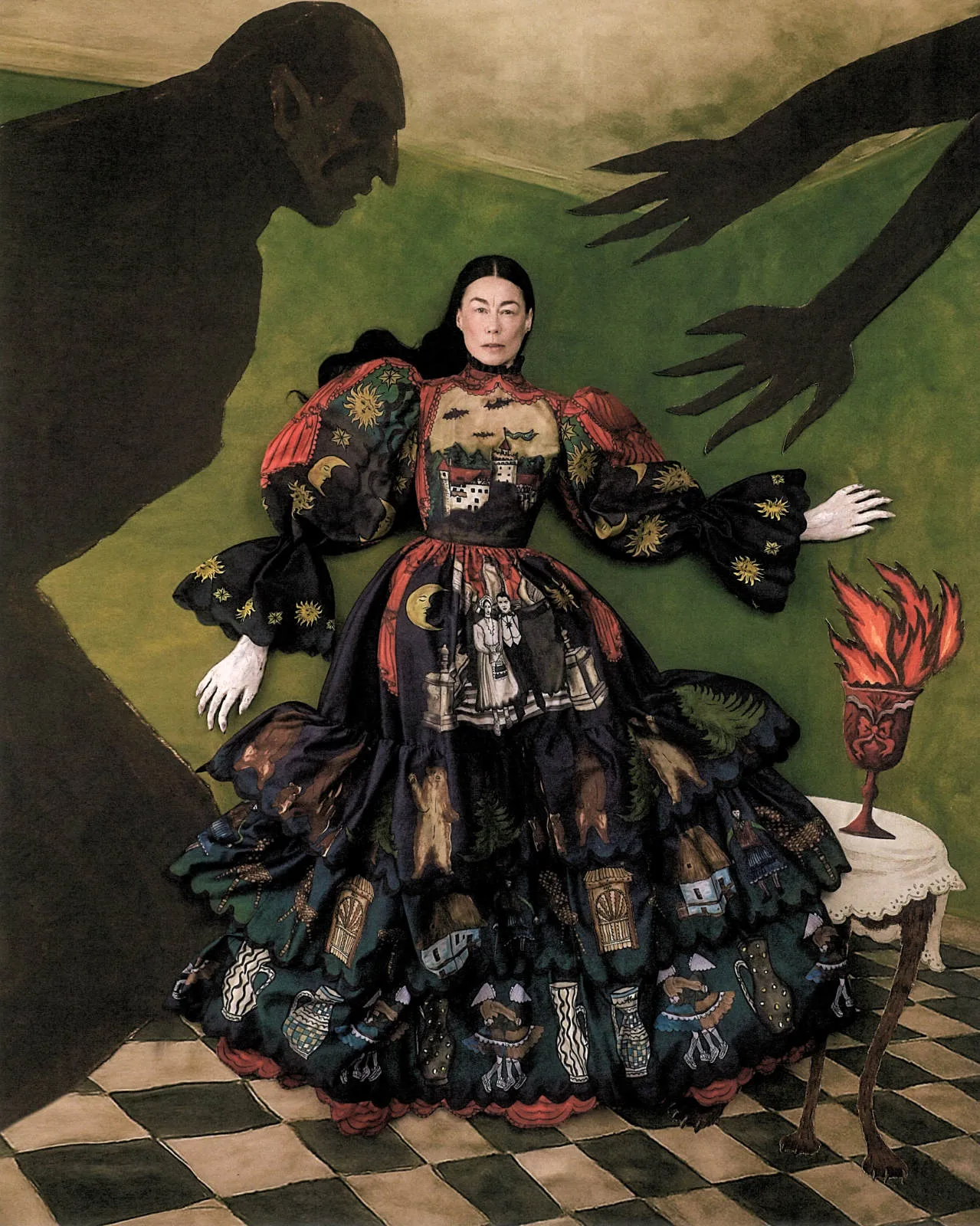
I can’t honestly answer that with someone else’s painting because I paint and create myself, and I build the props and characters too, so my imagination naturally goes toward my own images. The campaign itself is constructed like a painting. The set is inspired by my drawings; my visual world is on the garments, and the characters are shaped by my mythology. So instead of placing my work into somebody else’s frame, I’d rather say: my pieces belong inside my own timeless paintings — like vampires, living through centuries, appearing again and again in different forms.
When adapting mythological universes into ABODI creations, how much creative freedom do you allow yourself? Do you feel a responsibility to historical accuracy, or is your approach more inspired than based on factual rigour?
Historical accuracy isn’t my main concern. What matters more to me is the character and what that figure can communicate to a 21st-century audience. I’m not trying to rewrite history or be academically precise — that’s not my role.
I work with these references freely. I take what feels symbolically and emotionally relevant today and let the rest dissolve. For example, people sometimes ask whether our famous castle headpiece resembles a specific castle, like Bran Castle, which is already more legend than fact itself. So that debate is part of the myth.
The piece isn’t about copying a real building. It’s more like a memory of a castle, something seen in a half-dream. The real question for me is: why would someone wear a castle on their head today? What does that symbol mean now? I’m creating a new narrative, a new world, with real references as anchors, but with my own mythology shaping the story.
I work with these references freely. I take what feels symbolically and emotionally relevant today and let the rest dissolve. For example, people sometimes ask whether our famous castle headpiece resembles a specific castle, like Bran Castle, which is already more legend than fact itself. So that debate is part of the myth.
The piece isn’t about copying a real building. It’s more like a memory of a castle, something seen in a half-dream. The real question for me is: why would someone wear a castle on their head today? What does that symbol mean now? I’m creating a new narrative, a new world, with real references as anchors, but with my own mythology shaping the story.
Surrealism is deeply rooted in the subconscious — in parts of the mind we don’t fully control — yet myths and folk tales are very literal sources, already written and structured. How present is your own subconscious, your own internal surrealist world, within your designs?
Very present. As a child I had strange sensations: déjà vu, dissociation, lucid states, extremely vivid dreaming and, honestly, that surreal intensity never left. Sometimes it’s like the border between waking life and dreams is thin, and the imagery leaks through. I also believe in transcendental energies — call it spiritual, call it metaphysical, call it “Eastern European paranoia”, or whatever you prefer. I’m interested in the idea of layered lives, layered realities. That’s why the surrealism in my work isn’t soft and cloudy — it’s sharper. Like you’re awake, but not fully in the same dimension.
I’m also curious about your creative process. Many surrealist artists worked through dreams, REM states, or altered consciousness. Is your process as oneiric as your creations suggest, or is it more technical and grounded when it comes to translating ideas into reality?
Both, but in a very practical way. Many ideas come to me at night, just before sleep or inside dreams. I’m very much an evening person. I like the quiet, when things slow down and it’s easier to listen. Sometimes it feels like there are creatures sitting on my shoulders, or even a demon on my chest — like any normal, superstitious Eastern European would say. I don’t dramatise it; it’s just a sense of presence. I write everything down immediately. Later, the real work begins: translating something whispered by the universe into material, weight, and structure.
Why did you choose Elisabeth Báthory as the central character of the campaign, despite her dark and controversial history? What do you see in her that goes beyond the version history has handed down to us?
Báthory is a fascinating Hungarian historical figure, and she became a legend. The Blood Countess, the witch, the monster — that story tells us as much about patriarchy as it does about her. She was powerful, influential, and high-ranking, and after her husband died, she didn’t remarry. She managed the state herself, successfully. That kind of female autonomy has always been threatening to people who want control and to people who want her wealth. So the narrative turned into a witch-hunt.
And yes, it’s an old story. But it repeats itself constantly, in updated costumes. Even today, women are punished for contradictions: too beautiful, not beautiful enough; too young, too old; too ambitious, too emotional; too thin, too curvy; too loud, too quiet. Success in women is watched with harsher eyes than success in men — even in fashion, where we pretend we’re progressive. You rarely see women leading major fashion houses, and never a woman from Eastern Europe. So Báthory becomes symbolic.
And yes, it’s an old story. But it repeats itself constantly, in updated costumes. Even today, women are punished for contradictions: too beautiful, not beautiful enough; too young, too old; too ambitious, too emotional; too thin, too curvy; too loud, too quiet. Success in women is watched with harsher eyes than success in men — even in fashion, where we pretend we’re progressive. You rarely see women leading major fashion houses, and never a woman from Eastern Europe. So Báthory becomes symbolic.
How does it feel when women of immense social or cultural relevance — like Rama Duwaji or Marina Abramović — wear ABODI, especially for moments that will become permanently embedded in cultural memory? How does that kind of visibility affect or impact your process and intentions as a designer?
It really matters who embodies ABODI Transylvania and what they stand for, because we’re not just fashion. ABODI Transylvania is a multidisciplinary art universe.
Marina Abramović is a powerful Eastern European and global art icon: radical, self-owned, and uncompromising. That resonates deeply with our mythology and with the kind of women I’m drawn to. Rama Duwaji is also interesting to me because she’s not just “someone’s wife". She has her own artistic identity and cultural work, and I’m inspired by women who are someone on their own terms. When someone like that wears a piece, it reinforces my belief in what the work means: you can create something from the elements — earth, water, fire — from nothing, from imagination, from obsession, and from faith. You don’t need a famous name or an empire behind you. It’s hard, but possible.
Marina Abramović is a powerful Eastern European and global art icon: radical, self-owned, and uncompromising. That resonates deeply with our mythology and with the kind of women I’m drawn to. Rama Duwaji is also interesting to me because she’s not just “someone’s wife". She has her own artistic identity and cultural work, and I’m inspired by women who are someone on their own terms. When someone like that wears a piece, it reinforces my belief in what the work means: you can create something from the elements — earth, water, fire — from nothing, from imagination, from obsession, and from faith. You don’t need a famous name or an empire behind you. It’s hard, but possible.
It feels like when you began working more closely with Szilveszter Makó, a key part of the visual and narrative world of the brand truly clicked, almost as if it were inevitable. How did this creative “marriage” come to be, and how do your respective languages converse and evolve together?
We’ve known each other for a very long time, since we were very young. He photographed my diploma collection in Milan. In a way, we grew up artistically in parallel, and we’ve witnessed each other’s key stages. This collection is deeply important to me, and it felt natural that he would be the one to photograph it. He’s also an Eastern European artist, maximalist, self-critical, reflective, and sometimes almost brutally honest like me. That restless 24/7 creative drive is something we share.
Your work is deeply rooted in the folklore of your homeland, but are there other cultures whose mythologies spark your curiosity or feel like worlds you’d like to explore in the future?
Many cultures inspire me; I’m genuinely curious. I read, I listen, I absorb. But in my own work, I’m cautious. The line between inspiration and appropriation is real. For me it feels more honest to build from what I am, from my own cultural DNA. The Transylvanian/Carpathian Basin/Eastern European world is so rich that one lifetime isn’t enough to explore it properly. Also, this is still under-represented globally. It’s far more meaningful for me to deepen this universe than to borrow or steal symbols from places I don’t belong to. I’ll stay with my ghosts; they’re already demanding enough.
There seems to be a recurring character within the ABODI narrative universe. Could you tell me more about Éjka Hollósy’s lore and role within this world?
Éjka Hollósy is a defiant vampire lady I created. Her name is also invented by me, and that’s a tradition I borrowed from Hungarian literature: writers create “speaking names”. Éj means night; the “-ka” gives it a small, intimate tone. So Éjka is basically “nighty”, in a mischievous way. Hollosy means Raven-born. Part of her was inspired by a scandalous Victorian-era story from Quebec: a woman renting a horse-drawn hearse and cruising around at night, smoking, watching the city from inside a glassy death carriage. I found that hilarious and also proto-feminist in its refusal to behave.
In the ABODI universe we have historical figures like Dracula or Báthory, but also invented ones like Sándor, Marishka Torontál, Napfiú, Tündér Ilona or the Strawman. Some come from folk tradition; some I shape.
In the ABODI universe we have historical figures like Dracula or Báthory, but also invented ones like Sándor, Marishka Torontál, Napfiú, Tündér Ilona or the Strawman. Some come from folk tradition; some I shape.
Gothic, vampiric, and dark aesthetics have existed for generations, often associated with niche subcultures. In recent years, though, these themes seem increasingly present across fashion, music, and media. From your perspective, have you noticed a growing curiosity or openness toward proposals like yours?
Vampires are immortal, and so is the fascination. Cinema proves it: early 1922 Nosferatu, the classic Dracula with Bela Lugosi, Blade, Interview with the Vampire, Rocky Horror Show, the Twilight cycles, and again and again, new revivals. The theme never dies; it just changes its hairstyle.
The vampire is basically a portrait of modern desire and fear: eternal youth, forbidden sexuality, predatory freedom, the price of immortality, loneliness, existing outside society, and paying for a Faustian deal. It’s a bottomless metaphor. Are there trend waves? Sure. Minimalism had its long season. Maybe now people want drama again, a mediaeval mood, a return to symbolism. But I also think our work hits differently because it’s authentic; it comes from the place itself, not from a fantasy postcard. Authenticity matters more than people like to admit.
The vampire is basically a portrait of modern desire and fear: eternal youth, forbidden sexuality, predatory freedom, the price of immortality, loneliness, existing outside society, and paying for a Faustian deal. It’s a bottomless metaphor. Are there trend waves? Sure. Minimalism had its long season. Maybe now people want drama again, a mediaeval mood, a return to symbolism. But I also think our work hits differently because it’s authentic; it comes from the place itself, not from a fantasy postcard. Authenticity matters more than people like to admit.
It’s easy to form preconceived ideas about places based on stories, myths, or collective imagination. Transylvania, in particular, has a very defined and universal image from an outsider’s perspective thanks to all the cultural elements that have always surrounded it. But for you — someone with a deep, lived connection to the region — what is it like? How does it feel beyond the myths?
Every place suffers from projection. People dream about Paris and then get disappointed because it smells like reality. People go to L.A. expecting cinema and find traffic. That’s normal. Transylvania is the same: if you arrive only to confirm the cliché, you’ll miss it. But if you’re open — if you give time, emotion, attention — the place opens back. You walk into a forest, and you suddenly feel… watched. You visit a castle, and a cloak almost moves on its own. Not because it’s a theme park, but because the atmosphere there is dense.
The landscape helps: mountains, isolated nature, old structures, and layers of history. Yes, modern development is eating everything everywhere: roads, industry, “progress”. But if you know how to look, Transylvania still has that threshold quality. Like you can step slightly sideways out of reality. What’s truly special in the region is that folklore isn’t locked in the countryside. Superstitions, sayings and strange warnings survive in cities too. People glance behind them, as if something might follow. And honestly… in Transylvania, a lot of shadows do.
The landscape helps: mountains, isolated nature, old structures, and layers of history. Yes, modern development is eating everything everywhere: roads, industry, “progress”. But if you know how to look, Transylvania still has that threshold quality. Like you can step slightly sideways out of reality. What’s truly special in the region is that folklore isn’t locked in the countryside. Superstitions, sayings and strange warnings survive in cities too. People glance behind them, as if something might follow. And honestly… in Transylvania, a lot of shadows do.
Along similar lines, are there particular regions or demographics where you feel your work resonates most strongly? Which parts of the world seem more receptive to darker narratives, and why do you think that is?
The U.S. follows naturally because Hollywood created a massive vampire and horror culture with a very loyal audience. The U.K. also makes sense: Bram Stoker, Victorian literature, Carmilla, Frankenstein, and that inherently gloomy architecture and landscape, especially in Scotland. I’d also say the Balkans and Eastern Europe. Not because people are “gothic”, but because myths and superstitions are still alive there. The legends, the shadow figures, and the moral ambiguity. People grew up inside these narratives, so the atmosphere feels instinctively familiar.
Scandinavia resonates as well, not in a stereotypical gothic sense, but through a quieter, melancholic mood. A kind of emotional coldness and restraint that feels close to my universe. And very strongly: Japan. There’s a deep cultural openness to spirits, strange creatures, and parallel worlds in literature, animation, and visual culture. You see it in works like Spirited Away, in Murakami’s novels, and even in subcultures like Harajuku’s darker, doll-like aesthetics. That sensitivity to the unseen resonates strongly with my work.
I also find it fascinating that Elisabeth Báthory’s story has a following there and that Hungarian folk elements — like traditional Kalotaszeg embroidery — have such a dedicated admirer base. We have Japanese clients as well, and they’re incredibly perceptive and inspiring. In many ways, I feel they understand this world almost instinctively.
Scandinavia resonates as well, not in a stereotypical gothic sense, but through a quieter, melancholic mood. A kind of emotional coldness and restraint that feels close to my universe. And very strongly: Japan. There’s a deep cultural openness to spirits, strange creatures, and parallel worlds in literature, animation, and visual culture. You see it in works like Spirited Away, in Murakami’s novels, and even in subcultures like Harajuku’s darker, doll-like aesthetics. That sensitivity to the unseen resonates strongly with my work.
I also find it fascinating that Elisabeth Báthory’s story has a following there and that Hungarian folk elements — like traditional Kalotaszeg embroidery — have such a dedicated admirer base. We have Japanese clients as well, and they’re incredibly perceptive and inspiring. In many ways, I feel they understand this world almost instinctively.
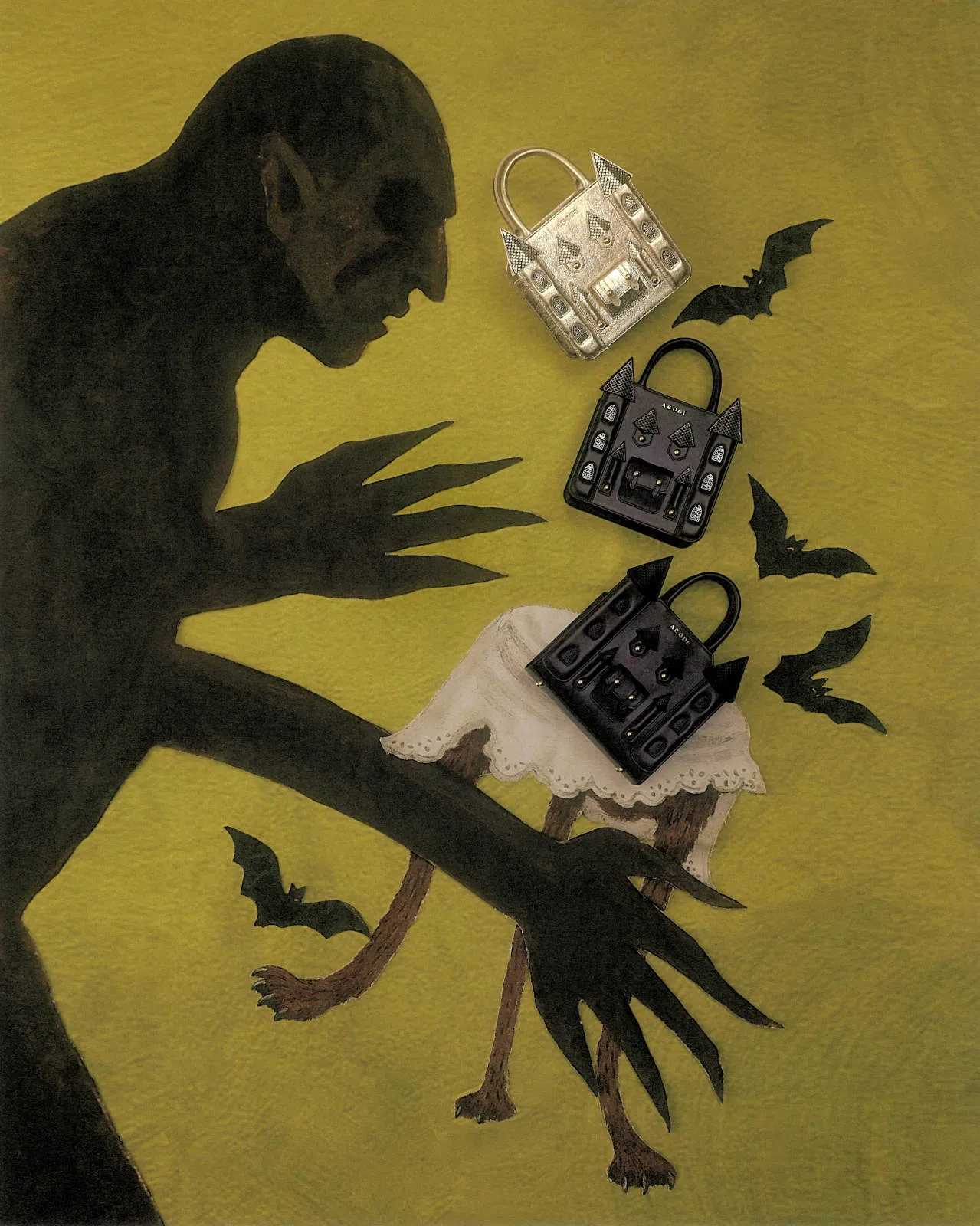
If we were to take a house tour inside the Vampire Castle Bag, what would it look like? Who lives there? Dracula, or perhaps other characters?
Inside the Vampire Castle Bag, it would be a labyrinth, like a real castle. But it wouldn’t be a fixed interior. It would contain whatever the owner carries: memories, childhood fragments, maybe even traces of past lives.
It’s also a portable home. “Your home is your castle,” and reversed: your castle becomes your home. Hidden rooms appear, secret corridors shift, and strange characters live behind symmetry. It would be an endlessly changing house tour: part archive, part dream, part trap; in the nicest possible way.
It’s also a portable home. “Your home is your castle,” and reversed: your castle becomes your home. Hidden rooms appear, secret corridors shift, and strange characters live behind symmetry. It would be an endlessly changing house tour: part archive, part dream, part trap; in the nicest possible way.
Finally, how does the ABODI universe sound? If your world had a musical counterpart, which artists, genres, or songs would embody what you’ve created visually?
For me it’s not one genre; it’s a soundtrack, like a film with an intentionally iconic music selection. Different scenes require different energies.
There would definitely be witchy techno: something sharp, electric, and a little feral. Crystal Castles fit that atmosphere. I also love that darker, cinematic club energy, like the kind of feeling you get from the Blade soundtrack during the club scene. Underworld’s Born Slippy is also a timeless reference point for that slightly possessed momentum.
There would also be heavier techno. Sometimes hardcore, sometimes with that colder, Eastern or Slavic edge. The kind of rhythm that doesn’t “entertain” you; it reorganises your nervous system. And then I’d bring in the other layer: authentic folk recordings. Old songs collected in Transylvania and Székelyföld — not polished, not staged, the real archival voices. That, for me, is haunting in the most precise way.
Hungarian classical music would be there too — Bartók, Liszt — because the tension, the discipline, the drama; it belongs to the same world. And yes, at some point, there would be a scene where Britney Spears' Gimme More, Madonna’s Deeper and Deeper, Lady Gaga’s Abracadabra or Lana Del Rey’s Bel Air appears. Sometimes the most powerful spell is a pop hook.
Also: big, flowing operatic moments, the kind of aria that feels like a curse and a prayer at the same time. Maria Callas or even Freddie Mercury or Mariah Carey.
So the ABODI Transylvania universe would sound layered: club ritual, folklore archive, classical intensity, and pop. And maybe, somewhere in the distance, a northern track that feels like it’s playing over an endless ice field — cold, beautiful, and slightly inhuman, like Goldfrapp's Utopia.
There would definitely be witchy techno: something sharp, electric, and a little feral. Crystal Castles fit that atmosphere. I also love that darker, cinematic club energy, like the kind of feeling you get from the Blade soundtrack during the club scene. Underworld’s Born Slippy is also a timeless reference point for that slightly possessed momentum.
There would also be heavier techno. Sometimes hardcore, sometimes with that colder, Eastern or Slavic edge. The kind of rhythm that doesn’t “entertain” you; it reorganises your nervous system. And then I’d bring in the other layer: authentic folk recordings. Old songs collected in Transylvania and Székelyföld — not polished, not staged, the real archival voices. That, for me, is haunting in the most precise way.
Hungarian classical music would be there too — Bartók, Liszt — because the tension, the discipline, the drama; it belongs to the same world. And yes, at some point, there would be a scene where Britney Spears' Gimme More, Madonna’s Deeper and Deeper, Lady Gaga’s Abracadabra or Lana Del Rey’s Bel Air appears. Sometimes the most powerful spell is a pop hook.
Also: big, flowing operatic moments, the kind of aria that feels like a curse and a prayer at the same time. Maria Callas or even Freddie Mercury or Mariah Carey.
So the ABODI Transylvania universe would sound layered: club ritual, folklore archive, classical intensity, and pop. And maybe, somewhere in the distance, a northern track that feels like it’s playing over an endless ice field — cold, beautiful, and slightly inhuman, like Goldfrapp's Utopia.