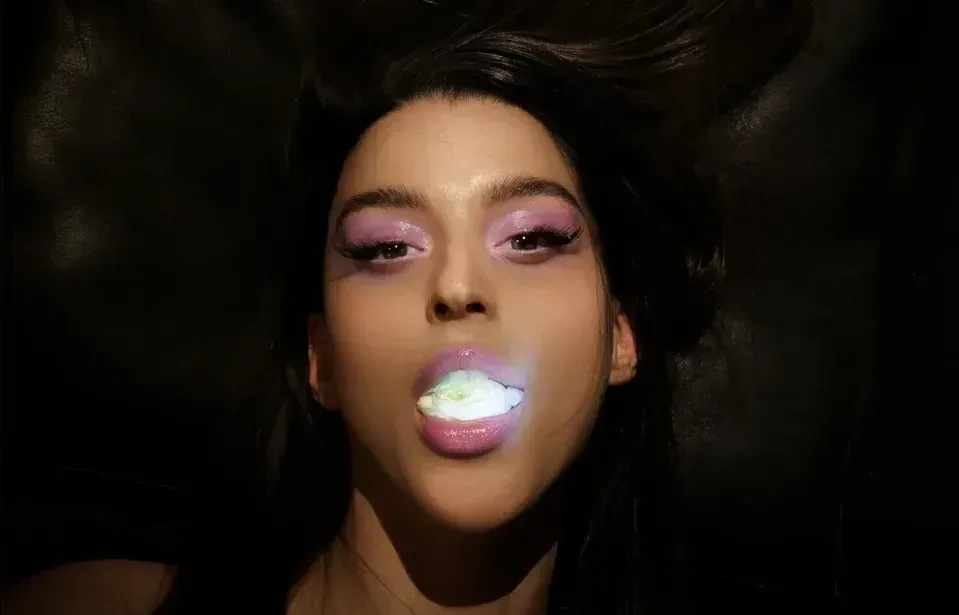
JIHAD, the debut EP by Tunisian-Danish artist 100, arrives today as a work shaped by emotional rupture and meticulous craft. Written, produced and composed entirely by 100, the project unfolds alongside a capsule collaboration with Copenhagen fashion label Sabot. It marks the beginning of a new self-published chapter for a multidisciplinary artist whose practice moves between electronic composition, classical strings, performance and installation.
Hours before the release, she described the EP as “the result of an internal struggle, the biggest Jihad… unfolding the disillusion caused by multi-layered heartbreaks, toxic relationships, and the duality of suppressed feelings versus arenas of emotion.” The statement captures the emotional weight behind the record and the way it moves: fluid, unstructured and constantly shifting, mirroring the instability she writes from.
Musically, JIHAD blends orchestral intensity, noise, R&B fragments and experimental production. On New Day, pipe organ and synths swell into cinematic tension, while her vocal phrasing balances fragility with resistance. Elsewhere, melodies dissolve abruptly, strings are stretched to their breaking point, and the production feels sculpted rather than arranged.
The artist's interdisciplinary background sharpens this fluidity. Having worked across music, visual art, performance and immersive installations, including her previous duo project Pamela Angela, she brings a gallery sensibility into the sonic world. International performances and exhibitions across Europe and North Africa have already shaped her language, and JIHAD extends that vocabulary into something more personal and self-defined.
This release also deepens her relationship with Sabot, a Danish fashion brand known for its uncompromising approach to craft and use of deadstock materials. In October, 100 designed an exclusive T-shirt for the label, followed by a handcrafted silver ring, now available made to order. These pieces form the early stages of a longer collaboration exploring how music can take physical form. As she explains, “I’ve always been interested in giving music a physicality—whether in sculpture, installation, performance, or now something wearable. This way of working—of materializing or installing the music—is maybe also a way to understand it better.”