The 1-54 Fair is back this weekend in New York City to showcase groundbreaking contemporary art from Africa and its diaspora until 17 May. Founded in 2013 by Touria El Glaoui, the fair travels between London, Morocco, and New York, “striving to promote a community of diverse perspectives, including evolving interpretations of the diasporic experience.” With twenty-eight galleries featured from across the world, 1-54 amplifies the wide reach African cultures have both within the continent and abroad. Based on their radical insight into the human experience, balance between tradition and innovation, and avant-garde approach, these are the five artists we are most excited to see.
Chéri Chérin
Born in the Democratic Republic of Congo in 1955, his work takes inspiration from the La Sape culture that focused on self-expression and refined elegance. Rooted in anticolonialism, this movement was meant to subvert colonial expectations of Africa and inspire confidence in the local people. Chérin’s work is known to celebrate the everyday life of the Congolese people — not shying away from the consequences of colonialism nor ignoring their dynamic talent — inspiring generations of artists after him.
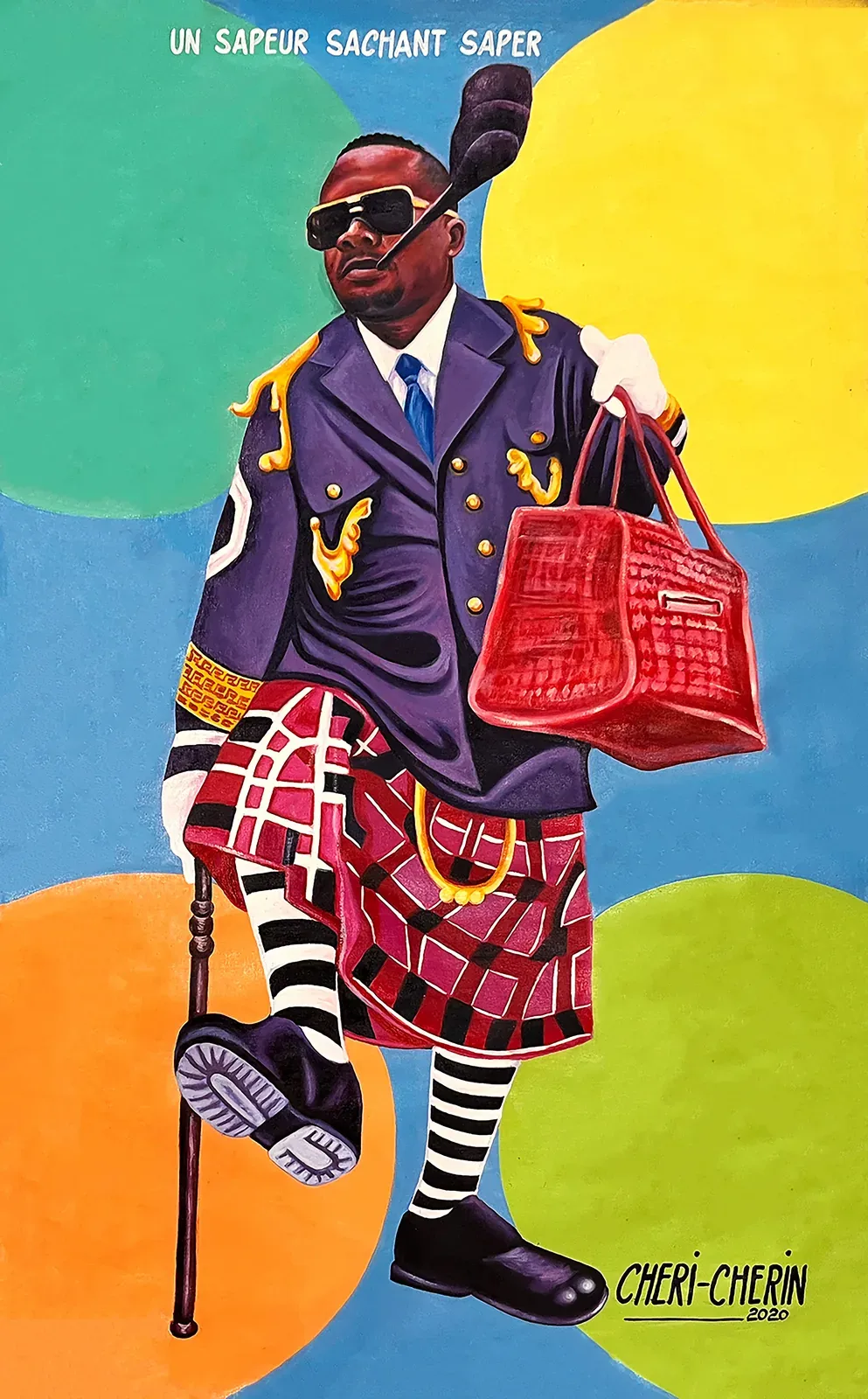
Chéri Chérin, Un Sapeur Sachant Saper, 2020. Courtesy of Gallery Article 15.
Hyacinthe Ouattara
Now based in France, Ouattara’s art echoes the ancestral memory of his birthplace, Burkina Faso. He explores human existence through multimedia work with sculpture, poetry, photography, painting, and more. Yet, instead of focusing on an individual and internal existence, he looks toward the interconnectedness and entanglements between humans. The colours, shapes, and textures leap from his pieces into your mind, but they don’t ask you to understand them, only to accept their multitudes.
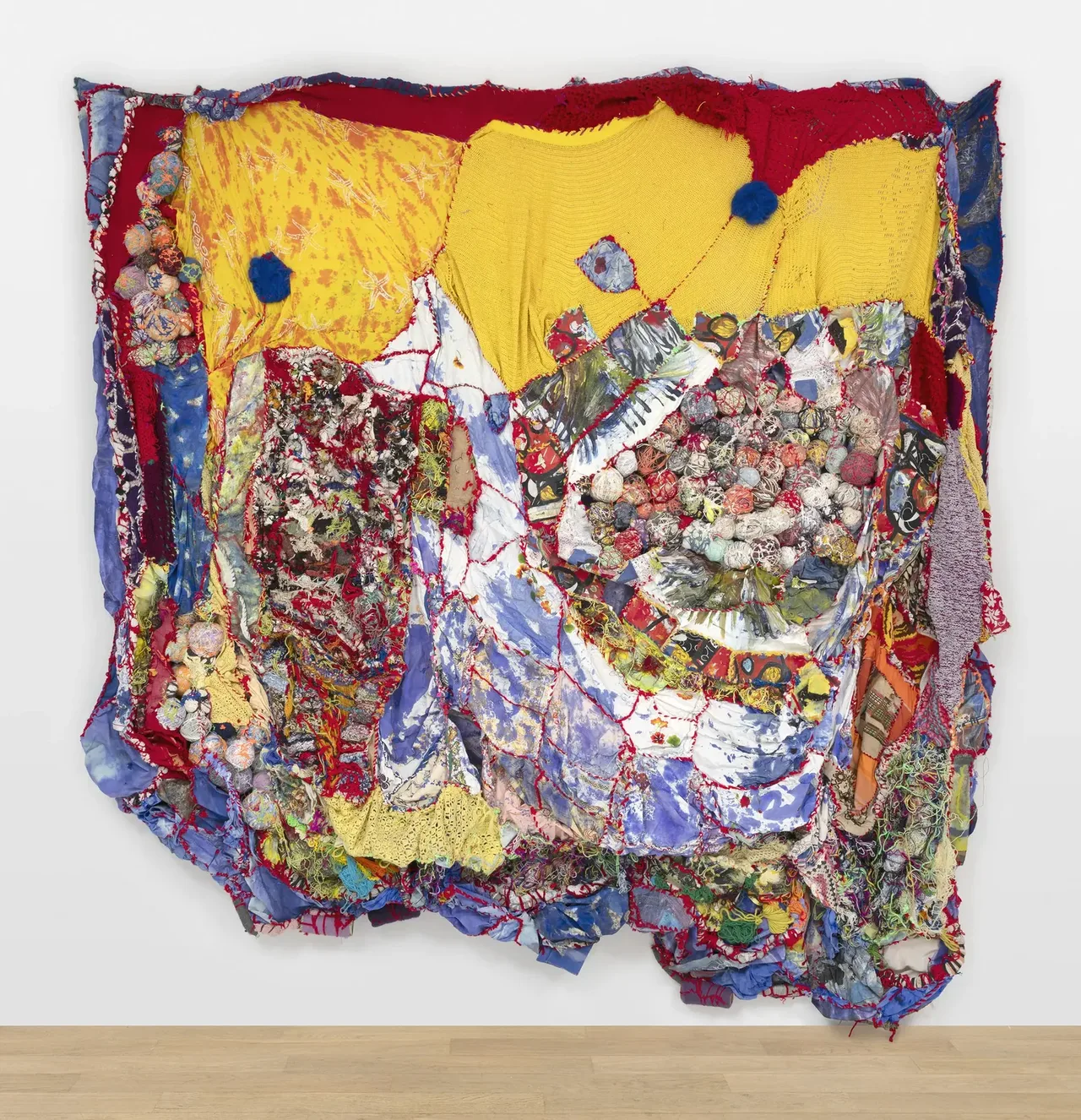
Hyacinthe Ouattara, Biomorphisme et ancestralité (Biomorphism and Ancestrality), 2023. Courtesy of the Artist and 193 Gallery.
Laetitia Ky
Using sculptural hair and photography as her primary mediums, this Ivorian artist communicates social storytelling through a technique that is at once innovative and ancient. In many African cultures, hair has been used to highlight social stature, tell a story, or adorn the body. It is a natural piece of art growing from the head and Ky wields this with great integrity, communicating feminist ideas, discussions on identity, and highlighting contemporary African references.
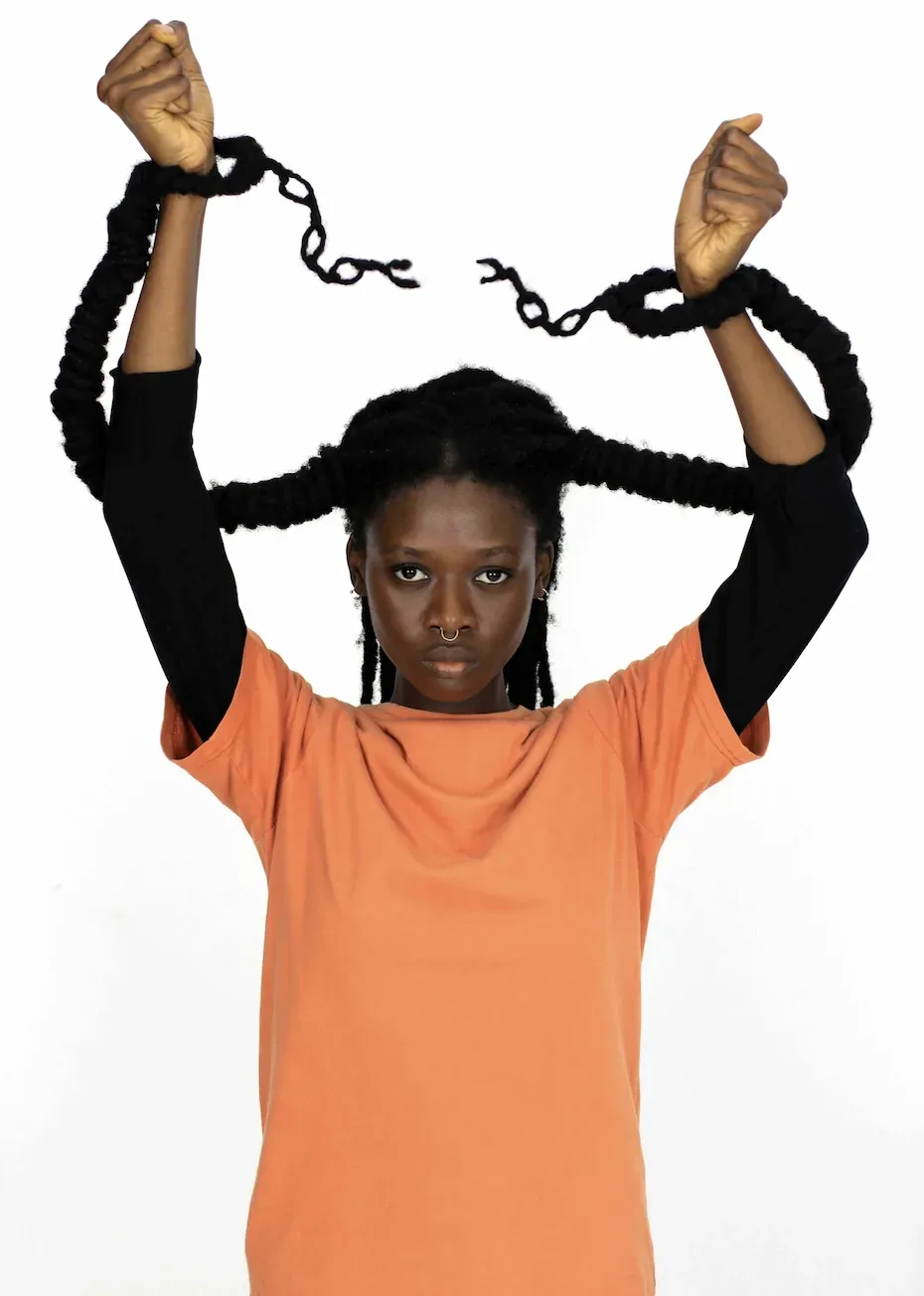
Laetitia Ky, La grâce du desert, C-print, 2024. Courtesy of LIS10 Gallery Hong Kong.
Thandiwe Muriu
Celebrating women, reinventing tradition, and honouring her culture are the cornerstones of Kenyan artist Muriu’s practice. Primarily working with African textiles such as Ankara wax prints and East African kanga, a nonverbal language is introduced, as each piece of fabric conveys a different message based on patterns, colour, and styling. Muriu leans into this cultural complexity, taking pride in its storytelling and envisioning how these practices can be protected and used to uplift her community, particularly women.
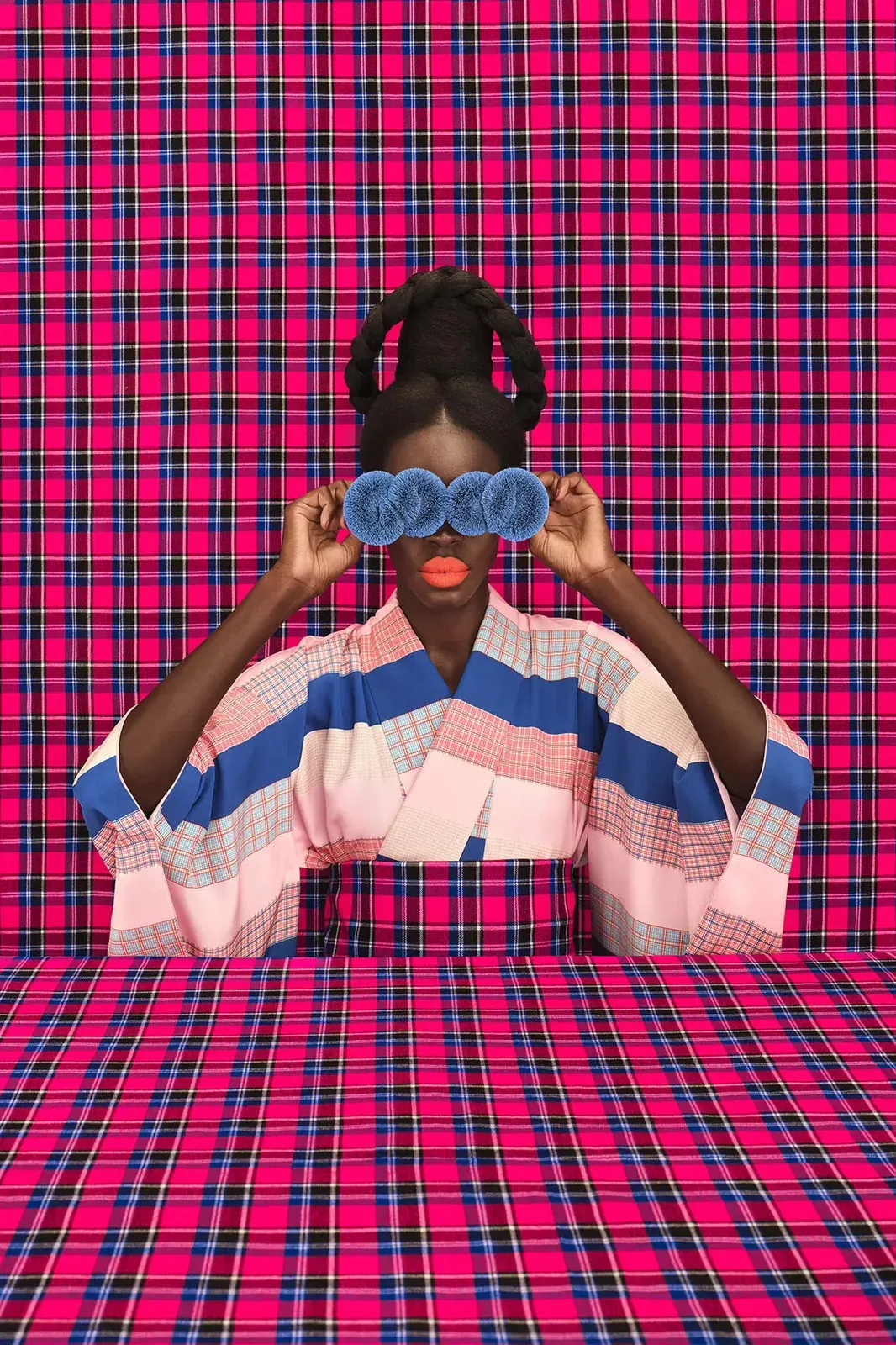
Thandiwe Muriu, The color of chocolate, 2026. Courtesy of the Artist and 193 Gallery.
Tuere Nicole
The soft, angelic, blooming features of Nicole’s work go to show her conception of Black girlhood across generations. Pastel colours and soft strokes give the impression of innocence and lightness, two things Black girls have been deprived of in social representations. The slightly blurred backgrounds set in nature make time and place indistinguishable, anchoring us in the intergenerational timeline of Nicole’s oeuvre. Inspired by her own family history, her work intimately lets us in and asks us to reflect on who our kinfolk are.
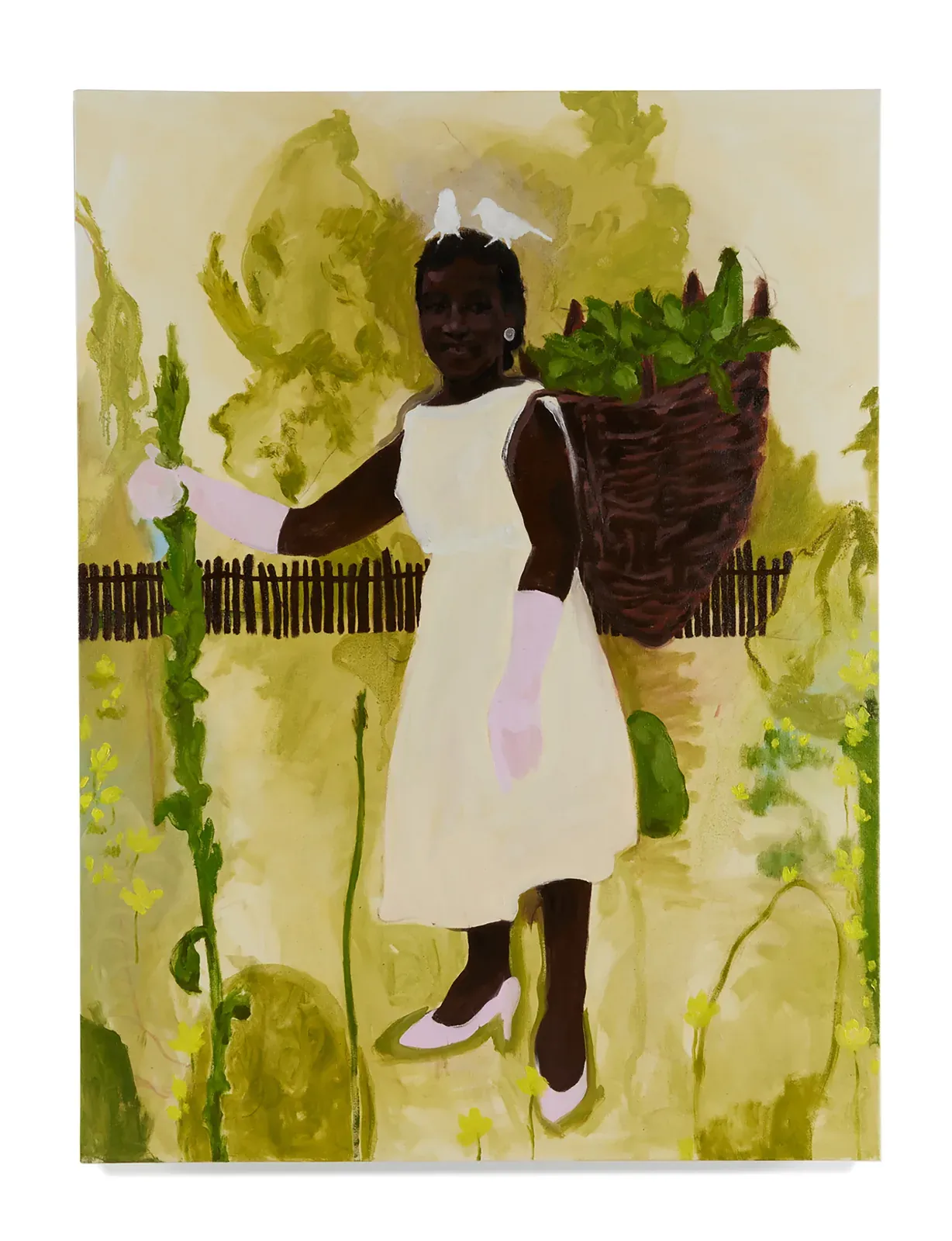
Tuere Nicole, Sundays Best, 2025. Courtesy of the Artist and Picture Theory.